Cognitive Development Adding in the Forest Worksheets for Ages 3-5
17 filtered results
-
From - To
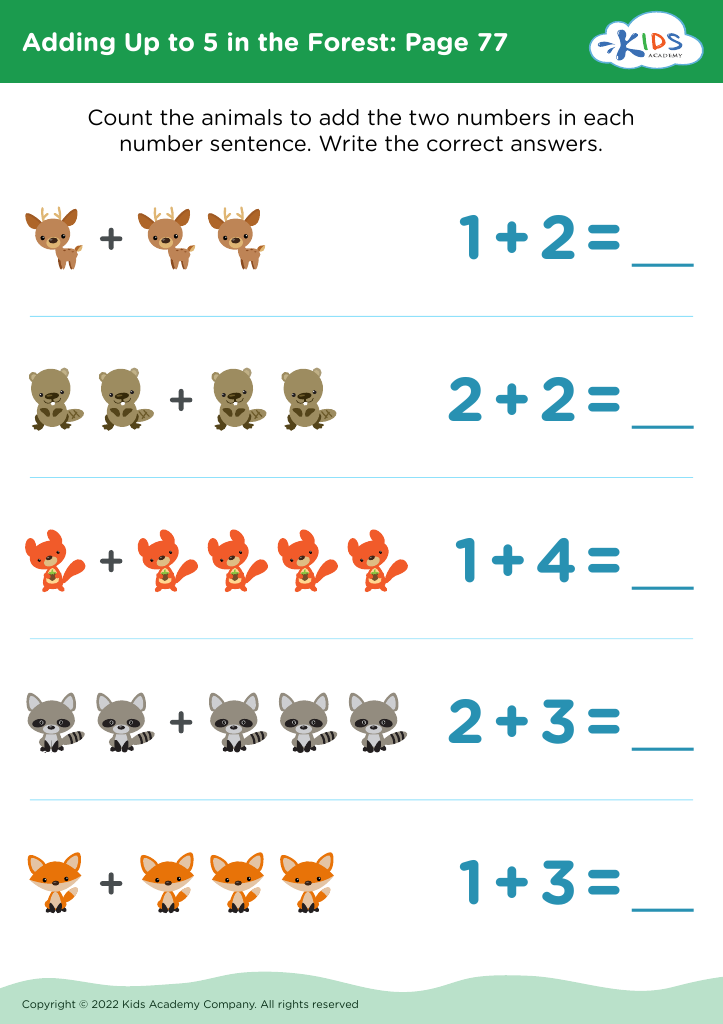
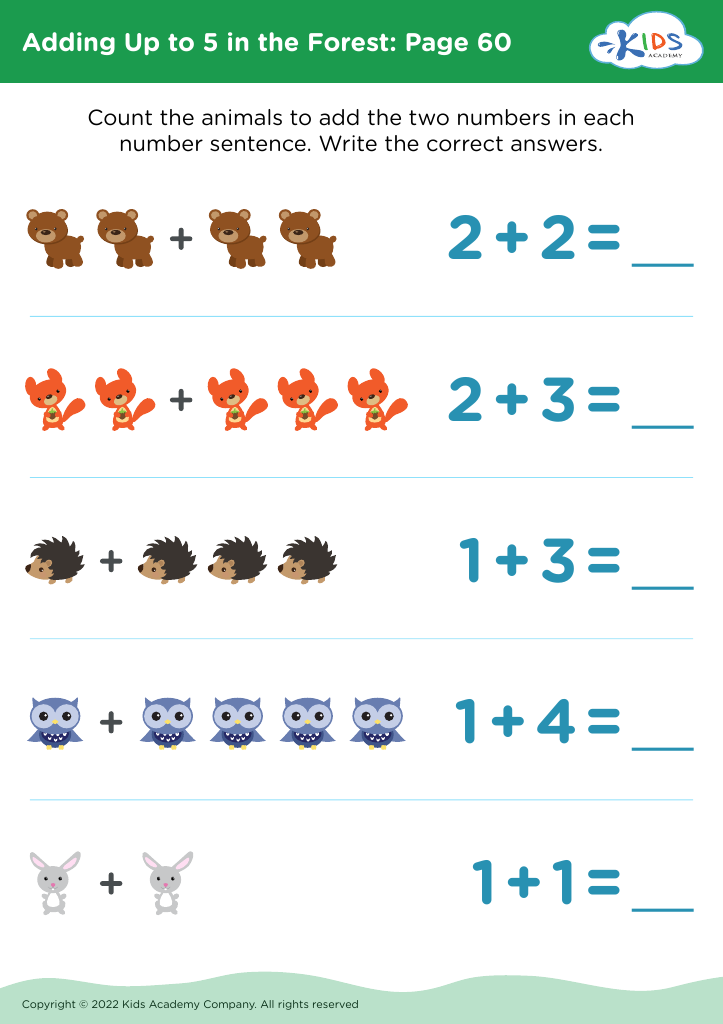
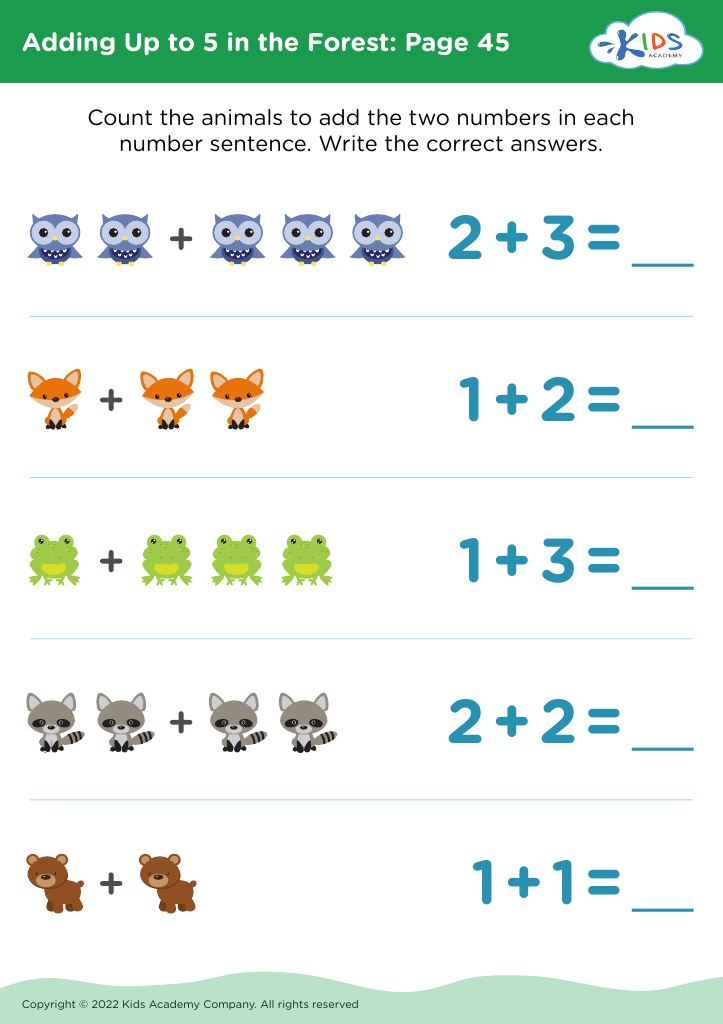
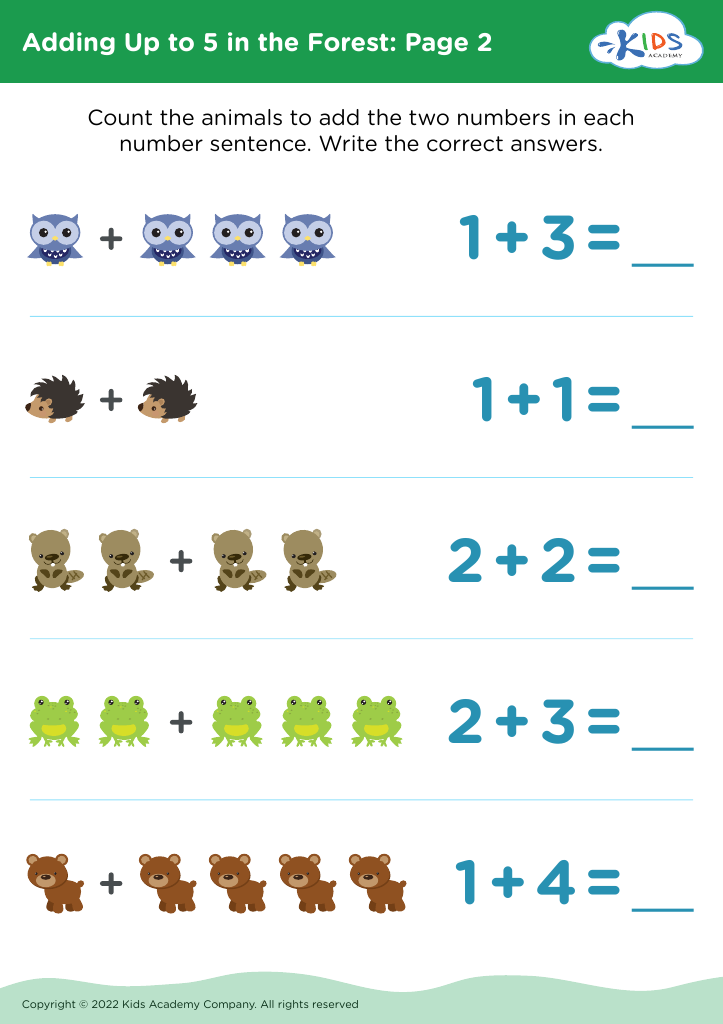
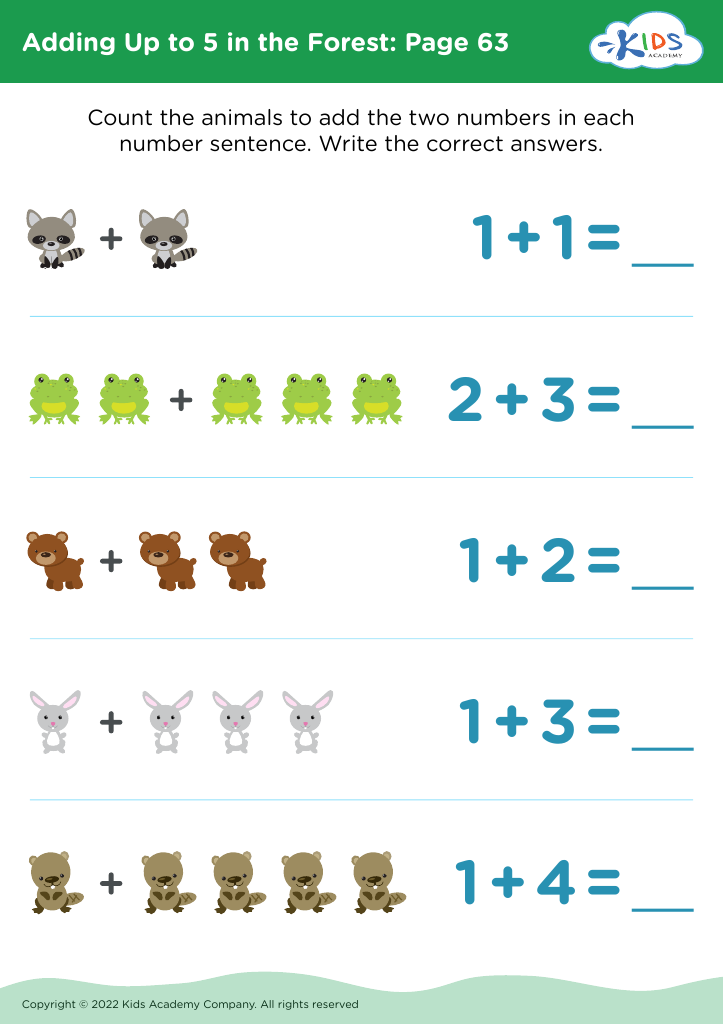
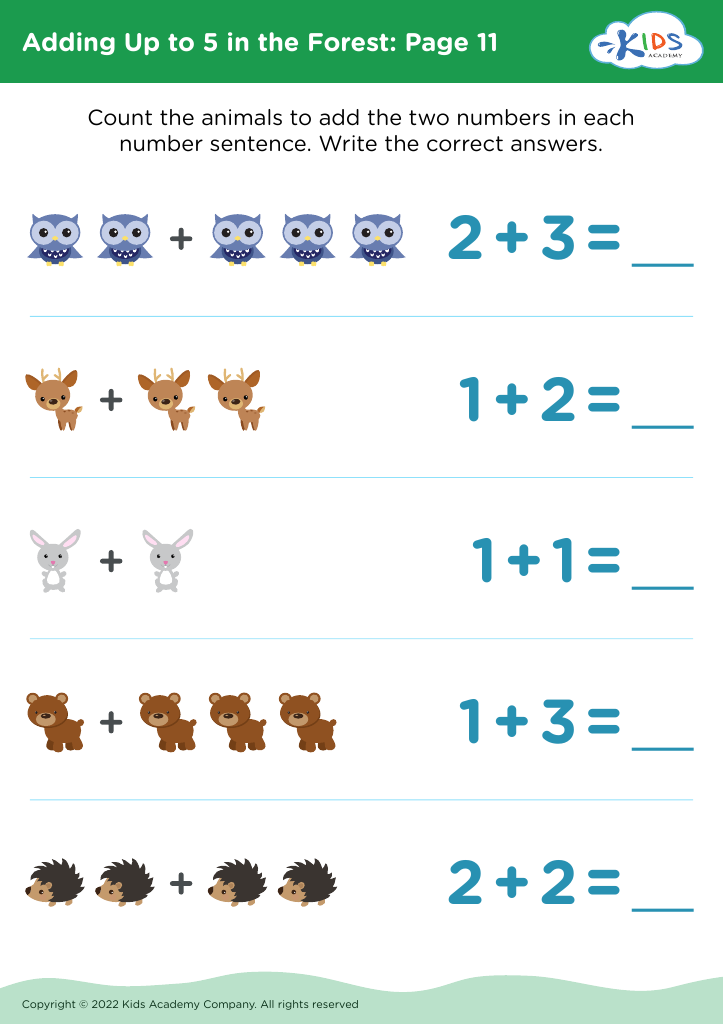
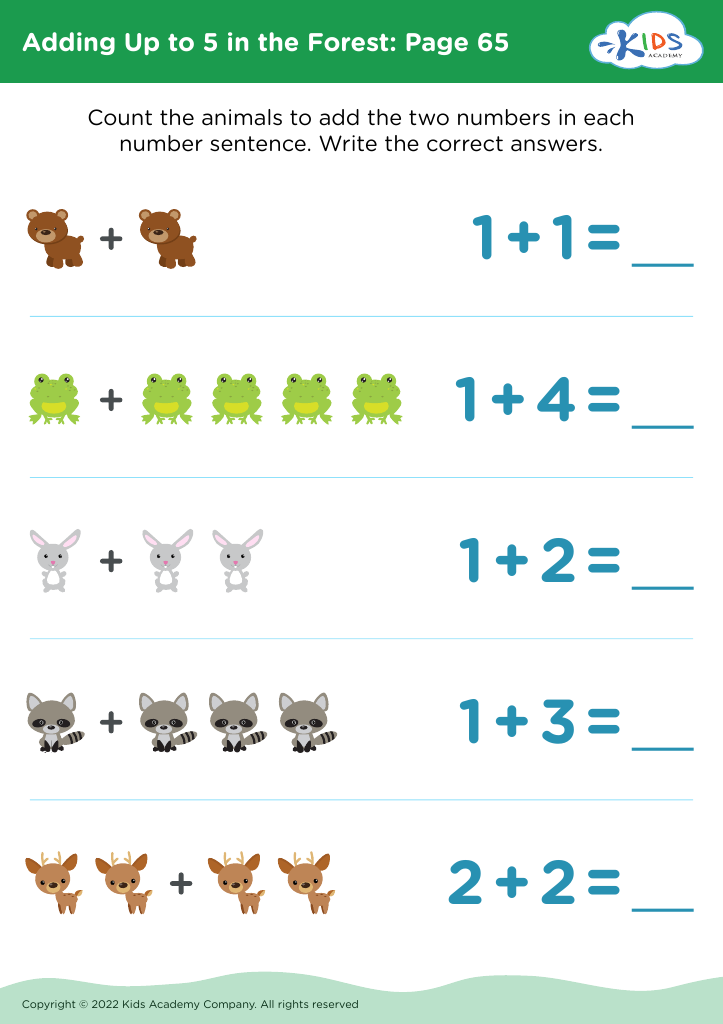
Discover our "Cognitive Development Adding in the Forest Worksheets" designed specifically for ages 3-5. These engaging resources introduce young learners to foundational math concepts through fun, nature-themed activities. Children will enhance their cognitive skills while counting and adding colorful forest animals, fostering a love for math in an interactive way. Our worksheets promote critical thinking, problem-solving, and early number recognition, aligning with essential learning goals for preschoolers. Ideal for classroom use or home learning, these worksheets create a playful learning environment, ensuring that your little ones develop key mathematical skills while exploring the wonders of the forest! Start their educational journey today!
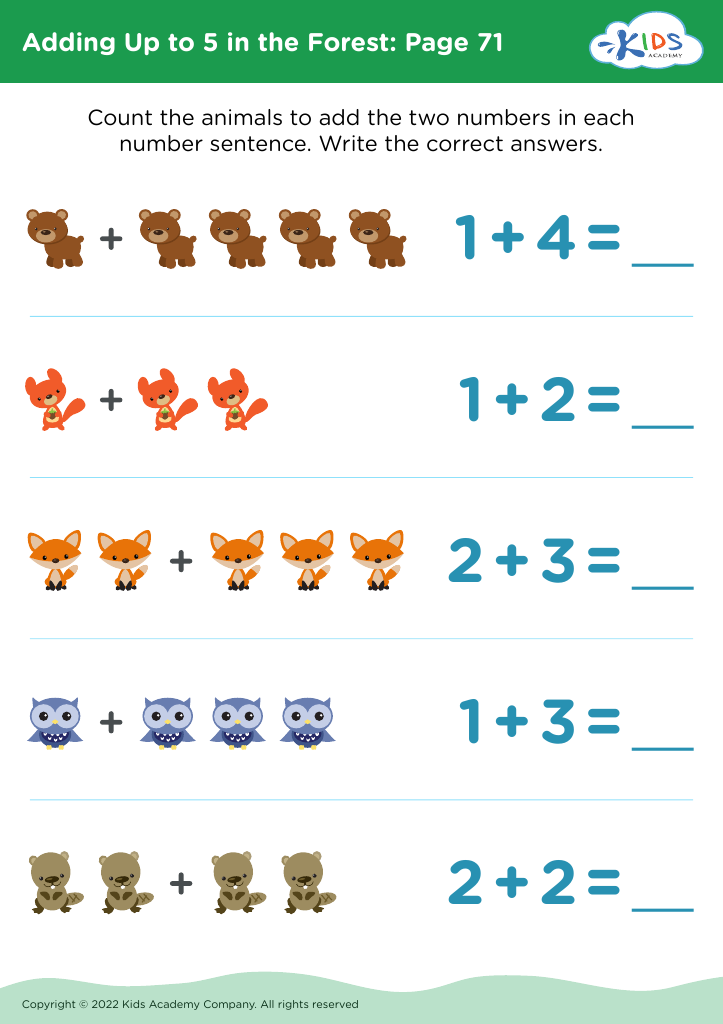
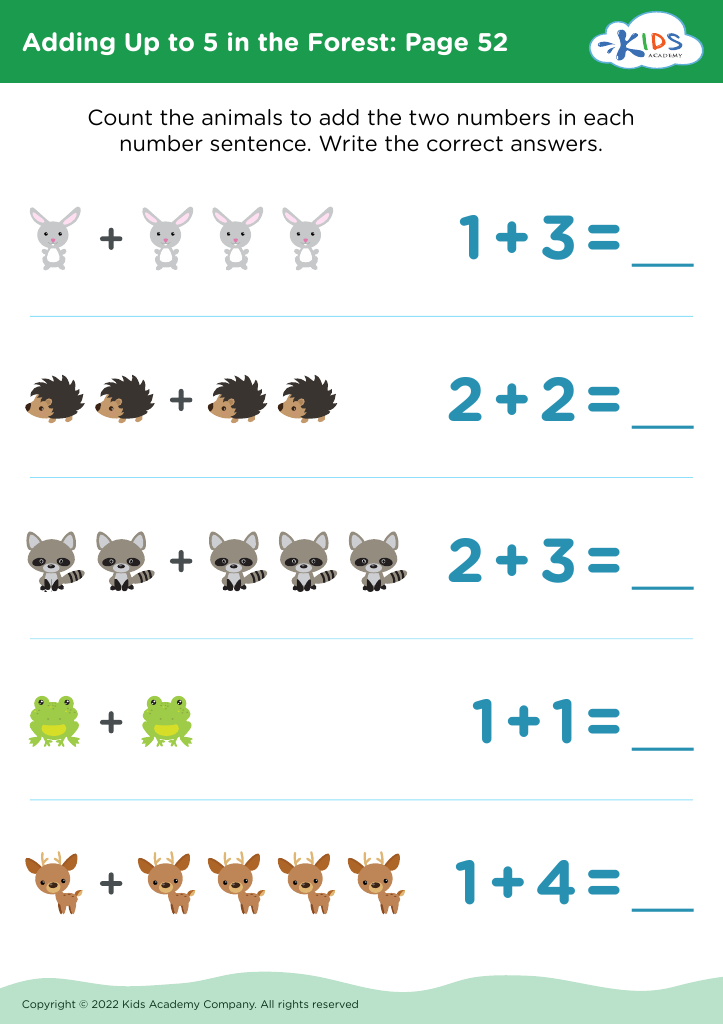
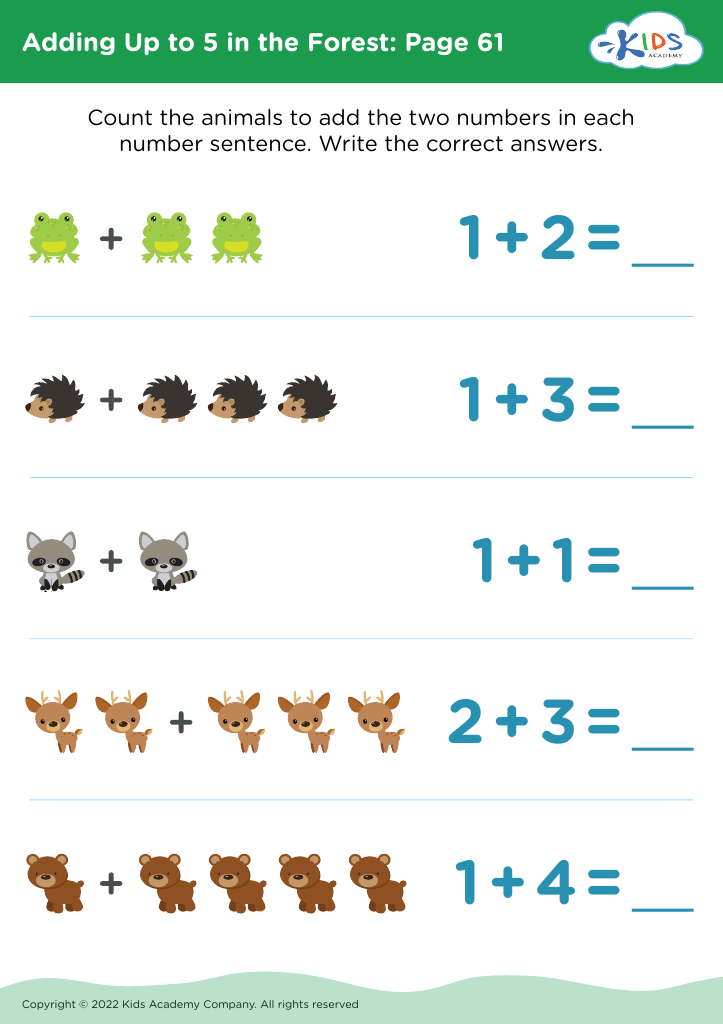
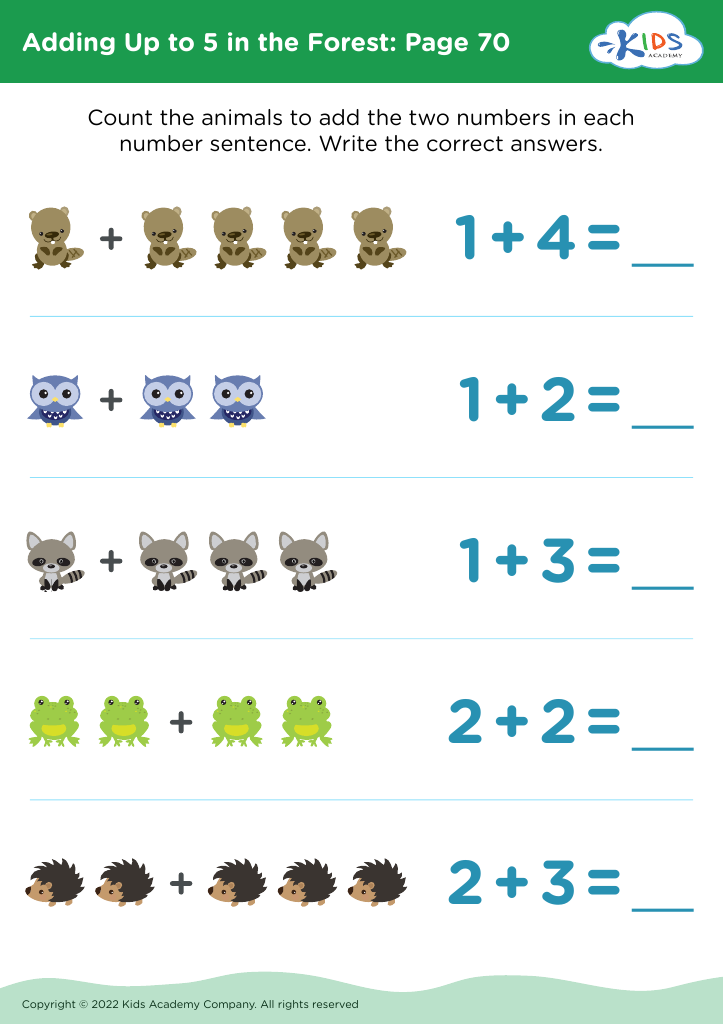
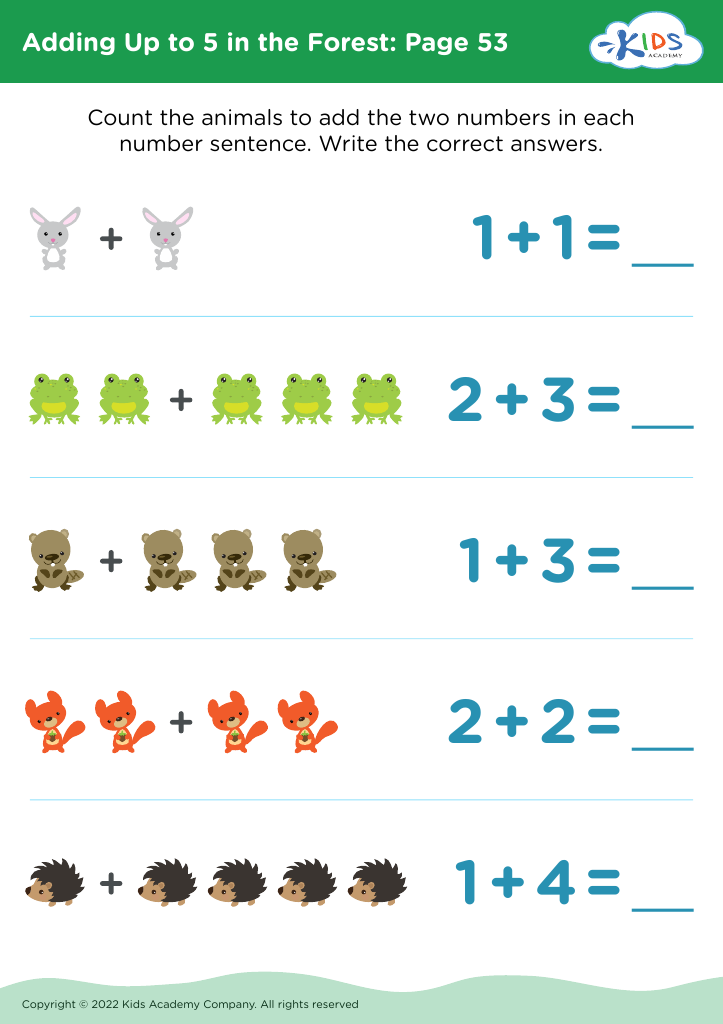
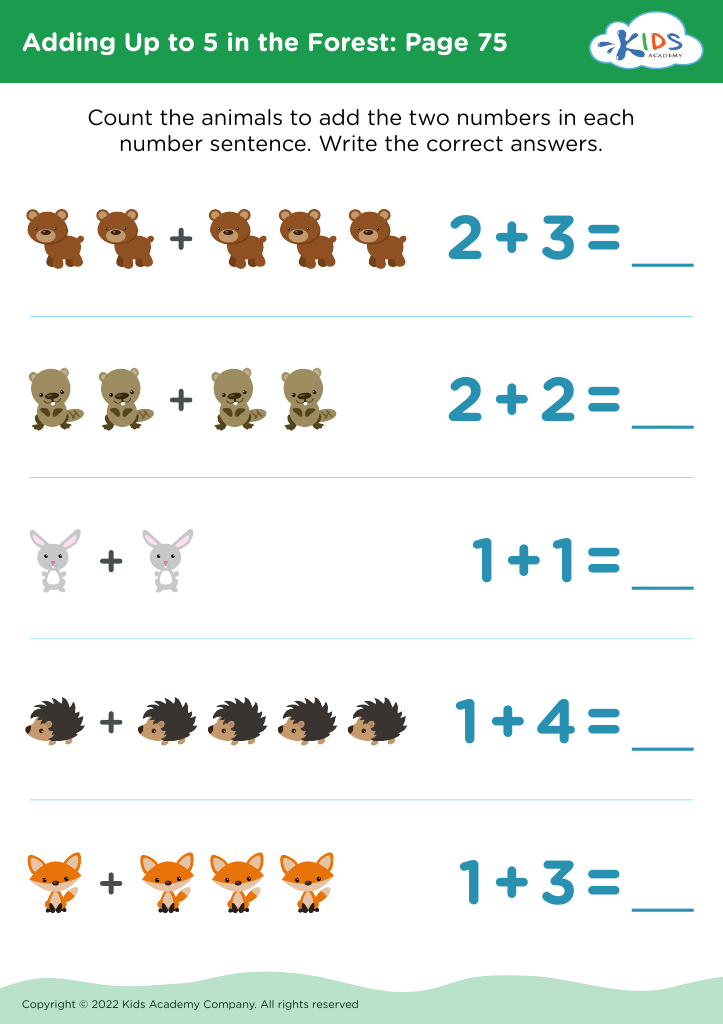
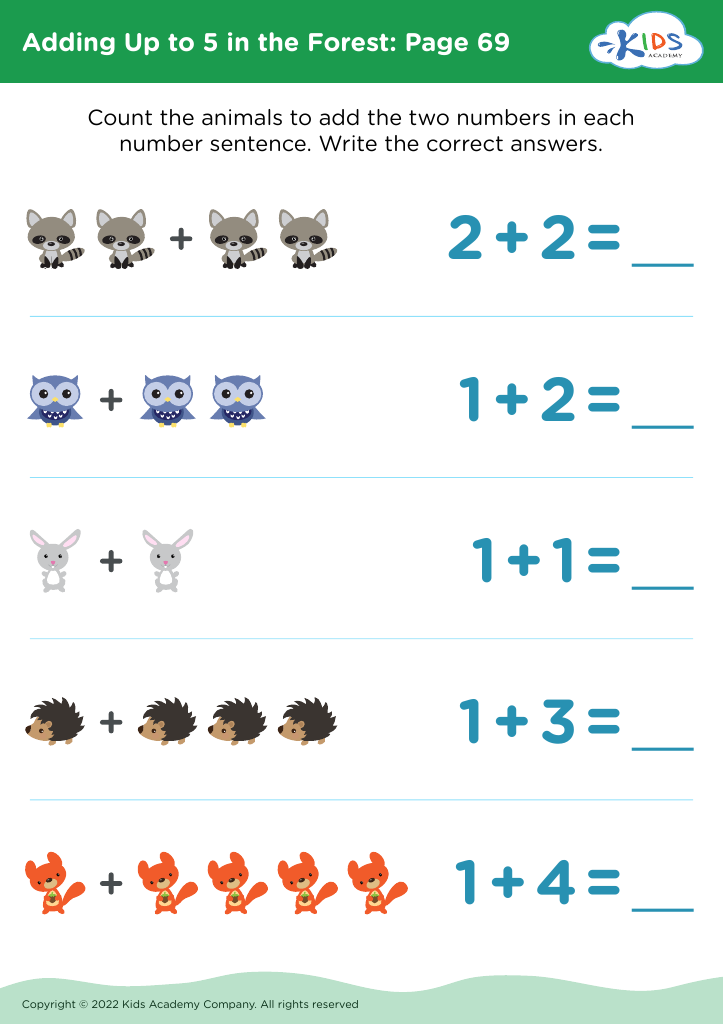
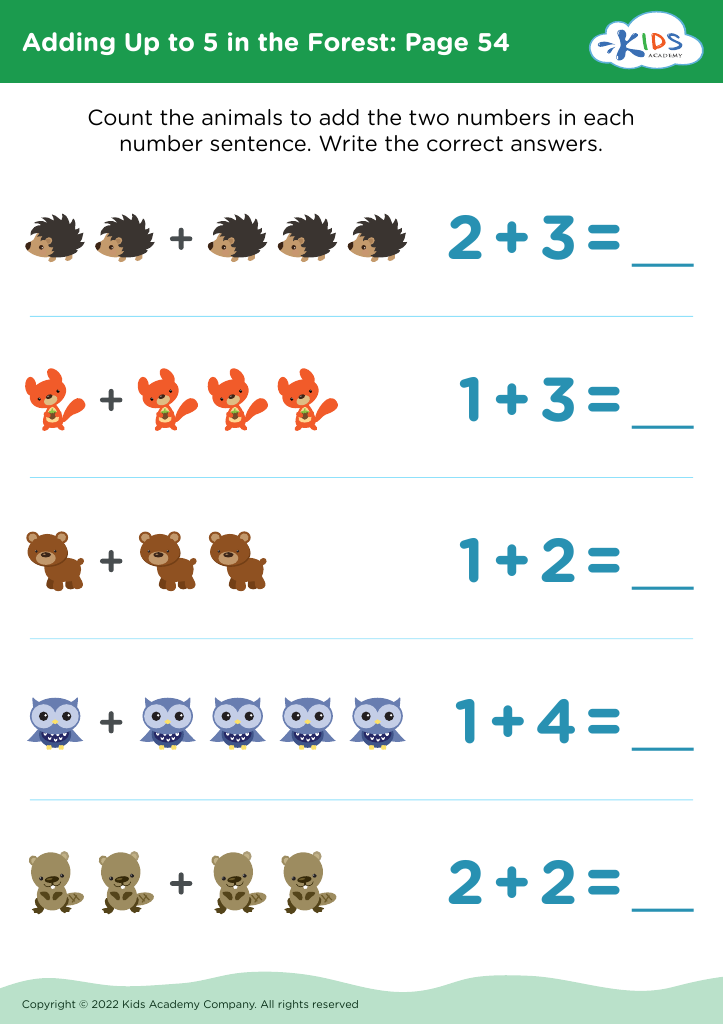
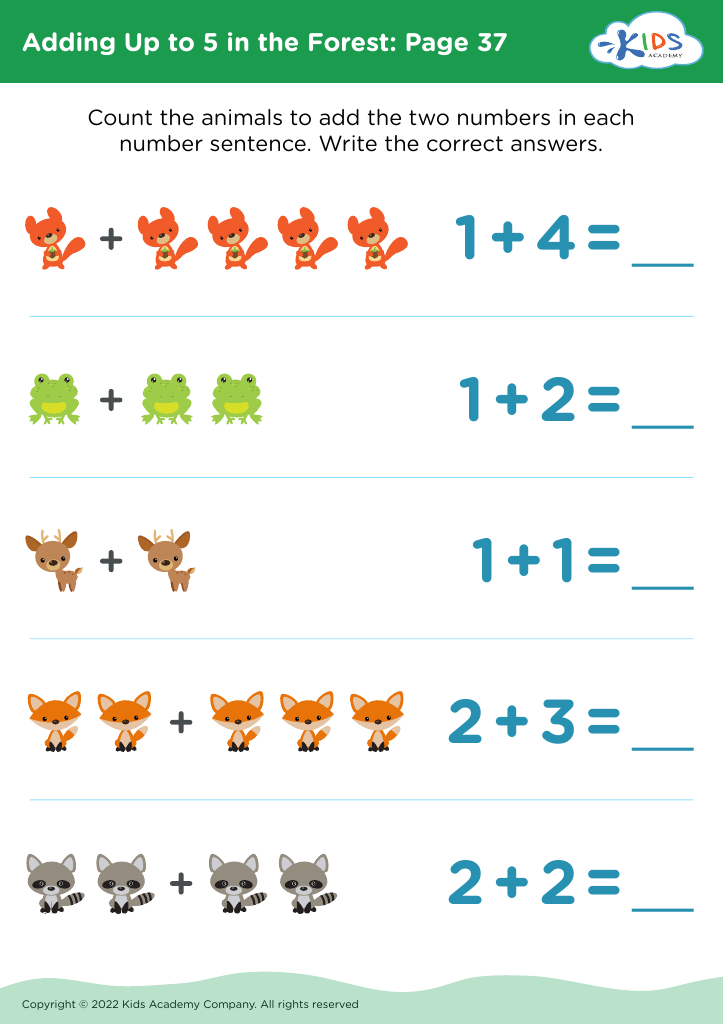
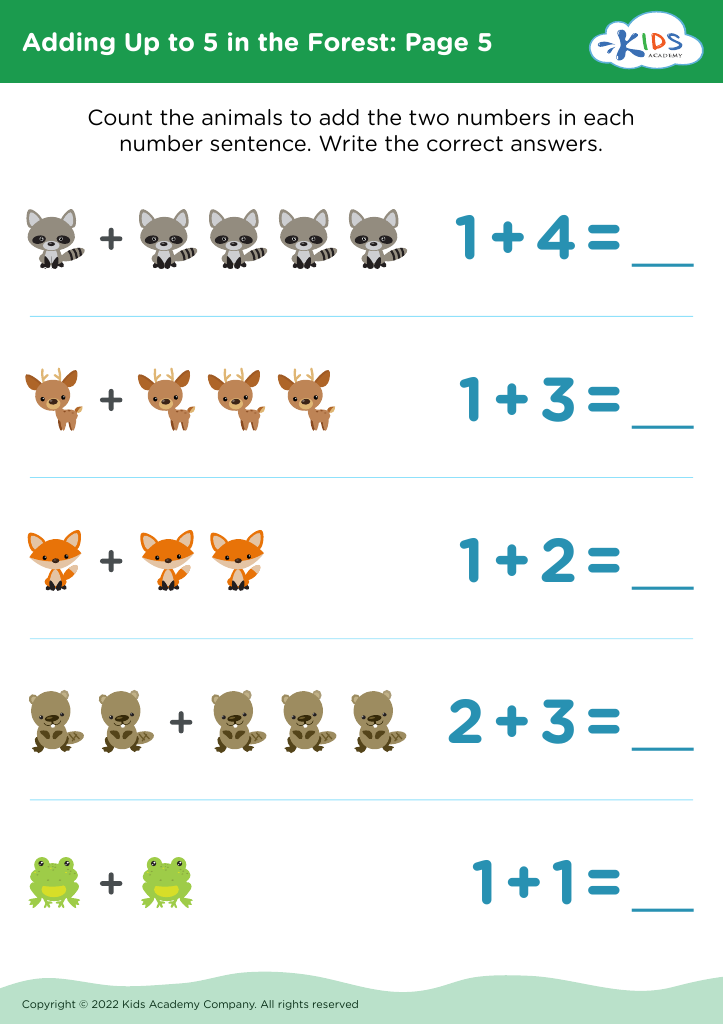



Cognitive development is a critical aspect of early childhood education, particularly for children aged 3-5, as it significantly influences how they think, learn, and interact with the world. When incorporating outdoor experiences, such as forest play, parents and teachers can enhance these cognitive skills in engaging and meaningful ways.
The forest environment is rich with stimuli that encourage exploration, problem-solving, and creativity. Children can observe nature, identify patterns, and experience cause-and-effect relationships as they engage with their surroundings. These interactions foster critical thinking and curiosity, essential components of cognitive development. Moreover, outdoor play promotes sensory experiences, allowing children to engage multiple senses, which accelerates learning and memory retention.
Emotionally, forest explorations provide a unique backdrop for social skills development. Collaborating with peers to navigate challenges, share discoveries, and create narratives enhances communication and teamwork abilities. In addition, the natural elements foster emotional well-being, resilience, and a sense of independence, all vital for holistic development.
For parents and teachers, recognizing the profound benefits of cognitive development through forest experiences not only enhances educational outcomes but also nurtures well-rounded, adventurous learners prepared to tackle future challenges with confidence. Ultimately, investing in such experiences lays the foundation for lifelong learning and critical thinking skills.