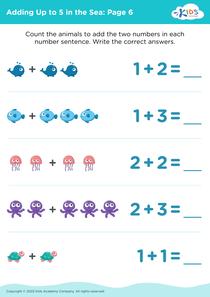
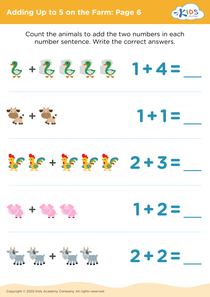
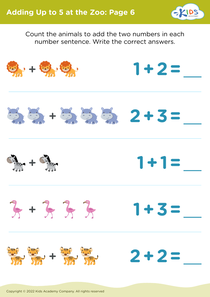
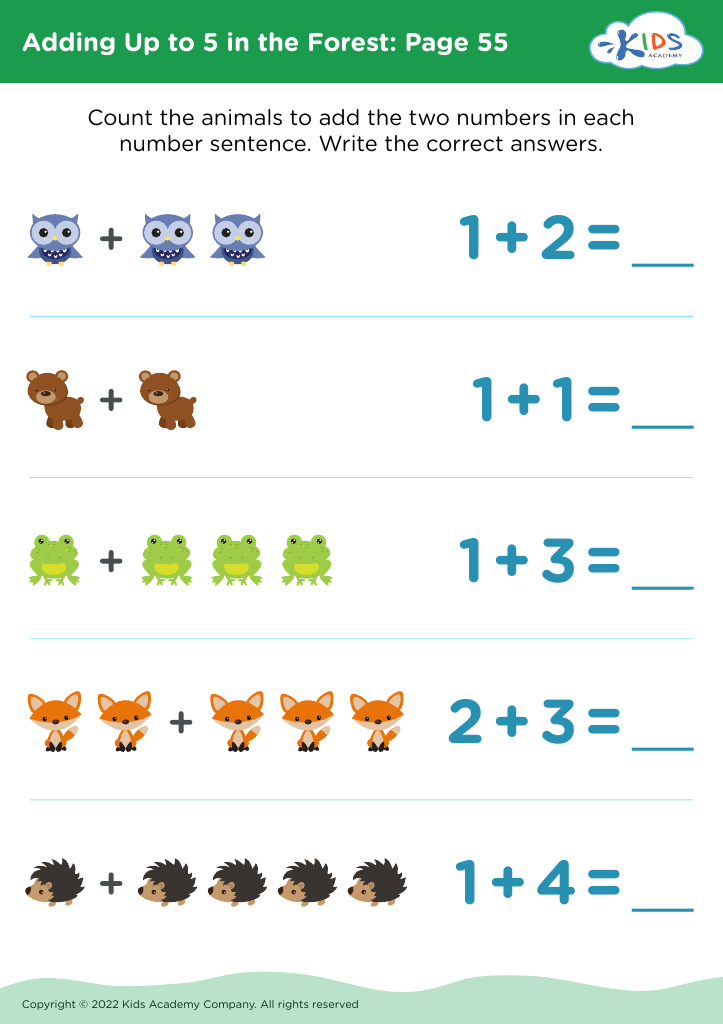
Nature awareness Adding in the Forest Worksheets for Ages 3-5
8 filtered results
-
From - To
Introduce your children to the wonders of nature with our 'Nature Awareness Adding in the Forest Worksheets' tailored for ages 3-5. These engaging, printable activities blend fundamental math skills with the beauty of the forest. As kids practice addition, they’ll simultaneously absorb valuable lessons about trees, animals, and the environment. Designed to foster curiosity and respect for nature, these worksheets enhance early childhood learning with vibrant, forest-themed visuals and interactive tasks. Perfect for parents and teachers aiming to create a well-rounded educational experience that instills both academic and ecological knowledge in young minds.
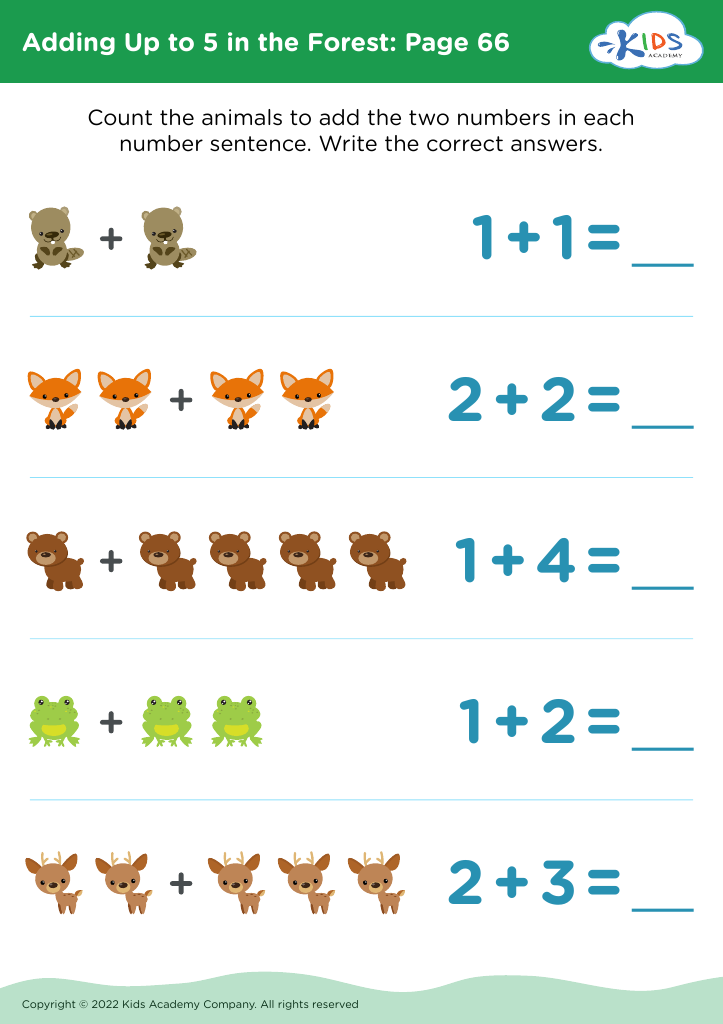
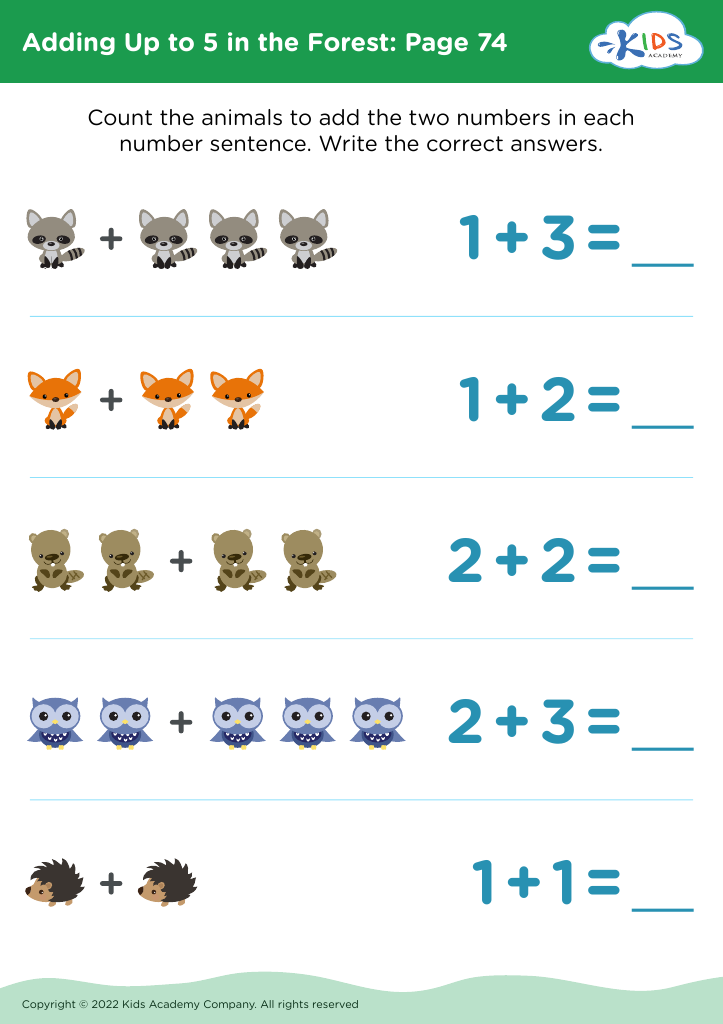
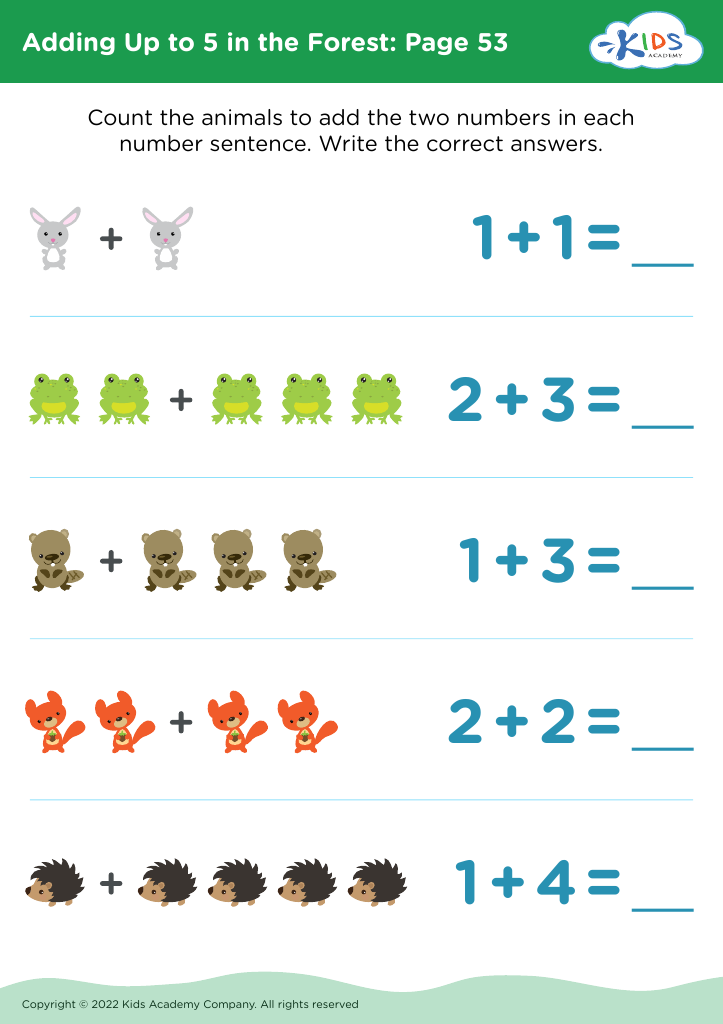



Nature awareness, particularly experiential learning in forest environments, plays a critical role in early childhood development for ages 3-5. Parents and teachers should care about this for several reasons.
Firstly, nature-based activities significantly enhance cognitive development. Interacting with diverse, natural settings stimulates curiosity, critical thinking, and problem-solving skills. Children learn about ecosystems, plant, and animal life, which enhances their observational and analytical abilities.
Secondly, physical activity in natural environments promotes motor skill development. Running, climbing, and exploring in a forest build coordination, strength, and overall physical health. Unlike sedentary indoor environments, nature encourages active play, which is vital for growth and fitness.
Moreover, exposure to natural settings promotes emotional well-being and mental health. Time spent in forests reduces stress, combats symptoms of ADHD, and fosters a sense of peace and relaxation. The calming effects of nature can mitigate anxiety and improve mood, leading to happier, more adaptable children.
Social development is another benefit. Group activities in nature encourage cooperation, language skills, and positive peer interactions, teaching essential social behaviors and values.
Lastly, fostering a love for nature at an early age cultivates environmental stewardship. Children who grow up appreciating the environment are more likely to become responsible, conservation-minded adults.
In summary, forest outings aren't just fun—they’re foundational for holistic development in early childhood, making such experiences invaluable.