Filters

70 filtered results

Clear all filters
Favorites
With answer key
Interactive

70 filtered results

Difficulty Level

Grade


Check out this FREE Trial Lesson on Adding in the Forest for age 3-5!

My Family

Favorites
With answer key
Interactive
  • 3-5
  • Number Recognition
  • Adding in the Forest
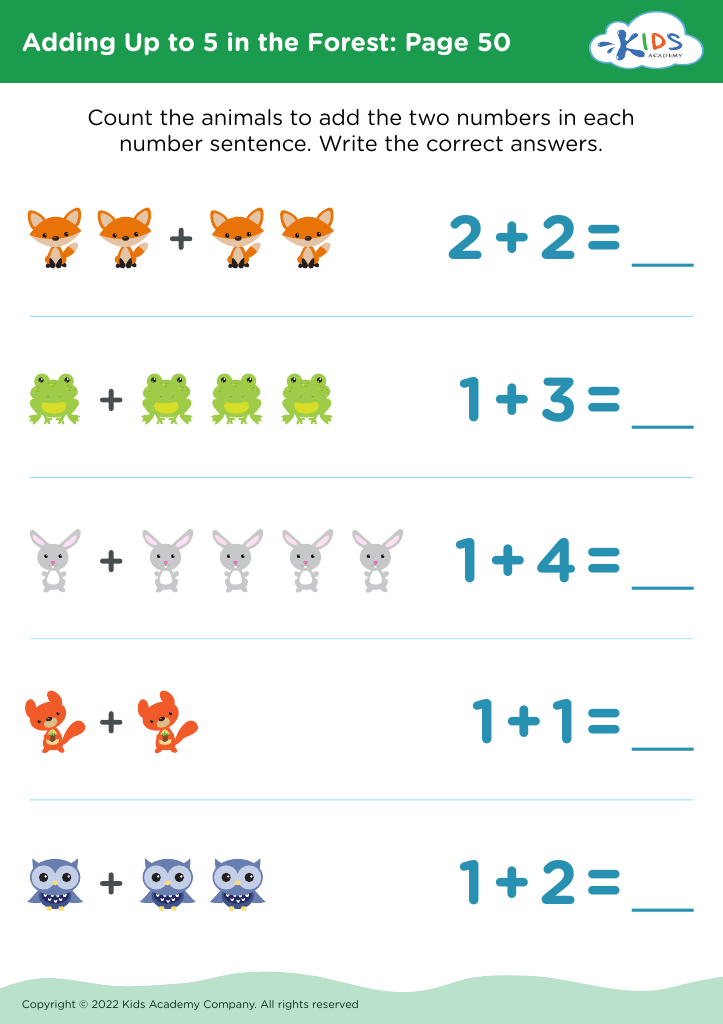
Adding Up to 5 in the Forest: Page 50
Worksheet
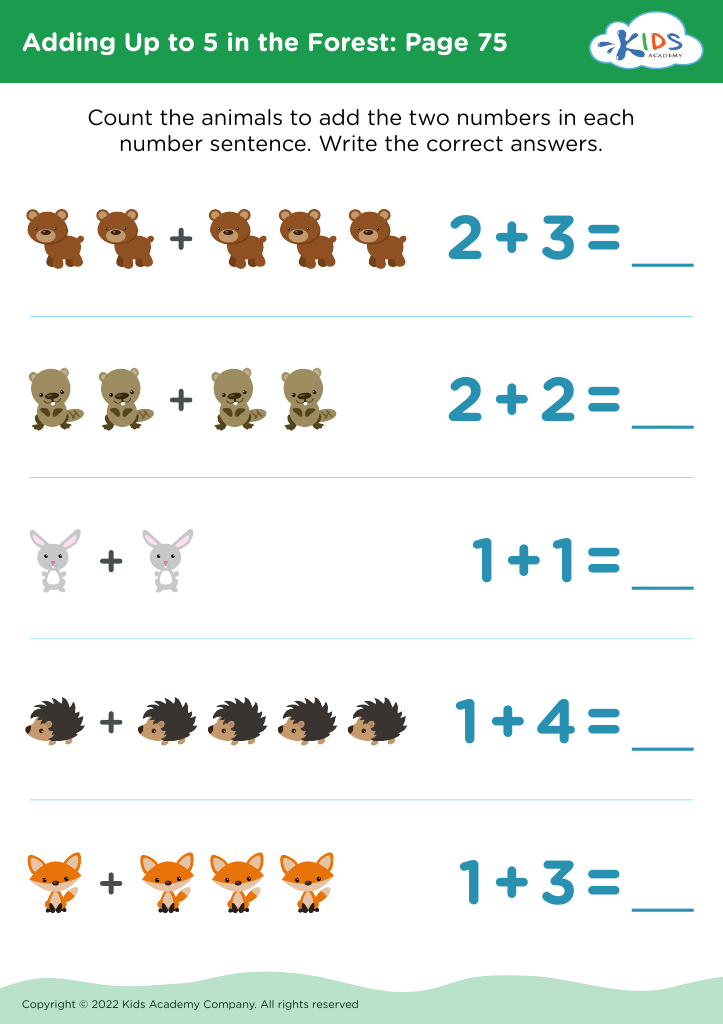
Adding Up to 5 in the Forest: Page 75
Worksheet
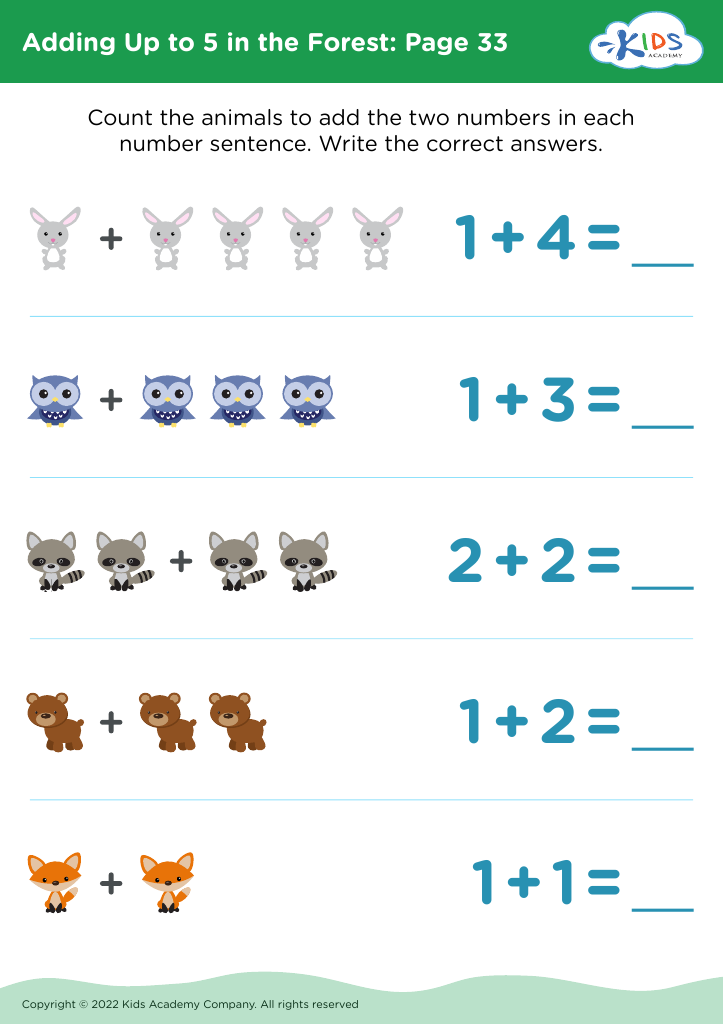
Adding Up to 5 in the Forest: Page 33
Worksheet
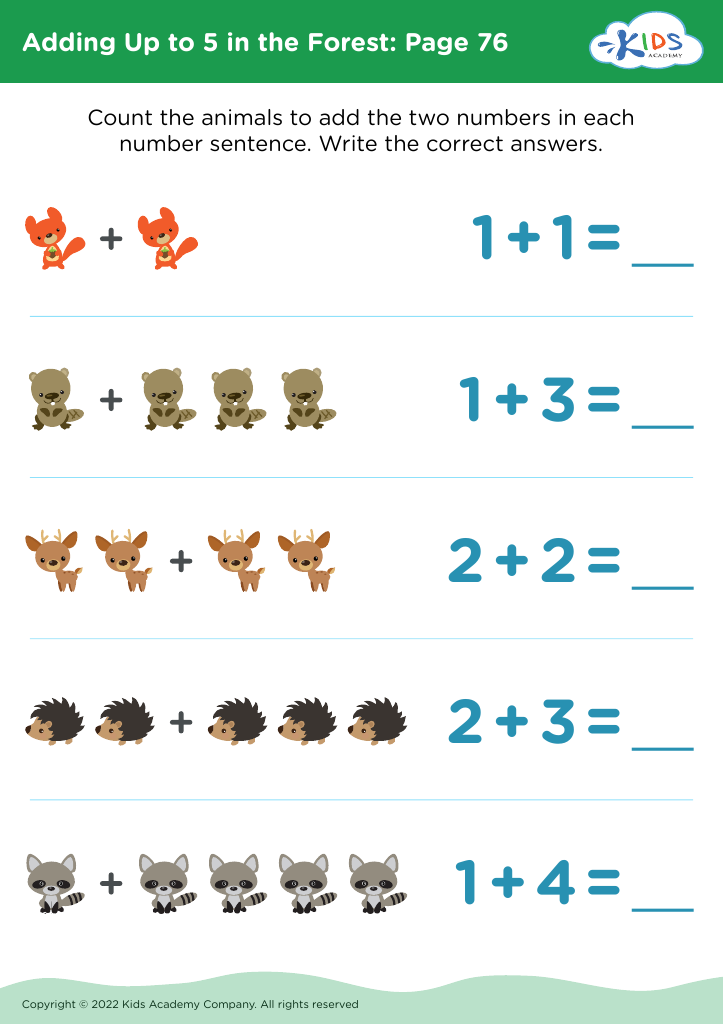
Adding Up to 5 in the Forest: Page 76
Worksheet
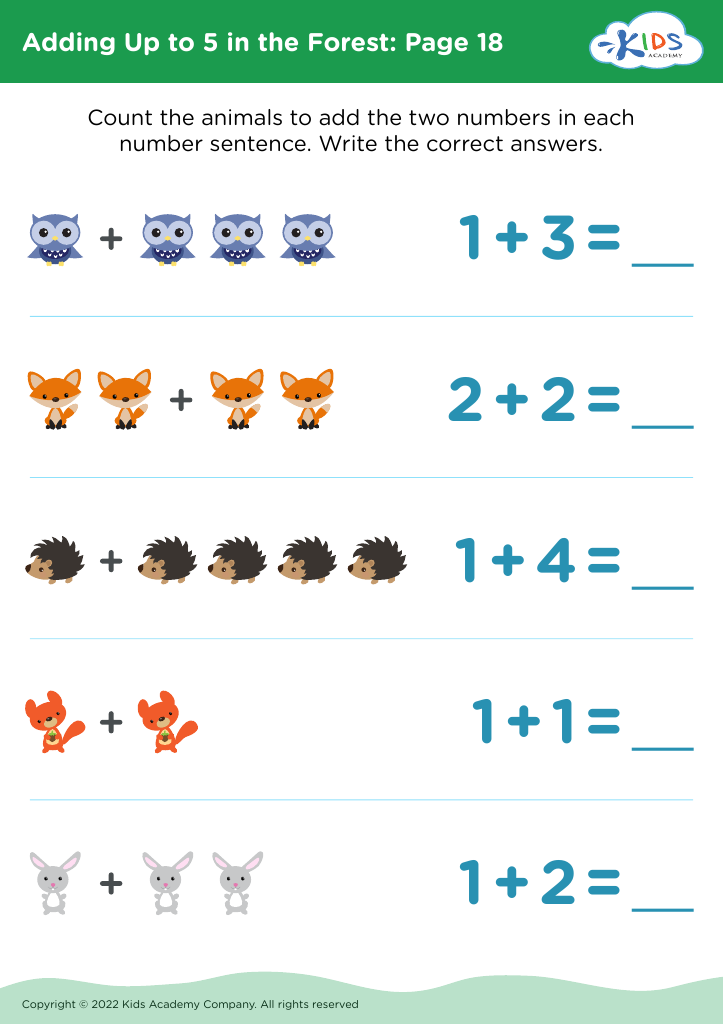
Adding Up to 5 in the Forest: Page 18
Worksheet
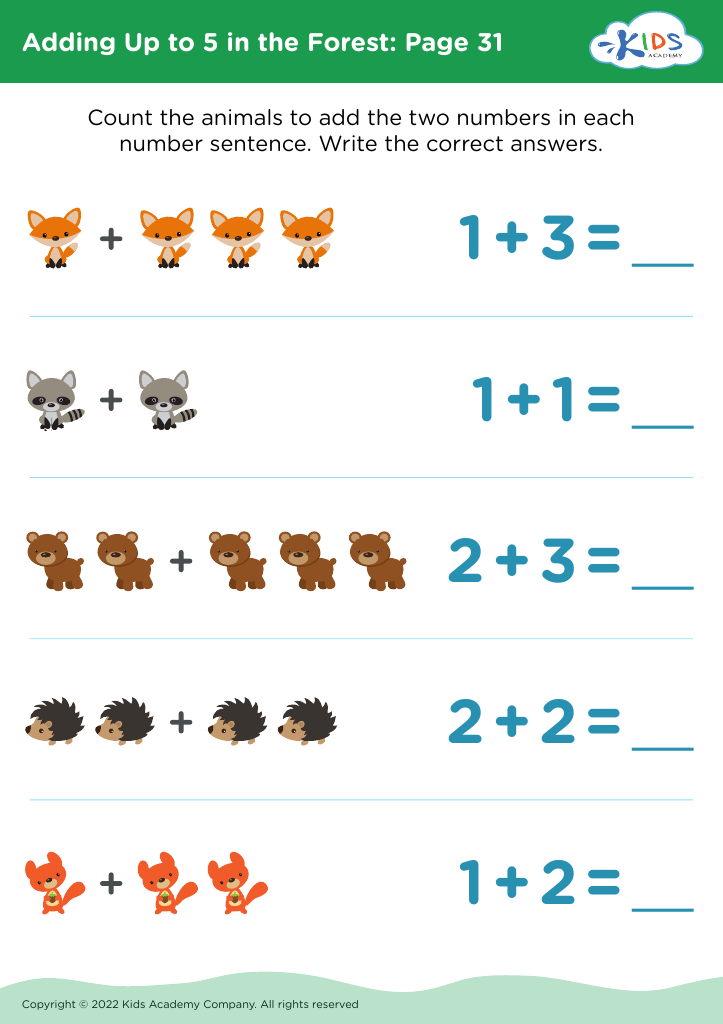
Adding Up to 5 in the Forest: Page 31
Worksheet
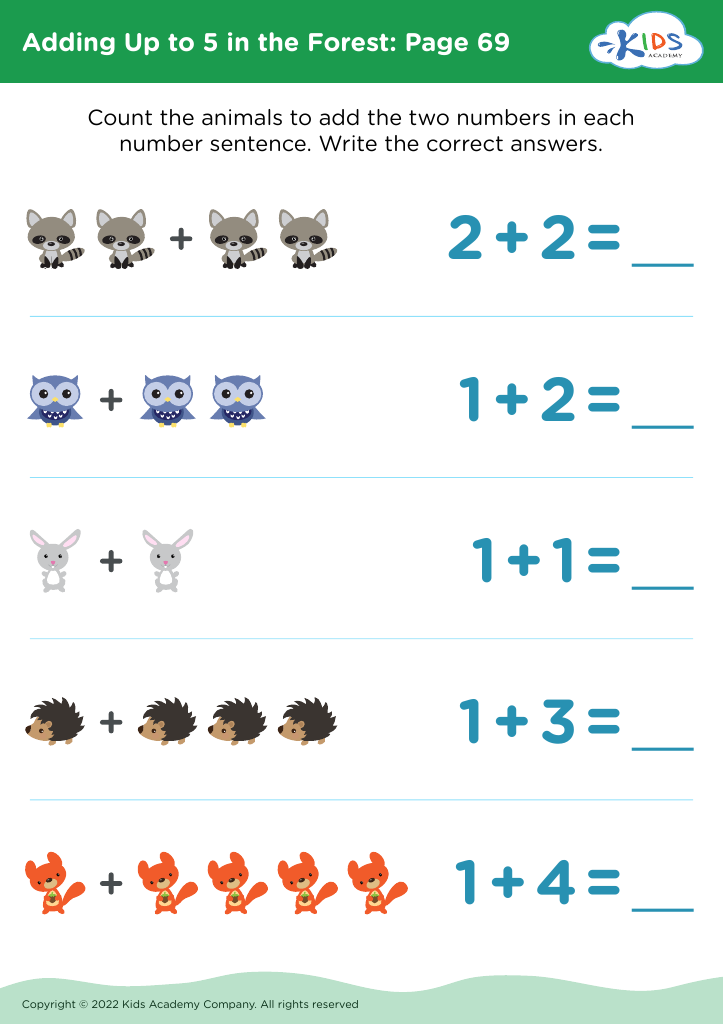
Adding Up to 5 in the Forest: Page 69
Worksheet
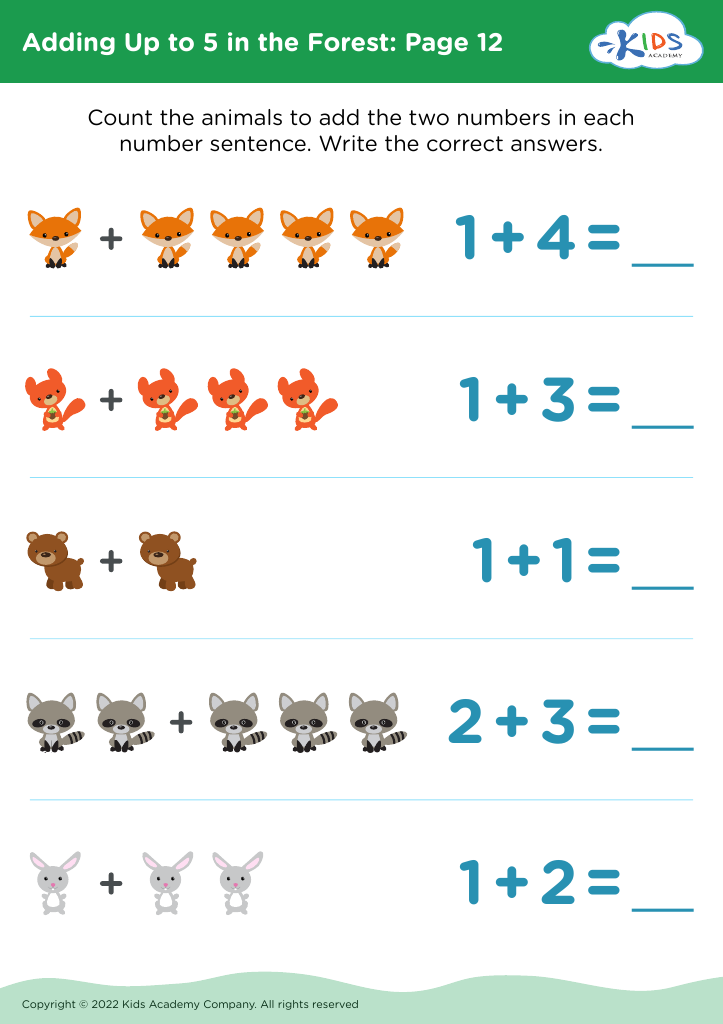
Adding Up to 5 in the Forest: Page 12
Worksheet
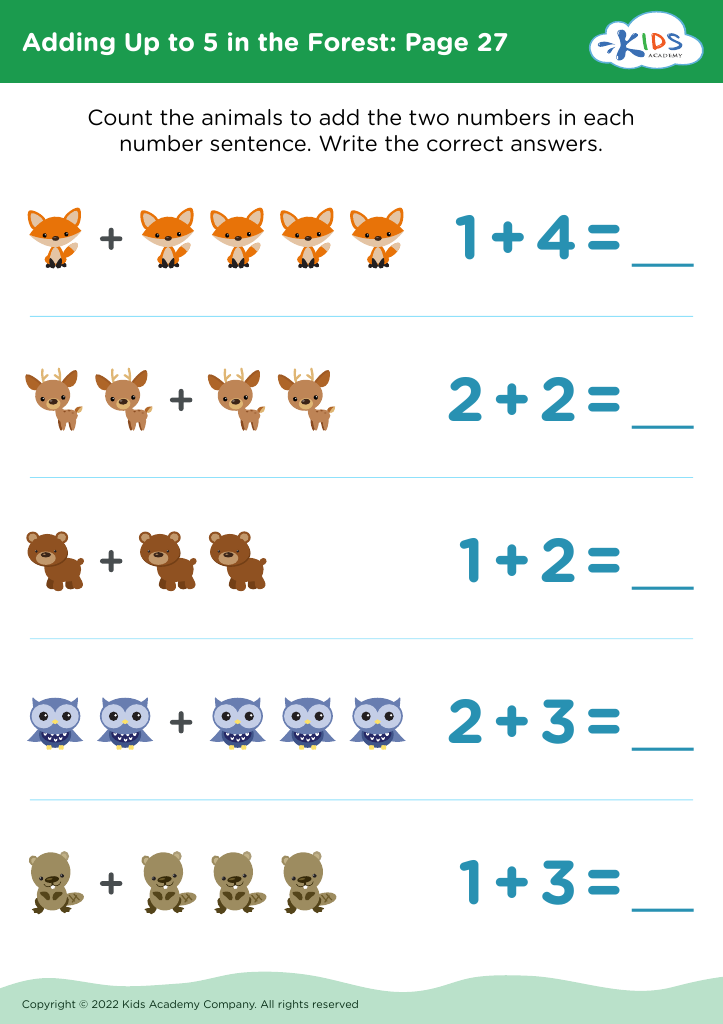
Adding Up to 5 in the Forest: Page 27
Worksheet
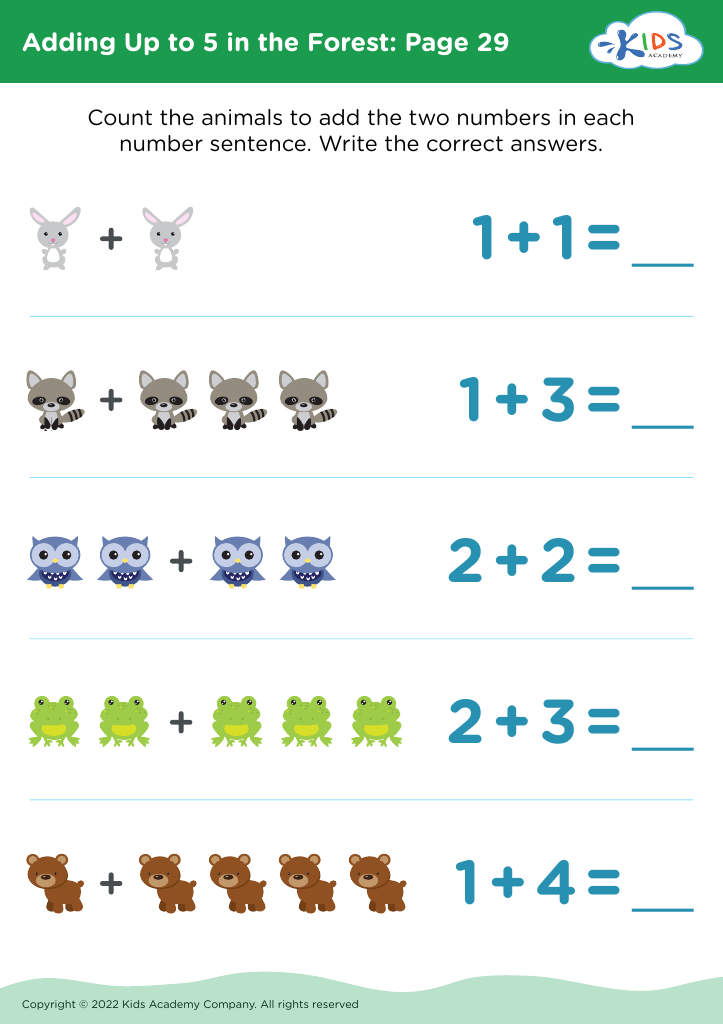
Adding Up to 5 in the Forest: Page 29
Worksheet
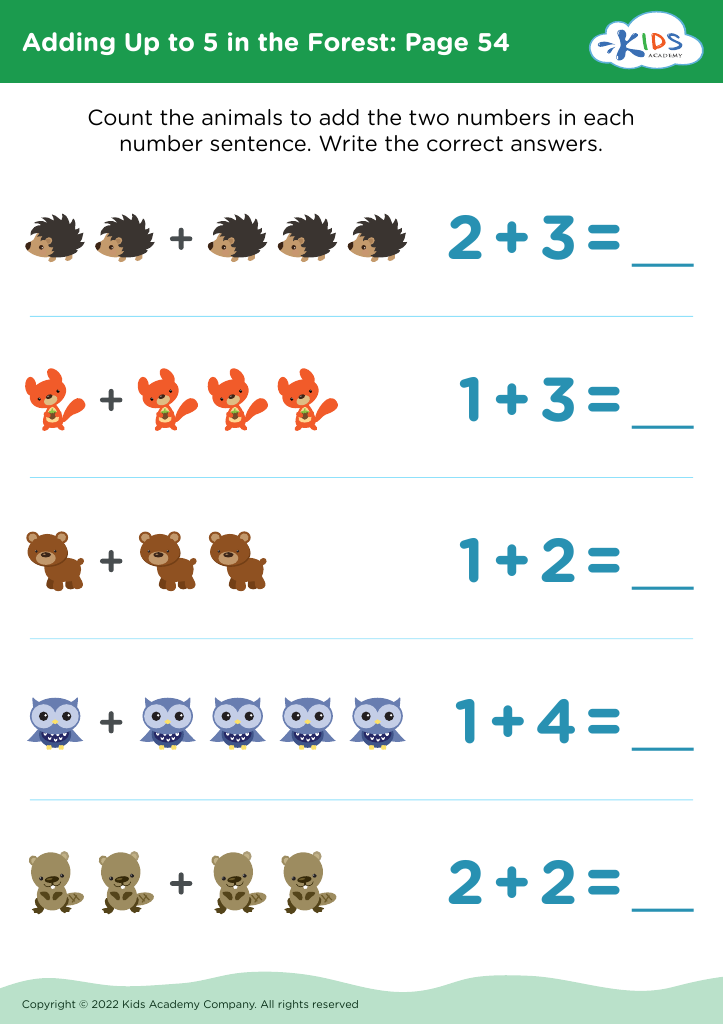
Adding Up to 5 in the Forest: Page 54
Worksheet
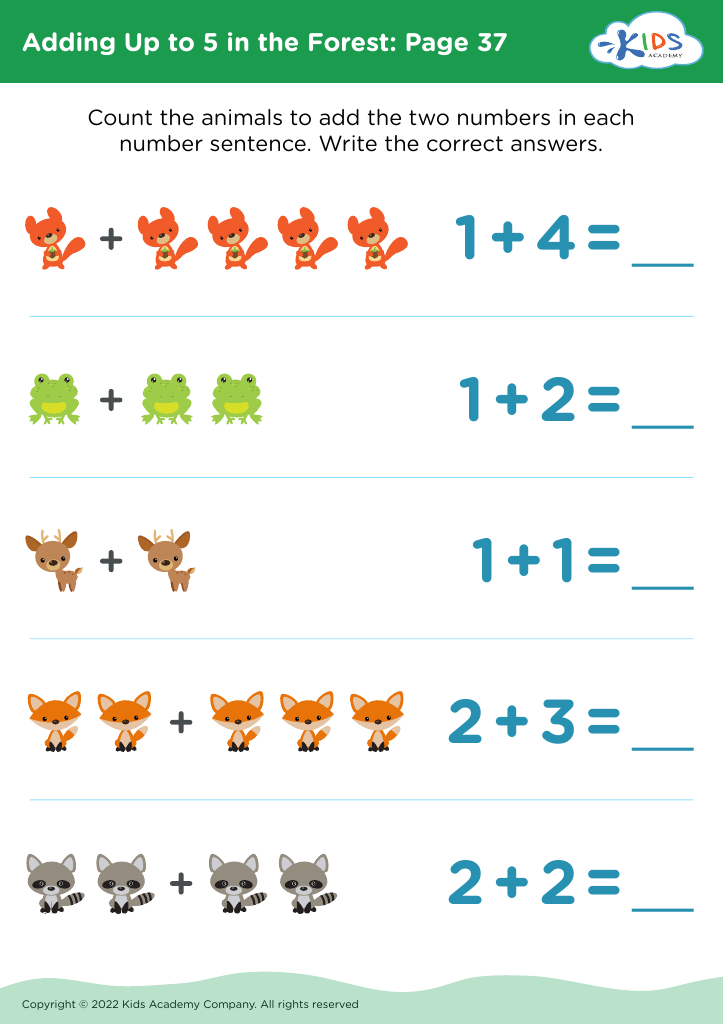
Adding Up to 5 in the Forest: Page 37
Worksheet
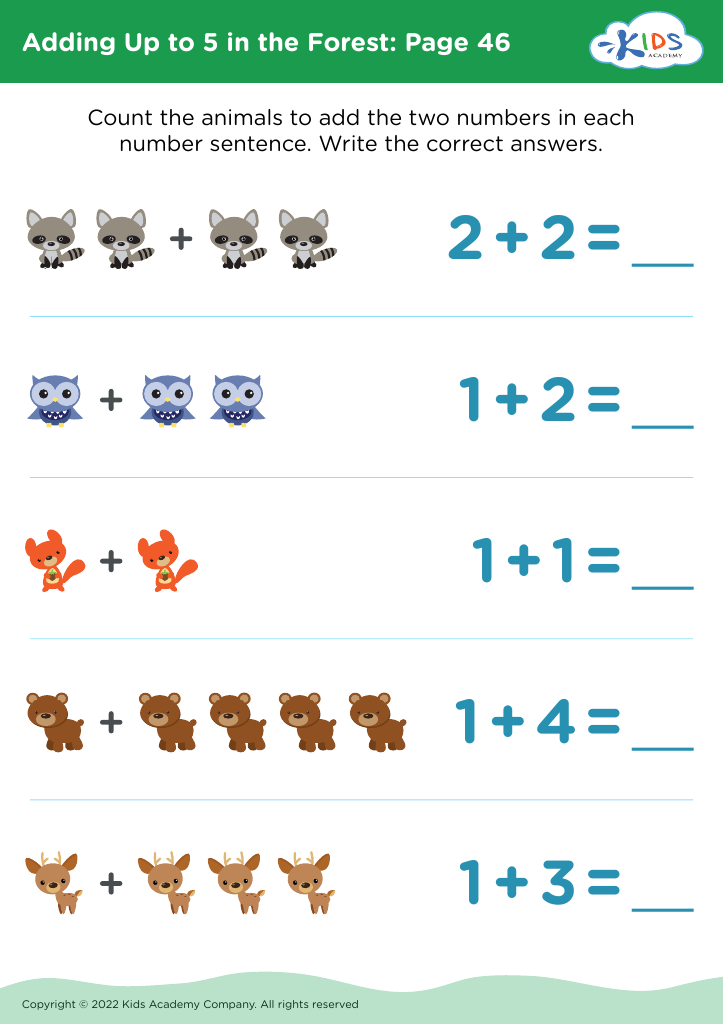
Adding Up to 5 in the Forest: Page 46
Worksheet
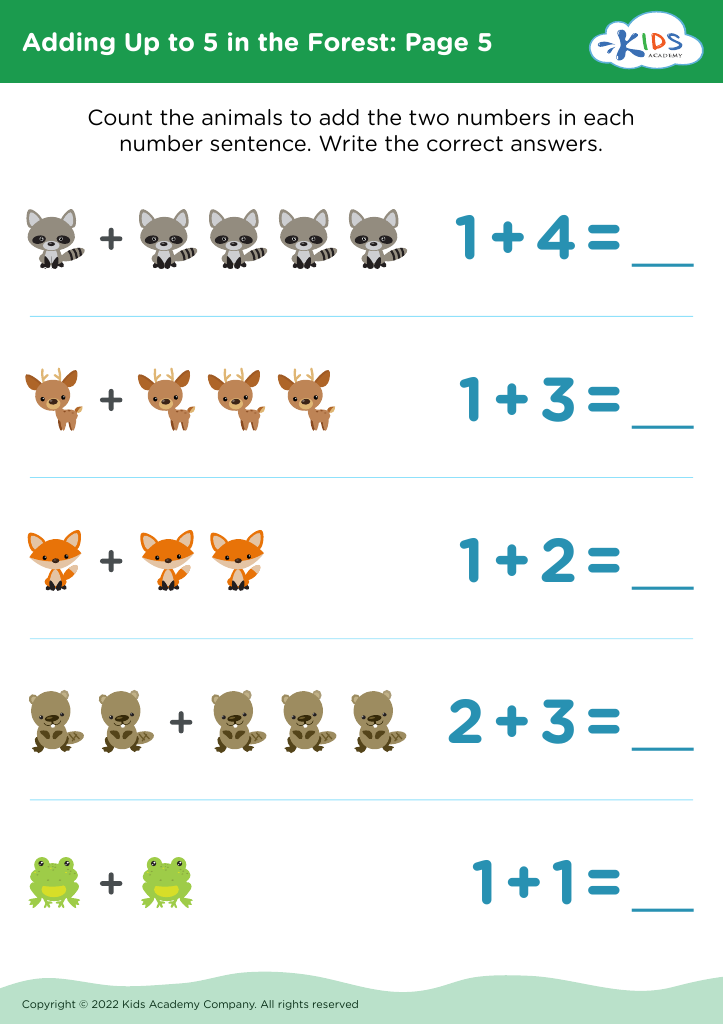
Adding Up to 5 in the Forest: Page 5
Worksheet
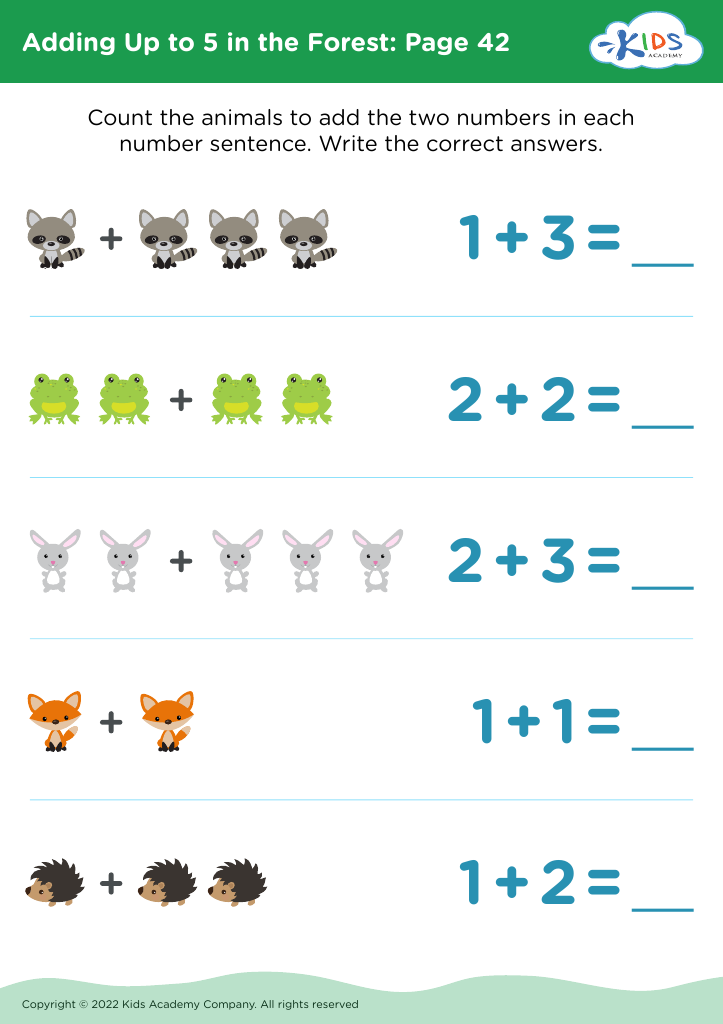
Adding Up to 5 in the Forest: Page 42
Worksheet
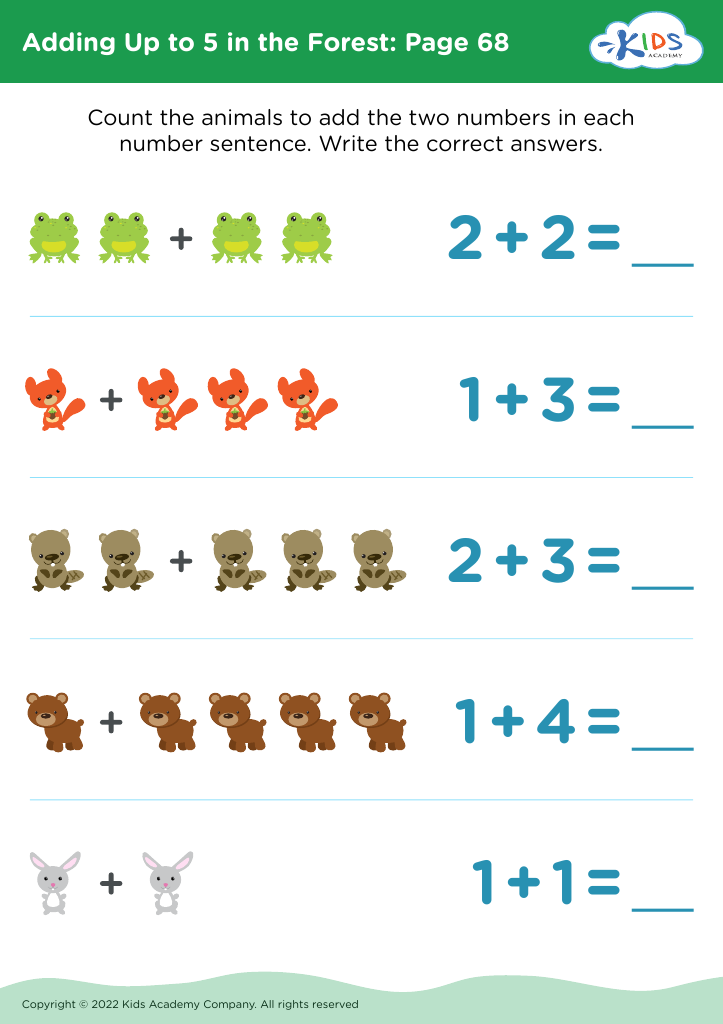
Adding Up to 5 in the Forest: Page 68
Worksheet
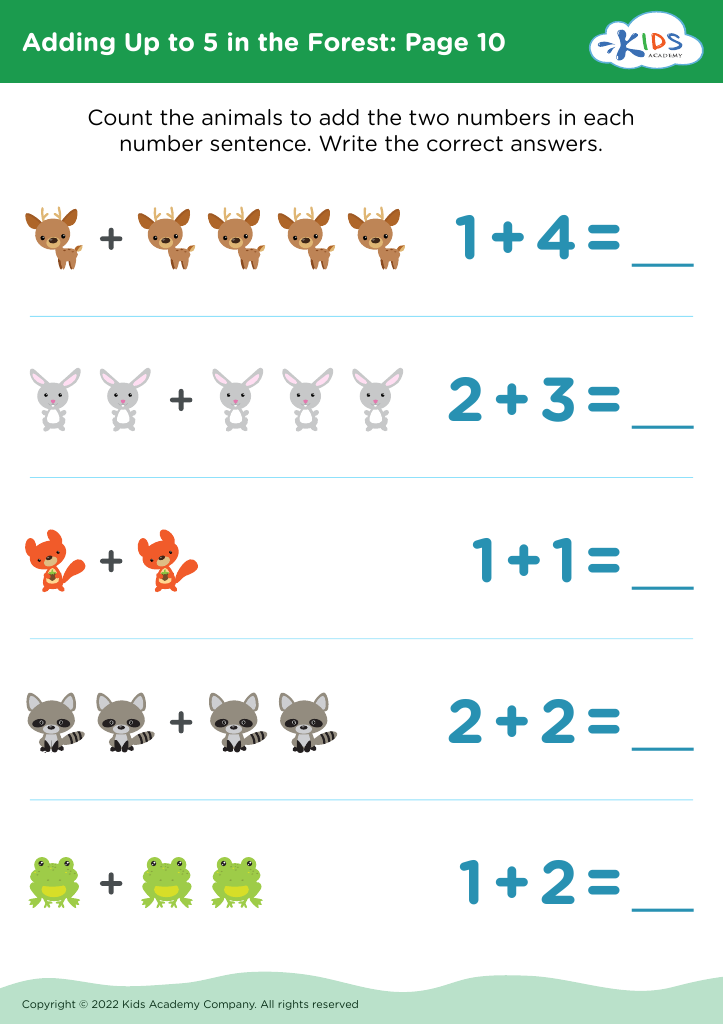
Adding Up to 5 in the Forest: Page 10
Worksheet
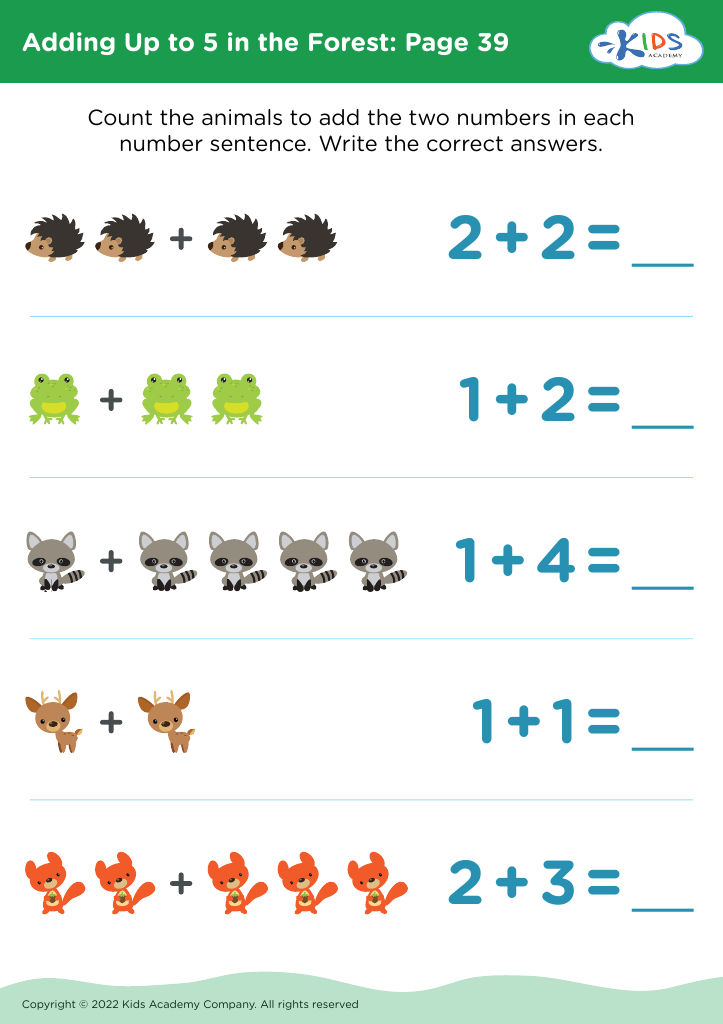
Adding Up to 5 in the Forest: Page 39
Worksheet
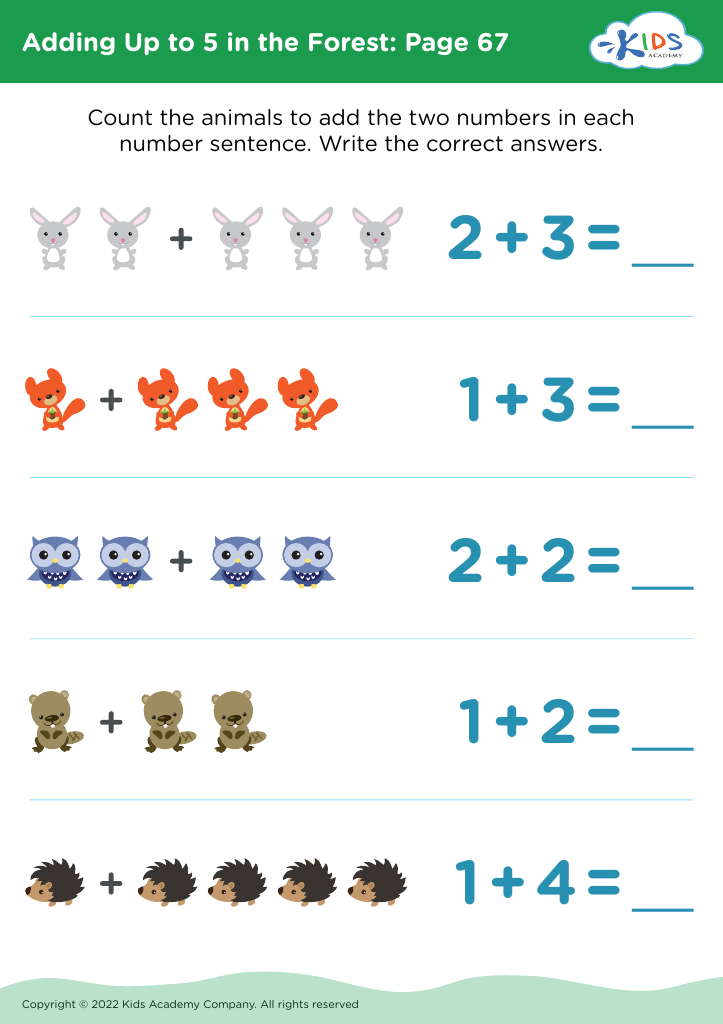
Adding Up to 5 in the Forest: Page 67
Worksheet
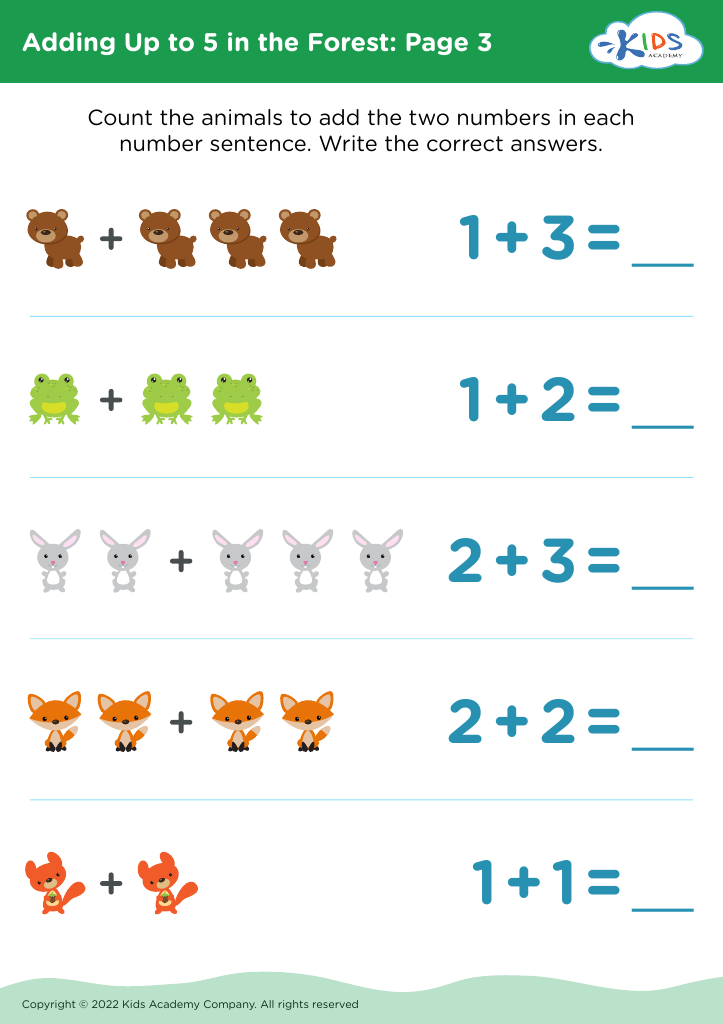
Adding Up to 5 in the Forest: Page 3
Worksheet
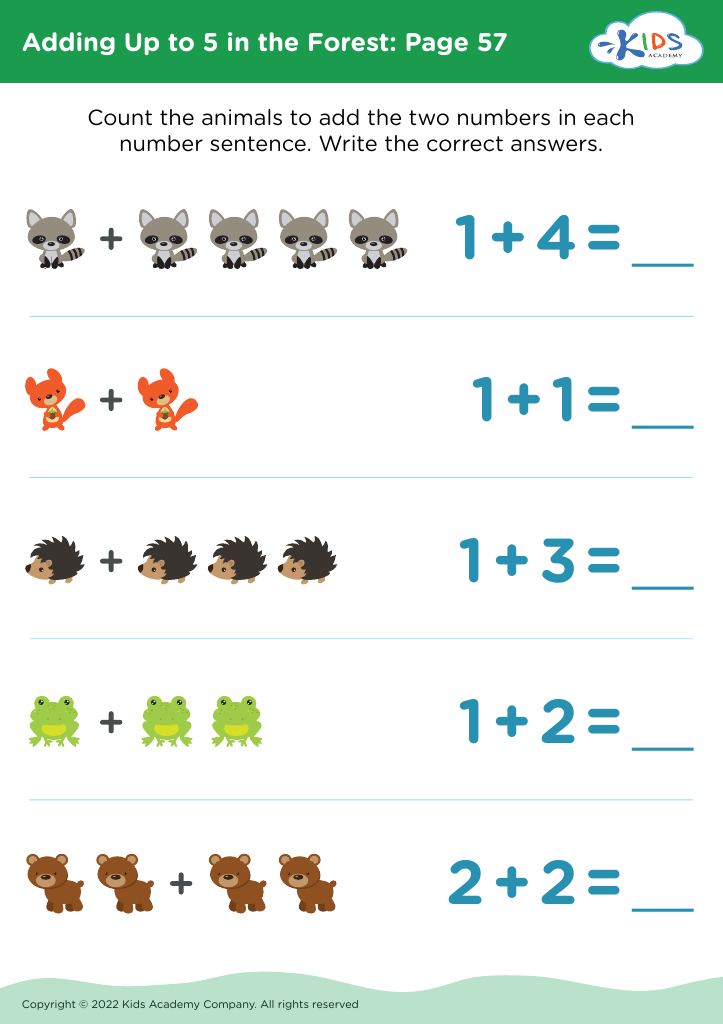
Adding Up to 5 in the Forest: Page 57
Worksheet
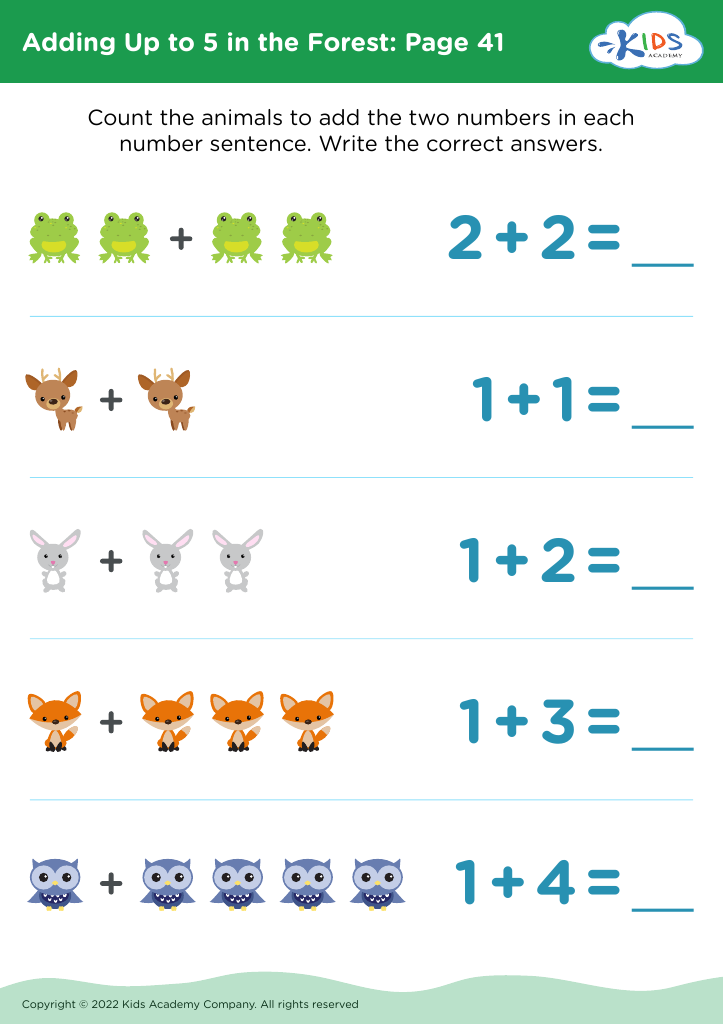
Adding Up to 5 in the Forest: Page 41
Worksheet


... 2 3

Number recognition is a foundational skill essential for early mathematics development, especially for children aged 3-5. Understanding numbers not only supports mathematical learning but also enhances critical thinking, problem-solving, and reasoning abilities. Engaging children in activities like "Adding in the Forest" integrates nature with learning, fostering curiosity and exploration.

For parents and teachers, supporting number recognition through playful methods, such as exploring nature, offers numerous benefits. First, it allows children to grasp abstract concepts through concrete experiences. By counting items in the forest, such as leaves or animals, they connect numbers to the world around them. This contextual learning helps solidify their understanding.

Additionally, activities in nature promote physical movement, which is crucial for young children’s development. Encouraging outdoor exploration can improve fine and gross motor skills while keeping children engaged.

Moreover, integrating number recognition into outdoor play establishes a positive attitude towards math, making it an enjoyable subject rather than a cumbersome task. By nurturing these foundational skills in a fun, immersive way, parents and teachers equip children not only with numerical understanding but also with a love for learning that will benefit them throughout their educational journey.