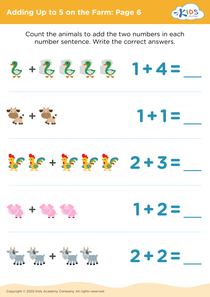
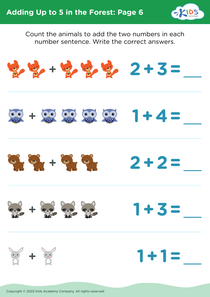
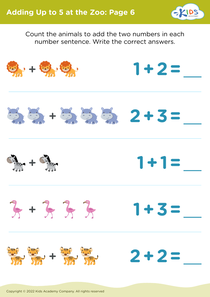
Basic Math Skills Adding in the Sea Worksheets for Ages 3-5
4 filtered results
-
From - To
Dive into learning with our "Basic Math Skills: Adding in the Sea Worksheets" designed for ages 3-5! These engaging worksheets make math fun by introducing young learners to foundational addition concepts through colorful sea-themed illustrations. Kids will enjoy counting and adding adorable underwater creatures while developing essential early math skills. This interactive resource encourages critical thinking and enhances number recognition in a playful, creative way. Perfect for both home and classroom settings, these worksheets cultivate a love for learning while building confidence in basic math abilities. Navigate the ocean of fun and education today with our aquatic addition activities!
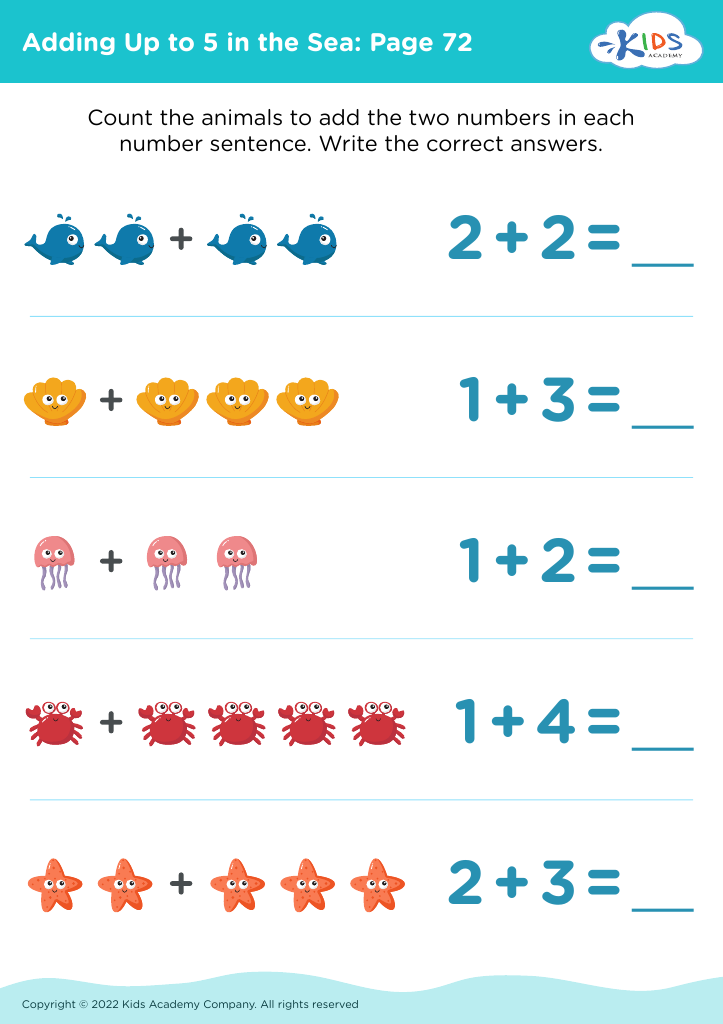
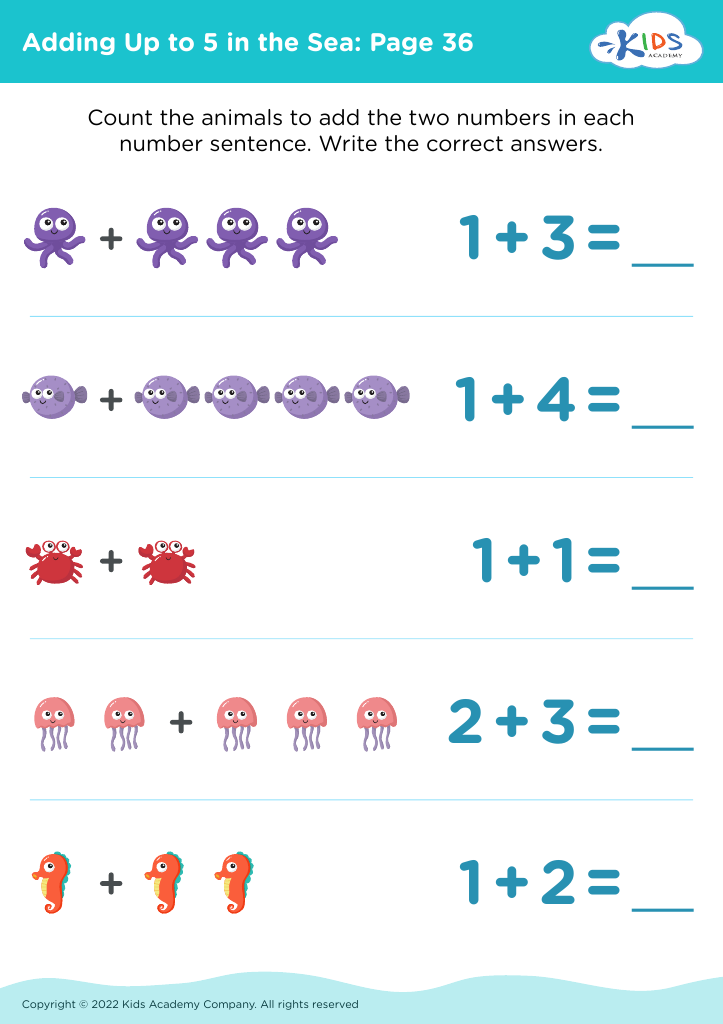
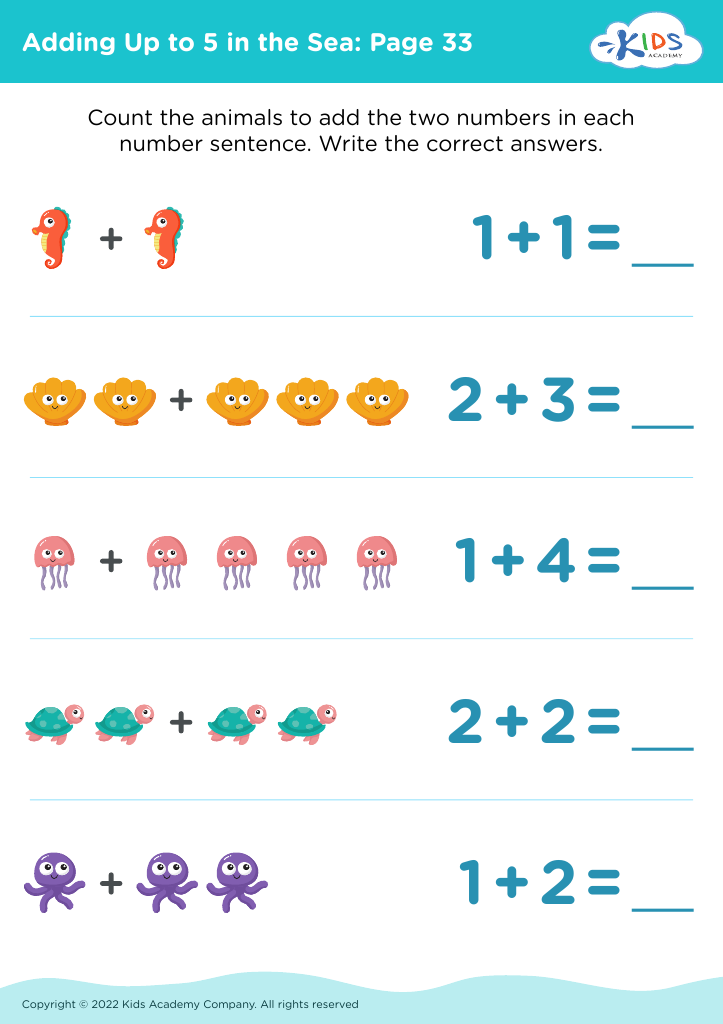
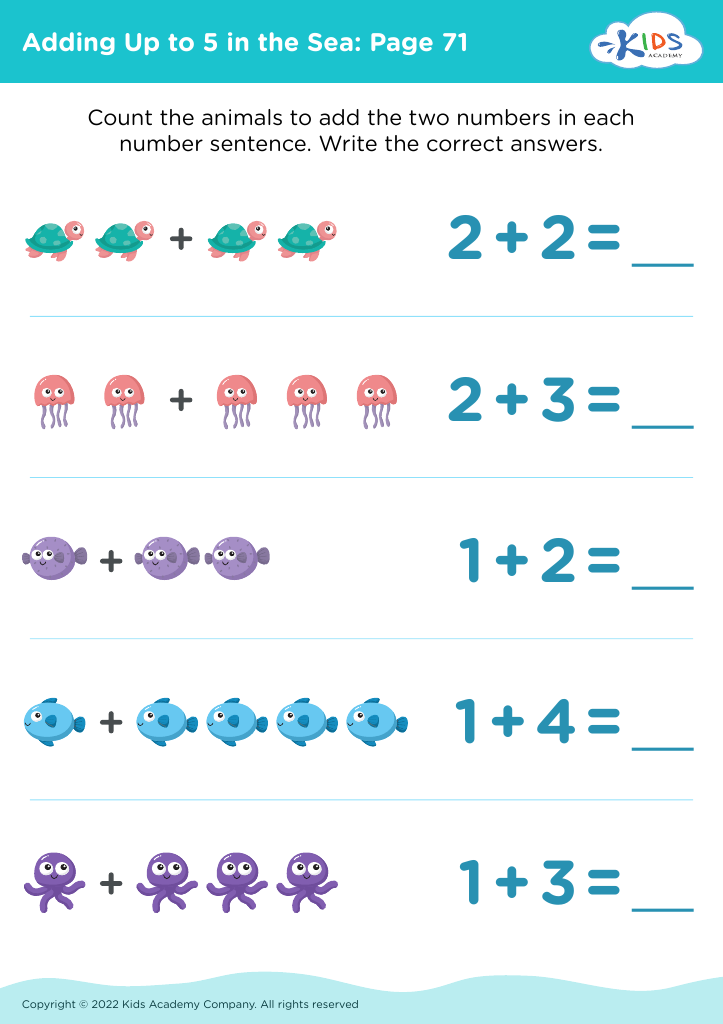



Parents and teachers should prioritize basic math skills, such as addition, for children ages 3-5 because these foundational skills support early cognitive development and future academic success. Engaging young learners with hands-on activities, like "Adding in the Sea," merges play with learning. This approach not only makes math enjoyable but also contextualizes learning, showing children how to apply math in real-life scenarios.
Basic math skills foster critical thinking, problem-solving abilities, and analytical reasoning. Understanding the concept of addition enhances a child's ability to recognize patterns, comprehend relationships, and manipulate numbers. These skills are pivotal as they transition to more complex math concepts in later grades.
Additionally, early math proficiency has been linked to improved literacy skills, as both subjects share similar cognitive processes. By honing basic addition skills during these formative years, parents and teachers set a precedent for positive attitude and resilience in facing challenges in academics.
Moreover, incorporating themes like "Adding in the Sea" makes math relatable and exciting, which nurtures a lifelong love for learning. Ultimately, fostering strong basic math skills early on equips children with competencies crucial for navigating and succeeding in their educational journeys and everyday life.