Cognitive Development Adding in the Sea Worksheets for Ages 3-5 - Page 2
28 filtered results
-
From - To
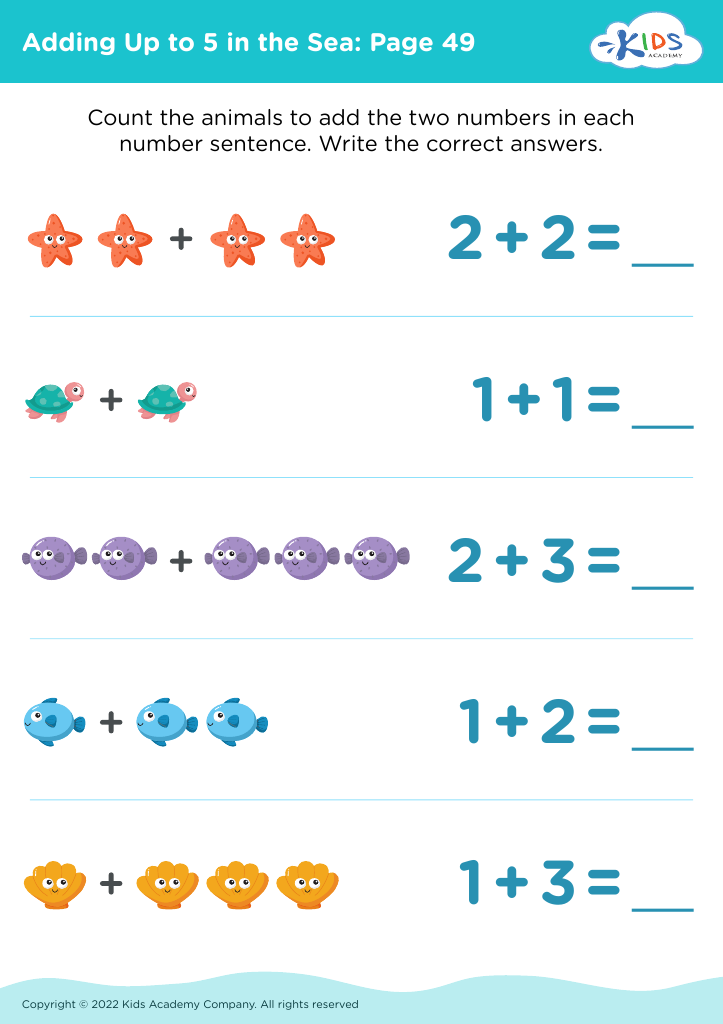
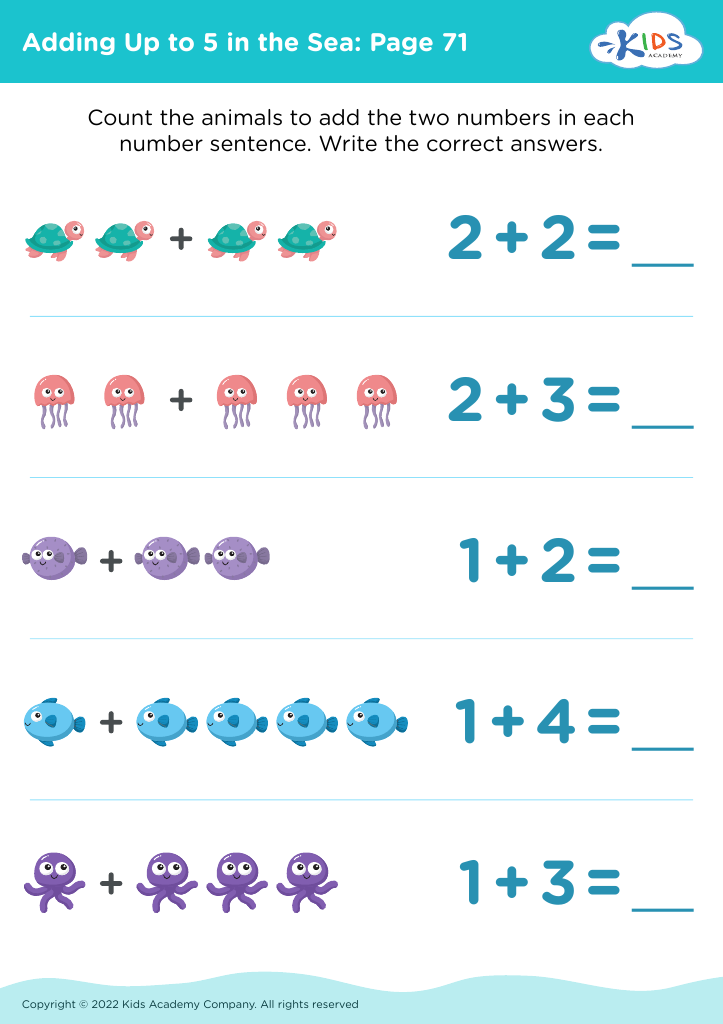
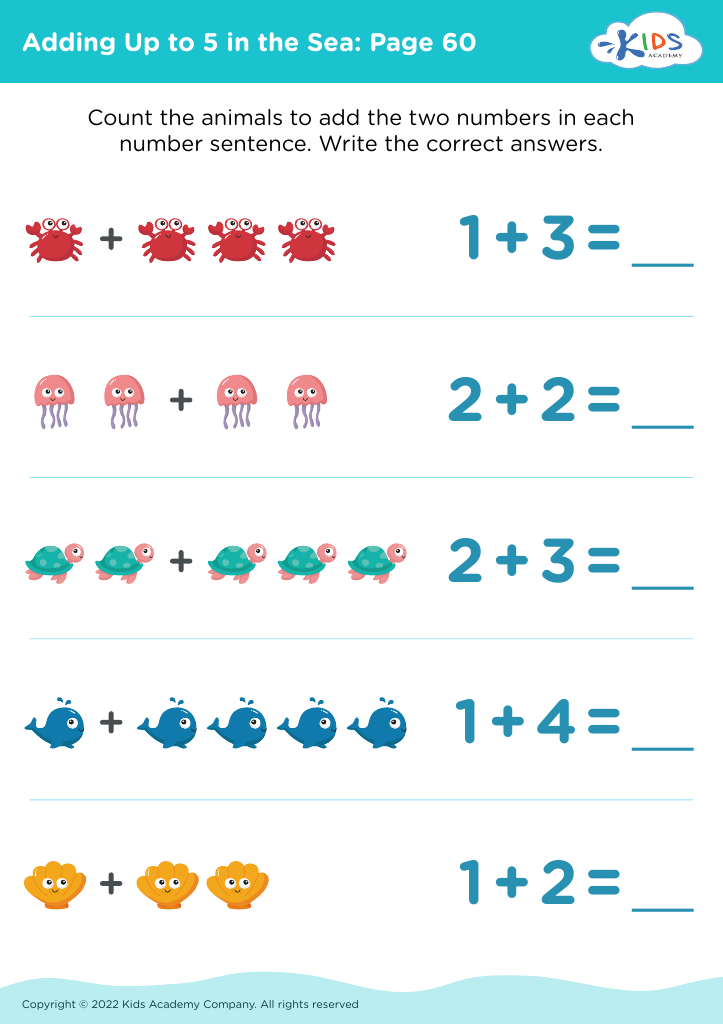
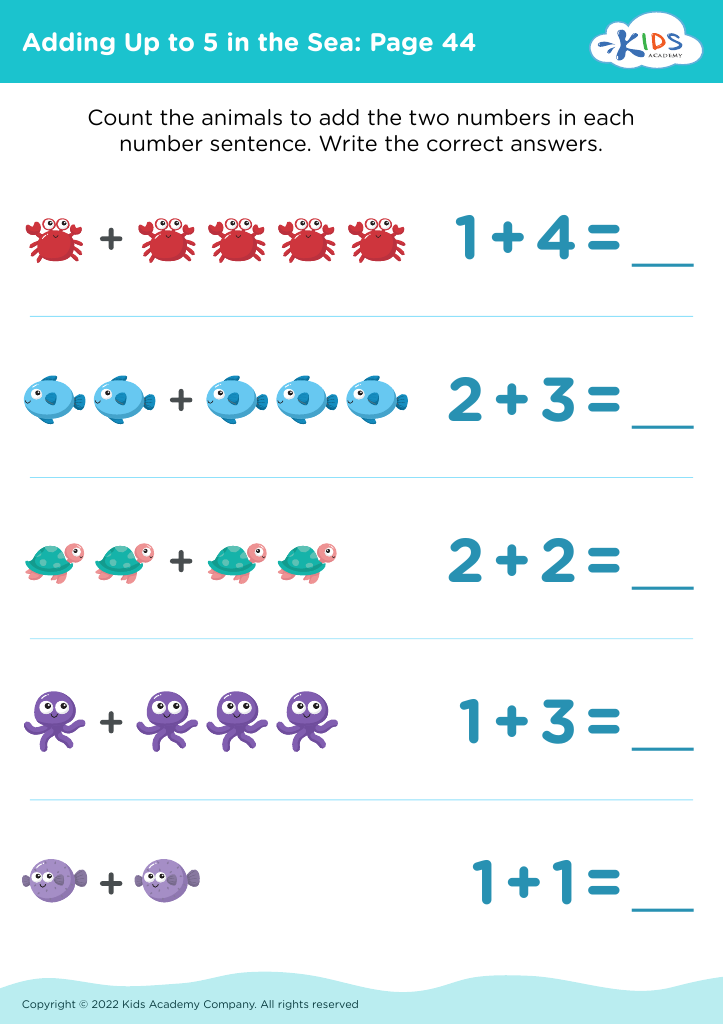



Cognitive development during the early years, particularly from ages 3-5, lays the foundation for a child's lifelong learning and success. Parents and teachers should prioritize this period carefully because it is an essential phase where children begin to develop critical thinking, language, problem-solving abilities, and understanding of the world around them. Engaging activities like Cognitive Development Adding in the Sea enhance these crucial cognitive skills in a fun, imaginative way, making learning enjoyable and effective.
By integrating simple arithmetic and adding activities focused on an engaging ocean theme, such initiatives can improve numerical comprehension, attention, and memory skills. For instance, counting seashells or adding starfish in pictures not only makes math relatable but also strengthens verbal expression and listening skills as children describe their actions and findings.
Moreover, during these formative years, positive reinforcement through interactive and thematic educational play helps build confidence and fosters a love for learning. This attention to cognitive development ensures children are better prepared for the structured learning environments they will encounter in school, leading to improved academic performance and a greater ability to navigate complex life skills later on. Therefore, parents and teachers who focus on early cognitive development are effectively investing in the child's future intellectual, emotional, and social well-being.