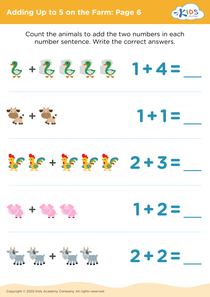
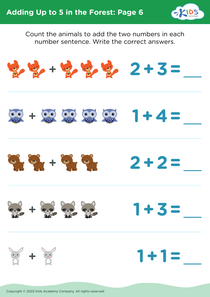
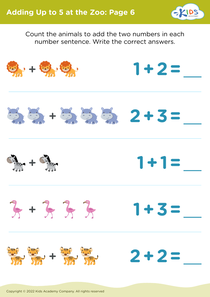
Fine motor skills (writing numbers) Adding in the Sea Worksheets for Ages 3-5
4 filtered results
-
From - To
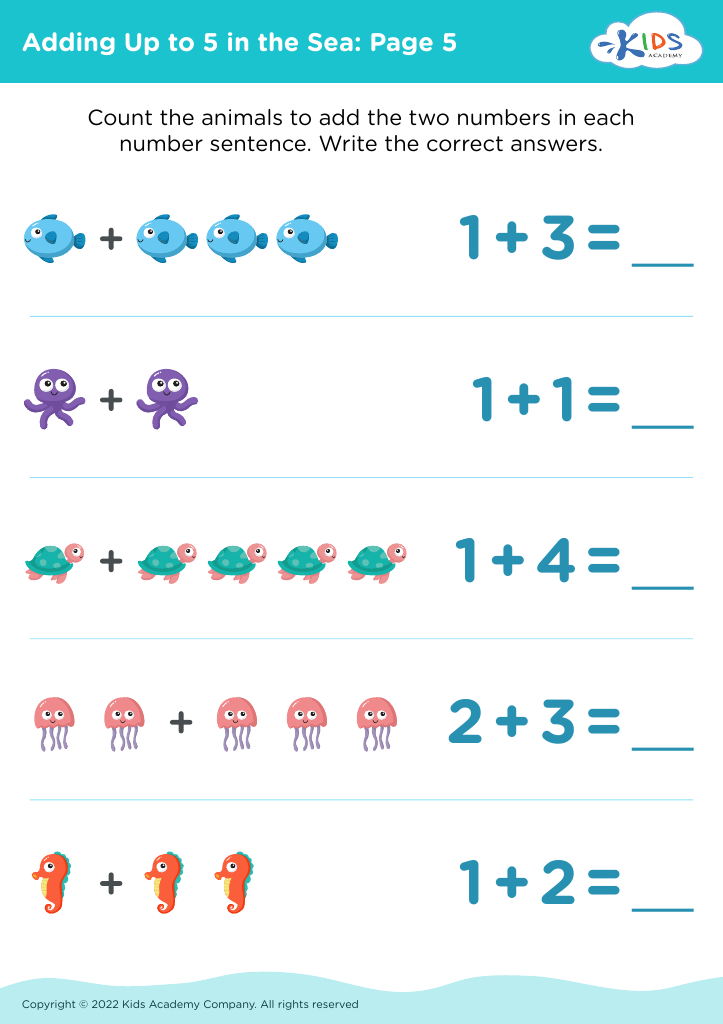
Enhance your child's fine motor skills and number writing abilities with our "Adding in the Sea" worksheets designed for ages 3-5. These engaging printables feature fun sea-themed activities that combine early math practice with fine motor development. Each worksheet encourages young learners to trace and write numbers while solving simple addition problems, helping to reinforce both numerical literacy and hand-eye coordination. Perfect for preschoolers and kindergarteners, these colorful and interactive sheets make learning enjoyable and effective. Download now from Kids Academy to give your child a head start in math readiness and fine motor control!
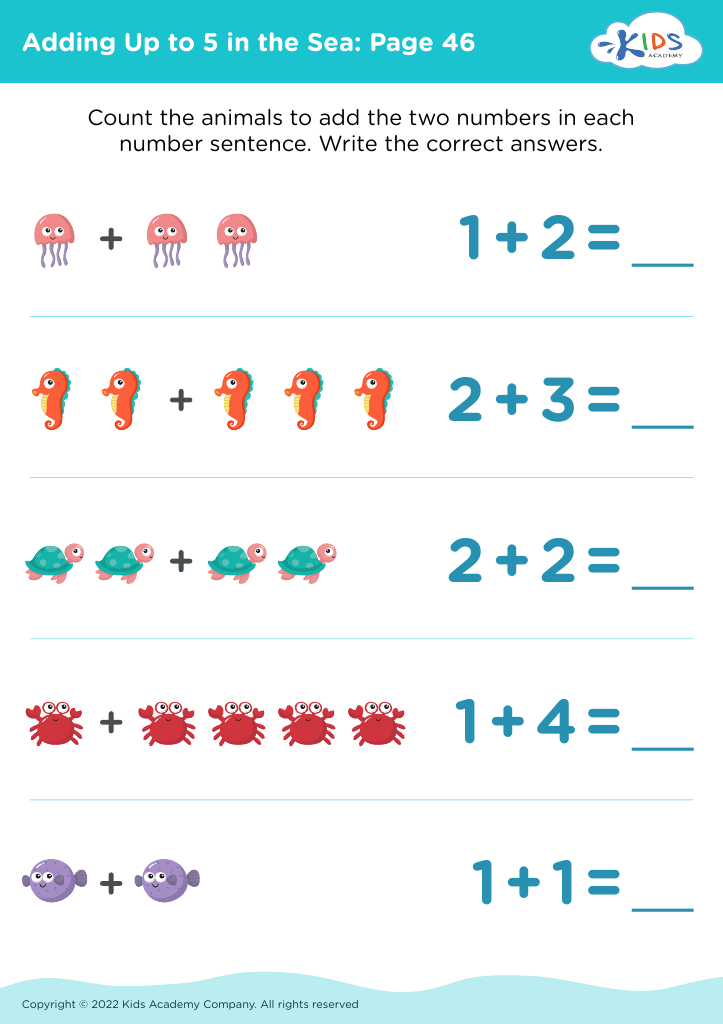
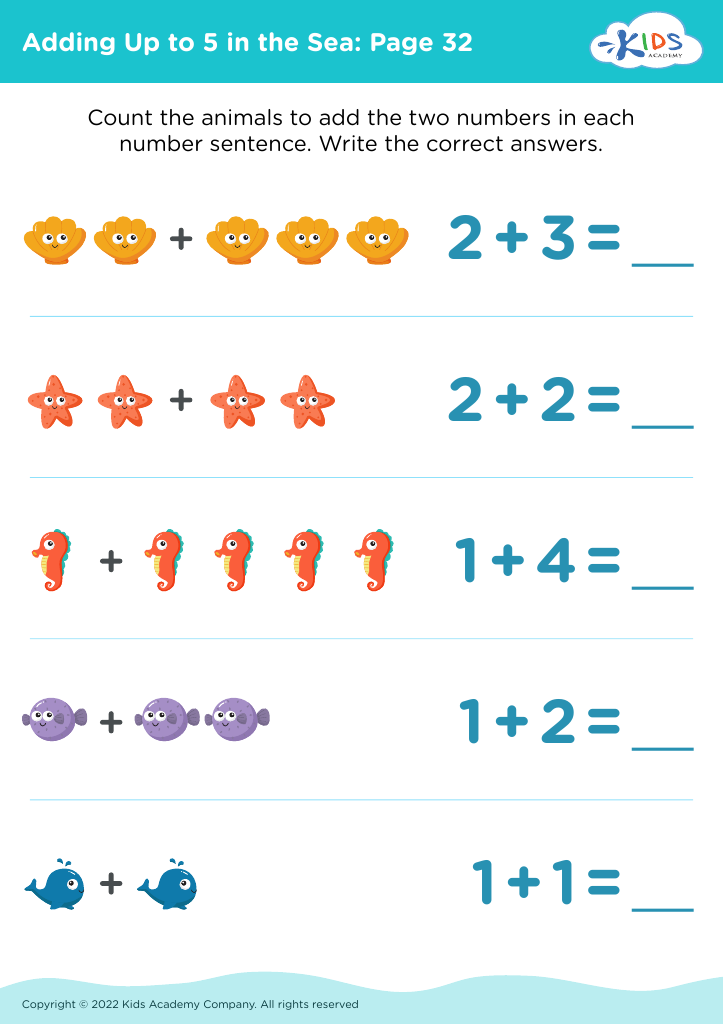
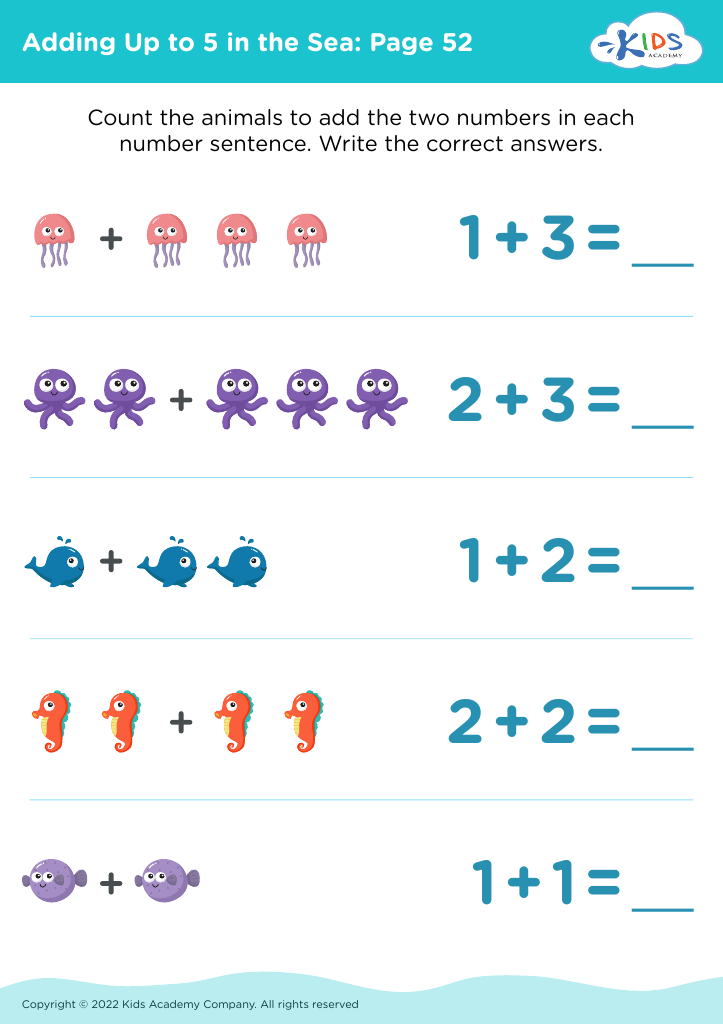



Parents and teachers should pay close attention to fine motor skills, such as writing numbers because these skills are foundational for early childhood development and later academic success. For children aged 3-5, developing fine motor skills enhances their ability to perform everyday tasks that require precise movements, such as drawing, cutting, and, importantly, writing numbers and letters.
Introducing activities like “Adding in the Sea” engages children in a fun, interactive way, providing them with a meaningful context to practice these skills. As they manipulate small objects, count sea creatures, and write corresponding numbers, they develop hand-eye coordination, concentration, and the dexterity needed for handwriting. This preparation not only supports academic growth but also fosters self-confidence as children see their own progress.
Additionally, developing fine motor skills at an early age lays the groundwork for future success in tasks across subjects—math, especially. Writing numbers correctly is crucial for understanding and solving math problems later on. When parents and teachers encourage activities that target these skills, they ensure that children build a solid foundation for both their academic and daily lives, promoting overall cognitive development and a positive attitude toward learning.