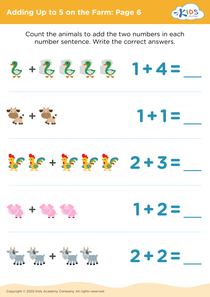
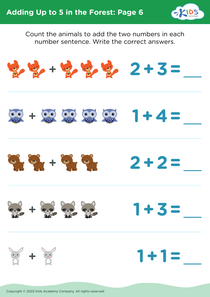
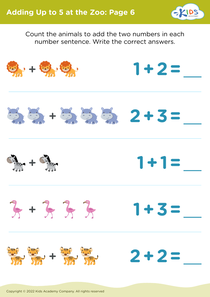
Hand-eye Coordination Adding in the Sea Worksheets for Ages 3-5
4 filtered results
-
From - To
Boost your child’s hand-eye coordination with our delightful "Adding in the Sea Worksheets" designed for ages 3-5. These engaging worksheets transform math practice into an underwater adventure, captivating young learners with vibrant sea creatures while enhancing essential developmental skills. Your little one will enjoy counting, adding, and drawing, all while refining their coordination and fine motor abilities. Perfect for early learners, our worksheets provide a fun, interactive way to introduce foundational math concepts, ensuring a smooth transition into more complex problem-solving skills. Dive into learning with "Adding in the Sea" and watch your child’s confidence and capability soar!
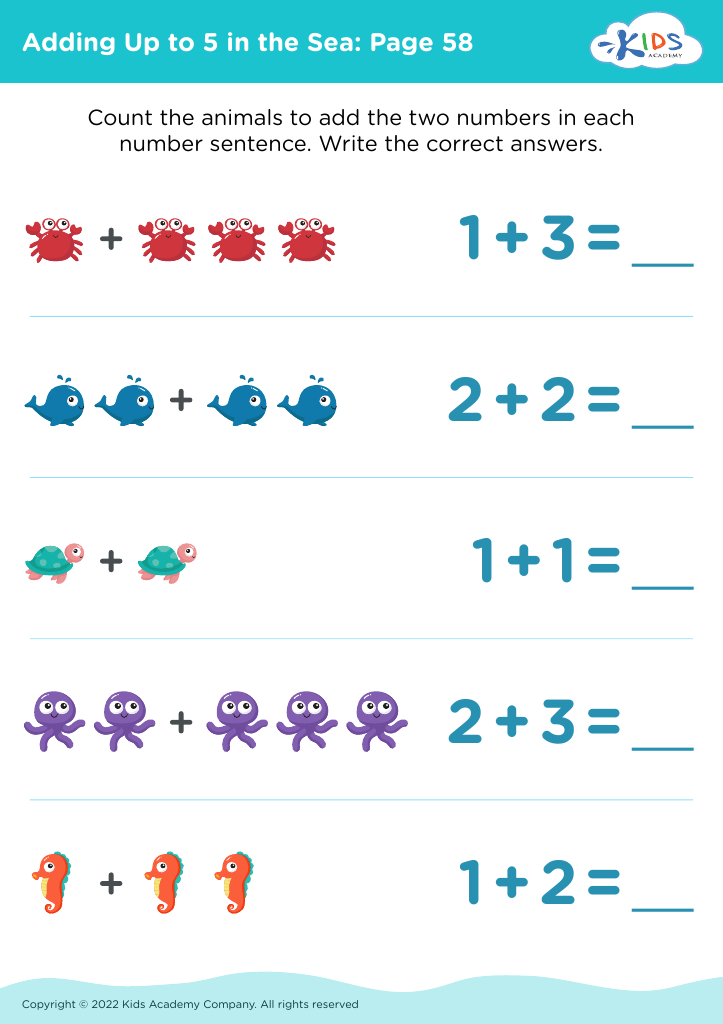
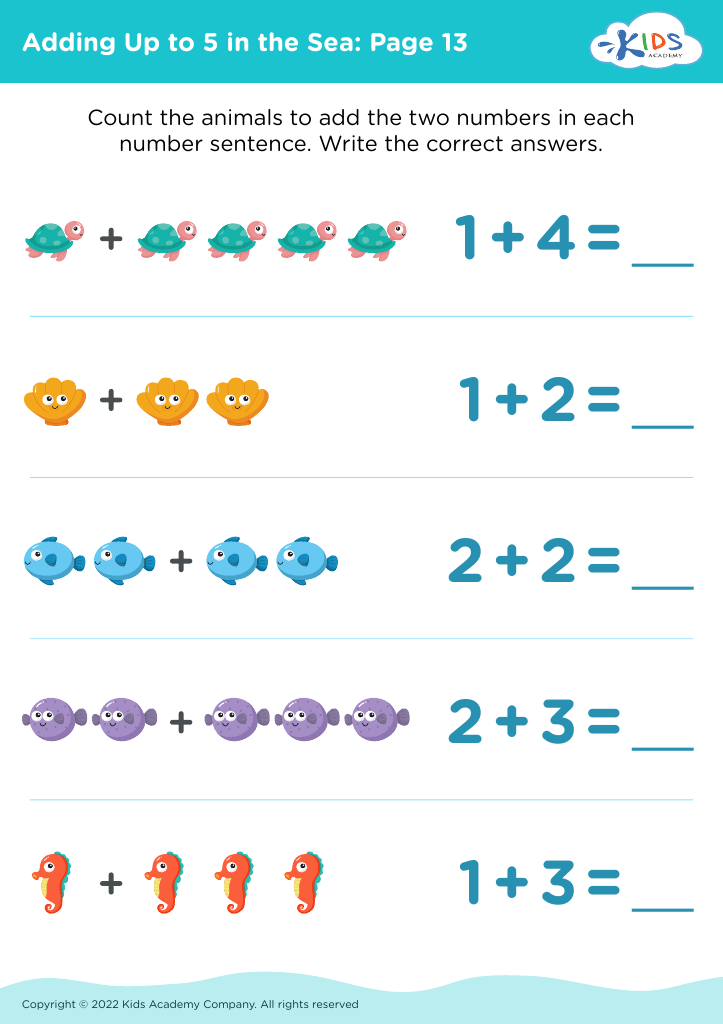
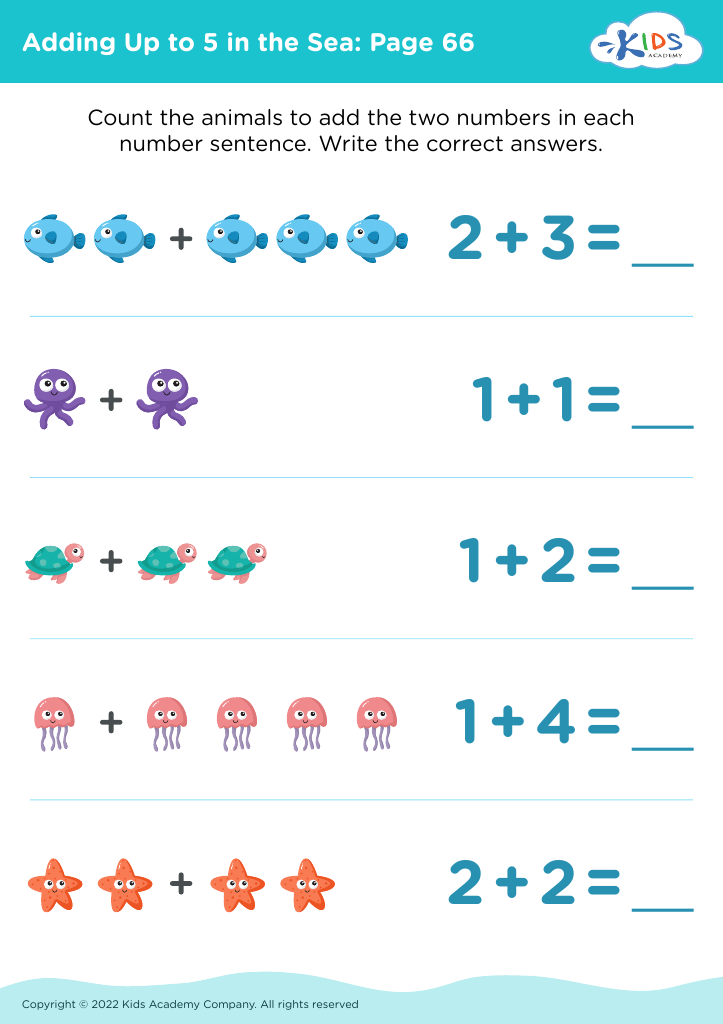
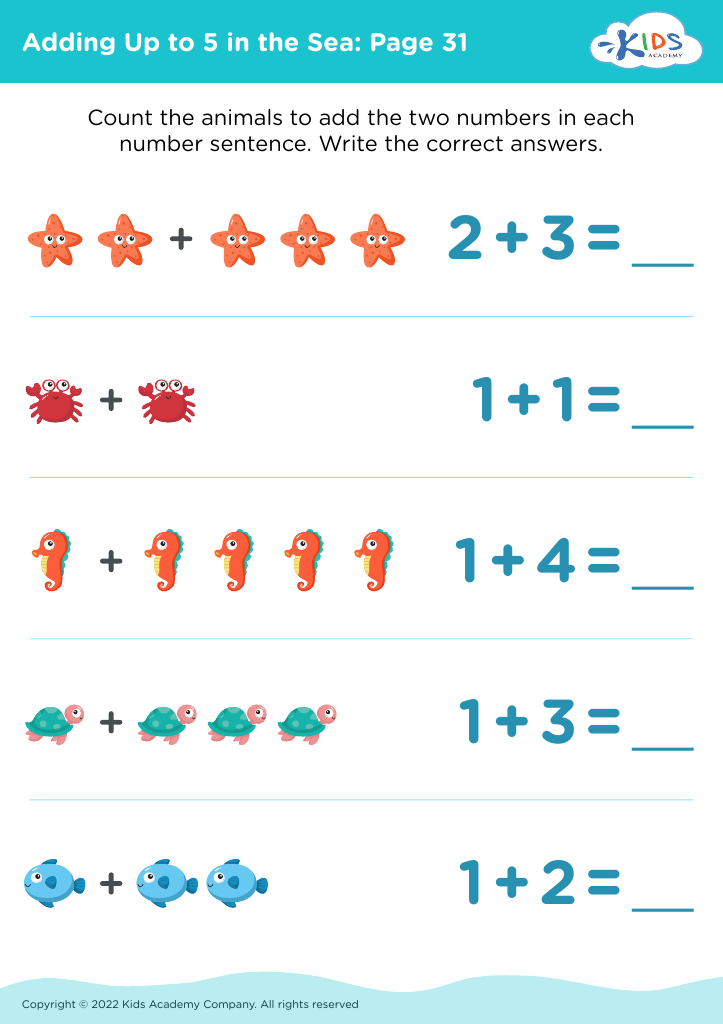



Hand-eye coordination is an essential developmental skill for children ages 3-5, reflecting the ability to use their eyes to direct attention and hands to execute a task. Engaging in activities like the "Hand-eye Coordination Adding in the Sea" game is crucial during early childhood due to its multifaceted impact on growth.
Firstly, hand-eye coordination enhances fine motor skills, pivotal for tasks such as writing, tying shoelaces, and using utensils. By mastering these skills early, children become more self-sufficient and ready for school-related tasks.
Secondly, it's vital for cognitive development. Activities requiring coordination boost problem-solving abilities and concentration. In the context of a themed activity like "Adding in the Sea," children also learn basic math concepts in an engaging and memorable way, strengthening numerical understanding through play.
Thirdly, social and emotional benefits arise. Success in these games builds confidence and fosters a sense of achievement. Cooperative play and sharing of learning experiences with their peers can enhance social skills and emotional maturity.
Finally, engaging in such activities incorporates educational themes that can spark interests in subjects like marine biology, promoting a love for learning. For parents and teachers, prioritizing hand-eye coordination exercises ensures children develop a well-rounded, healthy foundation critical for future learning and everyday tasks.