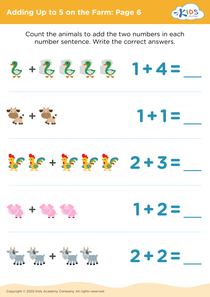
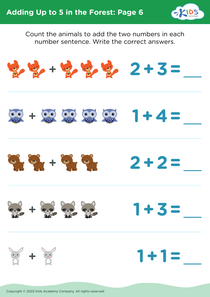
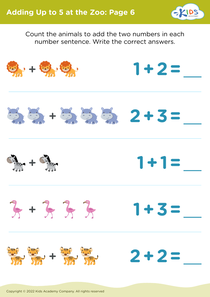
Underwater animal identification Adding in the Sea Worksheets for Ages 3-5
3 filtered results
-
From - To
Dive into an exciting underwater adventure with our "Underwater Animal Identification Adding in the Sea Worksheets" for children ages 3-5! These engaging worksheets combine fun and education, helping young learners explore marine life while practicing basic addition skills. Each worksheet introduces colorful illustrations of various underwater animals, enhancing vocabulary and recognition. Perfect for preschool and kindergarten, these activities encourage critical thinking and problem-solving in a playful context. Inspire your child's curiosity about the ocean while building early math skills with these delightful resources. Bring the magic of the sea into your learning environment today!
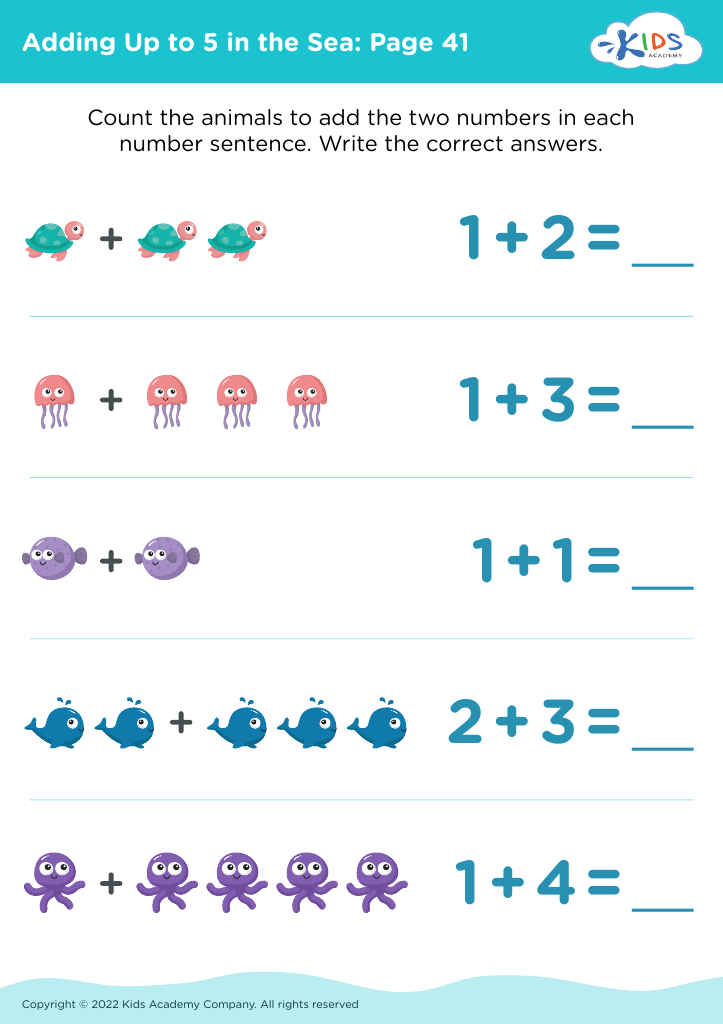
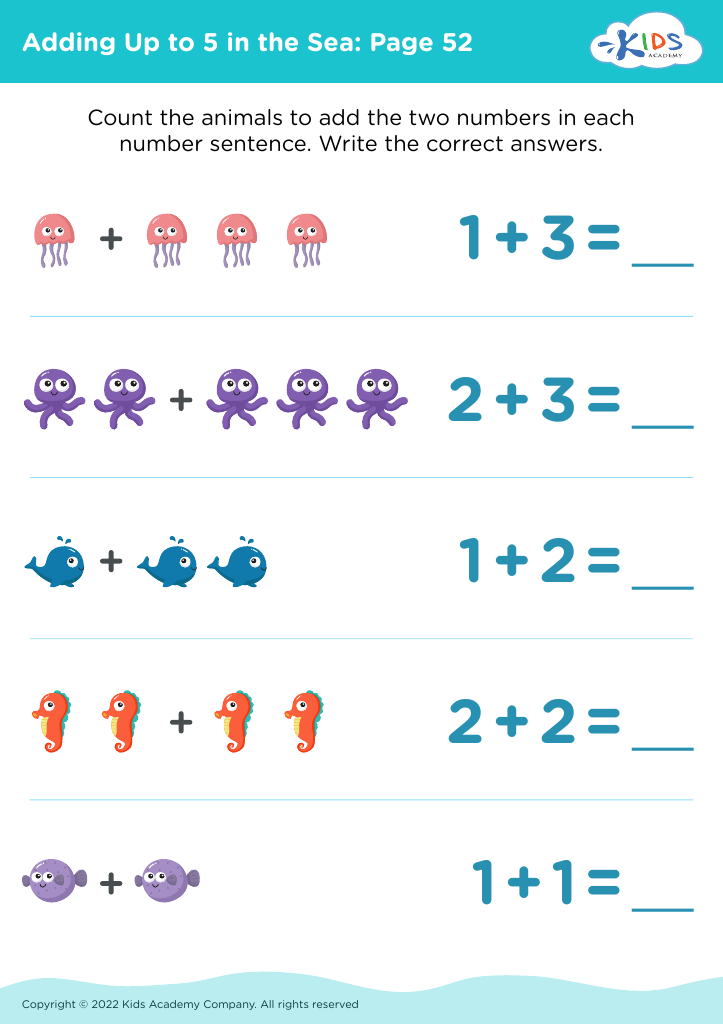
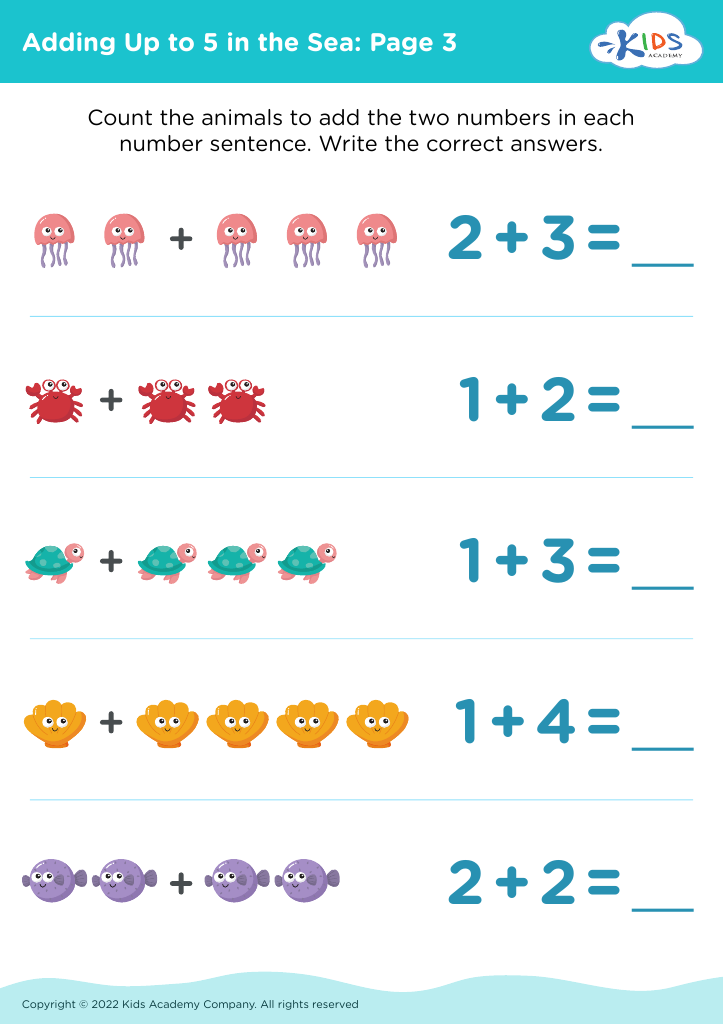



Teaching young children about underwater animal identification is crucial for several reasons. First, it fosters a sense of curiosity about the natural world. For ages 3-5, engaging children with vibrant images and interactive activities can spark their interest in marine life, making learning fun and memorable.
Second, understanding underwater animals promotes environmental awareness. Children at this age are impressionable and forming their values. By learning about different species — from colorful fish to majestic whales — they begin to appreciate biodiversity and the importance of ocean ecosystems, encouraging them to grow into responsible caretakers of our planet.
Additionally, this learning experience enhances cognitive development. Identifying various underwater animals helps develop language skills, boosts memory, and promotes critical thinking as children categorize and associate name, features, and habitats with each animal. It also opens a gateway to discussions about colors, shapes, and sizes, enriching their educational journey.
Ultimately, integrating underwater animal identification in early education nurtures inquisitive minds, builds a foundation for environmental stewardship, and supports key developmental milestones—benefitting both children and the broader community as they interact with and learn to protect nature.