Visual perception Adding in the Sea Worksheets for Ages 3-5
3 filtered results
-
From - To
Enhance your child's early math skills and visual perception with our 'Adding in the Sea Worksheets' designed specifically for ages 3-5. These engaging, ocean-themed worksheets make learning addition exciting as children count and add sea creatures while developing crucial visual perception and fine motor skills. Each worksheet combines vibrant illustrations with simple math problems, fostering a love for numbers and improving attention to detail. Perfect for preschoolers, these worksheets provide a fun and educational way to build foundational math abilities and observational skills. Dive into our interactive sea adventure and watch your child's confidence and competence in math grow!
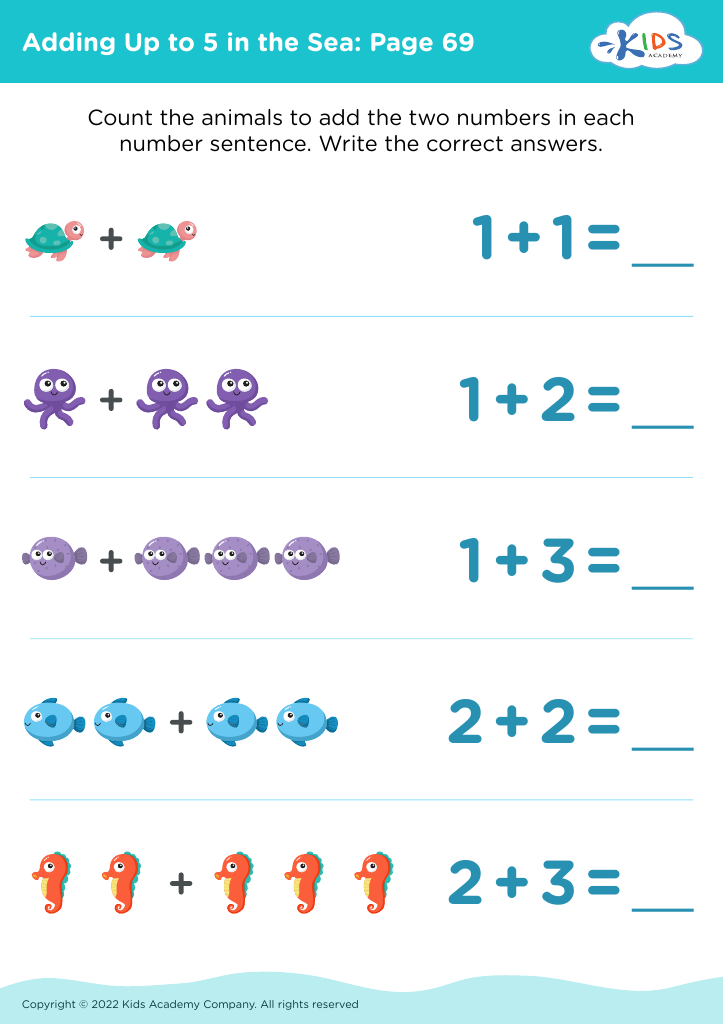
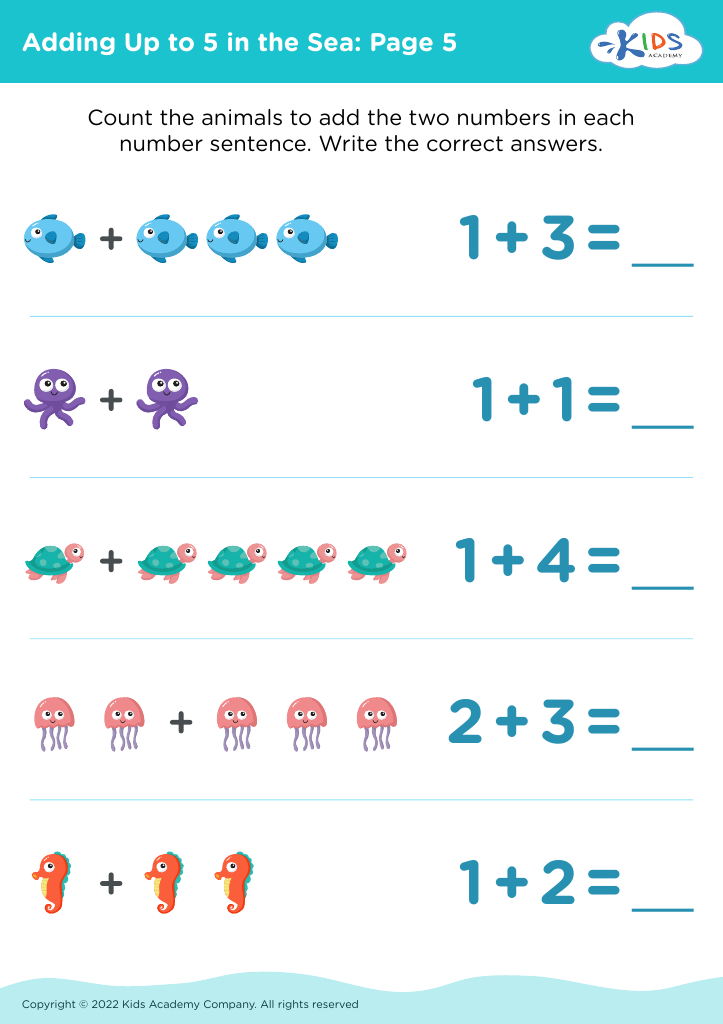
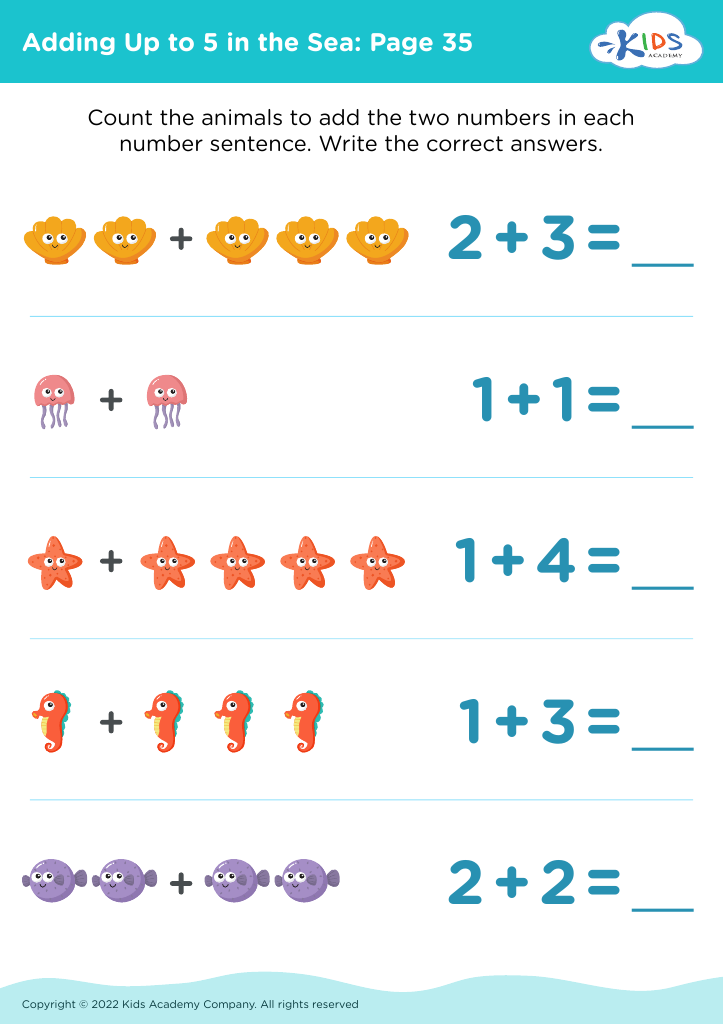



Visual perception skills are crucial during early childhood as they underpin numerous developmental milestones and learning processes. Engaging children aged 3-5 with activities like "Adding in the Sea," which uses visual stimuli in a fun, educational context, provides significant benefits. Visual perception helps children interpret and make sense of what they see, influencing their ability to read, write, and solve problems.
"Adding in the Sea" can enhance a child's ability to distinguish shapes, sizes, and patterns, important for recognizing letters and numbers later on. By interacting with visually rich environments, children develop hand-eye coordination and spatial awareness—key for everyday tasks like dressing or playing.
Moreover, early exposure to visual perception activities supports cognitive growth. It fosters memory retention and attention to detail, enabling children to process information more effectively. This foundation can ease transitions into formal education settings, making children more adept learners.
Additionally, such engaging and playful methods stimulate creativity and curiosity, essential traits for lifelong learning. Parents and teachers should prioritize visual perception activities to equip children with the tools needed for academic success and effective communication. Investing in early visual perception skills not only boosts intellectual abilities but also promotes confidence and enjoyment in learning.