Animal recognition Adding on the Farm Worksheets for Ages 3-5 - Page 2
31 filtered results
-
From - To
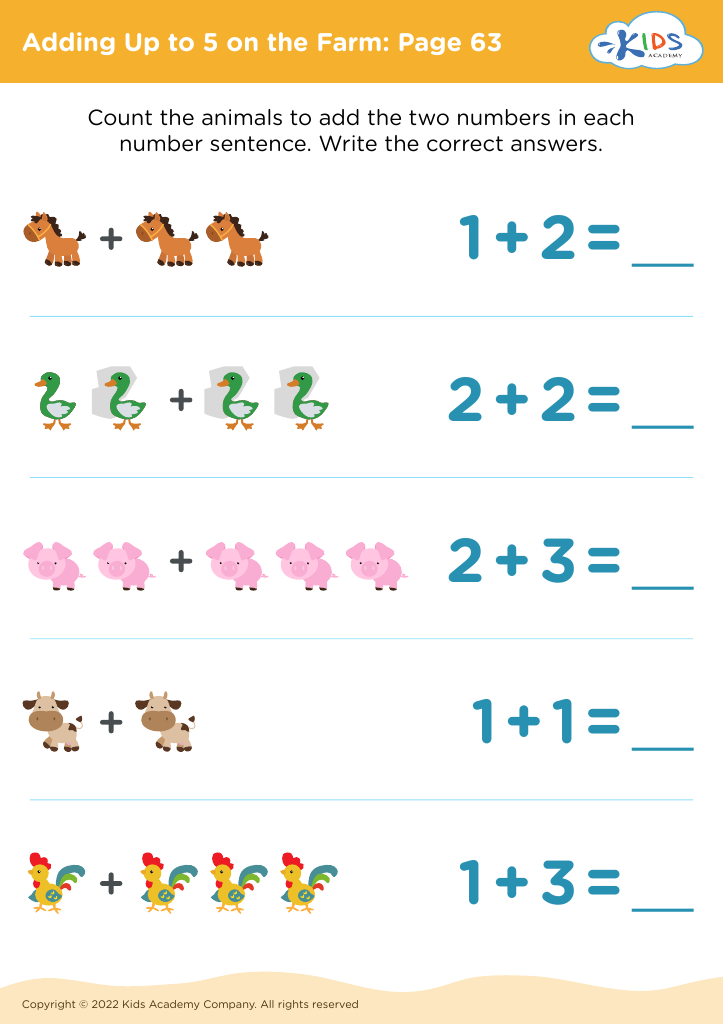
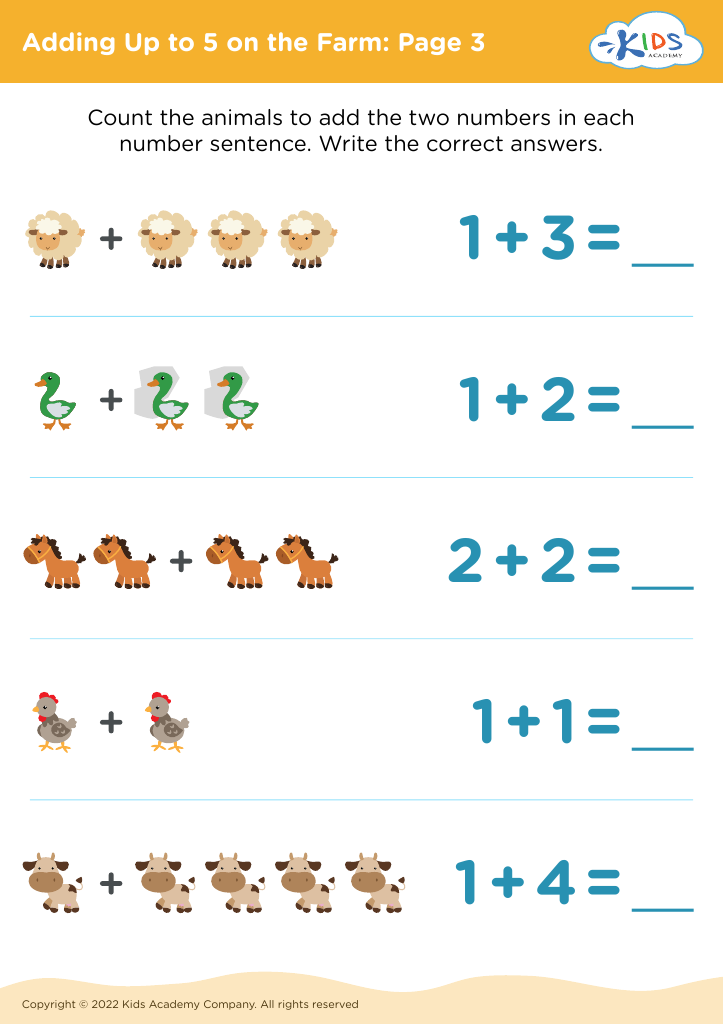
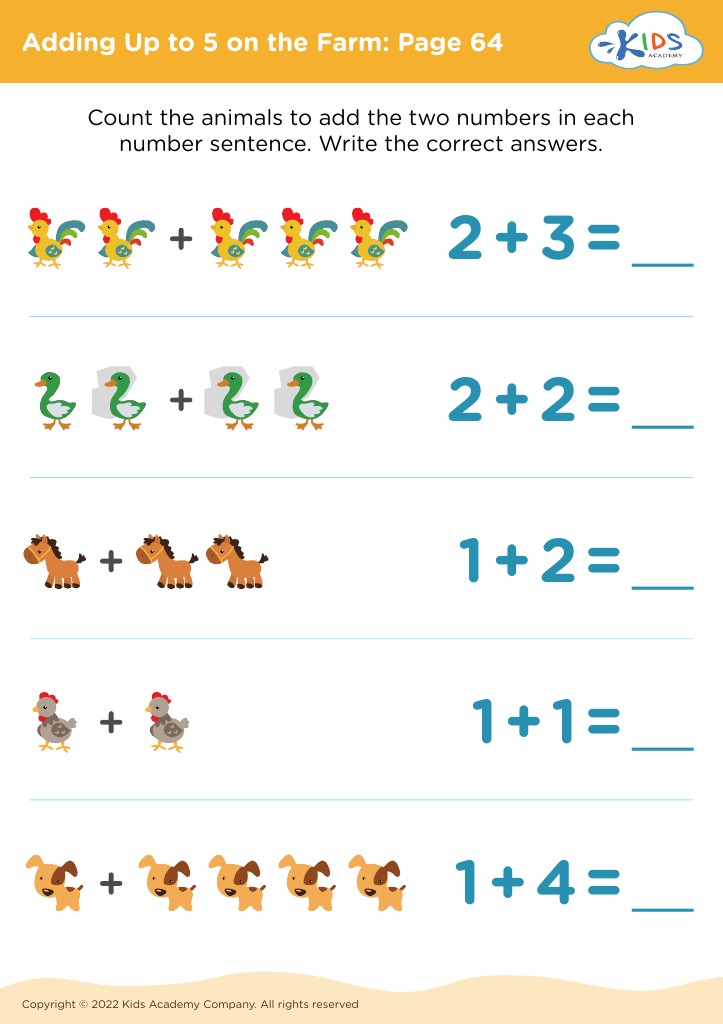
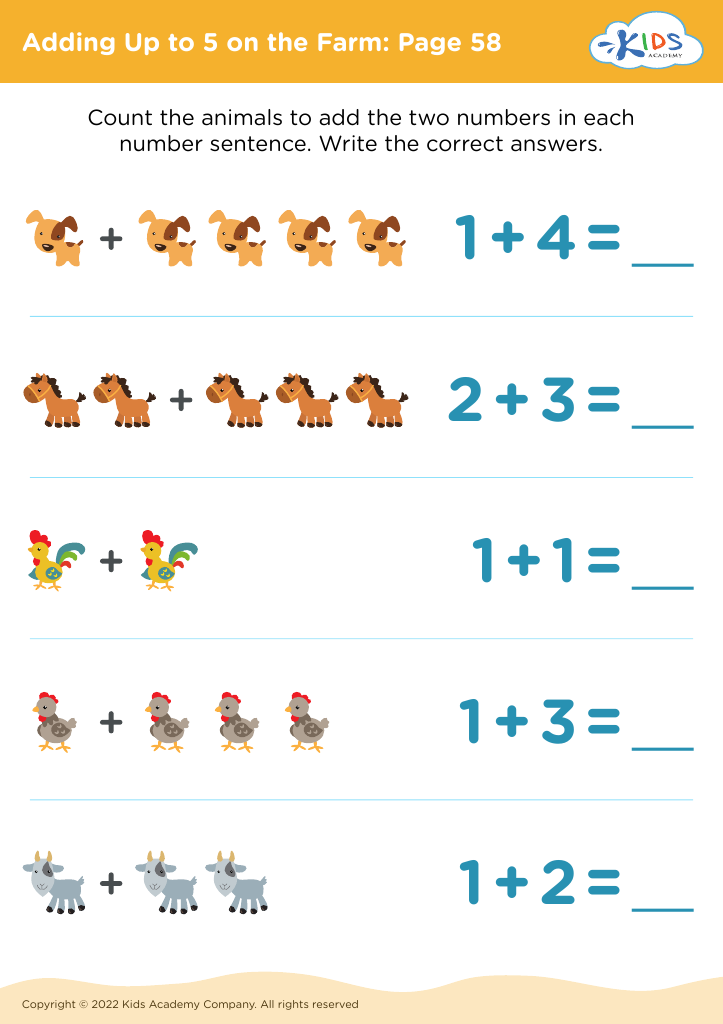
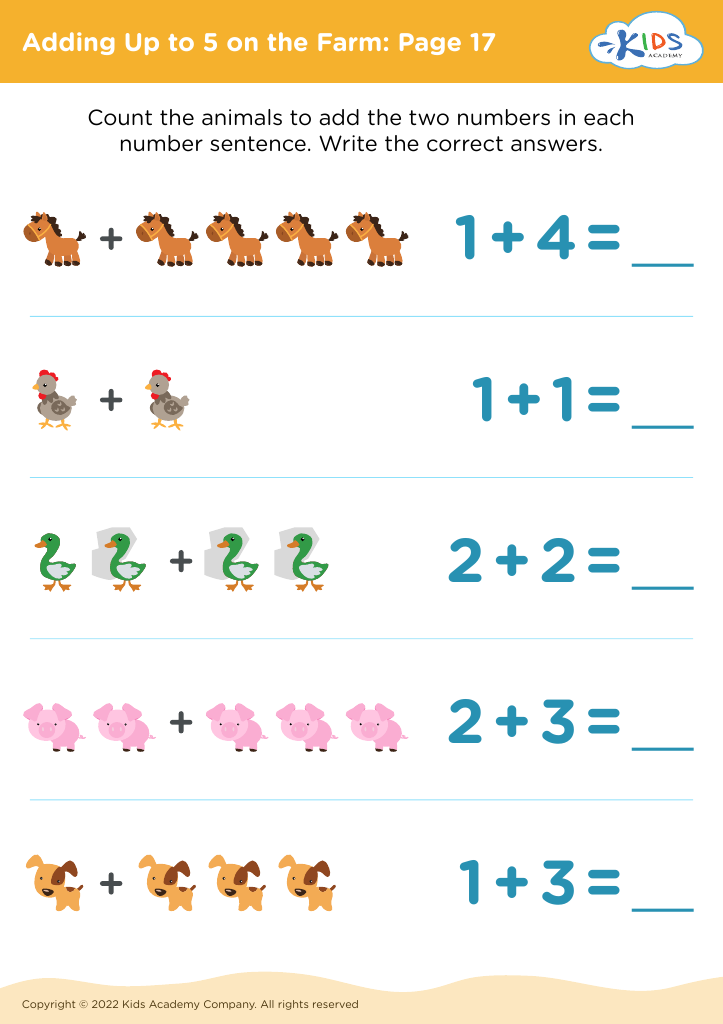
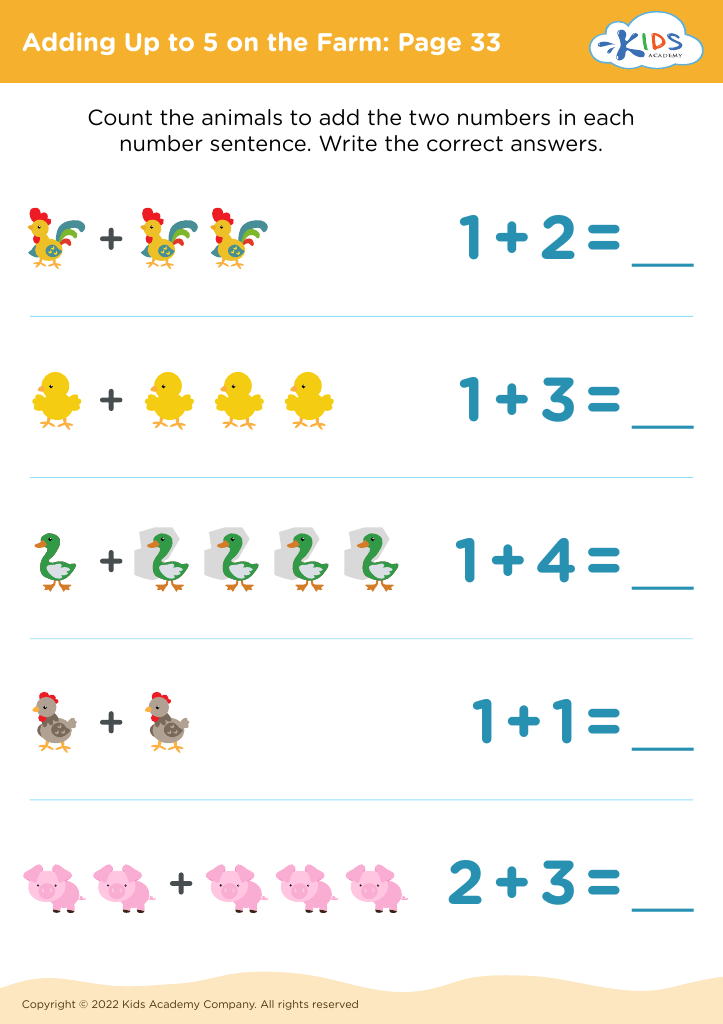
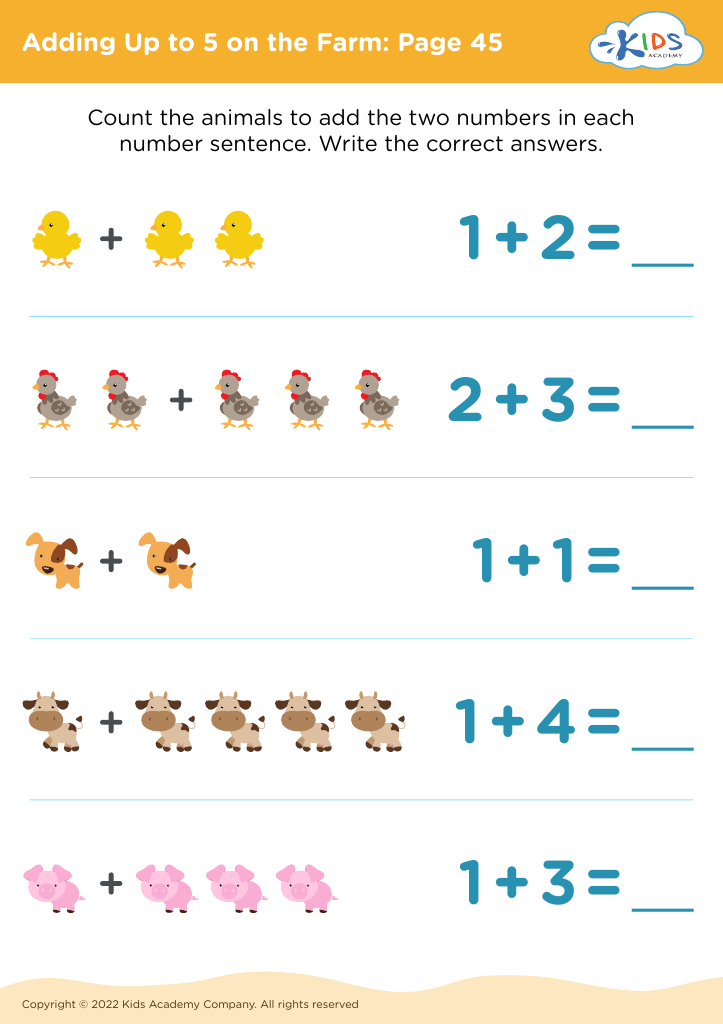



Animal recognition, particularly in a farm context, is vital for children aged 3-5 for several reasons. First, it enhances their cognitive development. Recognizing different animals helps young children build vocabulary, understand categorization, and enhance observational skills. By identifying animals like cows, pigs, and chickens, children expand their language and communication skills as they learn to describe and discuss these creatures.
Secondly, understanding farm animals fosters curiosity and a love for nature. It encourages children to explore their environment, instilling a sense of wonder about living things. This interaction can also lay the foundation for future learning about biology and ecology.
Furthermore, animal recognition supports emotional and social development. Children learn empathy and nurturing by observing animal behaviors and discussing their roles on a farm. Role-playing with animal figures can promote social skills as children interact and share their thoughts in cooperative play.
Lastly, incorporating animal recognition into early education aligns with play-based learning principles. Engaging activities, such as songs about farm animals or picture books, enhance learning through fun. Overall, parents and teachers play a crucial role in nurturing these connections, fostering a holistic, enriching educational experience for young minds.