Fine Motor Skills Adding on the Farm Worksheets for Ages 3-5
3 filtered results
Difficulty Level
Grade
Age
-
From - To
Subject
Activity
Standards
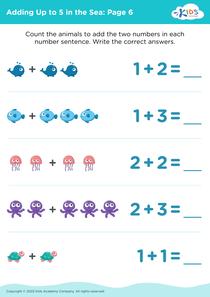
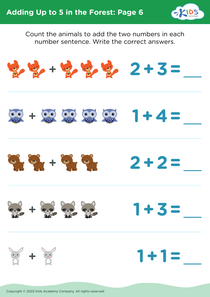
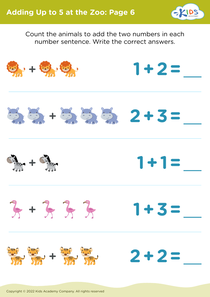
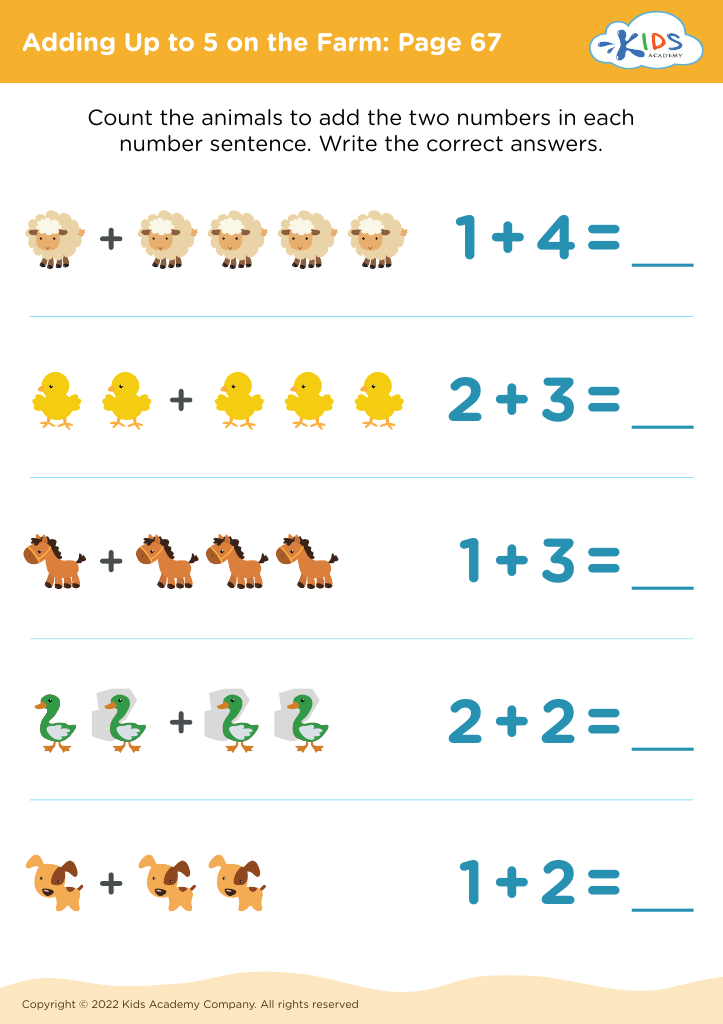
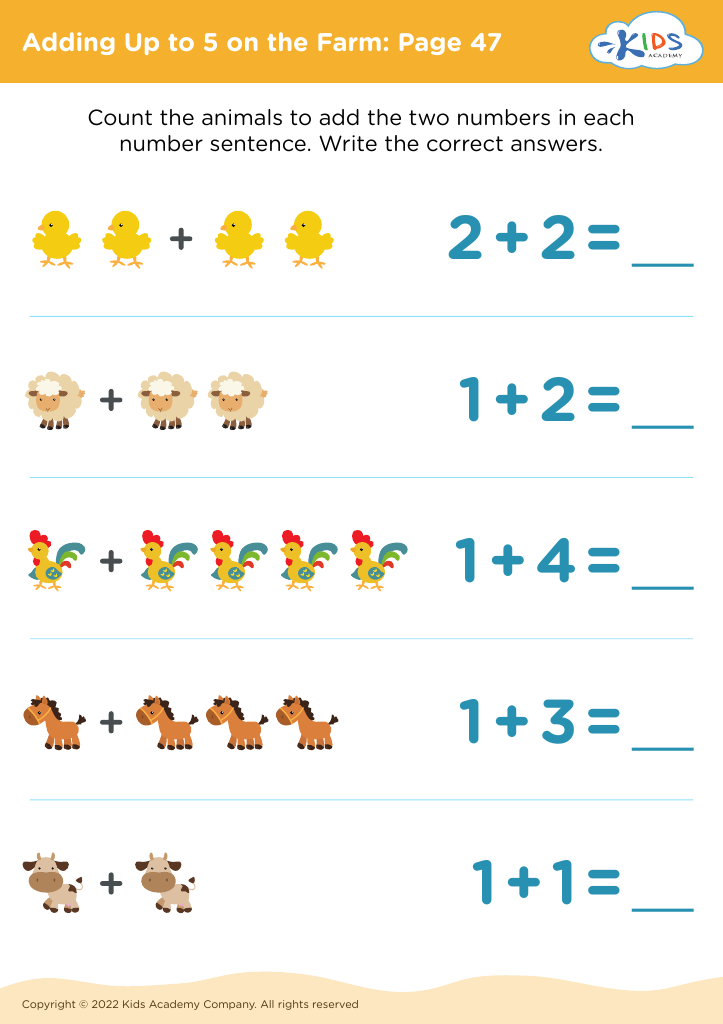
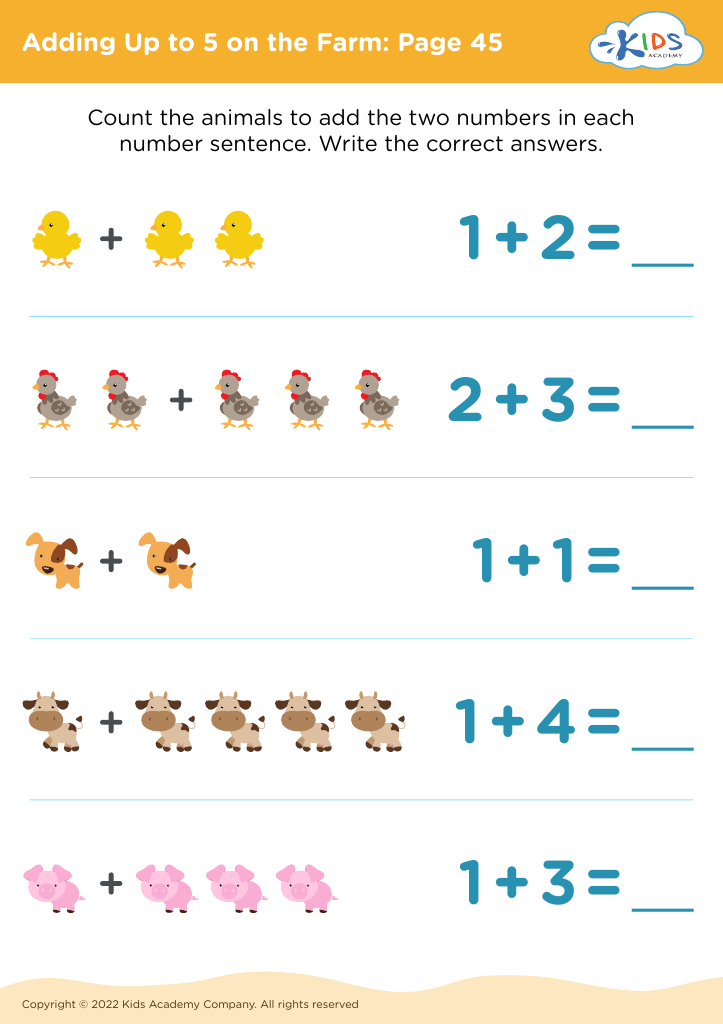
Our "Fine Motor Skills Adding on the Farm Worksheets" for ages 3-5 offer a fun, educational adventure for early learners. These printable worksheets feature engaging, farm-themed activities that help young children develop essential fine motor skills while introducing basic addition concepts. Through coloring, tracing, and drawing farm animals, your little ones will strengthen their hand-eye coordination and pencil grip, laying the foundation for future writing success. Burst with colorful images and simple, clear instructions, these worksheets turn learning math into a playful experience, fostering both cognitive development and creativity. Perfect for preschoolers and kindergarteners!
Favorites
With answer key
Interactive
Join Kids Academy for Free
Who is primarily going to use this learning content?



Fine Motor Skills Adding on the Farm for children aged 3-5 is an invaluable activity that parents and teachers should prioritize for several key reasons. Firstly, fine motor skills involve the coordination of small muscles in the hands and fingers, a critical precursor to essential life skills such as writing, dressing, and using utensils. Engaging young children in farm-themed activities incorporating counting and adding exercises helps reinforce foundational math concepts while simultaneously strengthening their hand-eye coordination and dexterity.
Adding on the Farm incorporates familiar, engaging farm animals and settings that captivate young children’s interests, making learning feel like play. This approach promotes attention and motivation, key components for effective learning. Handling small objects like pretend vegetables or animal figurines for counting practices also encourages precise motor control, boosting muscle strength, and finger agility.
Moreover, these activities offer opportunities for cognitive development—recognizing numbers, counting sequentially, and performing basic addition lays the groundwork for higher math skills. They also foster sensory experiences and social interactions, as children often collaborate, verbalize their thought processes, and learn from peers during group activities.
By supporting Fine Motor Skills Adding on the Farm, parents, and teachers are cultivating a rich, interactive learning environment that builds critical motor skills, cognitive development, and early numeracy seamlessly integrated with fun, relatable themes.