Fine motor skills (writing) Adding on the Farm Worksheets for Ages 3-5
5 filtered results
-
From - To
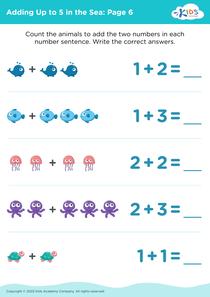
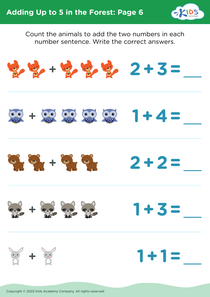
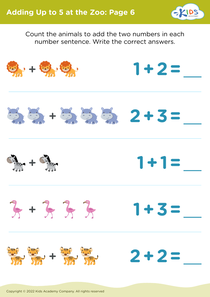
Introduce your young learners to math while improving their fine motor skills with our "Adding on the Farm Worksheets for Ages 3-5." These engaging activities combine counting and simple addition with fun farm-themed illustrations. Designed to develop early math proficiency and precision in writing, each worksheet encourages children to trace numbers, draw lines, and complete addition problems. Perfect for those just beginning their educational journey, our worksheets foster both cognitive and motor development in an enjoyable and practical way. Ideal for home or classroom use, prepare your little ones for academic success with these carefully crafted resources.
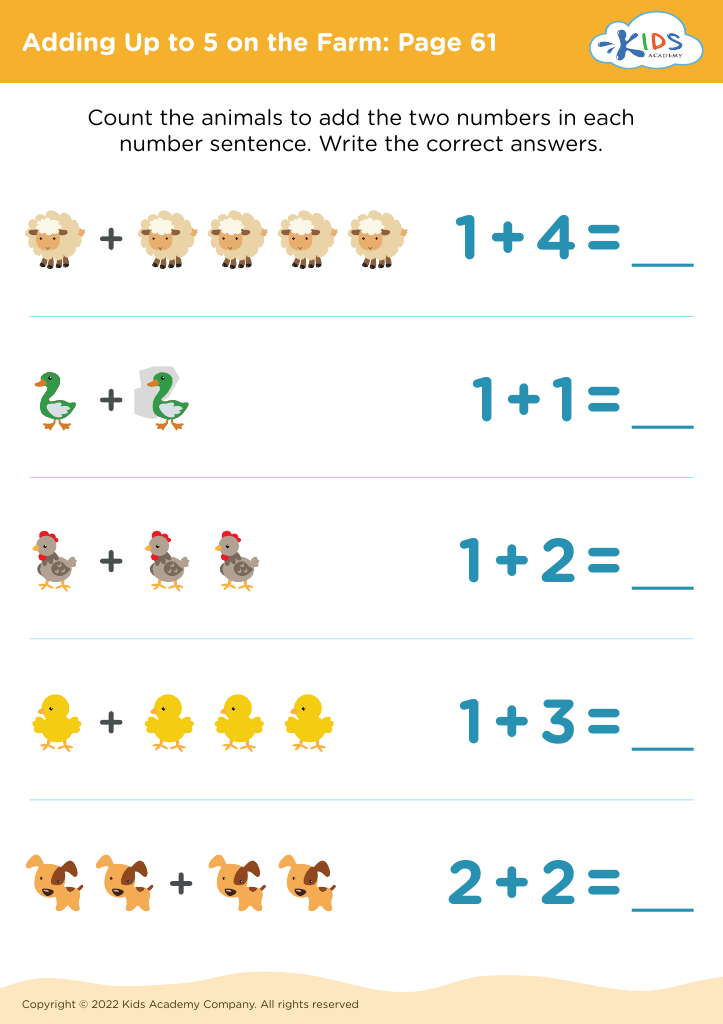
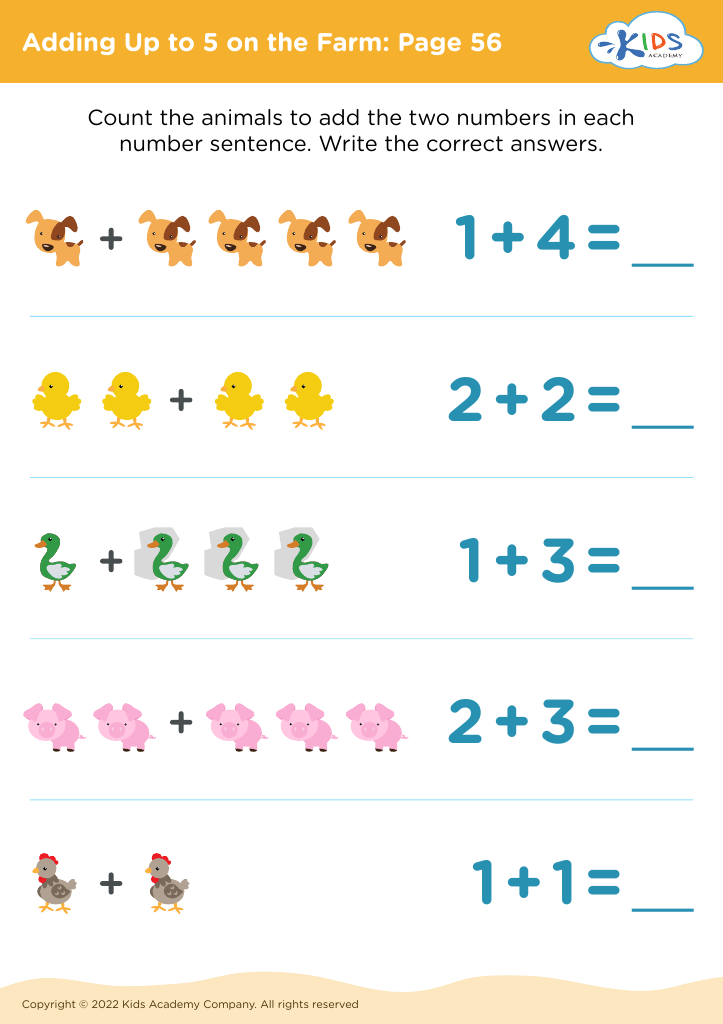
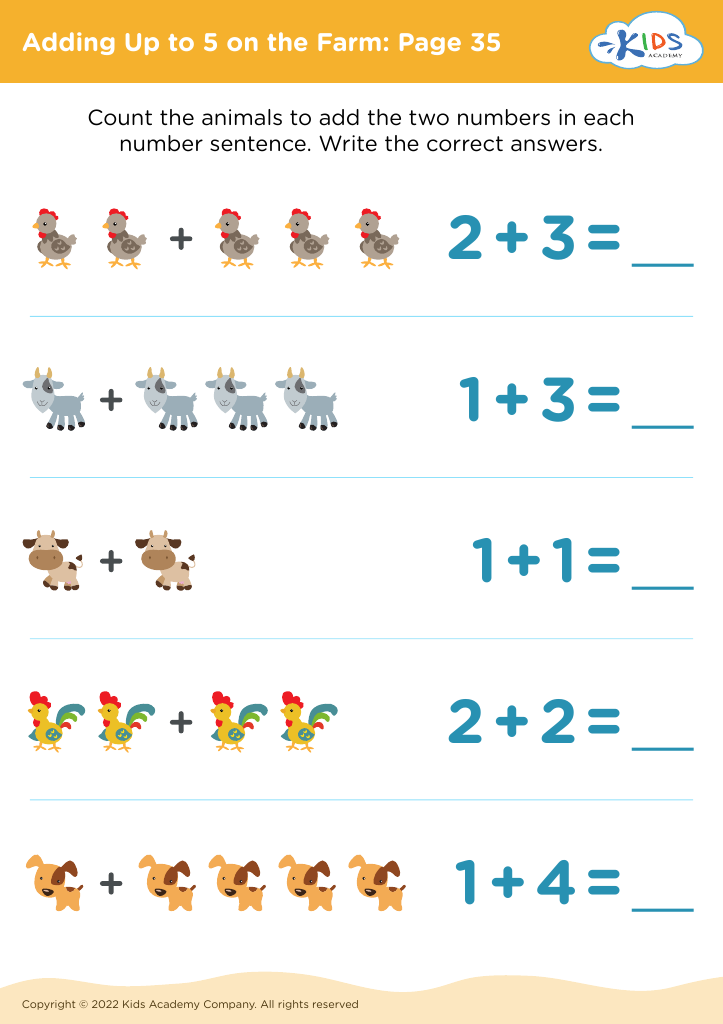
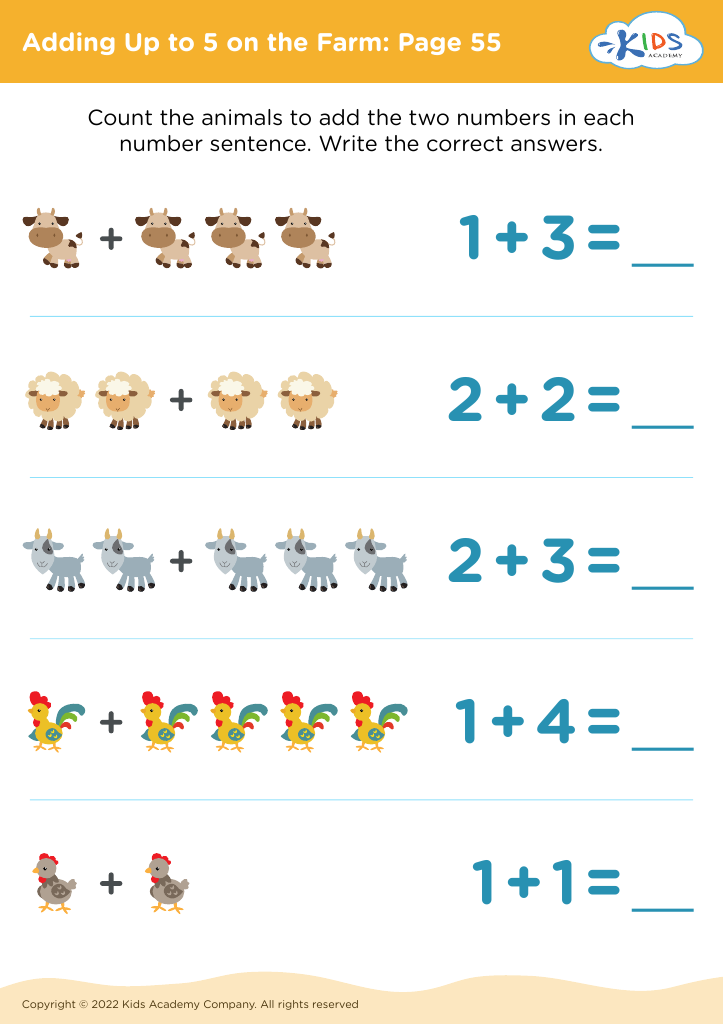
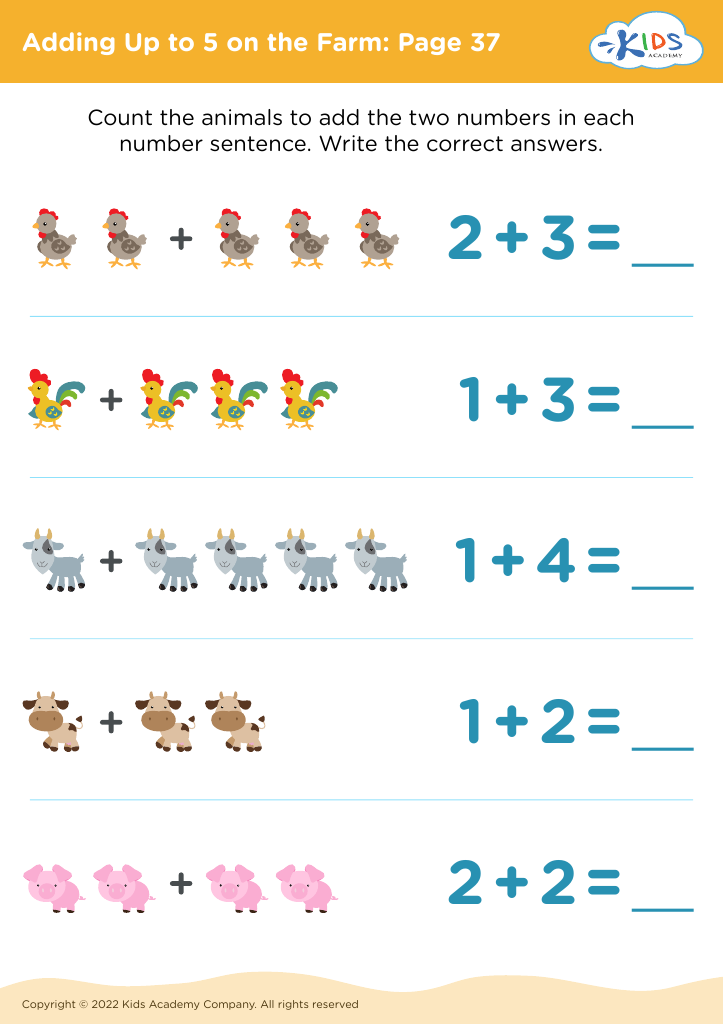



Fine motor skills are essential for young children ages 3-5 because they form the foundation for future academic and daily living skills. Activities like writing are one of the fundamental ways to develop these skills. For young children, engaging in farm-themed activities that incorporate fine motor practices can make learning enjoyable and highly effective. Examples include tracing or drawing farm animals and tools, or even simple writing tasks related to farm vocabularies, such as writing the animals’ names or sounds.
By working on fine motor skills through such engaging themes, children not only gain control and dexterity in their hands and fingers, but they also become more adept at tasks like buttoning clothes, using utensils, and other everyday activities. Furthermore, these skills are directly linked to cognitive development; fine motor coordination can enhance critical thinking and problem-solving abilities.
Integrating learning themes like the farm can make these exercises fun and relatable. The variety it introduces keeps children intrigued and eager to participate, which is crucial for early learning willingness. Parents and teachers should, therefore, prioritize the development of fine motor skills in young kids to support a range of future academic and practical achievements, all while making the learning process enjoyable.