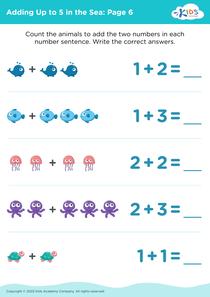
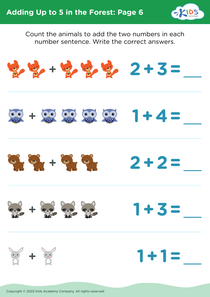
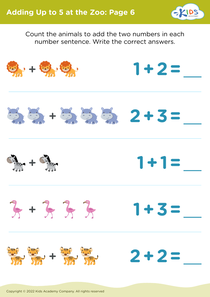
Fine motor skills (writing numbers) Adding on the Farm Worksheets for Ages 3-5
3 filtered results
-
From - To
Enhance your child's fine motor skills with our "Adding on the Farm" worksheets, designed specifically for ages 3-5! These engaging activities combine playful farm-themed scenarios with essential early math concepts. As children practice writing numbers, they’ll develop hand-eye coordination and dexterity—vital skills for future writing success. Each worksheet features colorful illustrations that capture your child's imagination, making learning enjoyable and interactive. Perfect for preschool or at-home learning, these worksheets ignite a love for math while improving fine motor skills. Download now and watch your little ones flourish as they explore math on the farm!
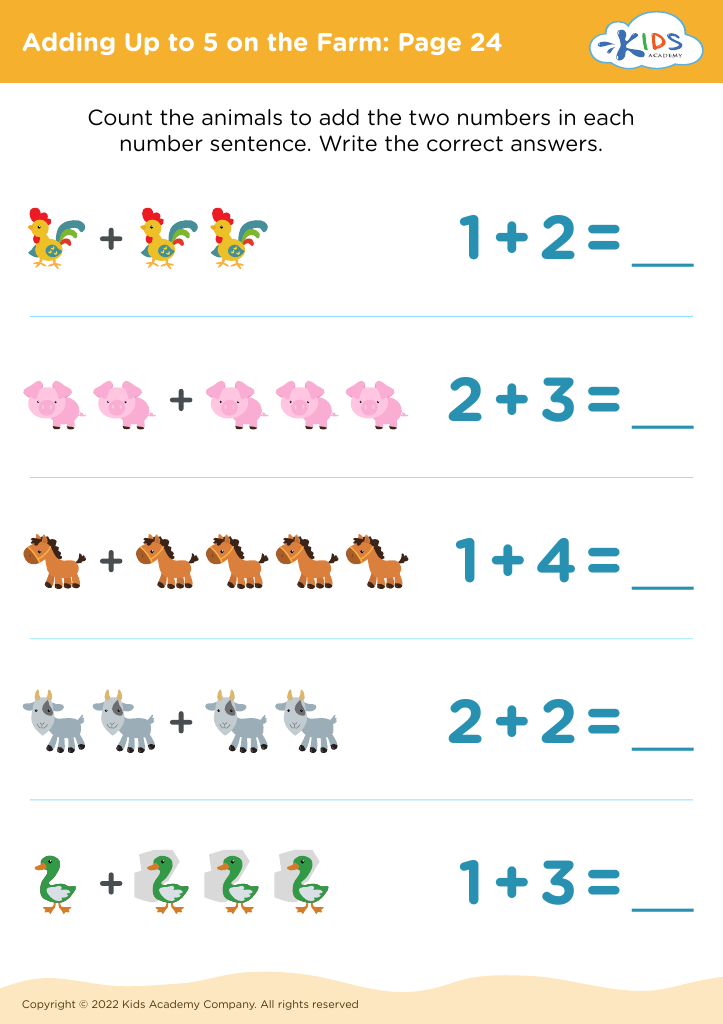
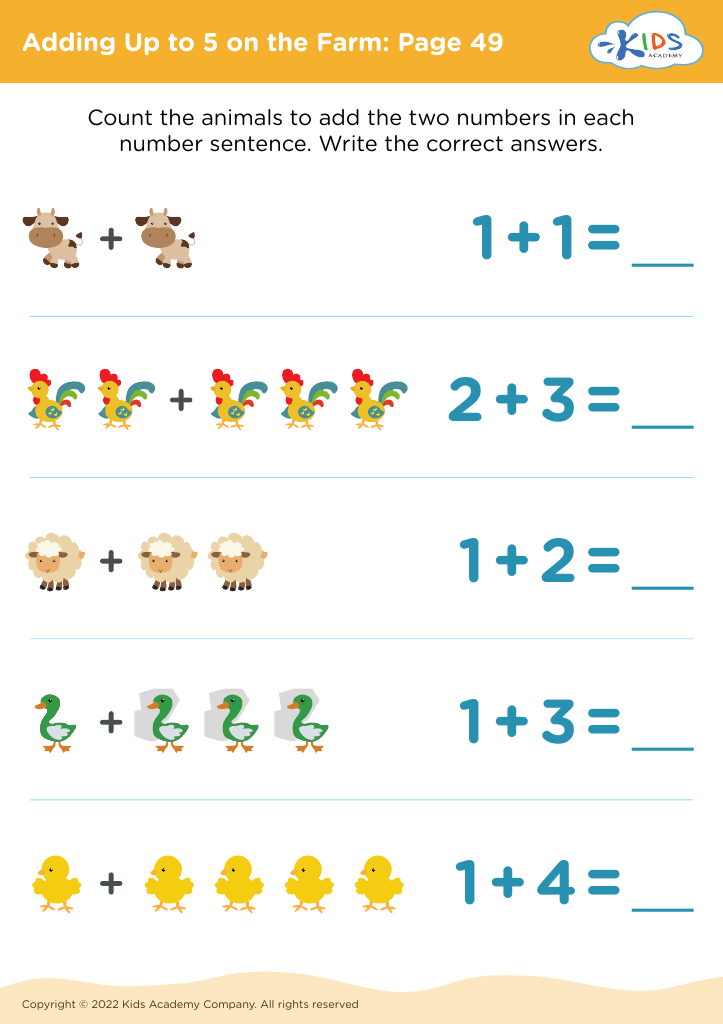
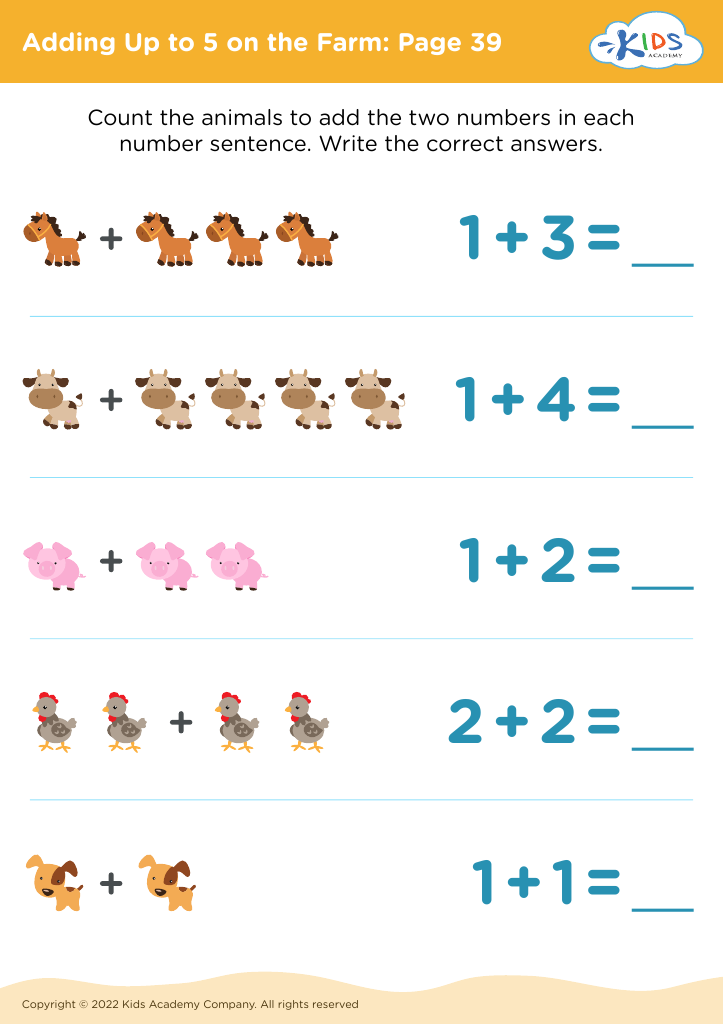



Fine motor skills are crucial for early childhood development, especially in activities like writing numbers. For children aged 3-5, mastering fine motor skills through engaging activities, such as “Adding on the Farm,” not only enhances their ability to grasp and control writing tools, but also promotes cognitive growth.
Writing numbers is essential for developing mathematical literacy. When children connect fine motor practice with numbers in a thematic context, such as farming, they become more engaged and motivated to learn. Activities centered around familiar concepts, like animals and farm settings, can enliven lessons, making learning both meaningful and memorable.
Additionally, fine motor skills contribute to a child’s overall academic confidence. As they progress in writing and counting, their self-esteem grows, creating a positive feedback loop for continued learning. Parents and teachers should care deeply about this development as it creates foundational skills needed for future academic success.
Overall, fostering fine motor skills through playful, thematic activities cultivates a love for learning while equipping children with the essential skills necessary for writing and basic arithmetic, setting them on a path for creativity and future achievements. Encouraging practice in a fun environment helps facilitate exploration and joy in learning.