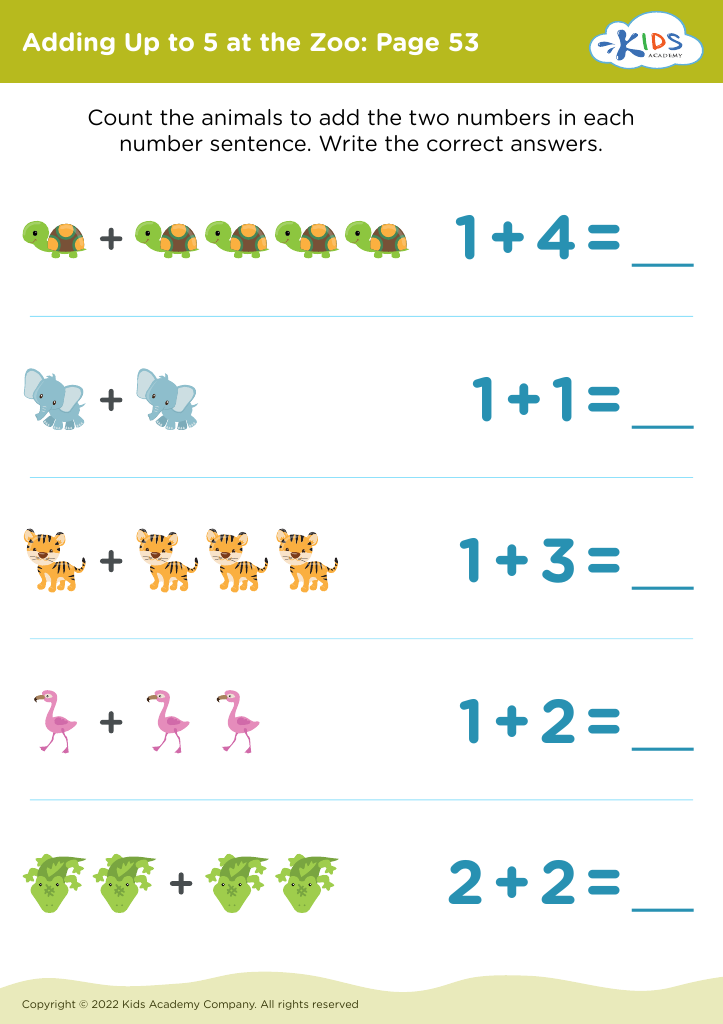
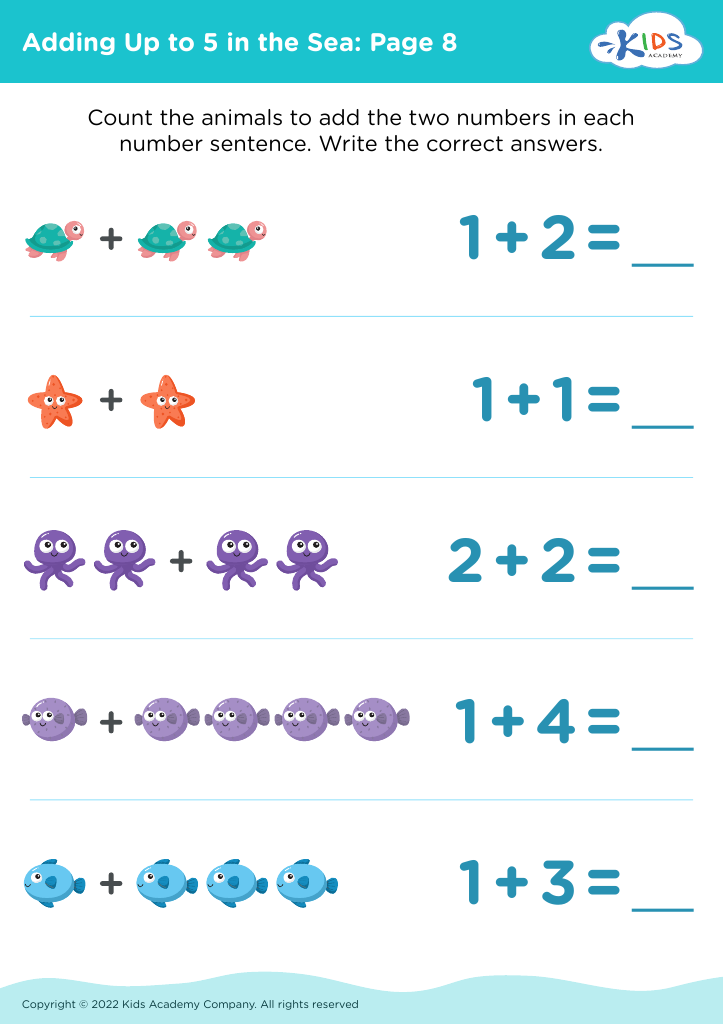
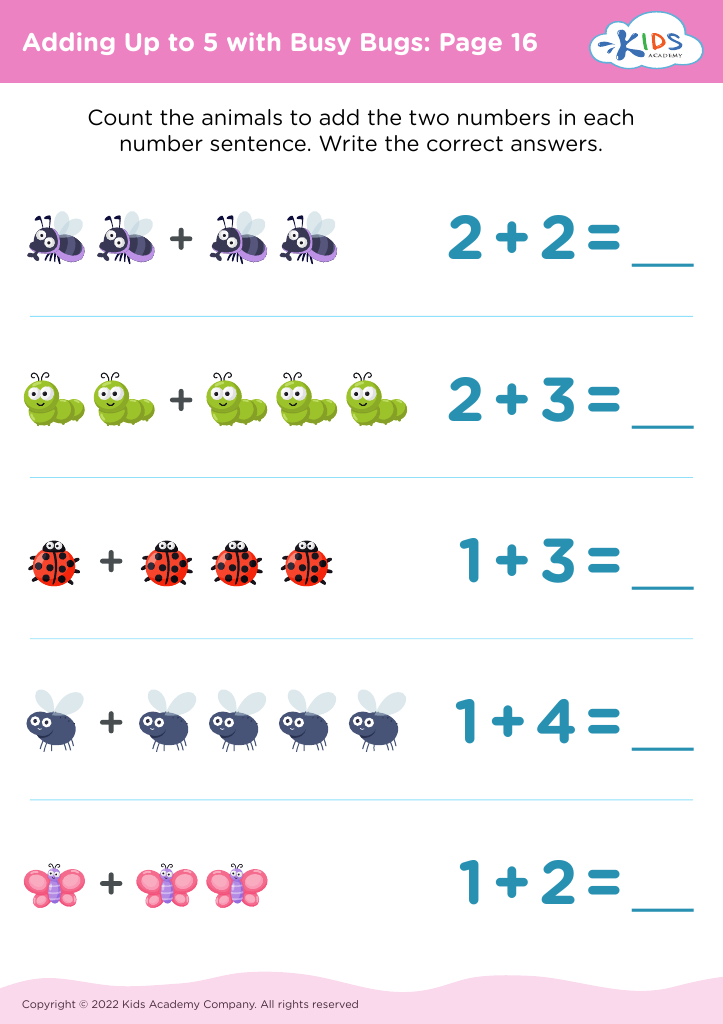
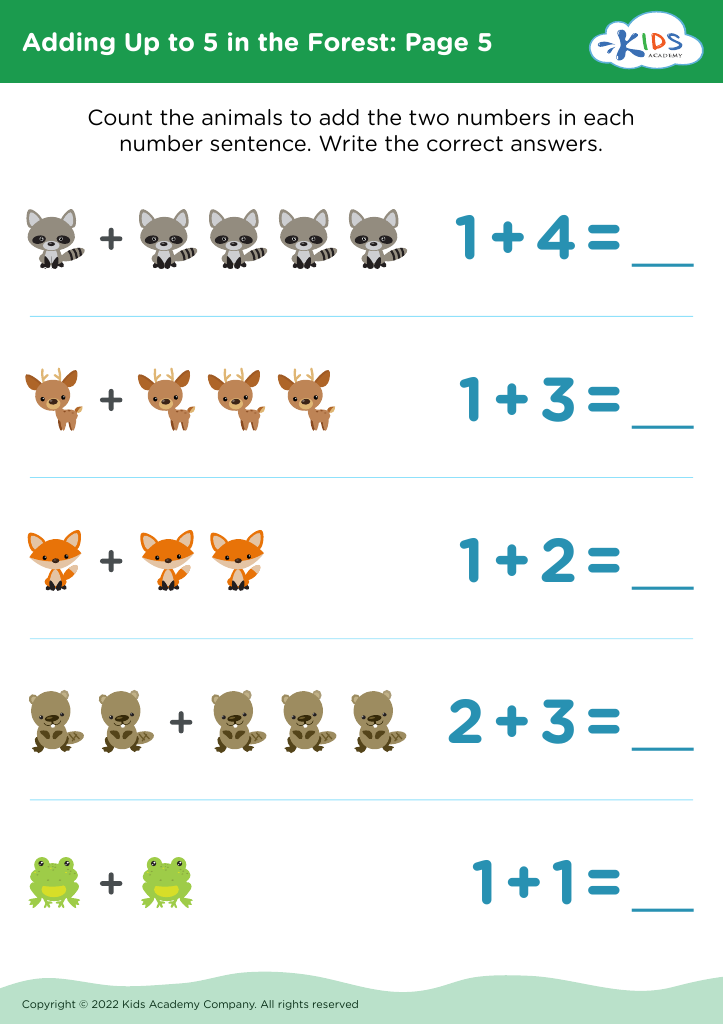
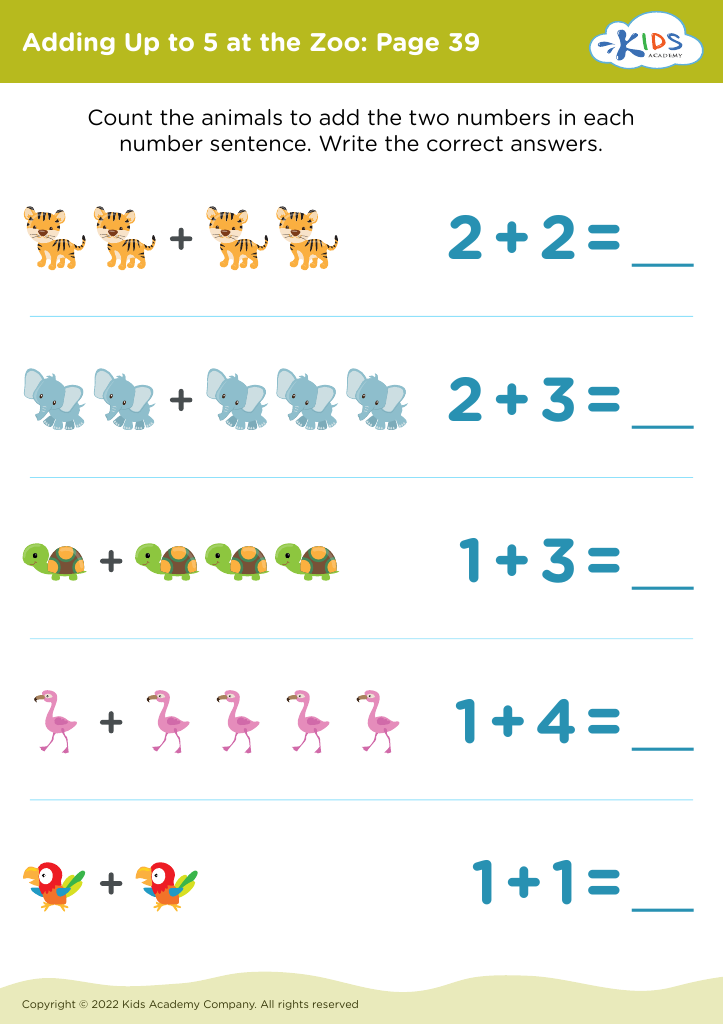
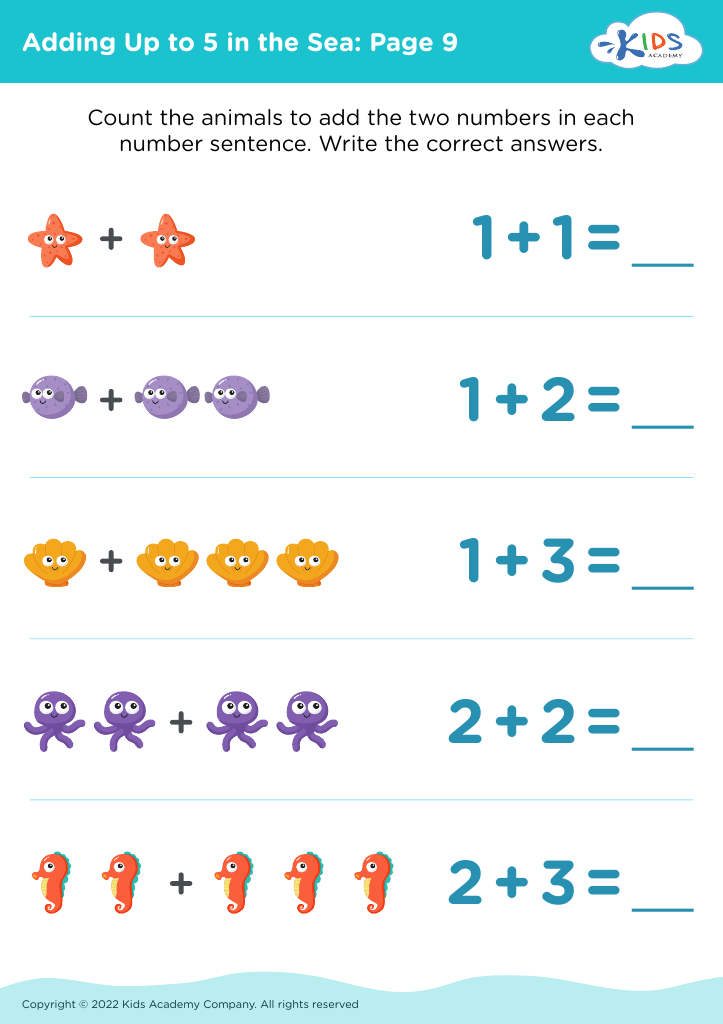






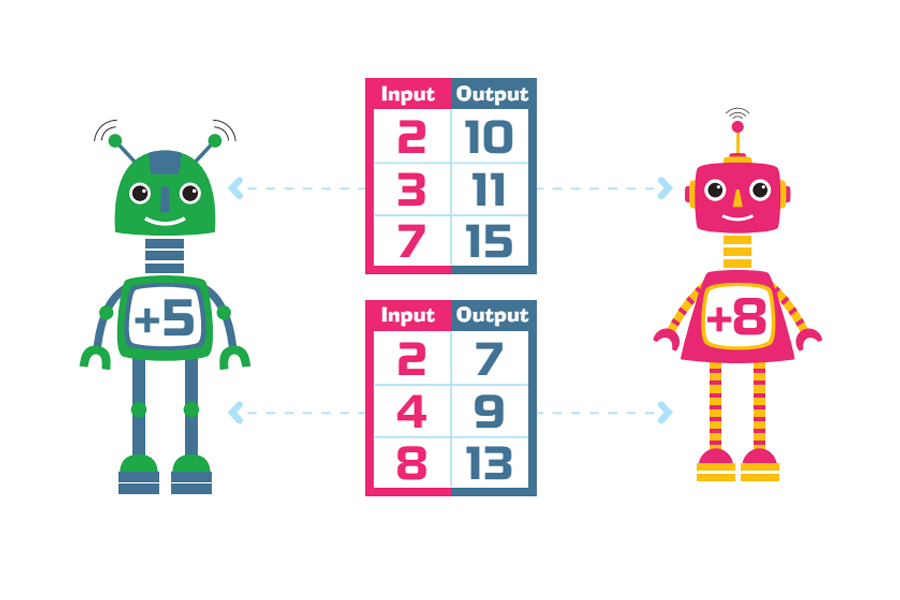

Addition skills, especially adding up to 5, are foundational to early mathematical understanding for children ages 3-5. During these formative years, children develop crucial cognitive and reasoning abilities. Mastering basic addition not only enhances numeracy but also promotes critical thinking and problem-solving skills.
Understanding addition up to 5 lays the groundwork for more complex math concepts as they progress. This skill is often introduced through engaging, hands-on activities such as using manipulatives like blocks or counters, making learning interactive and enjoyable.
Additionally, these early math skills build confidence. When children successfully complete basic addition tasks, they develop a sense of accomplishment that encourages them to take on new challenges. As parents and teachers nurture this skill, they also promote a positive attitude toward learning, which can impact a child's enthusiasm for math in later years.
Furthermore, addition skills have practical implications in daily life. From counting toys to sharing snacks, these experiences help children see the relevance of math in their world.
In summary, fostering addition skills up to 5 nurtures cognitive development, builds self-esteem, and equips children with essential life skills, making it a priority for both parents and teachers.








