Animal identification Adding Up to 5 Worksheets for Ages 3-5 - Page 2
27 filtered results
-
From - To







%20(1).jpg)
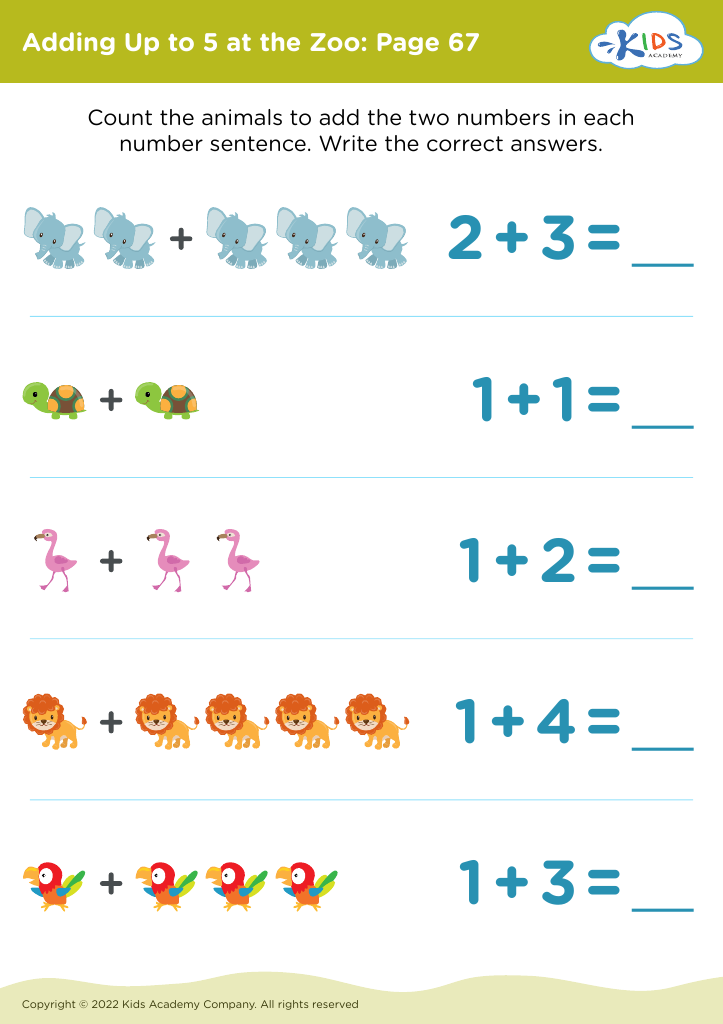
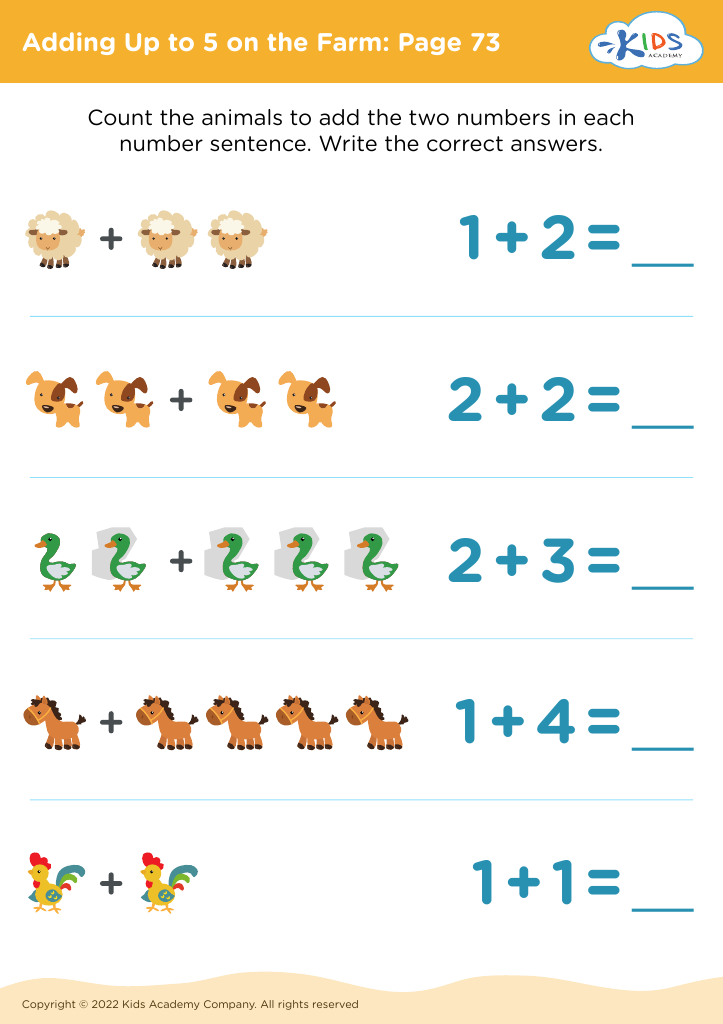
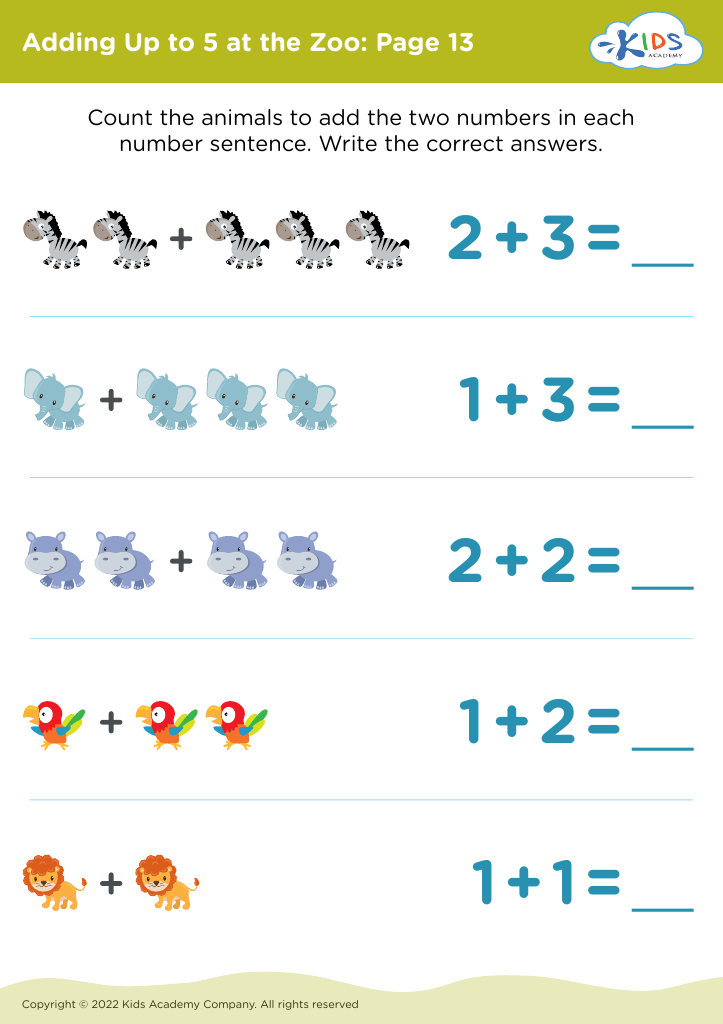
Early childhood is a formative period for cognitive and social development. Introducing animal identification and basic math concepts, such as adding up to 5, caters to children’s natural curiosity and lays foundational skills for future learning.
Cognitive Development: Identifying animals helps improve memory and attention to detail. Associating animals with numbers enhances recognition skills and fosters understanding of categorization.
Math Skills: Simple addition promotes number recognition and understanding of quantity. Skills like counting help children grasp more complex mathematical concepts later.
Language Skills: Talking about animals and numbers boosts vocabulary, comprehension, and verbal skills. Describing “two dogs” or “three cats” combines word learning with numerical context.
Social-Emotional Skills: Discussing animals can be engaging and enjoyable, making learning fun. Success with simple addition can boost confidence and willingness to tackle more challenging tasks.
Connections to World: Teaching children to identify animals nurtures an early appreciation for nature and living things. This can instill values of respect and curiosity about the environment.
Engagement in such activities should be playful and interactive, as consistent, supportive learning experiences prepare children for academic success and lifelong curiosity. Thus, parents and teachers should focus on integrating animal identification and simple math into daily learning experiences.








