Filters

90 filtered results

Clear all filters
Favorites
With answer key
Interactive

90 filtered results

Difficulty Level

Grade


Check out this FREE Trial Lesson on Adding Up to 5 for age 3-5!

D

Favorites
With answer key
Interactive
  • 3-5
  • Animal recognition
  • Adding Up to 5
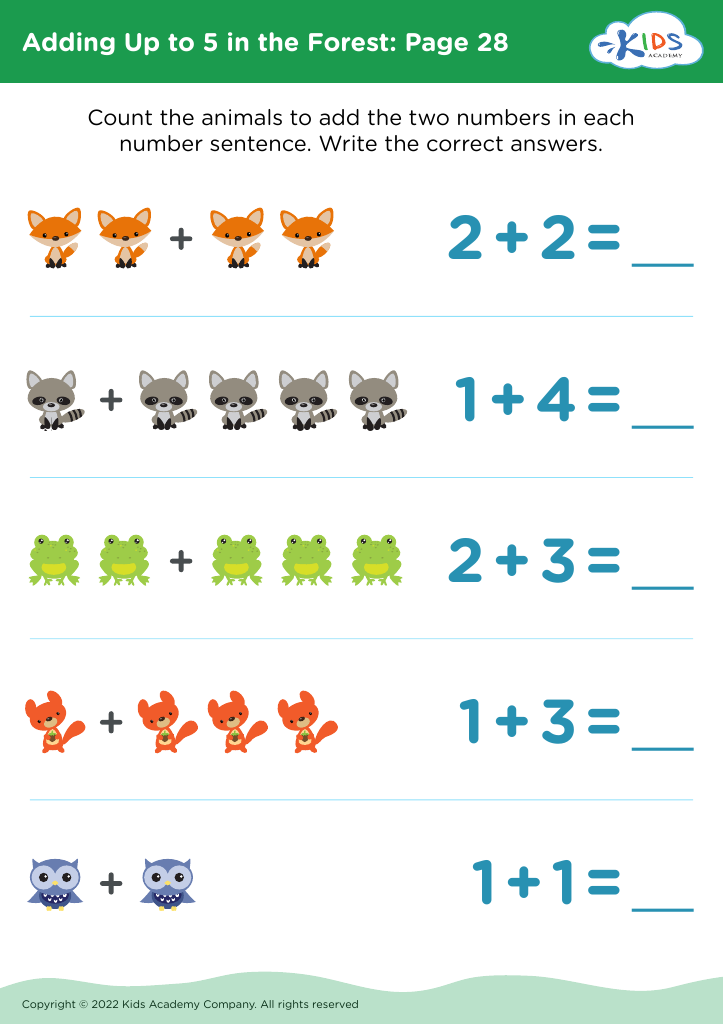
Adding Up to 5 in the Forest: Page 28
Worksheet
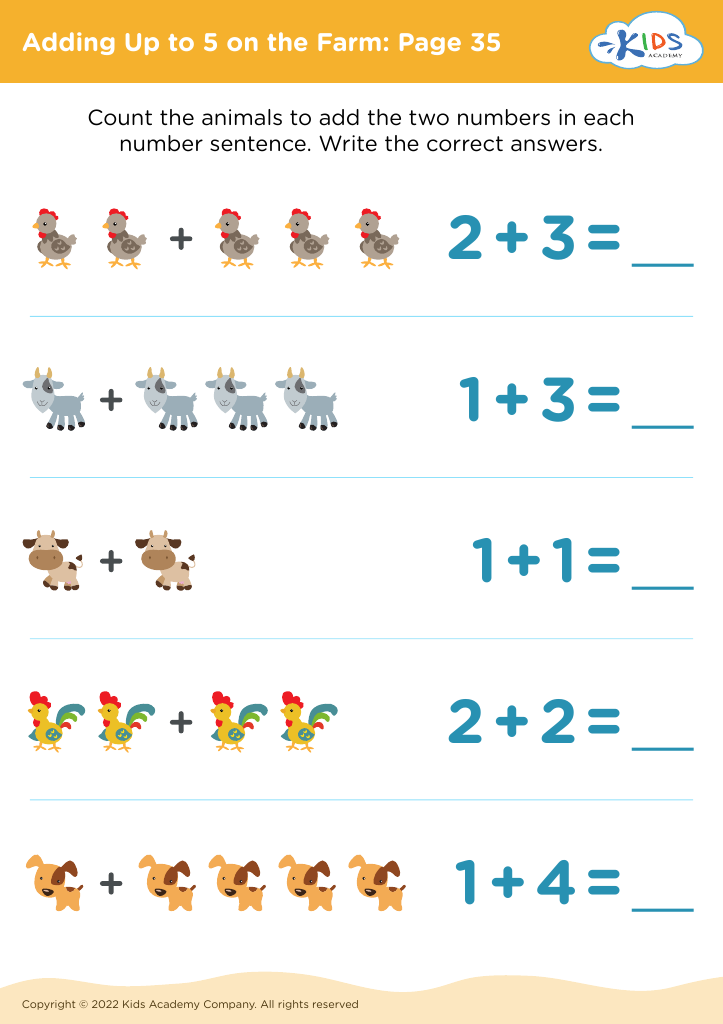
Adding Up to 5 on the Farm: Page 35
Worksheet
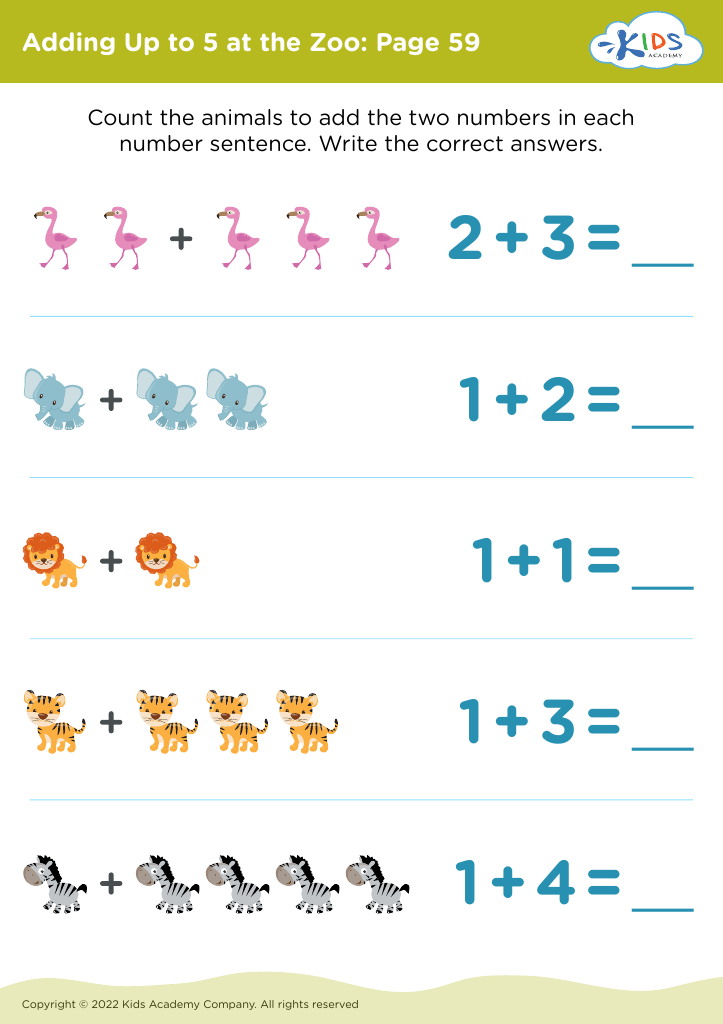
Adding Up to 5 at the Zoo: Page 59
Worksheet
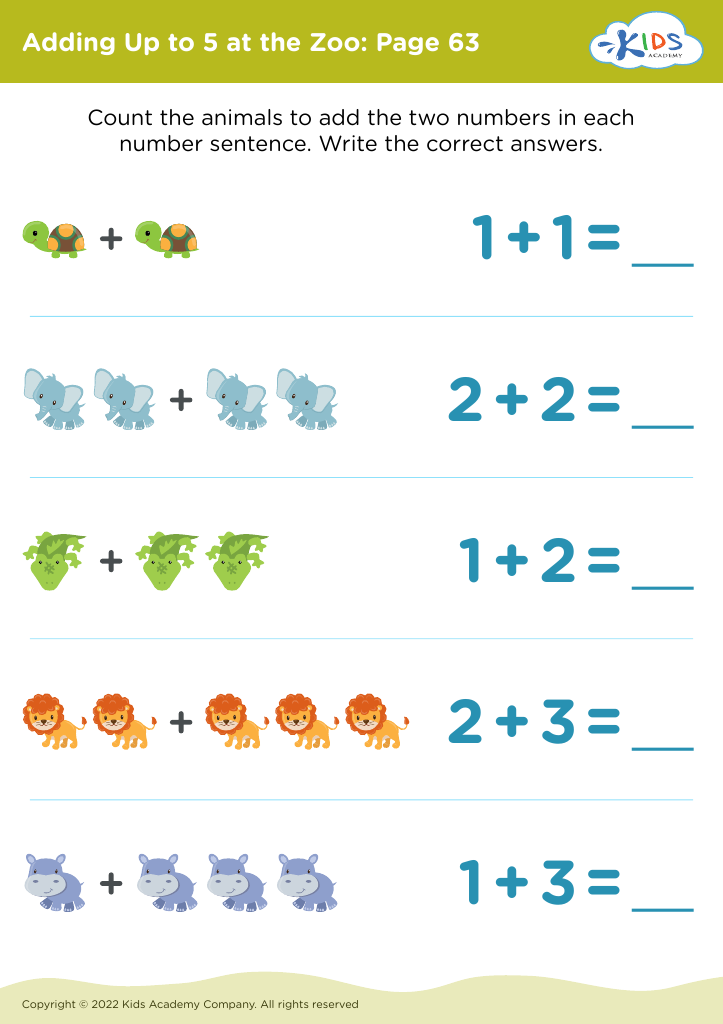
Adding Up to 5 at the Zoo: Page 63
Worksheet
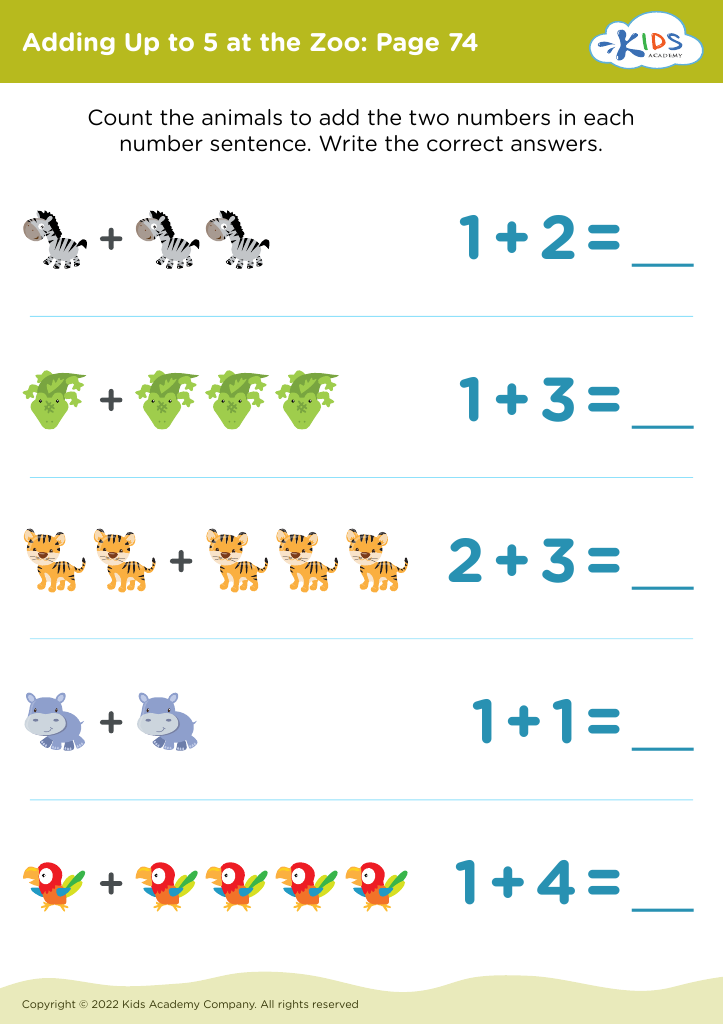
Adding Up to 5 at the Zoo: Page 74
Worksheet
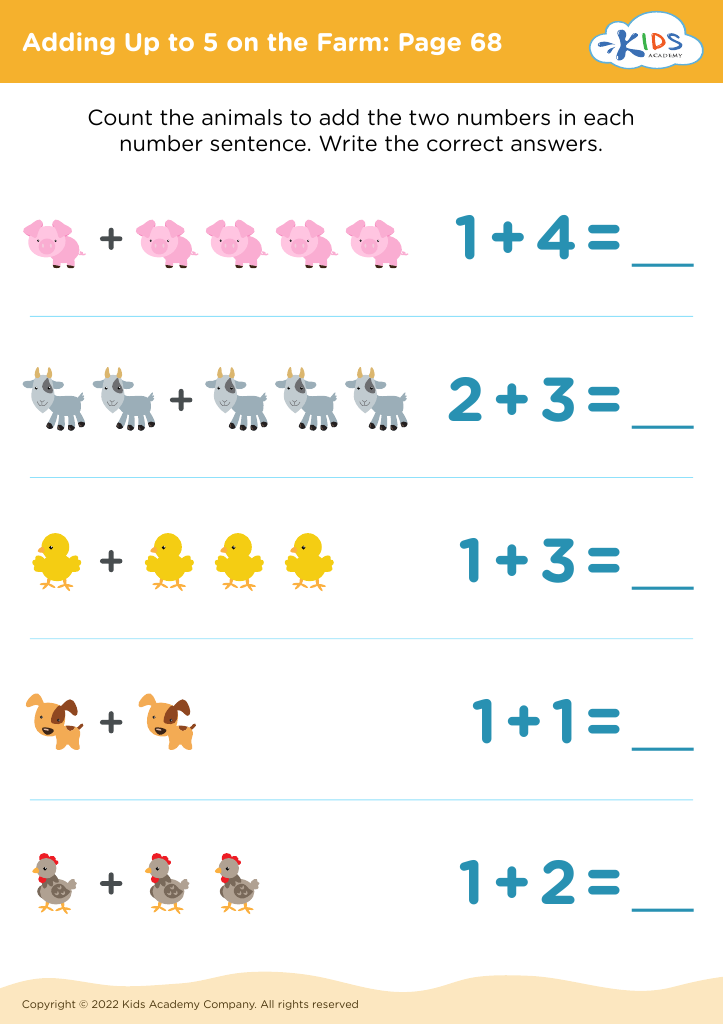
Adding Up to 5 on the Farm: Page 68
Worksheet
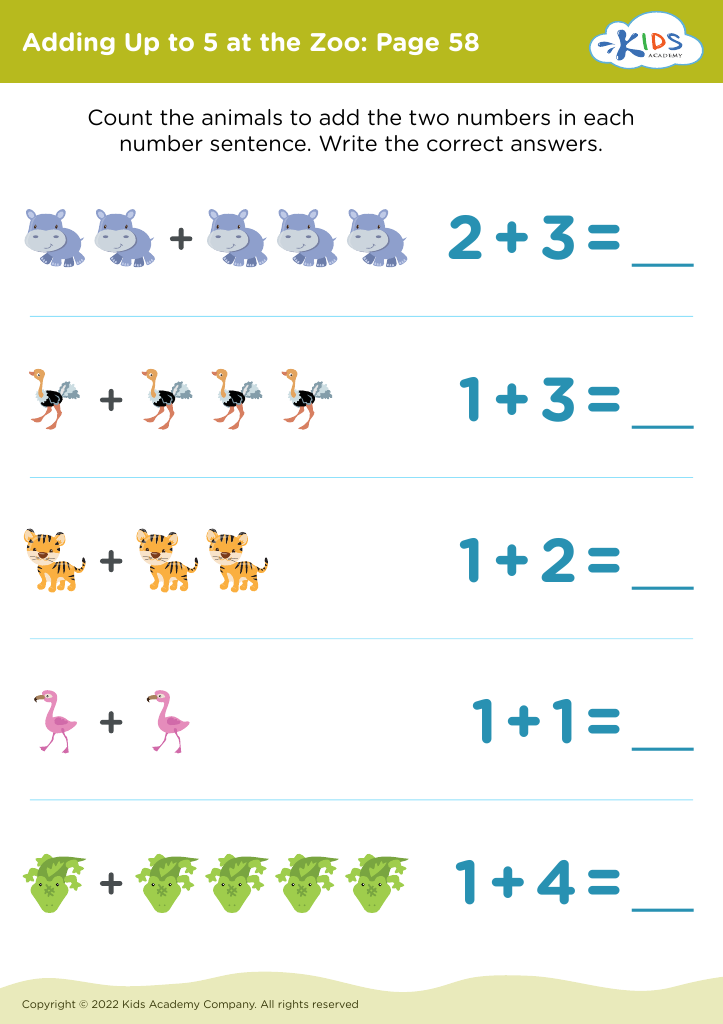
Adding Up to 5 at the Zoo: Page 58
Worksheet
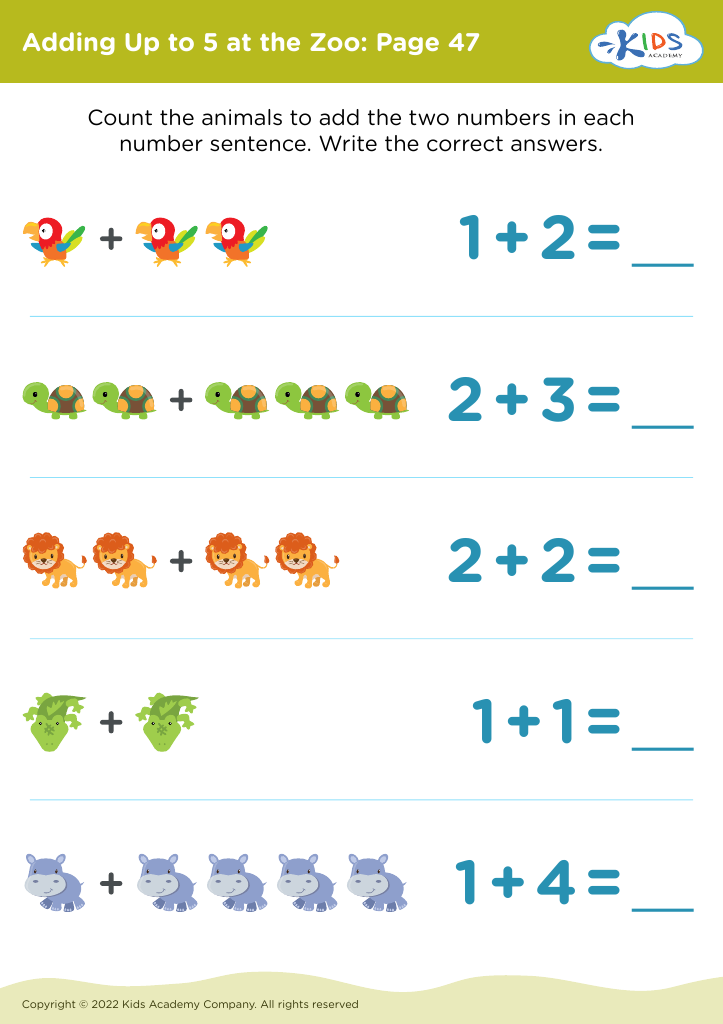
Adding Up to 5 at the Zoo: Page 47
Worksheet
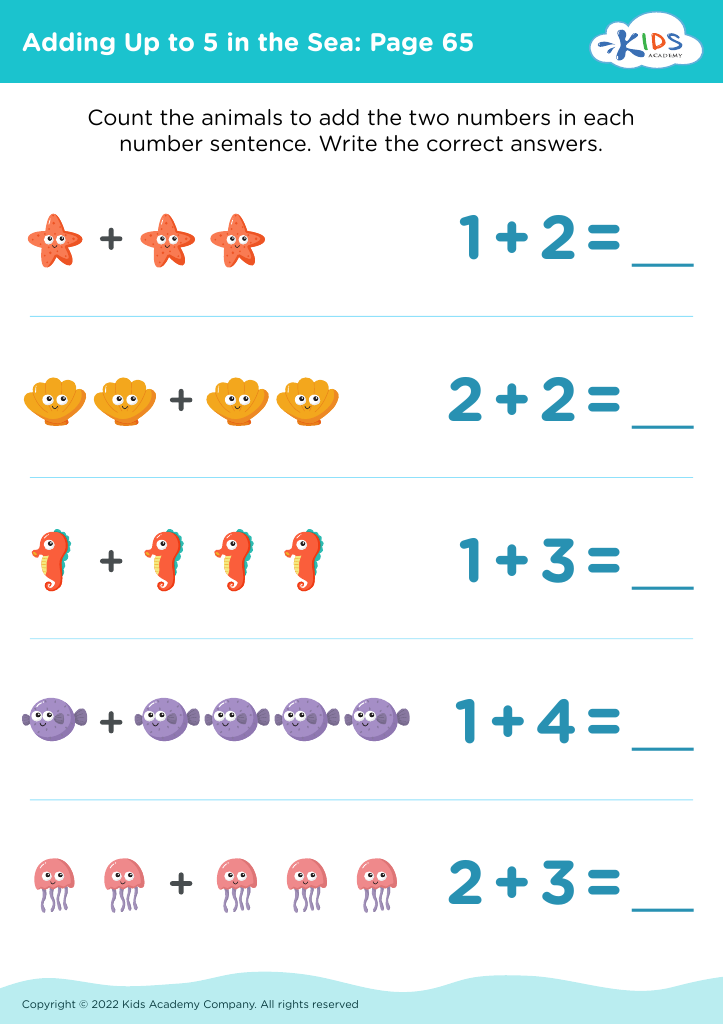
Adding Up to 5 in the Sea: Page 65
Worksheet
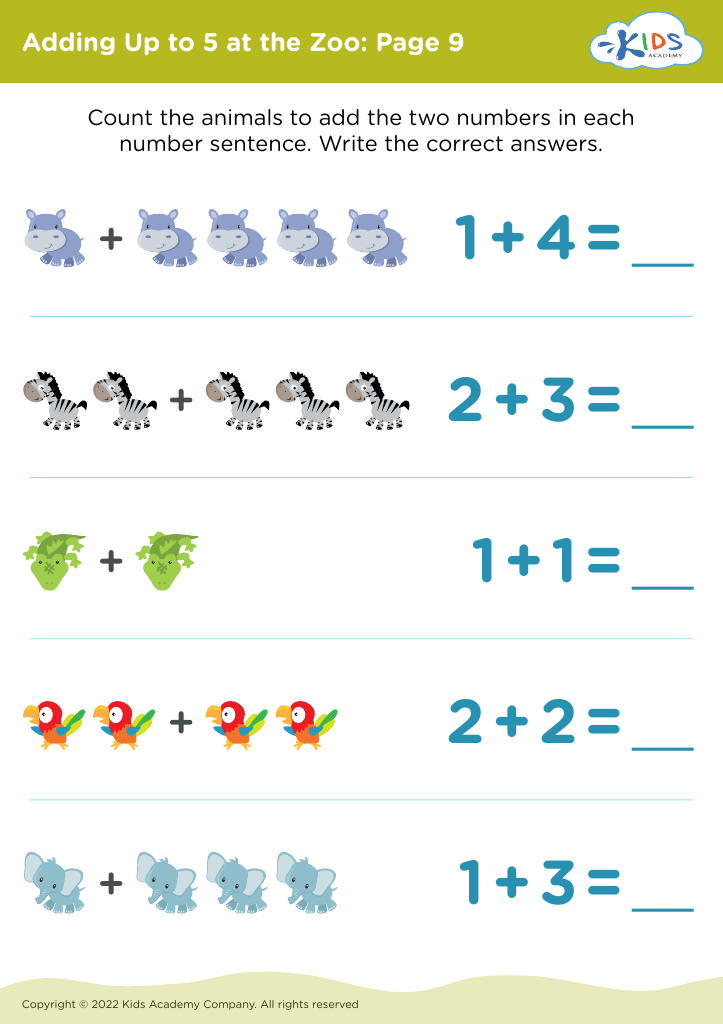
Adding Up to 5 at the Zoo: Page 9

Adding Up to 5 at the Zoo: Page 9

Adding Up to 5 at the Zoo: Page 9
Worksheet
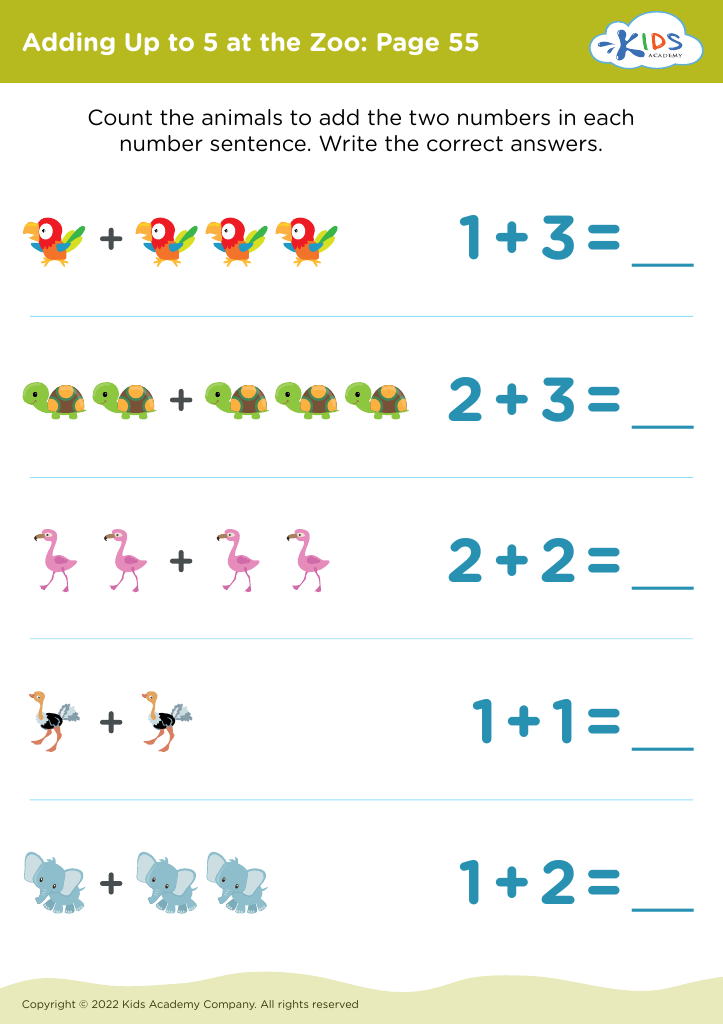
Adding Up to 5 at the Zoo: Page 55
Worksheet
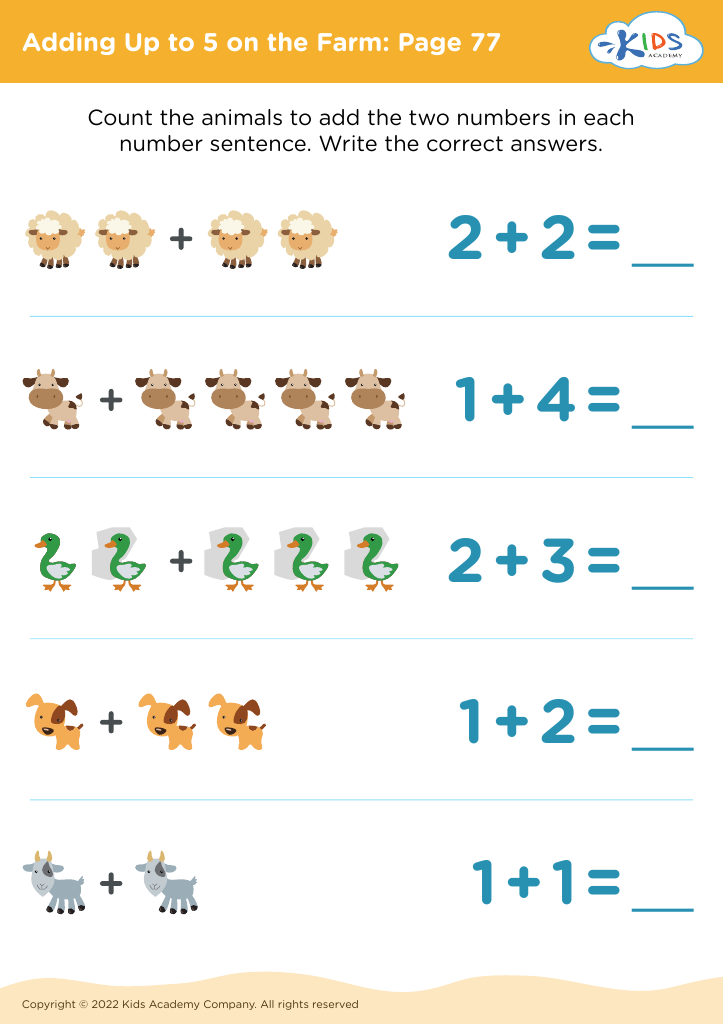
Adding Up to 5 on the Farm: Page 77
Worksheet
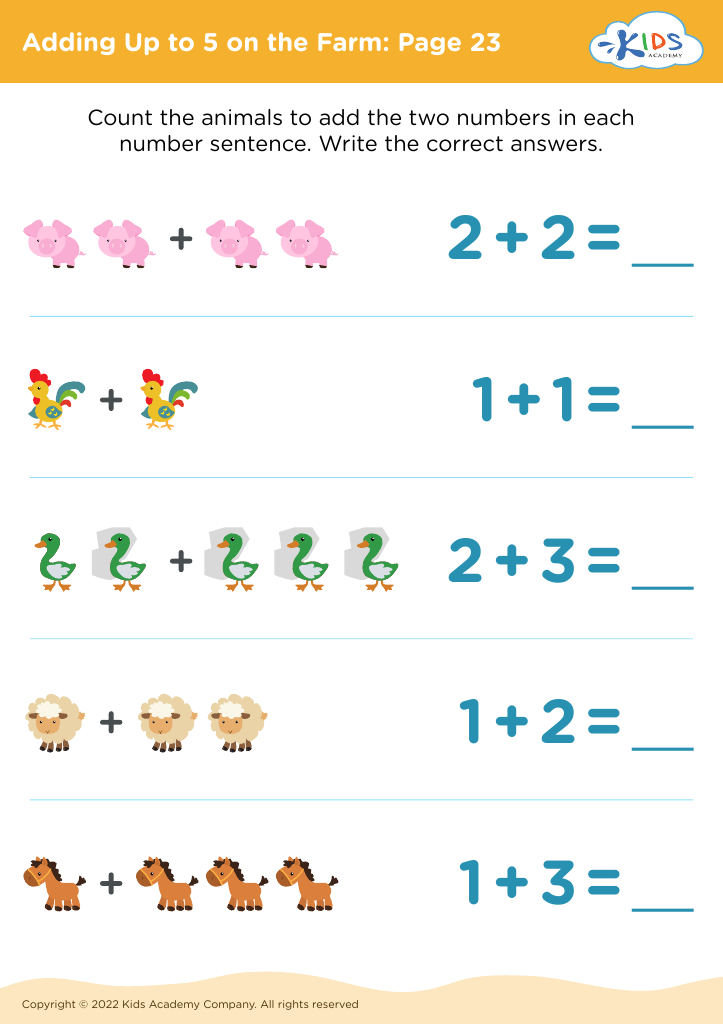
Adding Up to 5 on the Farm: Page 23
Worksheet
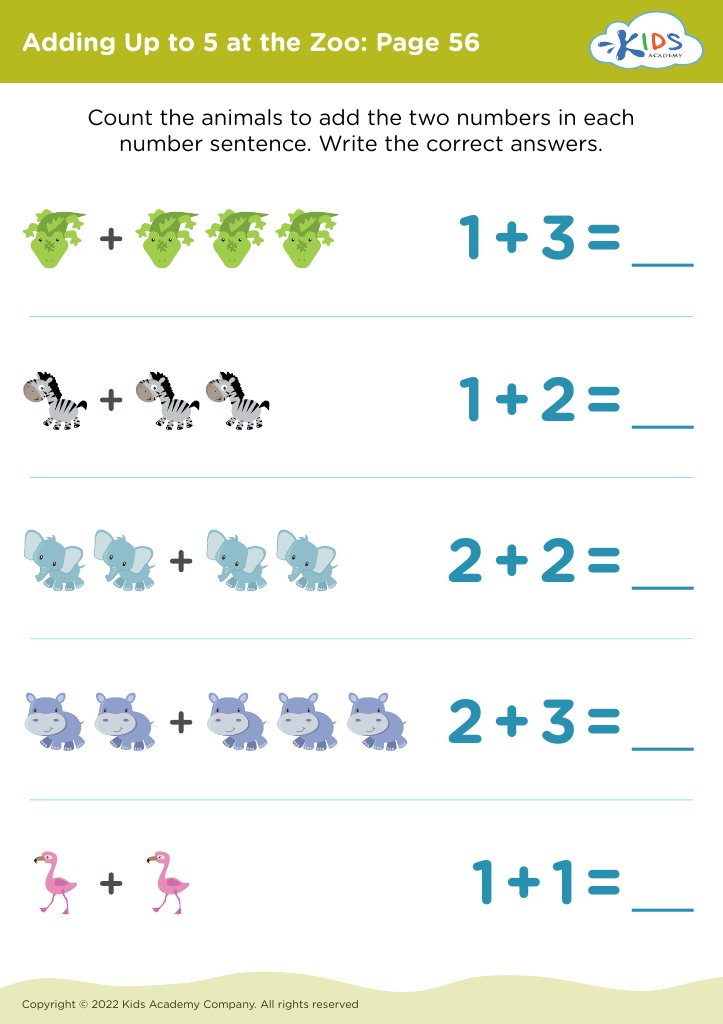
Adding Up to 5 at the Zoo: Page 56
Worksheet
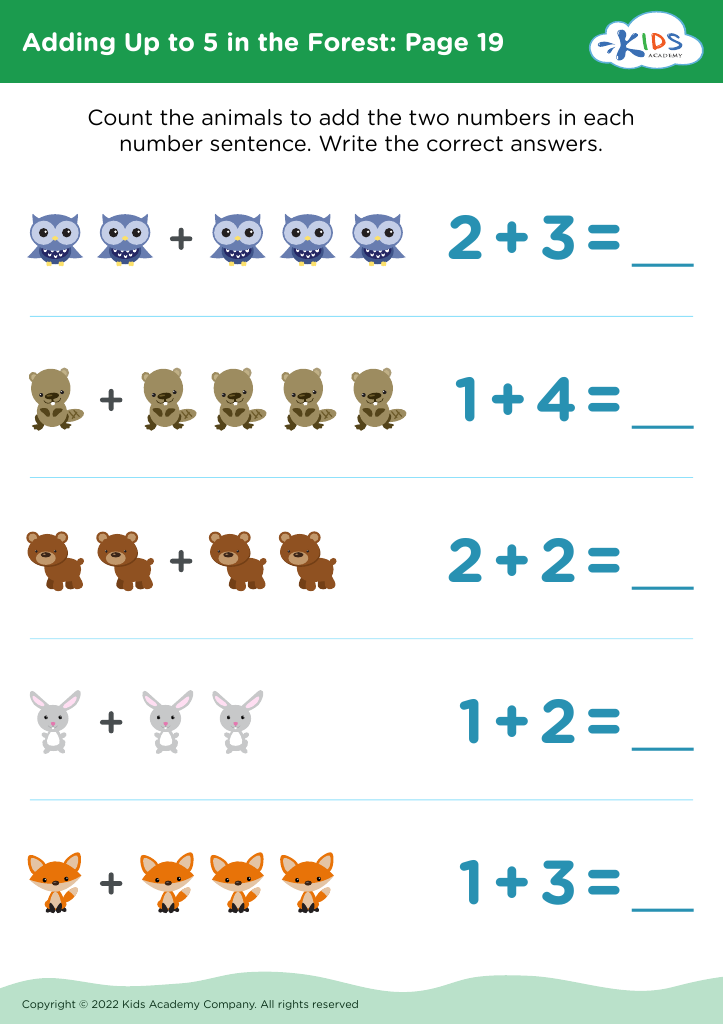
Adding Up to 5 in the Forest: Page 19
Worksheet
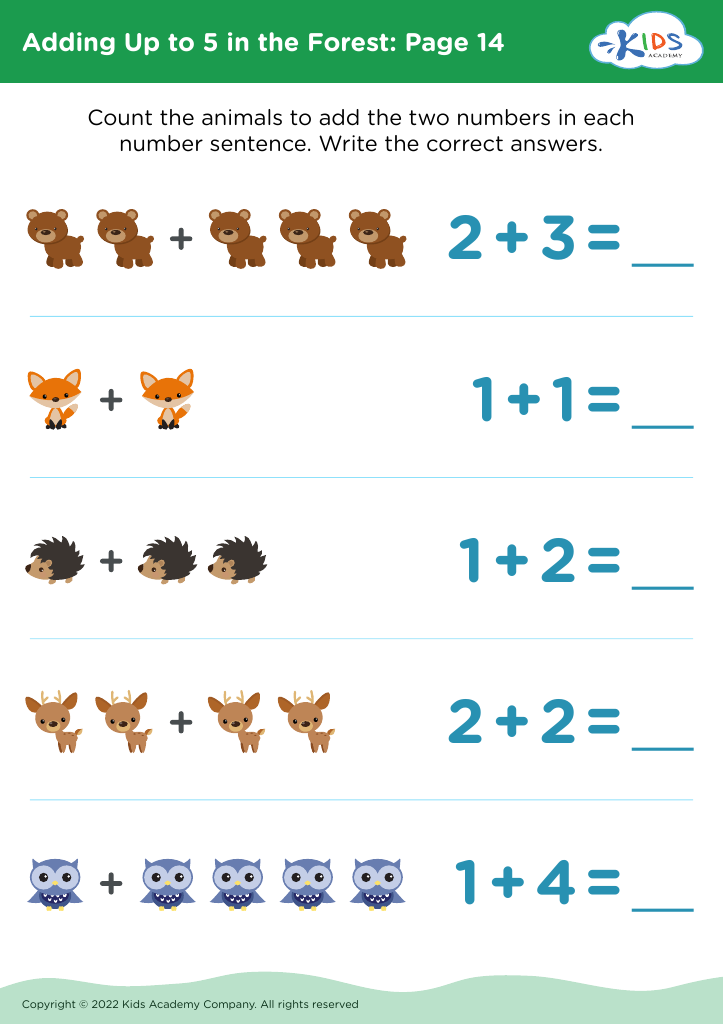
Adding Up to 5 in the Forest: Page 14
Worksheet
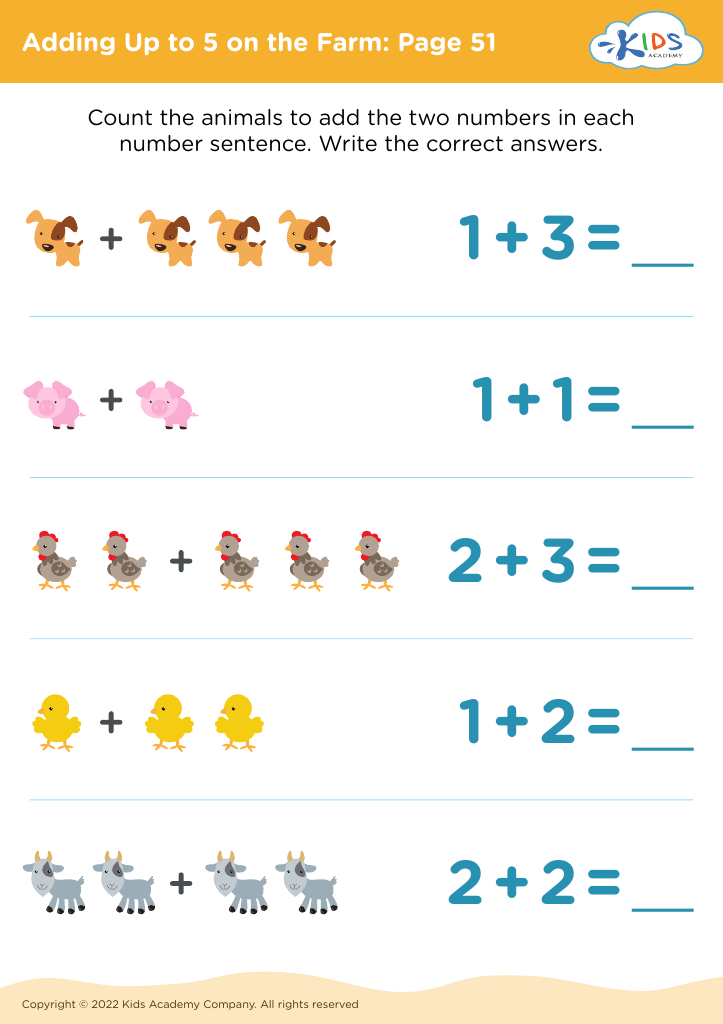
Adding Up to 5 on the Farm: Page 51
Worksheet
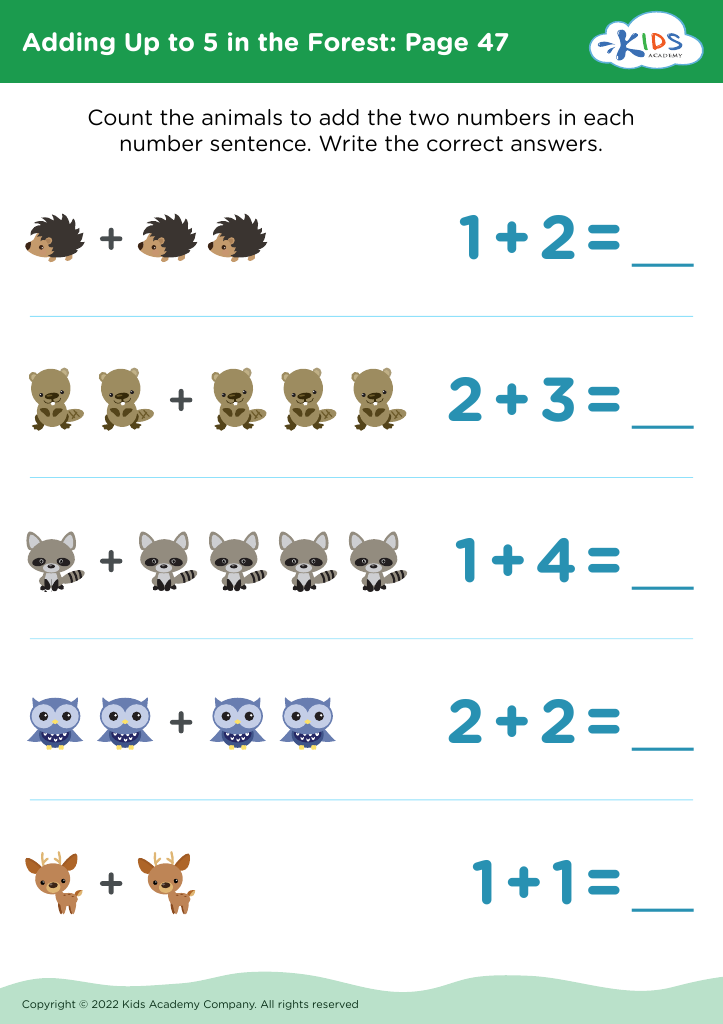
Adding Up to 5 in the Forest: Page 47
Worksheet
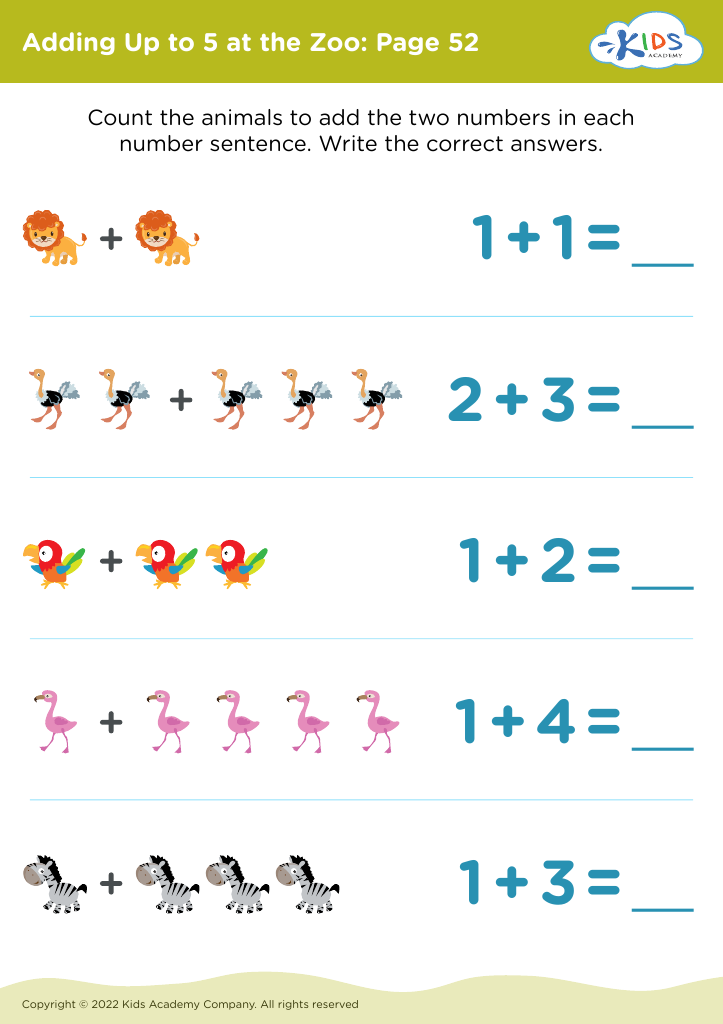
Adding Up to 5 at the Zoo: Page 52
Worksheet
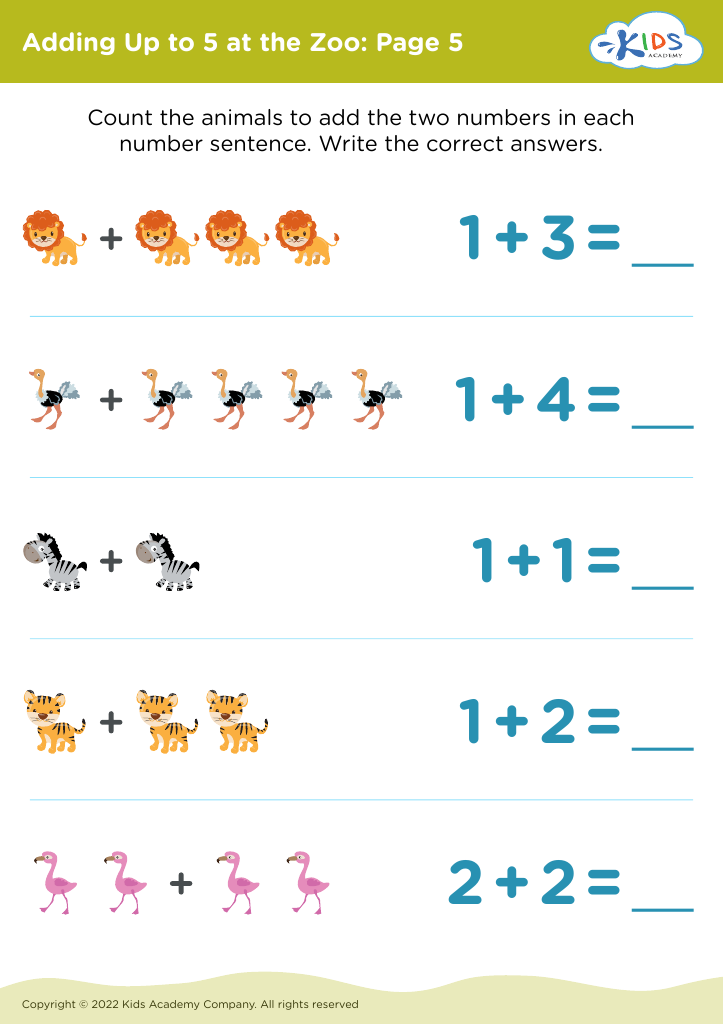
Adding Up to 5 at the Zoo: Page 5

Adding Up to 5 at the Zoo: Page 5

Adding Up to 5 at the Zoo: Page 5
Worksheet
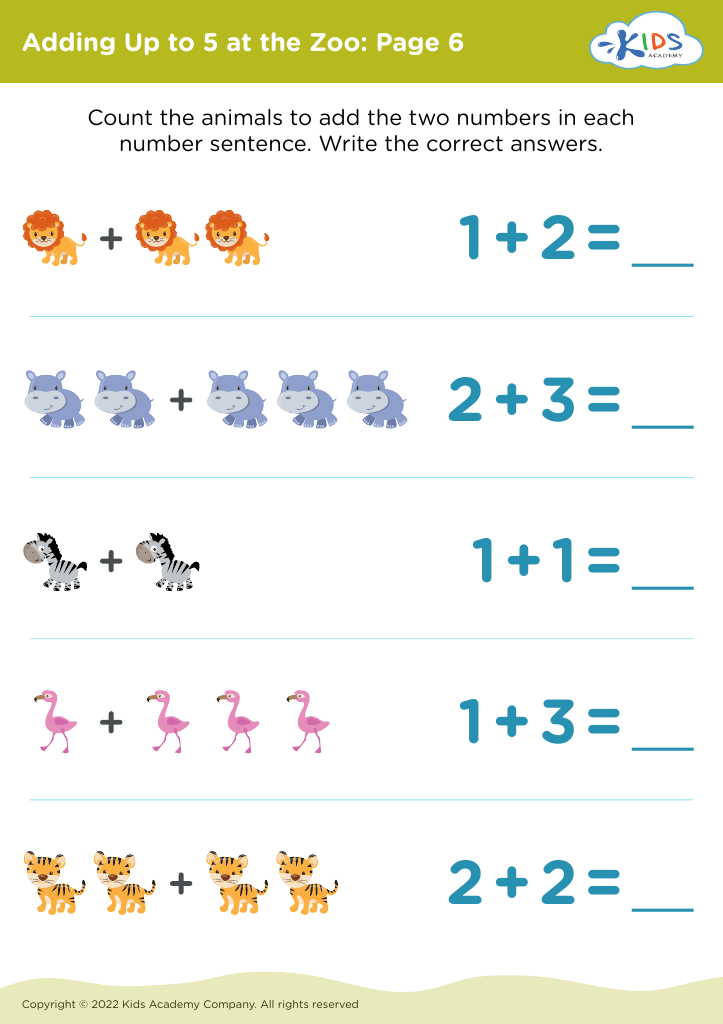
Adding Up to 5 at the Zoo: Page 6

Adding Up to 5 at the Zoo: Page 6

Adding Up to 5 at the Zoo: Page 6
Worksheet
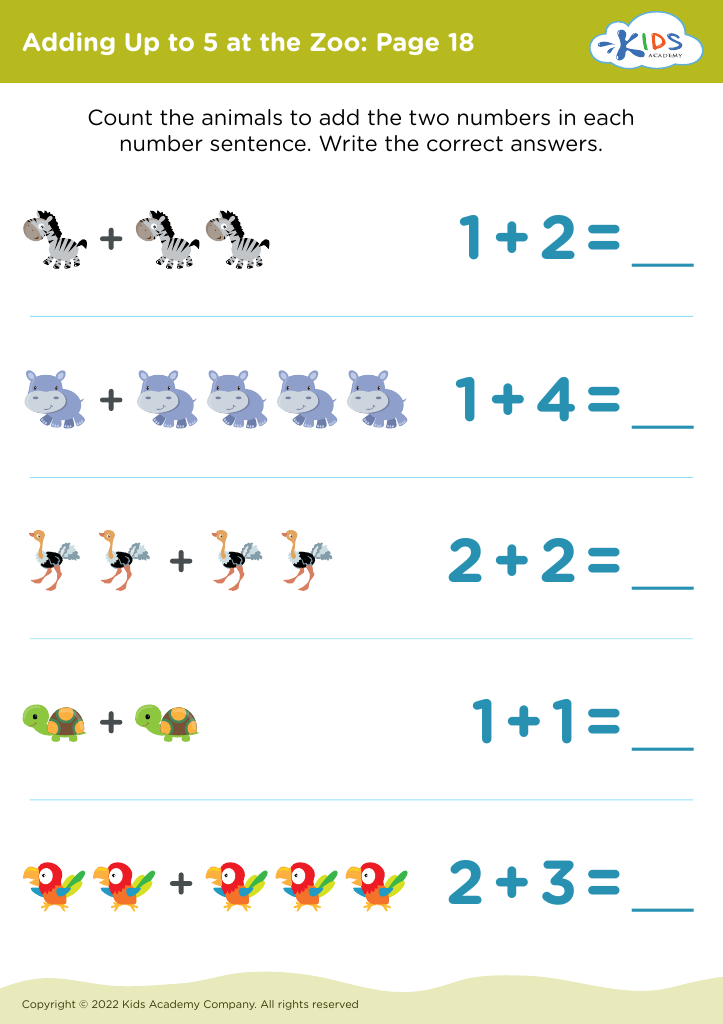
Adding Up to 5 at the Zoo: Page 18
Worksheet
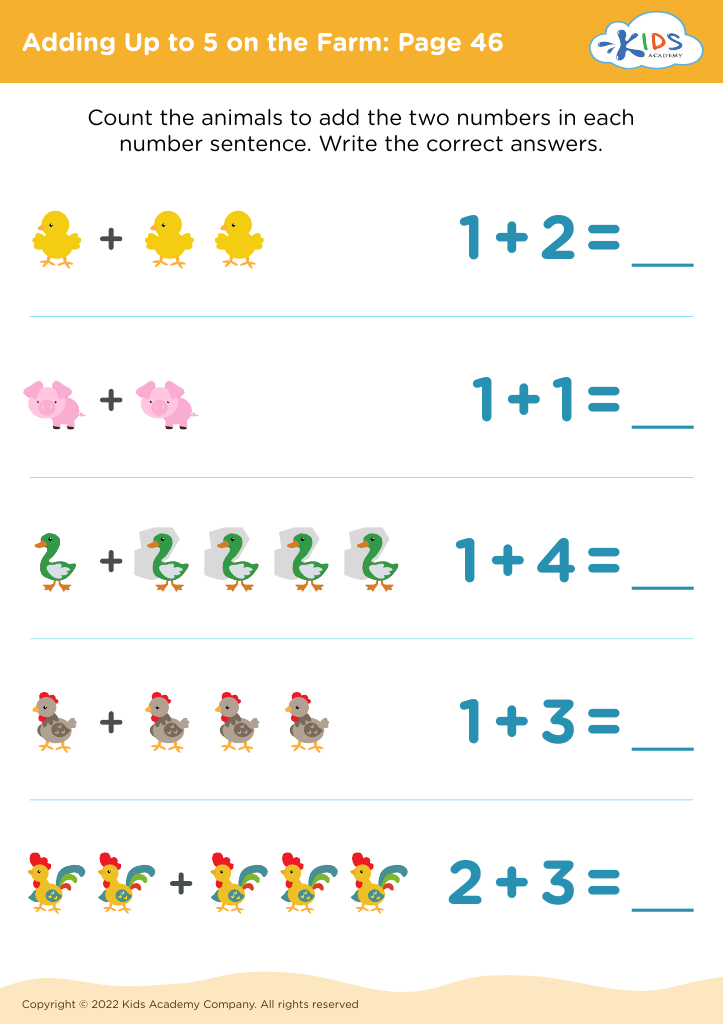
Adding Up to 5 on the Farm: Page 46
Worksheet
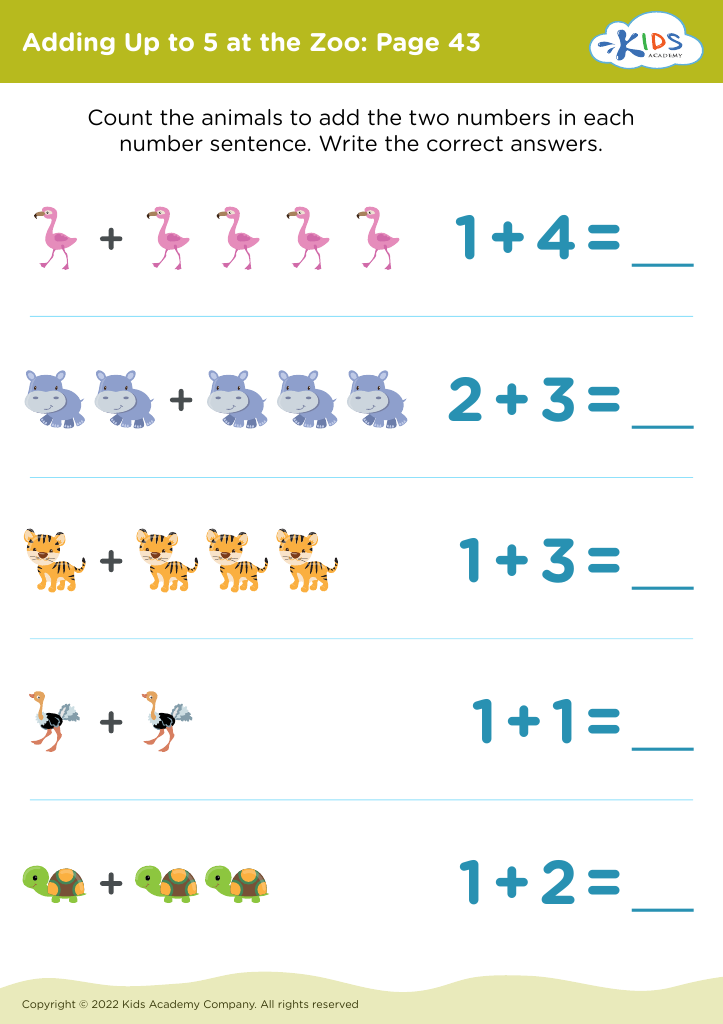
Adding Up to 5 at the Zoo: Page 43
Worksheet


Animal recognition and basic math skills, such as counting or adding up to 5, are essential components of early childhood education. For children aged 3-5, engaging with animals while learning basic math helps boost their cognitive and social skills. When parents or teachers introduce animal recognition alongside simple math concepts, it makes learning engaging and fun, fostering a love for education.

Recognizing animals enhances vocabulary and language skills, which are crucial at this developmental stage. It encourages curiosity about the natural world and sparks children's imagination. Additionally, incorporating animals into counting activities can make learning more relatable. For example, counting the number of ducks in a pond can help children visualize the concept, making it easier to grasp.

Moreover, these activities often promote social interactions among peers, nurturing communication and teamwork. As children work together to identify animals and solve math problems, they develop important interpersonal skills. Overall, integrating animal recognition with basic math enriches the learning experience and aids in the holistic development of young learners, preparing them for more complex subjects in the future. By making connections between animals and numbers, we lay a strong foundation for lifelong learning.