Basic addition practice Adding Up to 5 Worksheets for Ages 3-5
9 filtered results
-
From - To
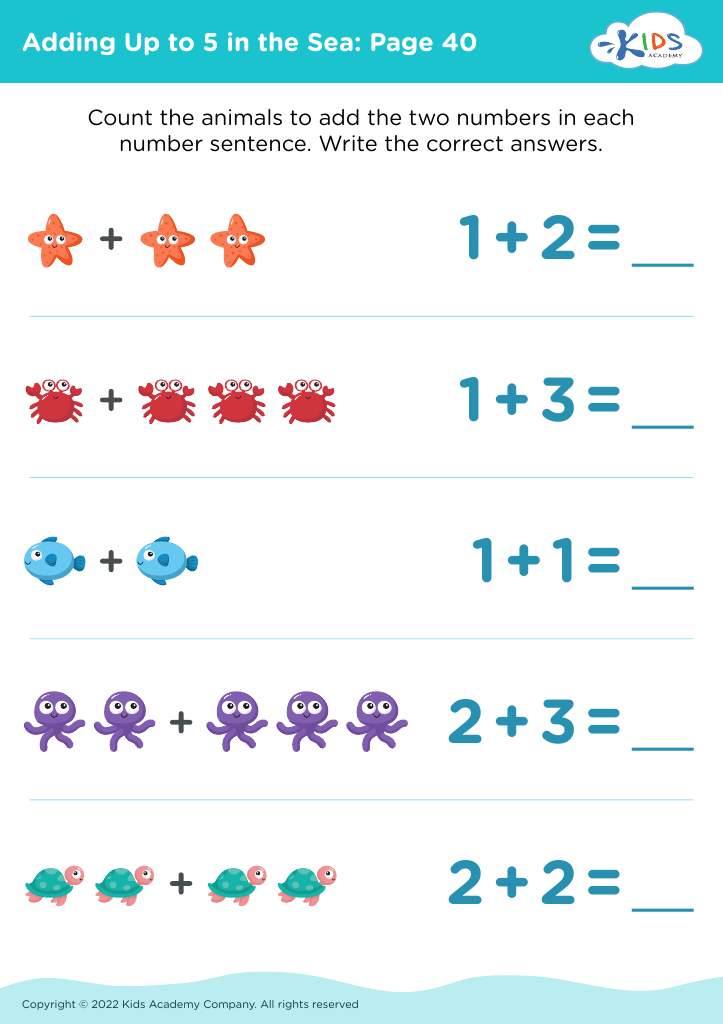
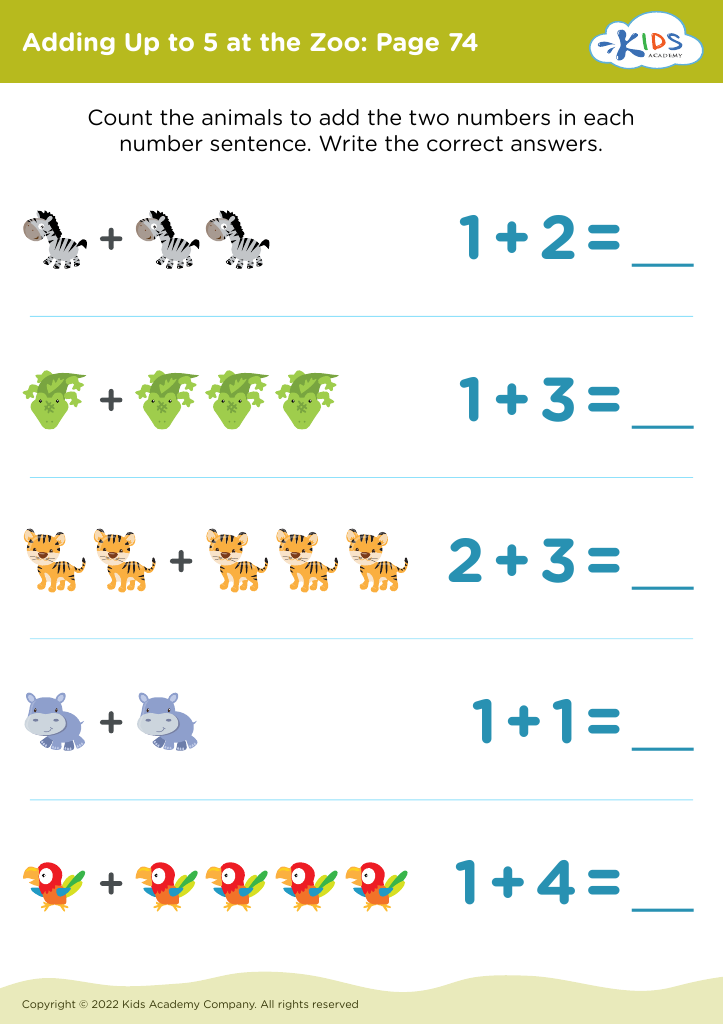
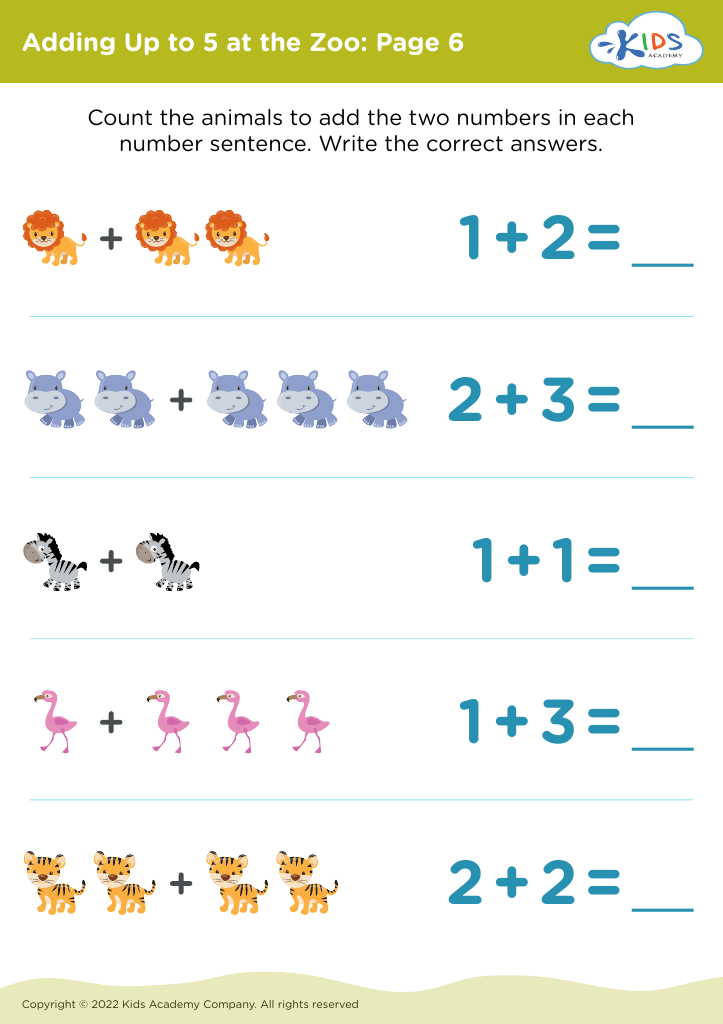
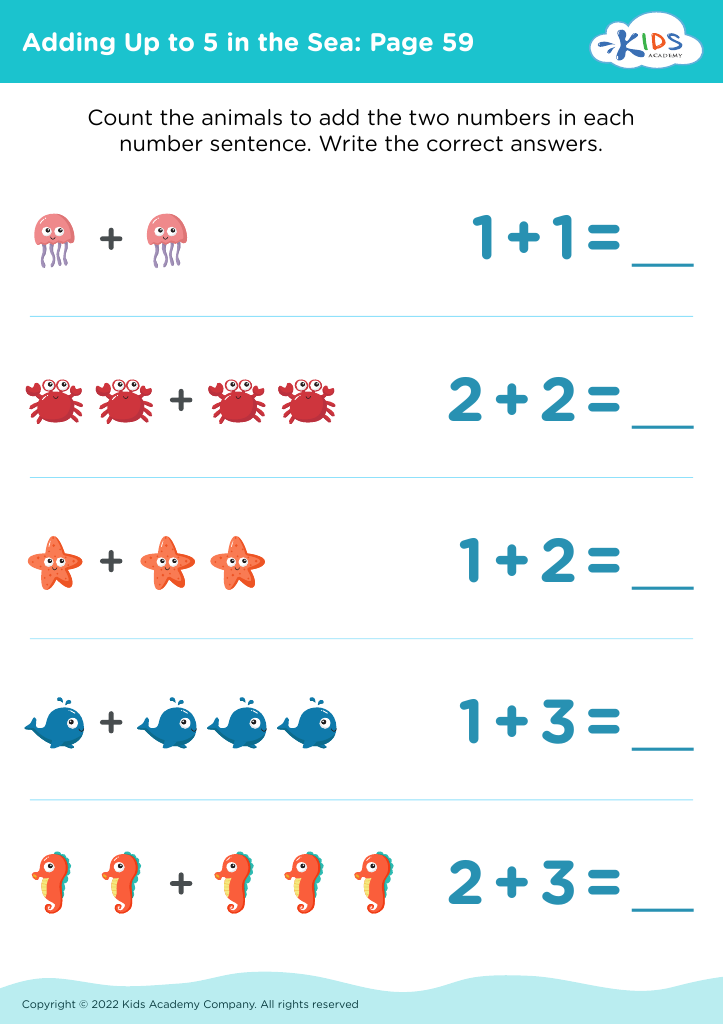
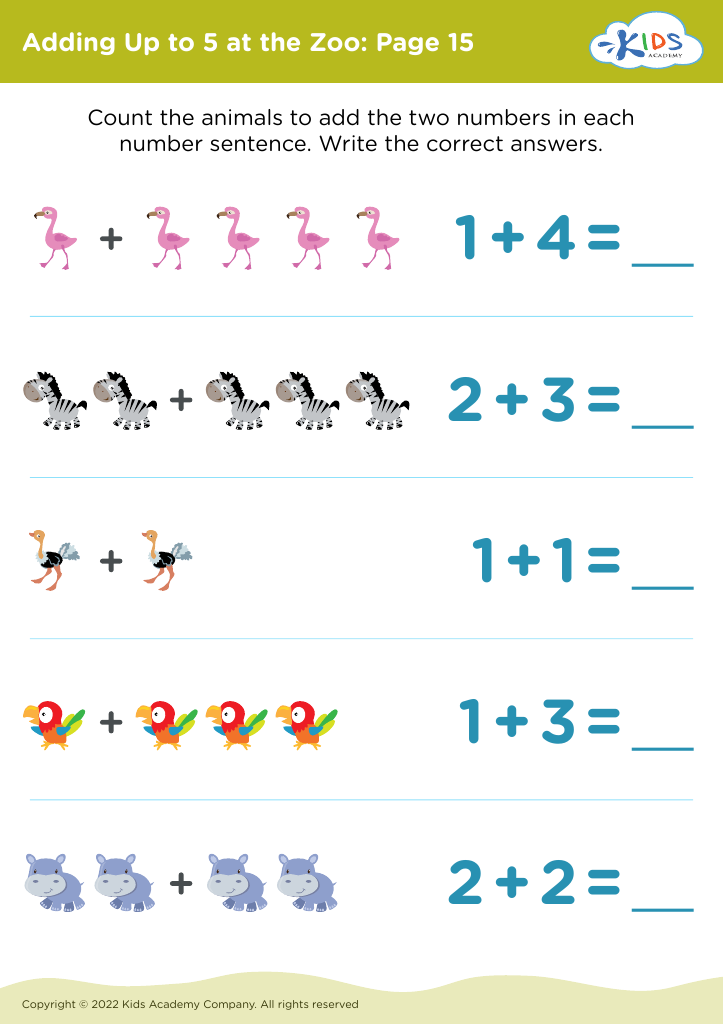
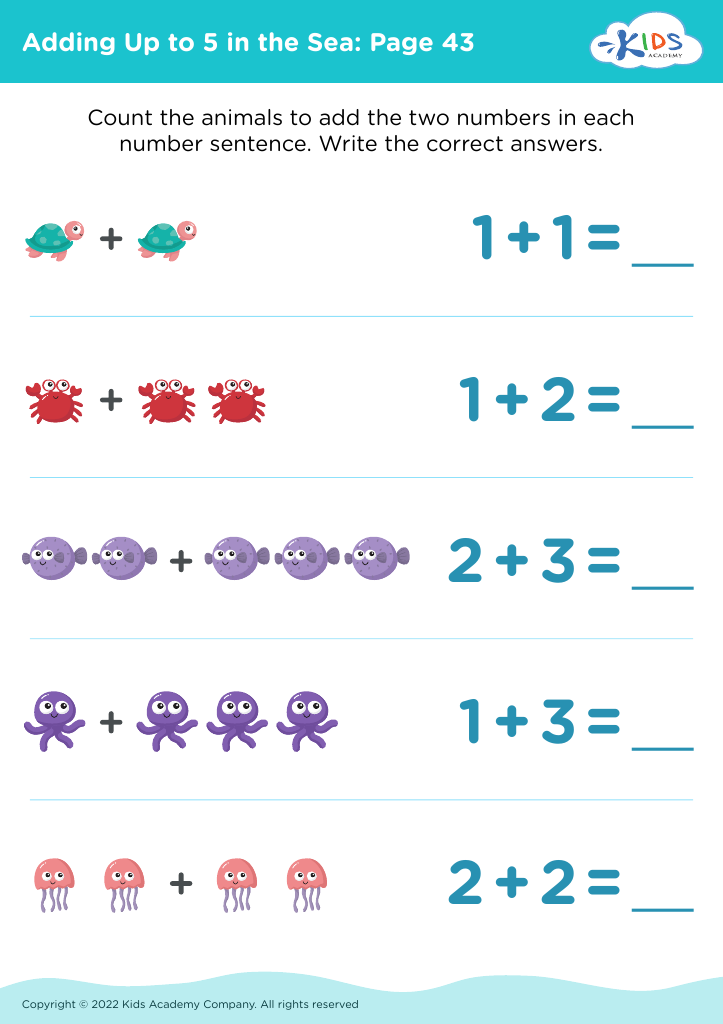
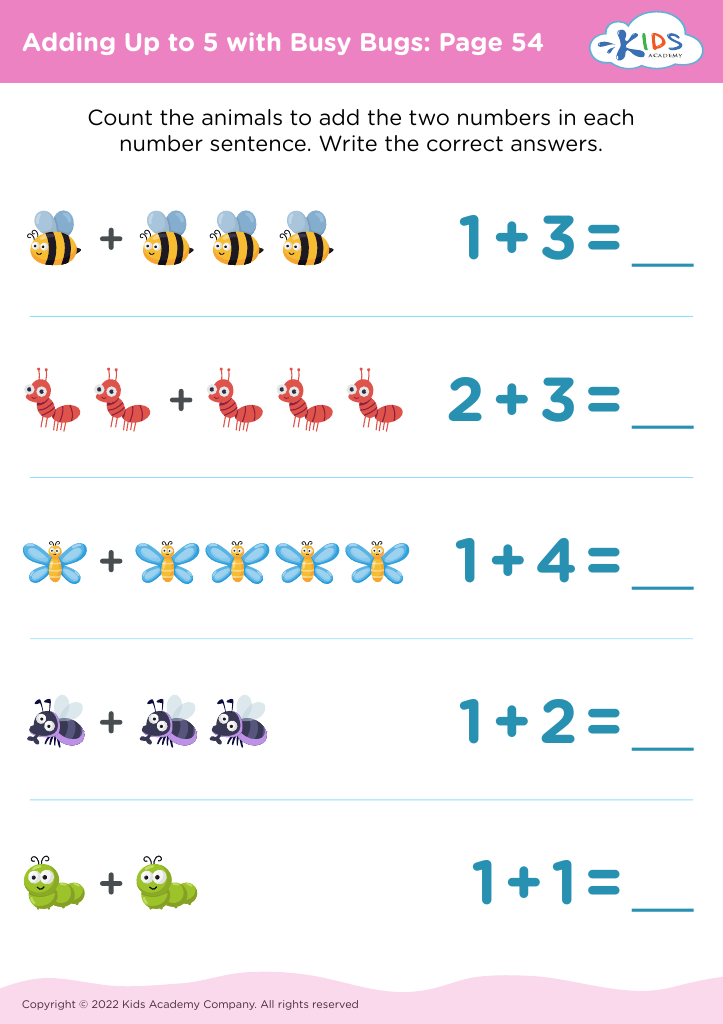
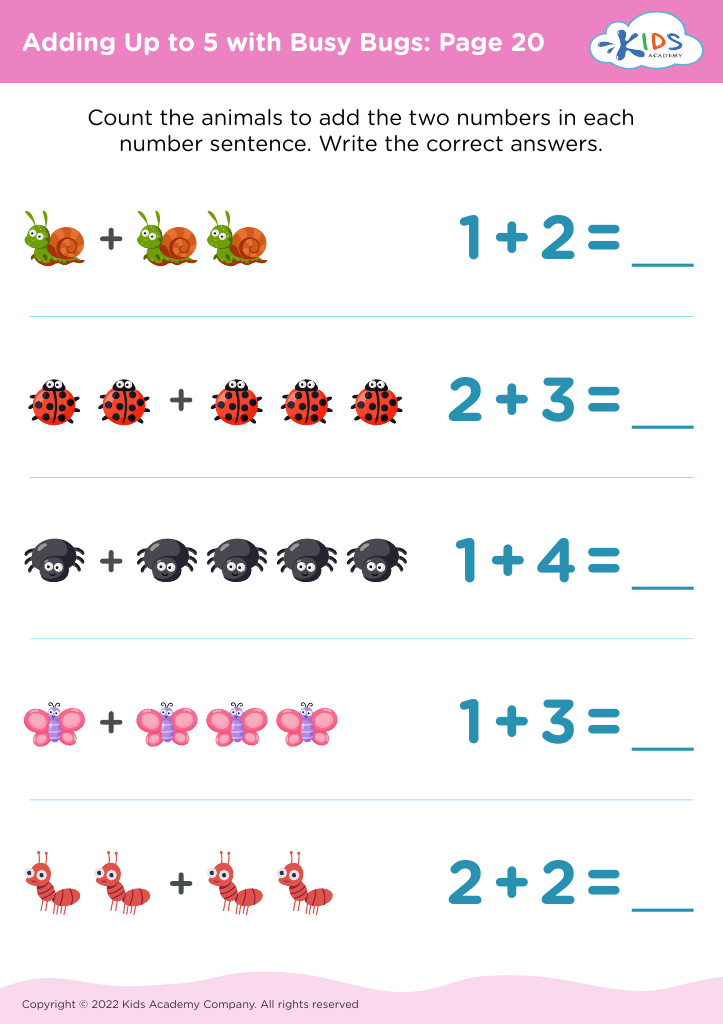
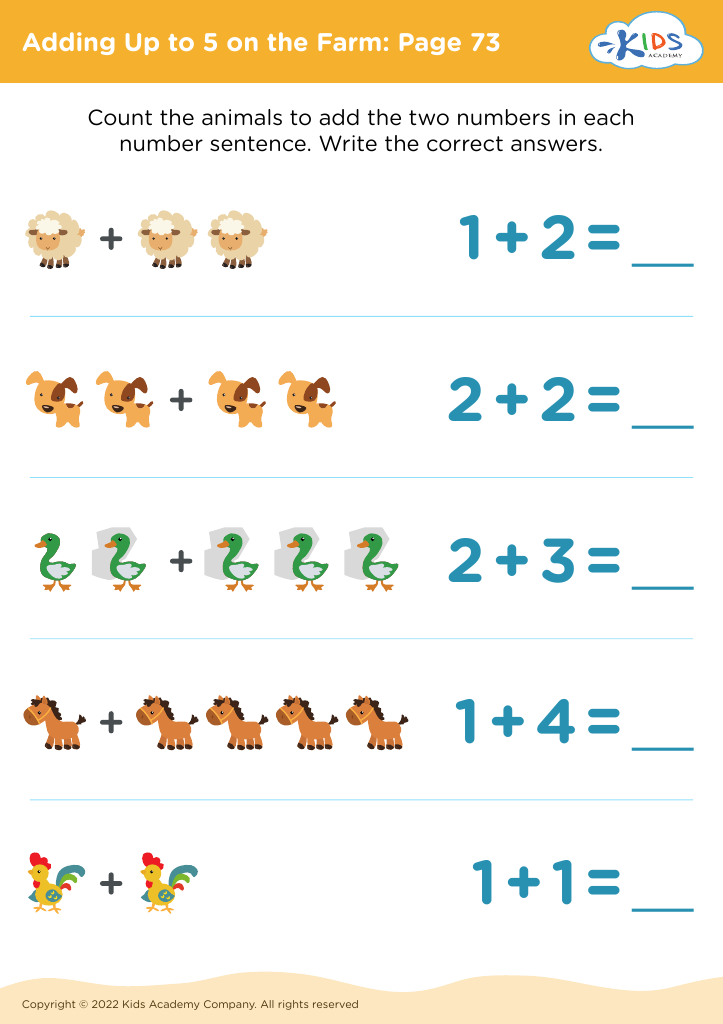
Introducing our "Basic Addition Practice Adding Up to 5 Worksheets for Ages 3-5"! Perfect for early learners, these engaging worksheets are designed to make math fun and easy. With colorful illustrations and simple problems, your child will love practicing basic math skills while building a strong foundation for future learning. Ideal for both parents and teachers, these printables help young ones master addition up to 5, developing their confidence and accuracy. Plus, they'll enhance number recognition and counting abilities. Start your child’s math journey today with our expertly crafted resources, ensuring their progress in a fun, interactive manner!



.jpg)




Parents and teachers should give importance to basic addition practice, especially adding numbers up to 5 for children aged 3-5, as it lays the foundational groundwork for future mathematical skills. At this formative age, young minds are highly adaptable and are in the critical phase of cognitive development. Introducing them to simple addition arrangements fosters early numeracy skills, which are crucial for understanding more complex concepts later on.
Mastering addition up to 5 helps children develop counting skills, number recognition, and the ability to make connections between quantities and numerical symbols. This, in turn, supports the brilliance of their problem-solving and logical-thinking processes. Moreover, achieving small successes with these early math problems boosts confidence and promotes a positive attitude towards learning and mathematics at a young age.
Practicing addition in this range can be engaging and enjoyable. Using items like toys, blocks, or pictures can make the learning interactive and relevant to their everyday experiences. Furthermore, these activities indirectly enhance their fine motor skills and hand-eye coordination when they manipulate physical objects. Consistently integrating basic addition into early education fosters a sense of accomplishment and a sturdy mathematical foundation for future educational pursuits.








