Basic arithmetic practice Adding Up to 5 Worksheets for Ages 3-5
8 filtered results
-
From - To
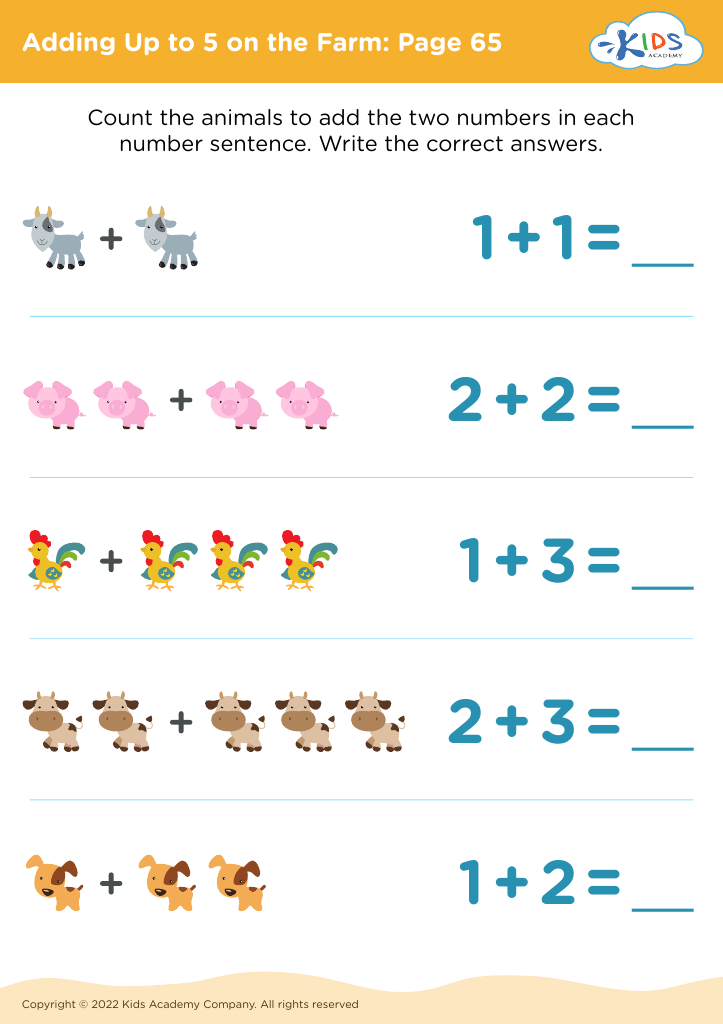
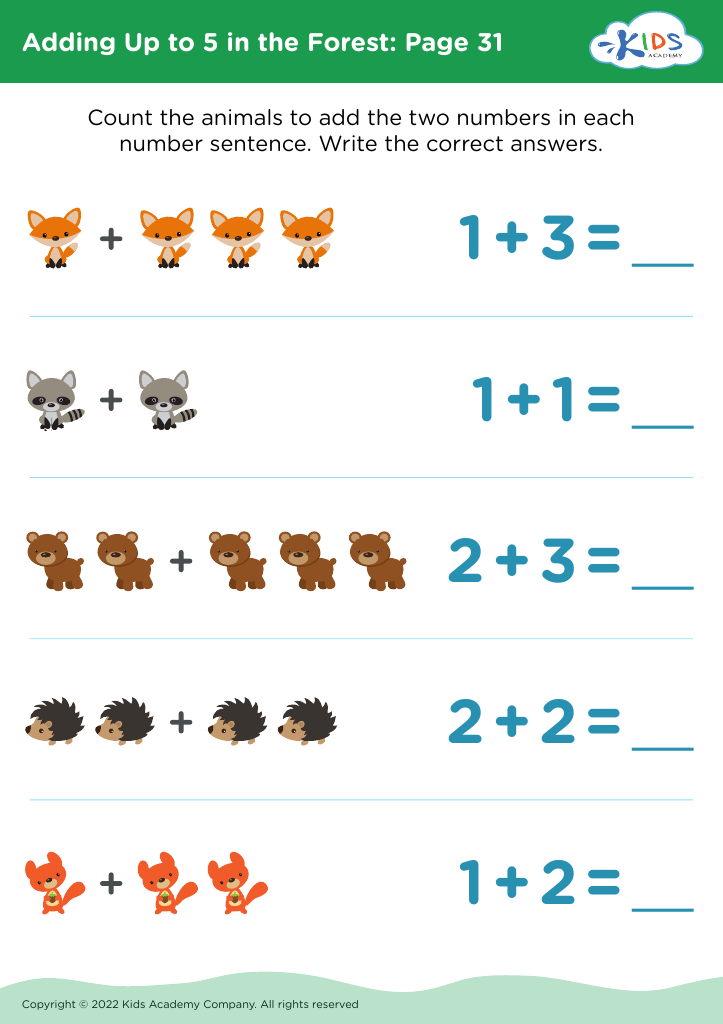
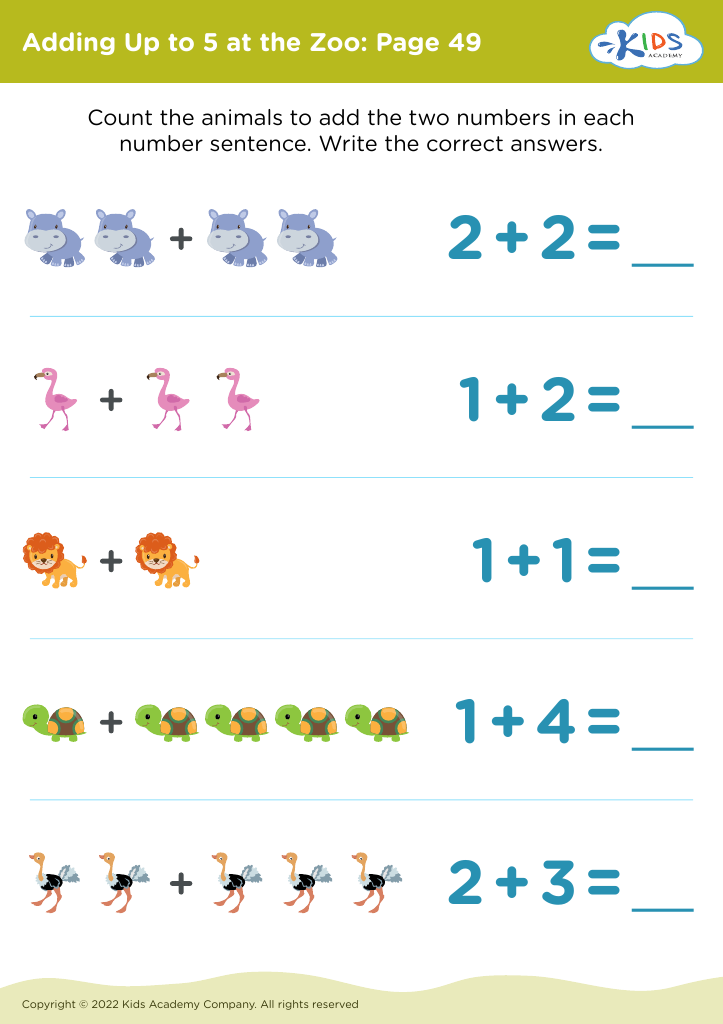
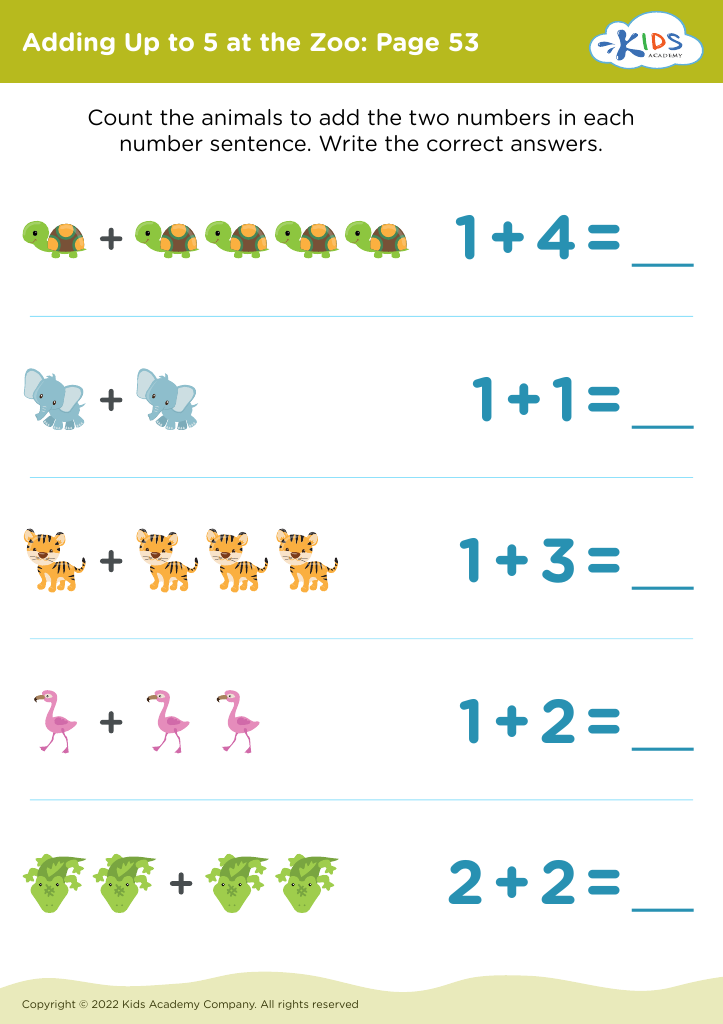
Explore our collection of "Basic Arithmetic Practice: Adding Up to 5 Worksheets" designed specifically for children aged 3-5. These engaging worksheets offer an interactive way to introduce early math skills, helping young learners develop a strong foundation in addition. Featuring colorful illustrations and age-appropriate problems, each worksheet encourages children to practice adding numbers up to 5, reinforcing their number recognition and counting abilities. Ideal for parents and educators, our worksheets can be easily printed at home or in the classroom, making learning fun and accessible. Start your little one's mathematical journey today with these enjoyable and educational resources!
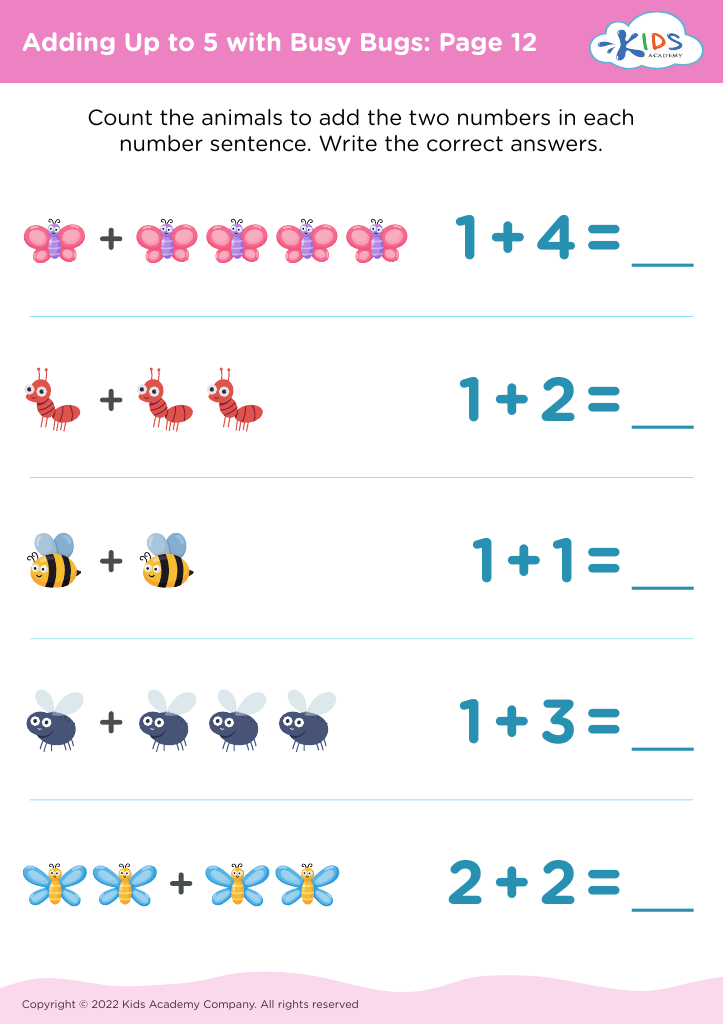
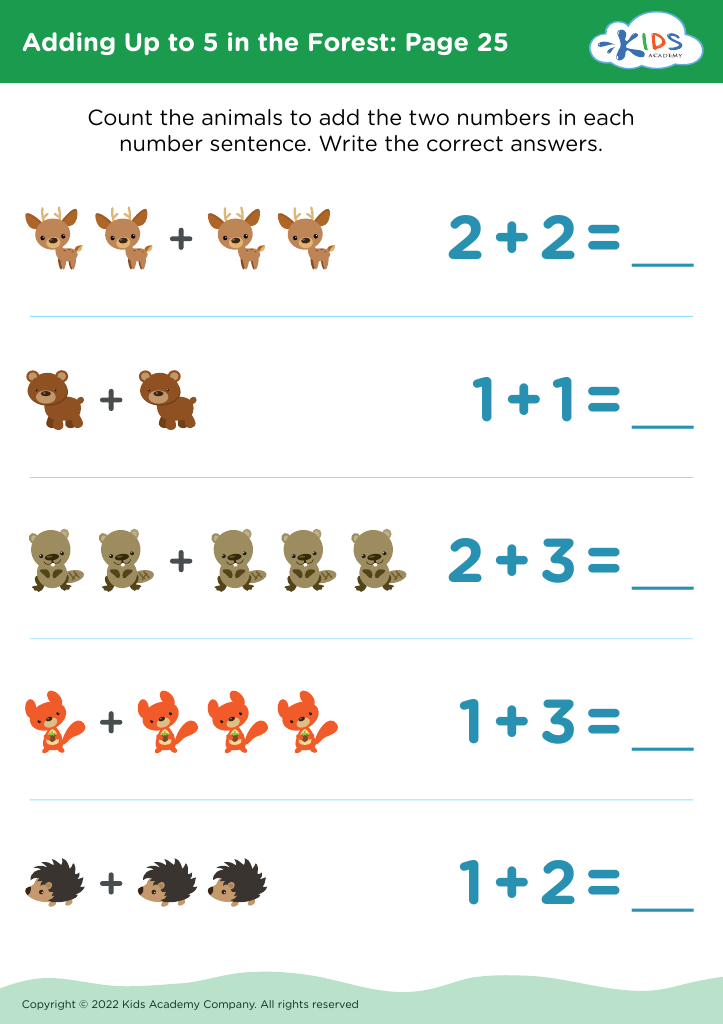
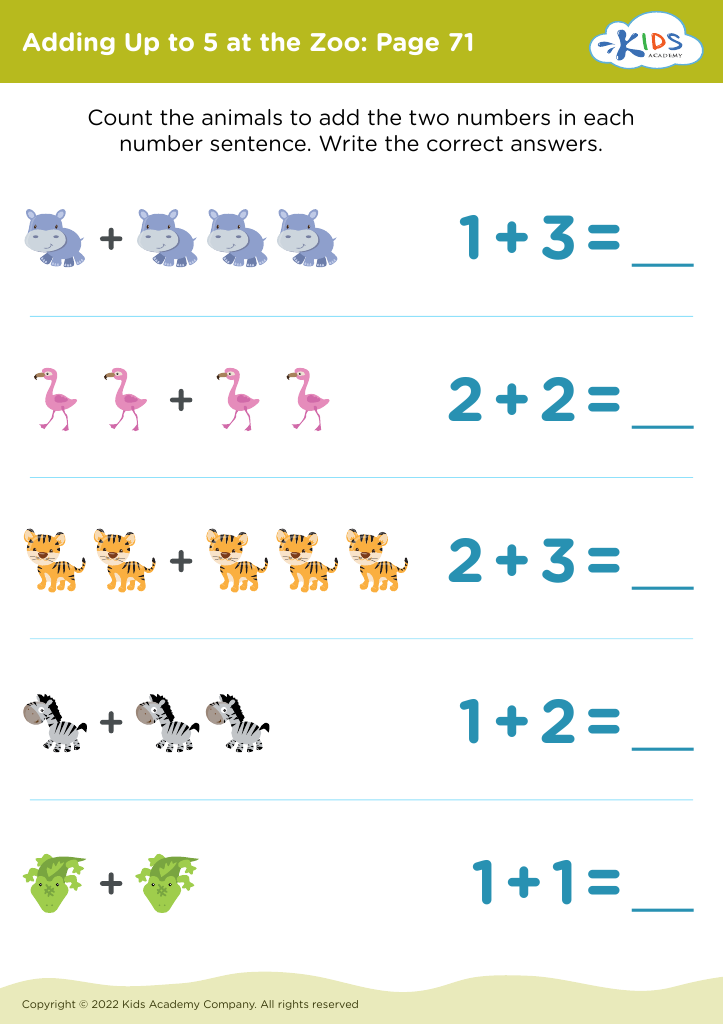
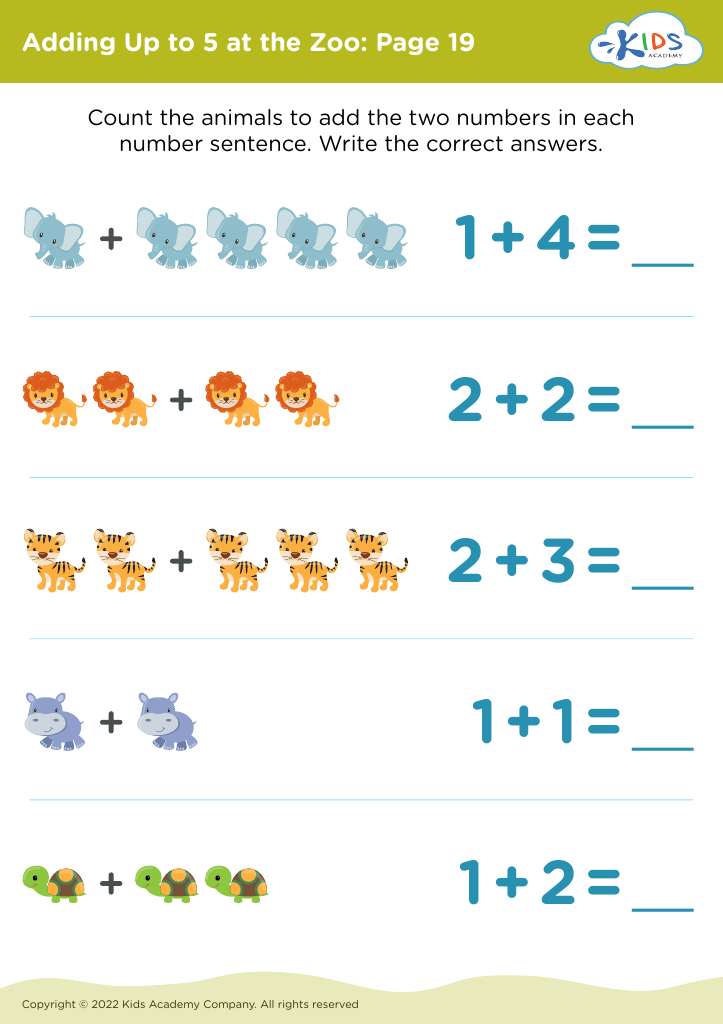


%20(1).jpg)

.jpg)



Basic arithmetic practice, such as Adding Up to 5, plays a crucial role in the cognitive and social development of children aged 3-5. During these formative years, children build foundational skills needed for more complex mathematical concepts later on. Engaging with simple addition helps reinforce number recognition, counting, and problem-solving abilities.
Learning to add amounts up to 5 fosters confidence and encourages children to explore and manipulate numbers in a playful, hands-on manner. This playful learning not only sparks curiosity but also nurtures critical thinking skills. Parents and teachers should care about this early practice because it lays the groundwork for positive attitudes towards mathematics in the future.
Moreover, these activities often include interactive elements—such as using objects or drawings—that can enhance fine motor skills and promote social interaction through group activities. Such engagement cultivates communication skills and teamwork, as children often discuss their strategies and reasoning with peers.
Inculcating a strong grasp of basic arithmetic not only prepares children for academic success but also helps them navigate everyday situations that involve numbers, fostering practical life skills. Consequently, a solid understanding of adding numbers up to 5 is essential for a well-rounded educational foundation.








