Filters

102 filtered results

Clear all filters
Favorites
With answer key
Interactive

102 filtered results

Difficulty Level

Grade


Check out this FREE Trial Lesson on Adding Up to 5 for age 3-5!

My Family

Favorites
With answer key
Interactive
  • 3-5
  • Counting skills
  • Adding Up to 5
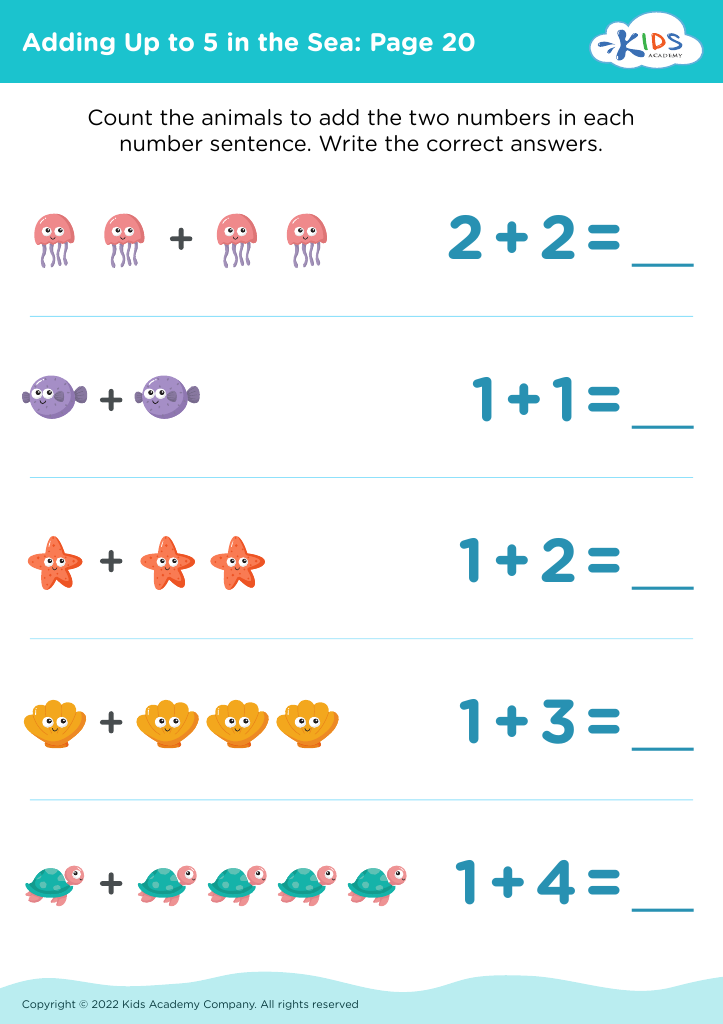
Adding Up to 5 in the Sea: Page 20
Worksheet
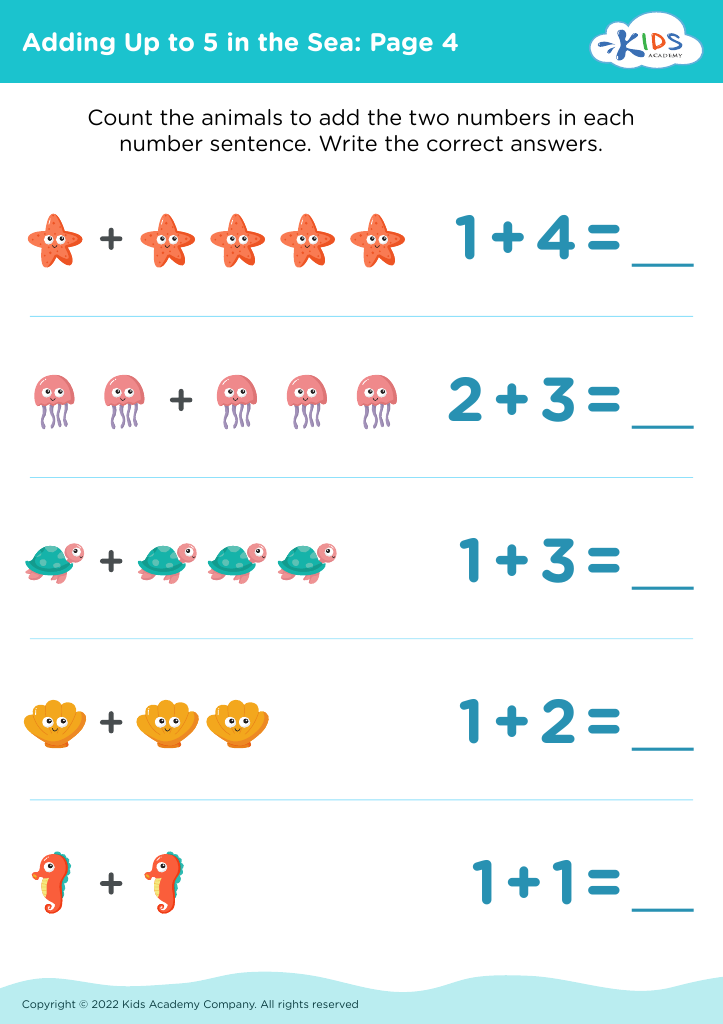
Adding Up to 5 in the Sea: Page 4

Adding Up to 5 in the Sea: Page 4

Adding Up to 5 in the Sea: Page 4
Worksheet
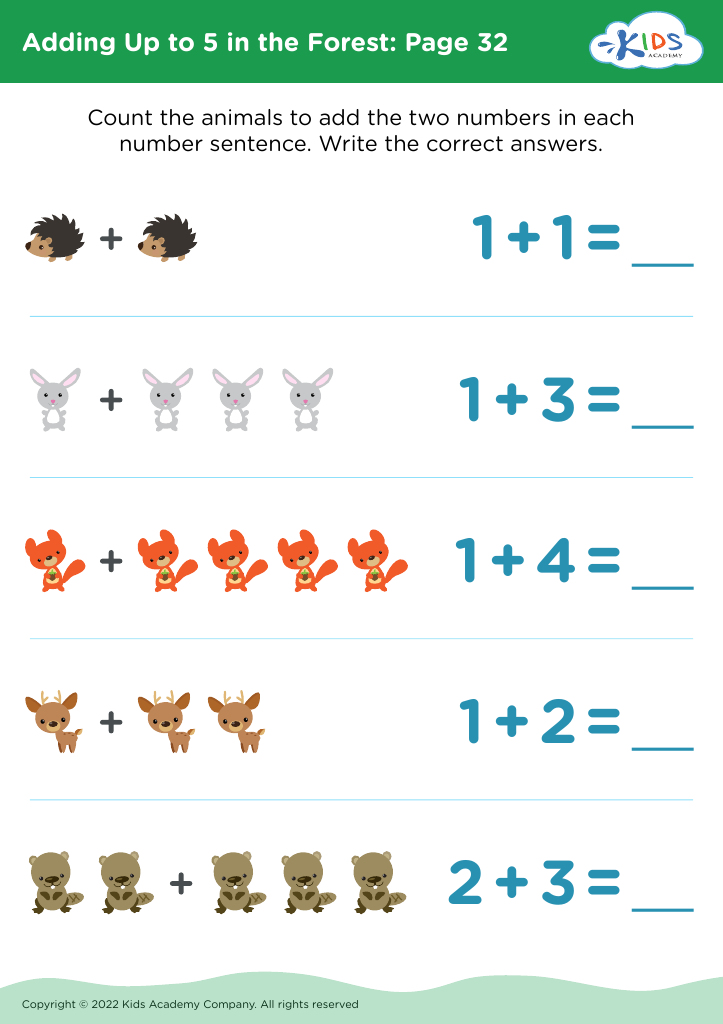
Adding Up to 5 in the Forest: Page 32
Worksheet
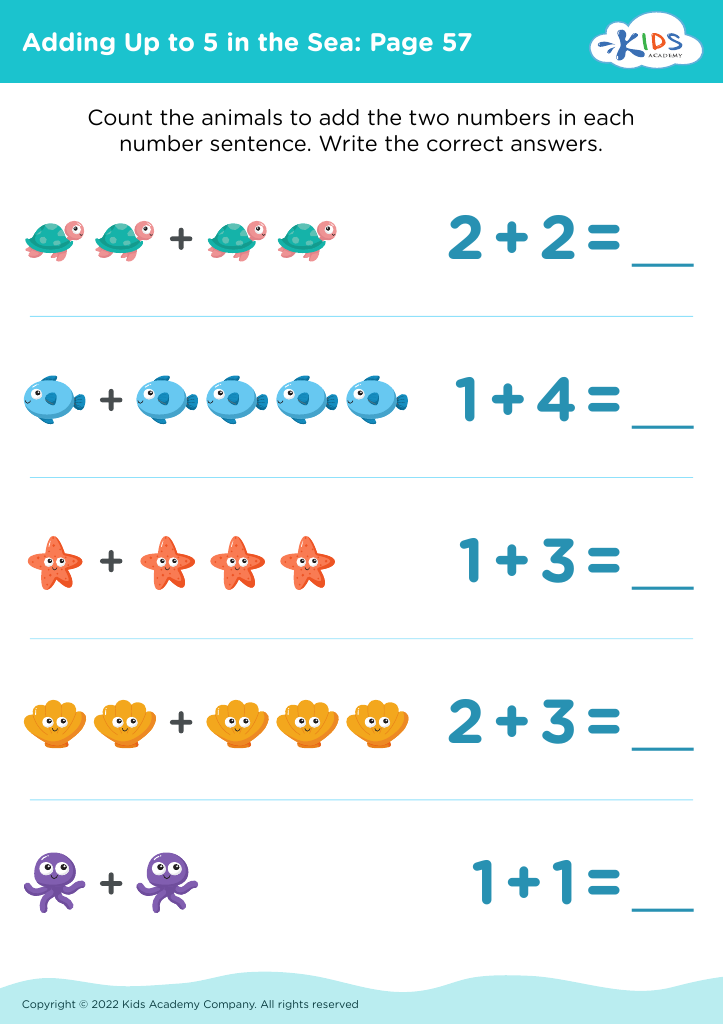
Adding Up to 5 in the Sea: Page 57
Worksheet
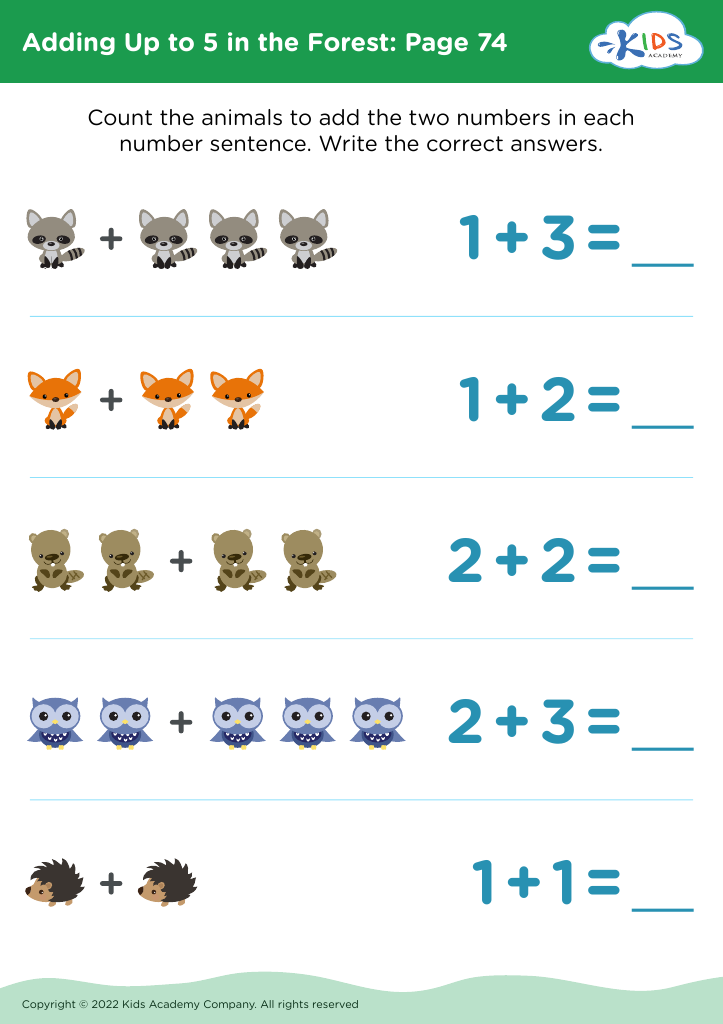
Adding Up to 5 in the Forest: Page 74
Worksheet
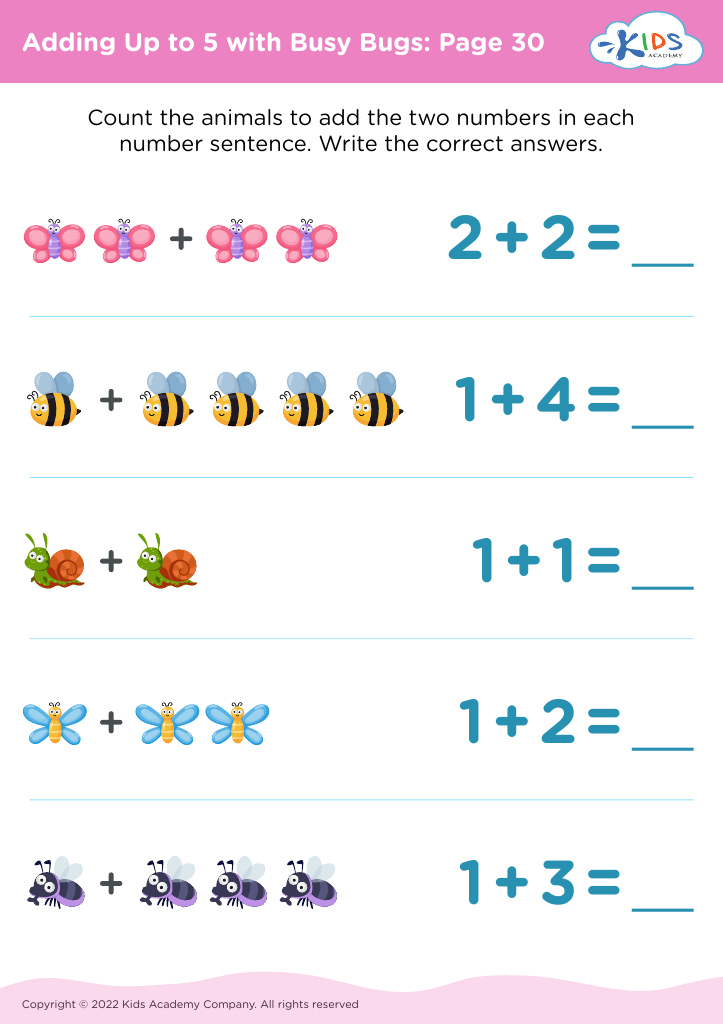
Adding Up to 5 with Busy Bugs: Page 30
Worksheet
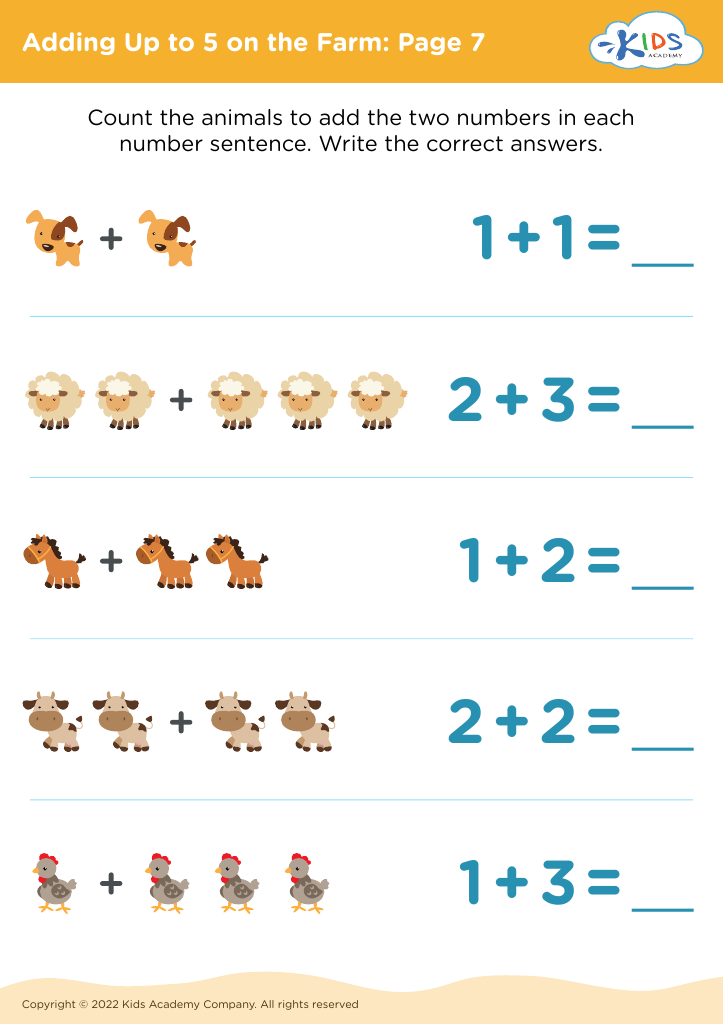
Adding Up to 5 on the Farm: Page 7
Worksheet
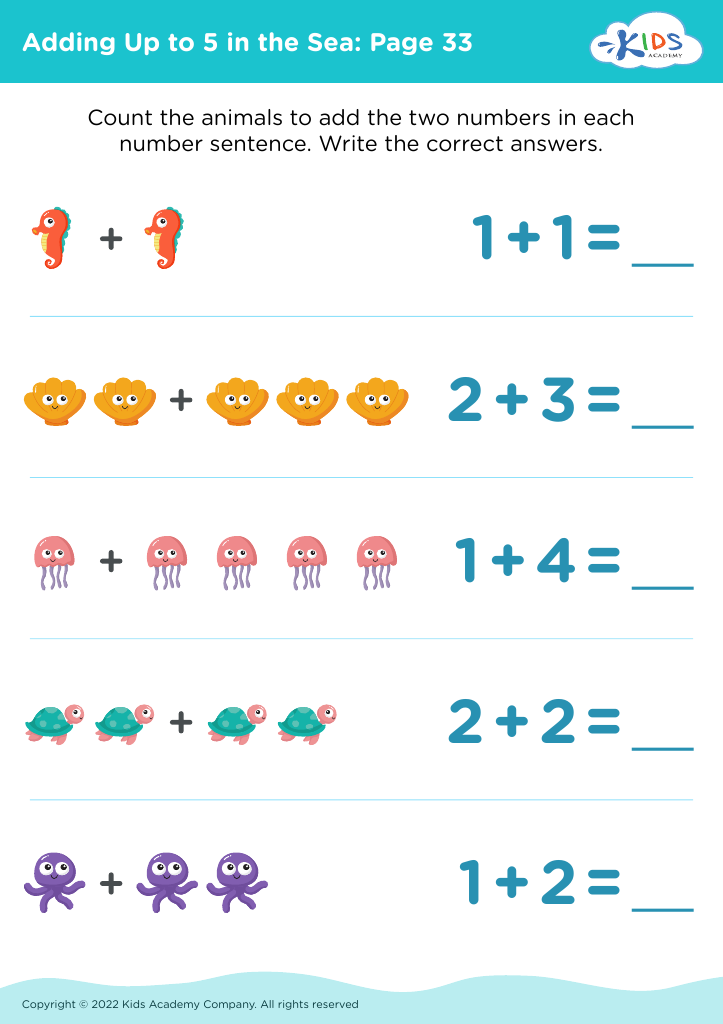
Adding Up to 5 in the Sea: Page 33
Worksheet
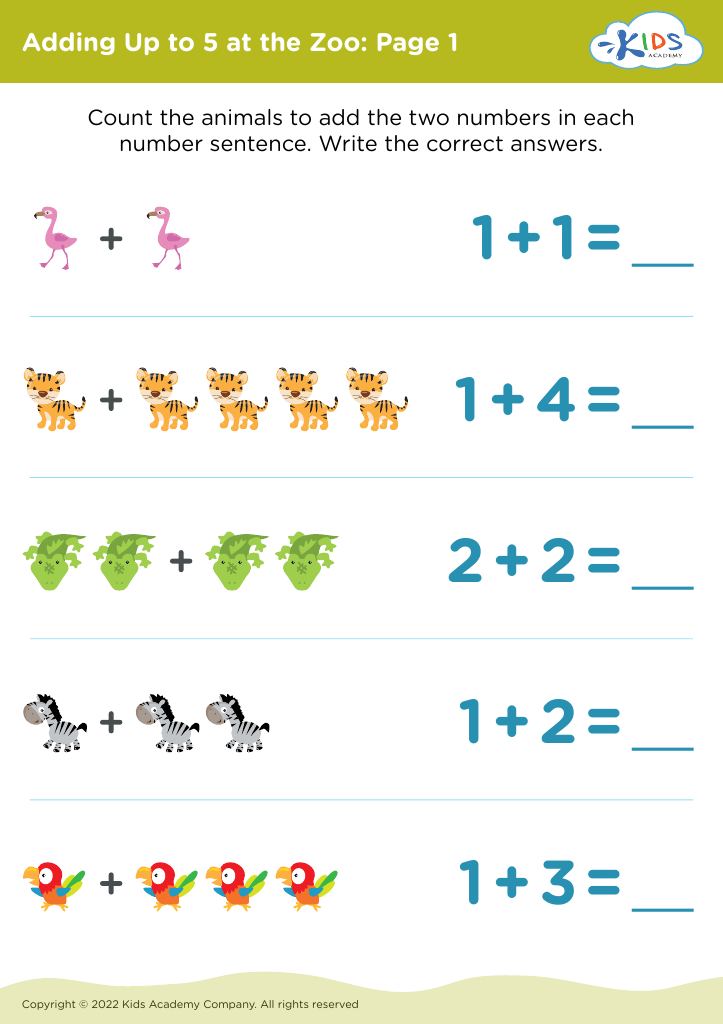
Adding Up to 5 at the Zoo: Page 1

Adding Up to 5 at the Zoo: Page 1

Adding Up to 5 at the Zoo: Page 1
Worksheet
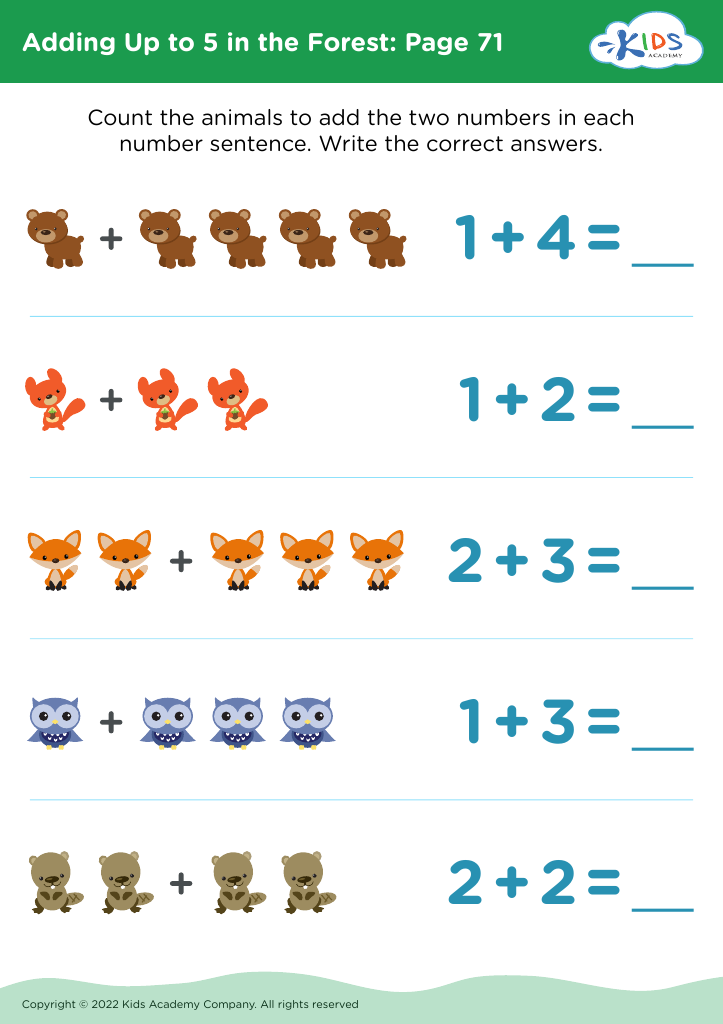
Adding Up to 5 in the Forest: Page 71
Worksheet
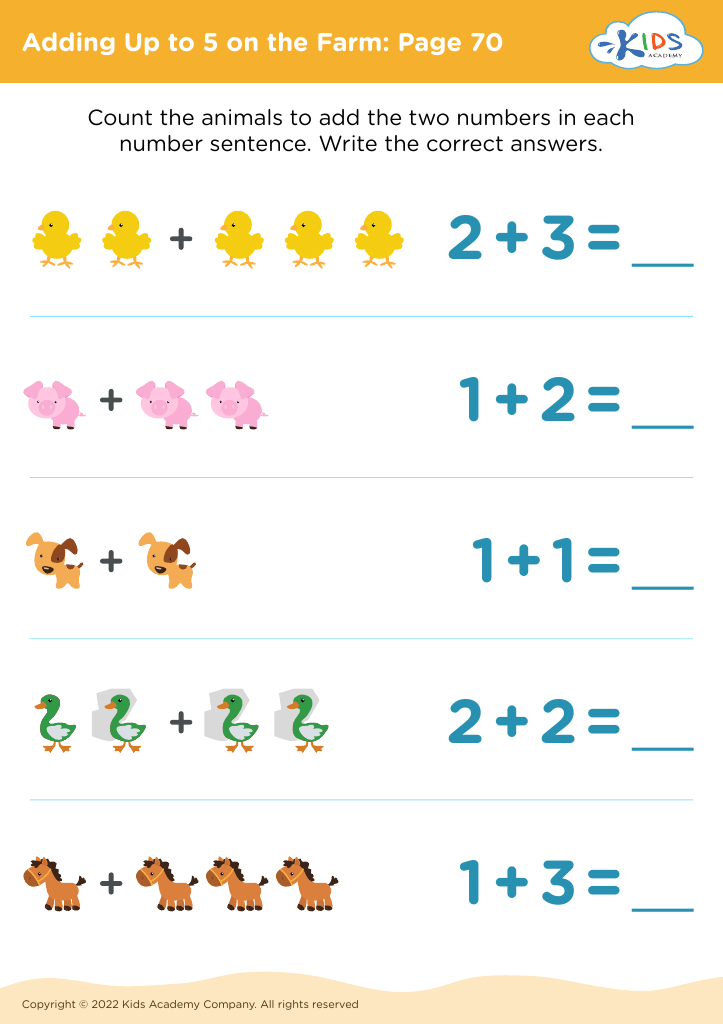
Adding Up to 5 on the Farm: Page 70
Worksheet
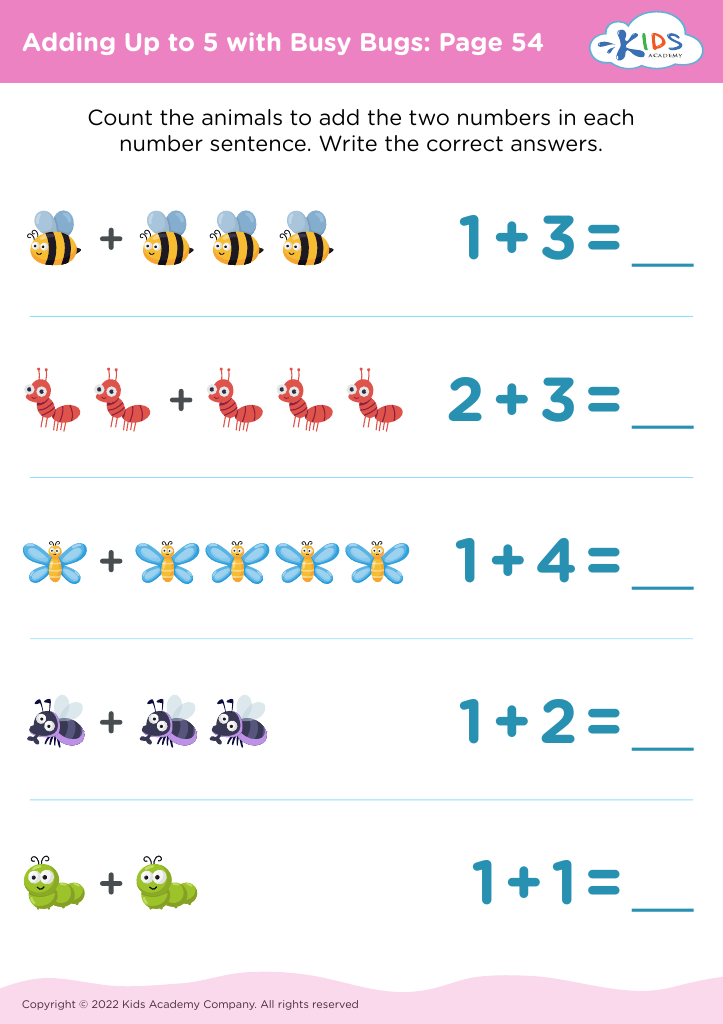
Adding Up to 5 with Busy Bugs: Page 54
Worksheet
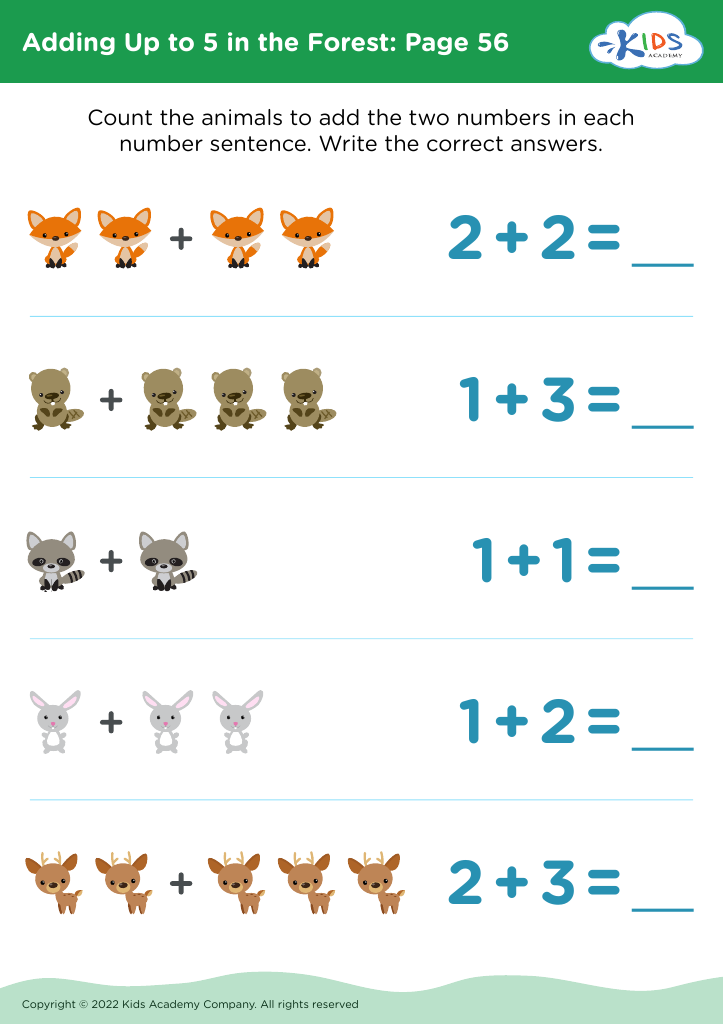
Adding Up to 5 in the Forest: Page 56
Worksheet
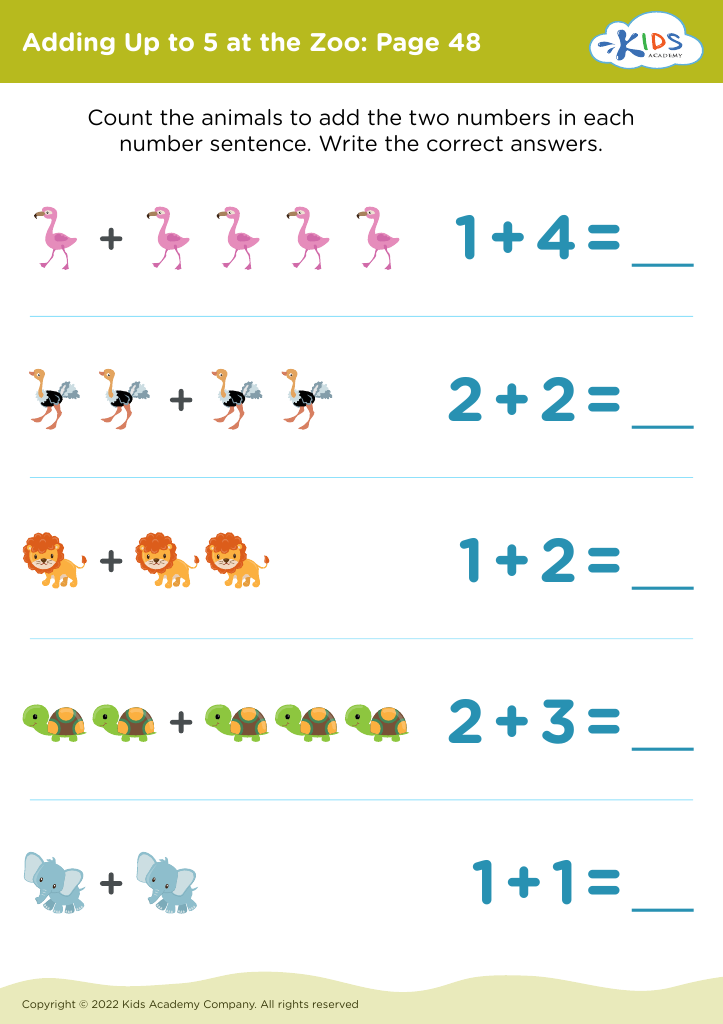
Adding Up to 5 at the Zoo: Page 48
Worksheet
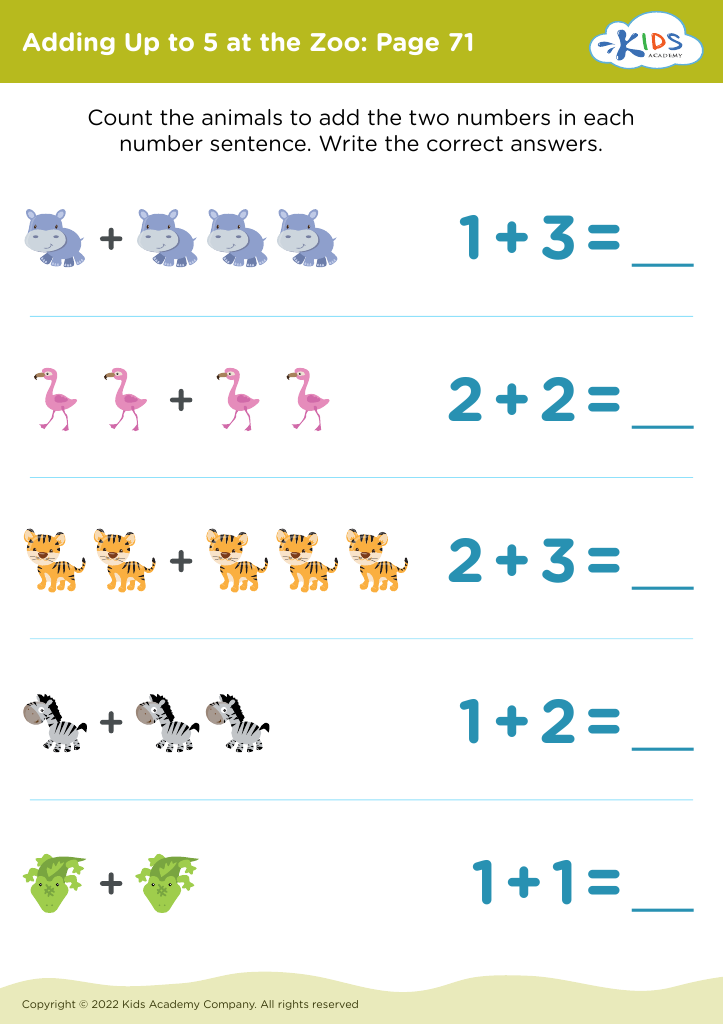
Adding Up to 5 at the Zoo: Page 71
Worksheet
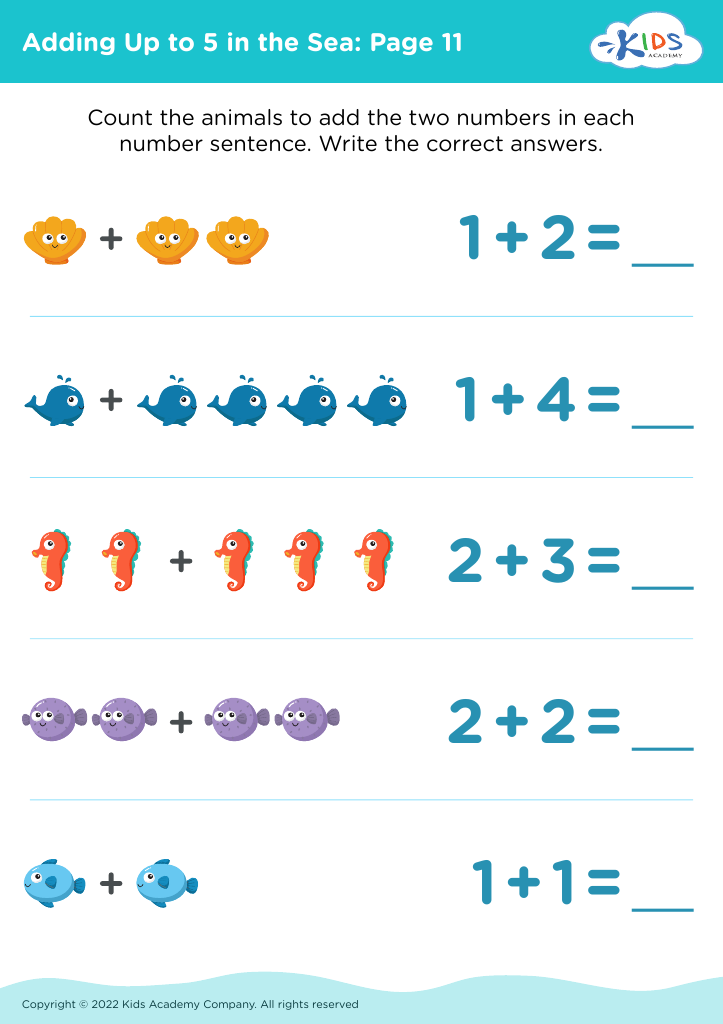
Adding Up to 5 in the Sea: Page 11
Worksheet
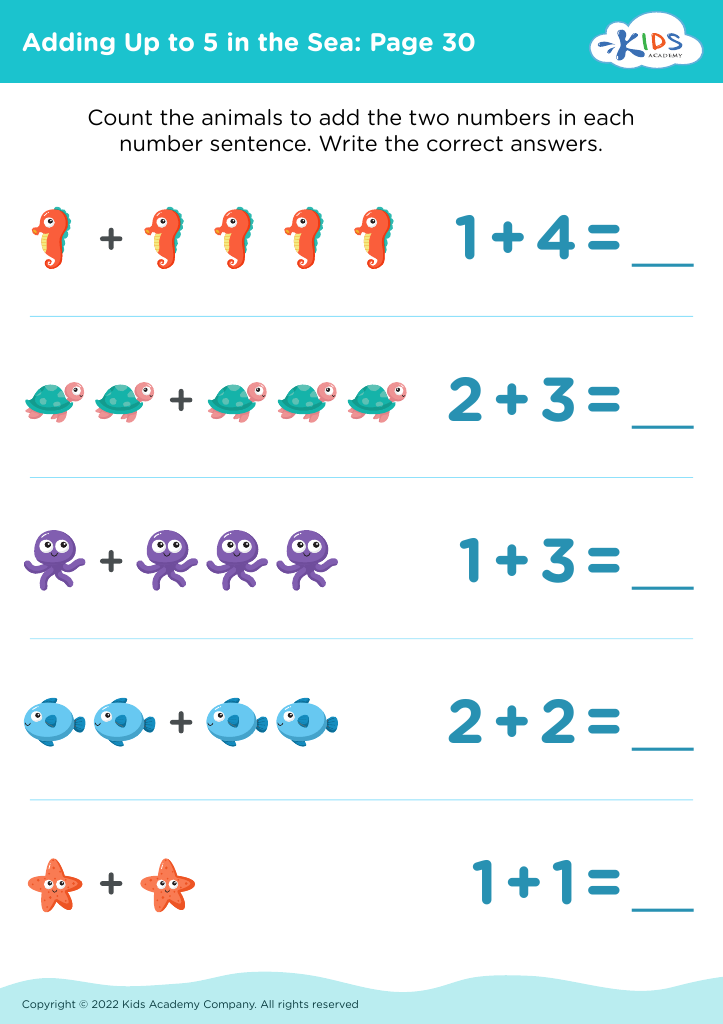
Adding Up to 5 in the Sea: Page 30
Worksheet
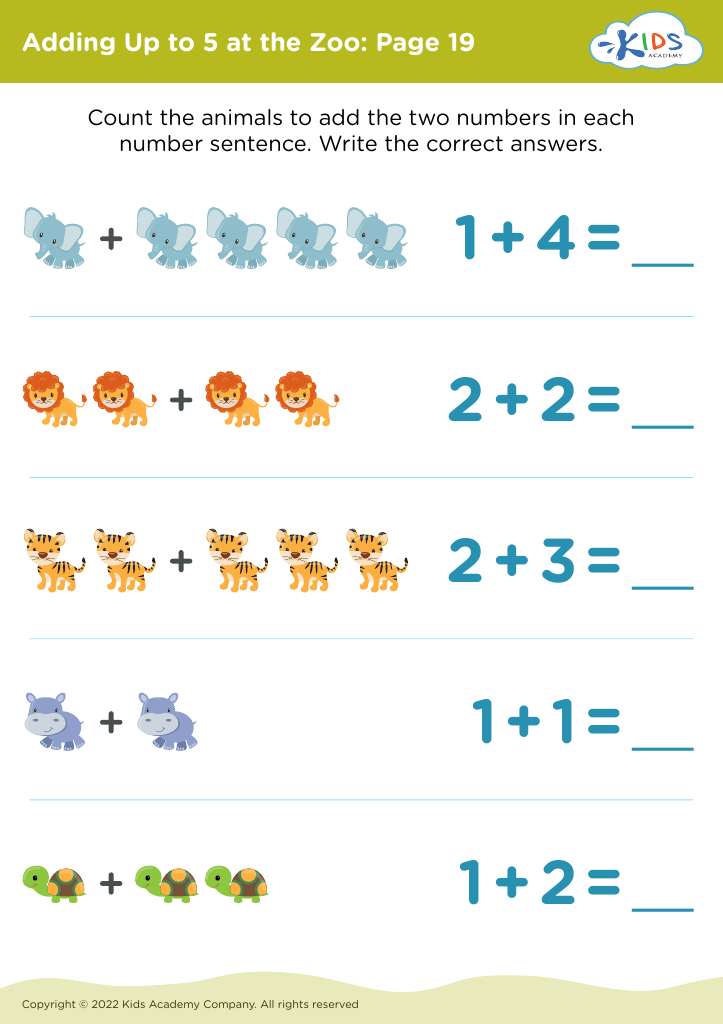
Adding Up to 5 at the Zoo: Page 19
Worksheet
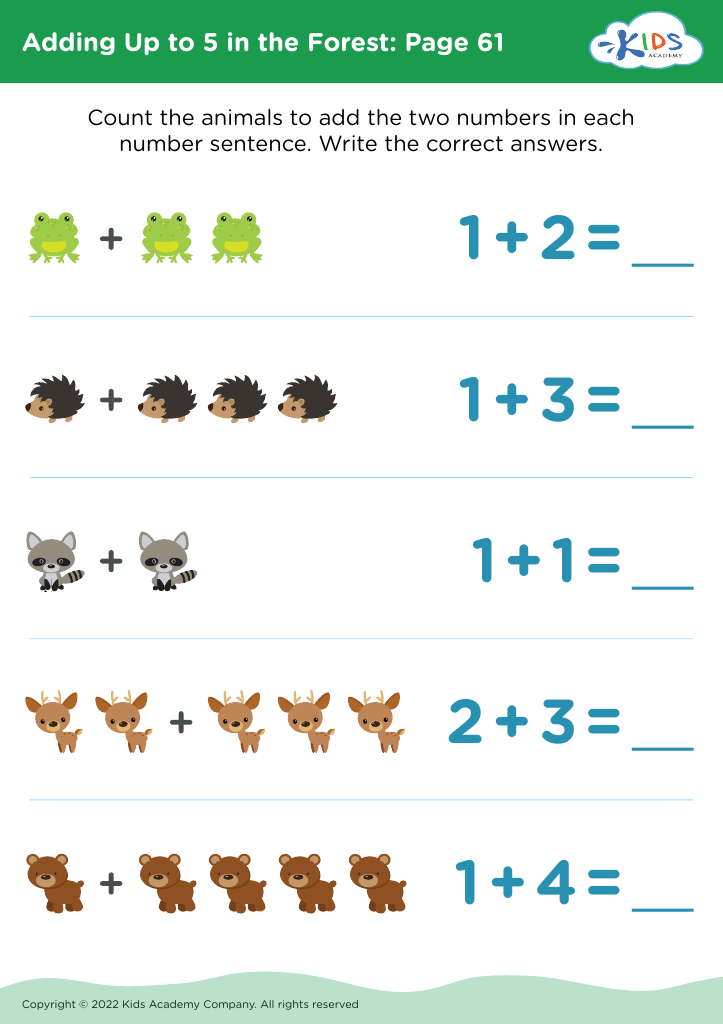
Adding Up to 5 in the Forest: Page 61
Worksheet
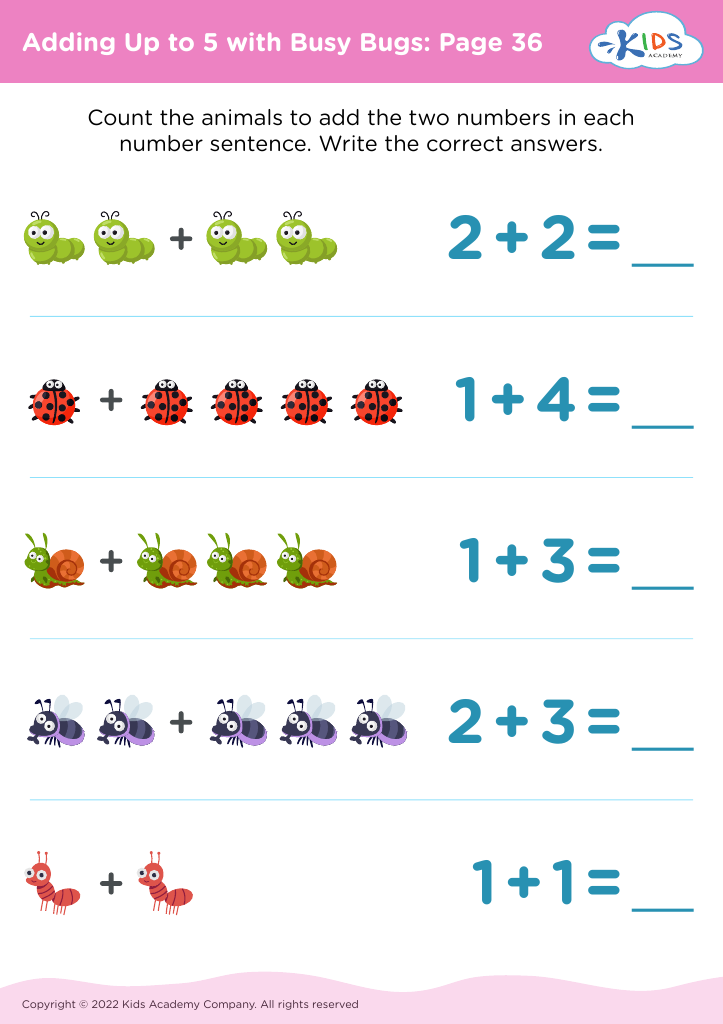
Adding Up to 5 with Busy Bugs: Page 36
Worksheet
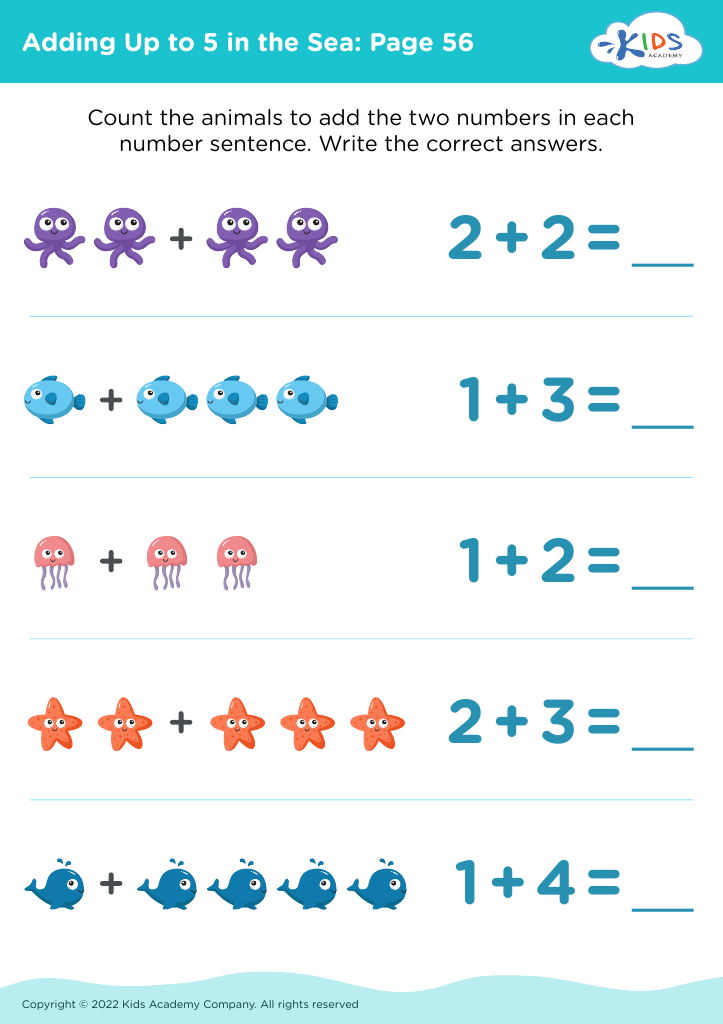
Adding Up to 5 in the Sea: Page 56
Worksheet
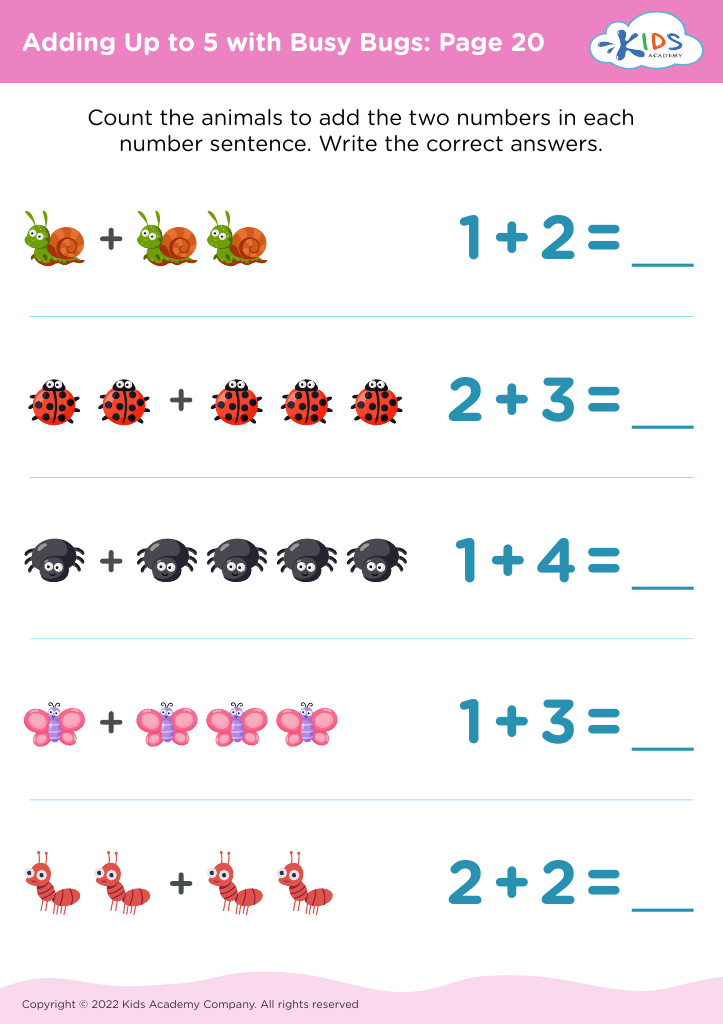
Adding Up to 5 with Busy Bugs: Page 20
Worksheet
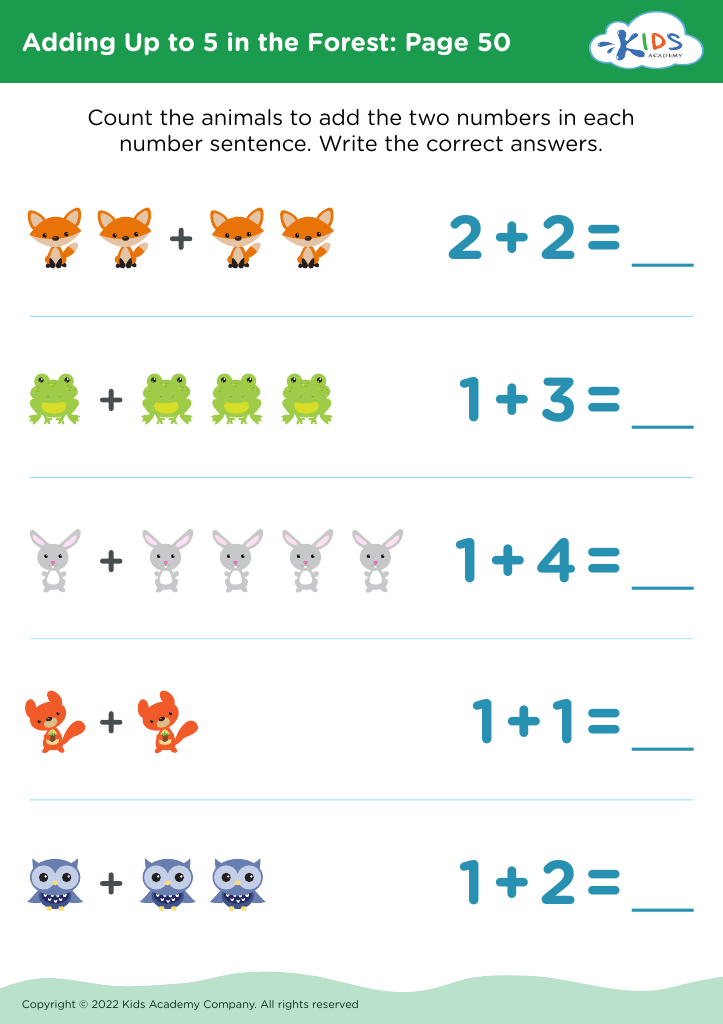
Adding Up to 5 in the Forest: Page 50
Worksheet
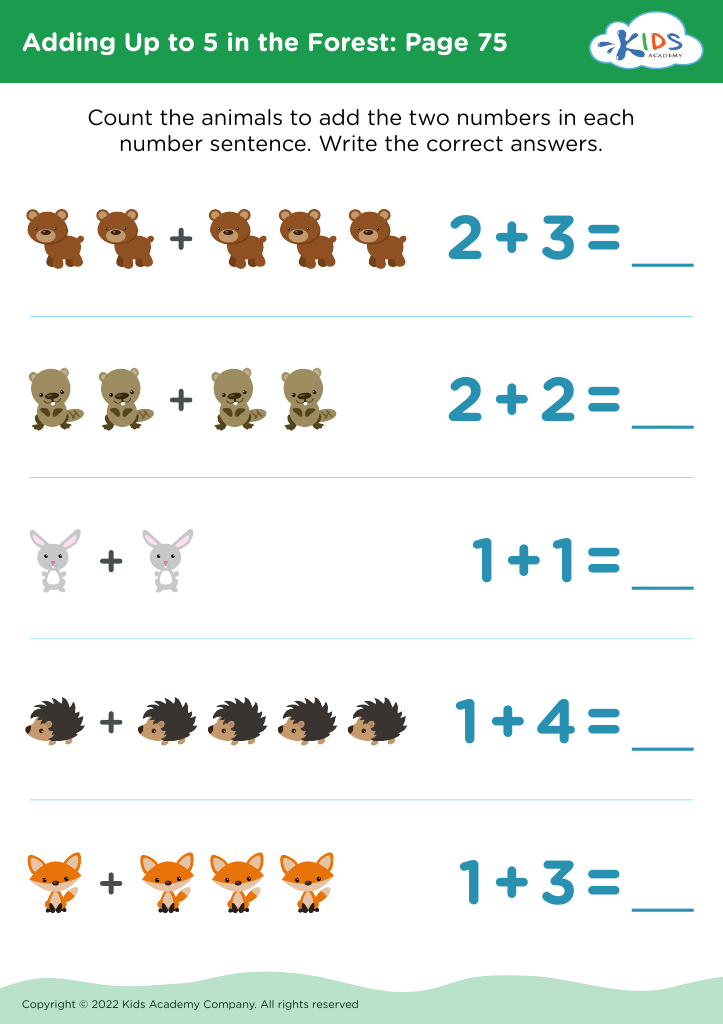
Adding Up to 5 in the Forest: Page 75
Worksheet


Counting skills, especially those adding up to 5, are crucial for children ages 3-5 because they form the foundation for future mathematical understanding. During these formative years, children are developing their cognitive abilities and number sense, which are essential for more complex mathematical concepts later on.

For starters, counting and simple addition help children understand the basics of number recognition and one-to-one correspondence, where each object is counted once and only once. This is a fundamental skill for any form of arithmetic. Additionally, engaging in counting up to 5 allows children to begin grasping the ideas of order and quantity, which are critical when learning to compare different sets of objects.

Moreover, these early counting activities aid in developing fine motor skills and hand-eye coordination when children physically manipulate objects like blocks or beads to count. Frequent practice embedding these skills into regular play and routines helps build confidence and establishes a positive relationship with mathematics from a young age.

Finally, counting and adding up to 5 can easily become interactive and fun through games, songs, and stories, making the learning process enjoyable. This positive experience can build a lifelong love of learning and problem-solving, key attributes for academic success. Therefore, parents and teachers should prioritize these skills to ensure foundational readiness for future education.