Fine motor skills (drawing lines) Adding Up to 5 Worksheets for Ages 3-5
3 filtered results
-
From - To
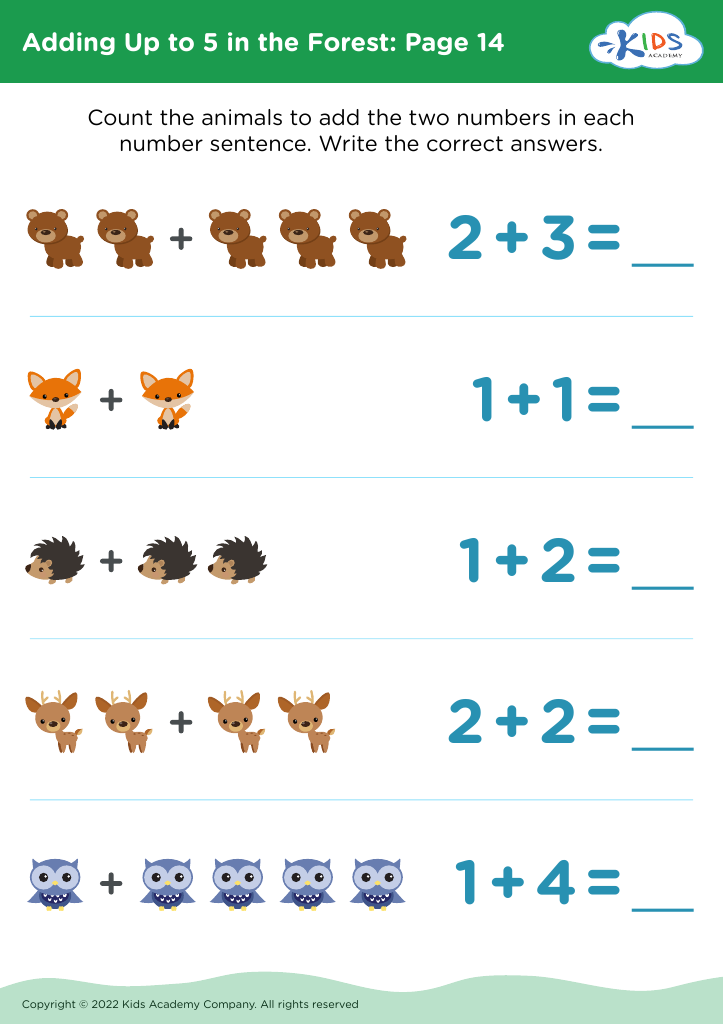
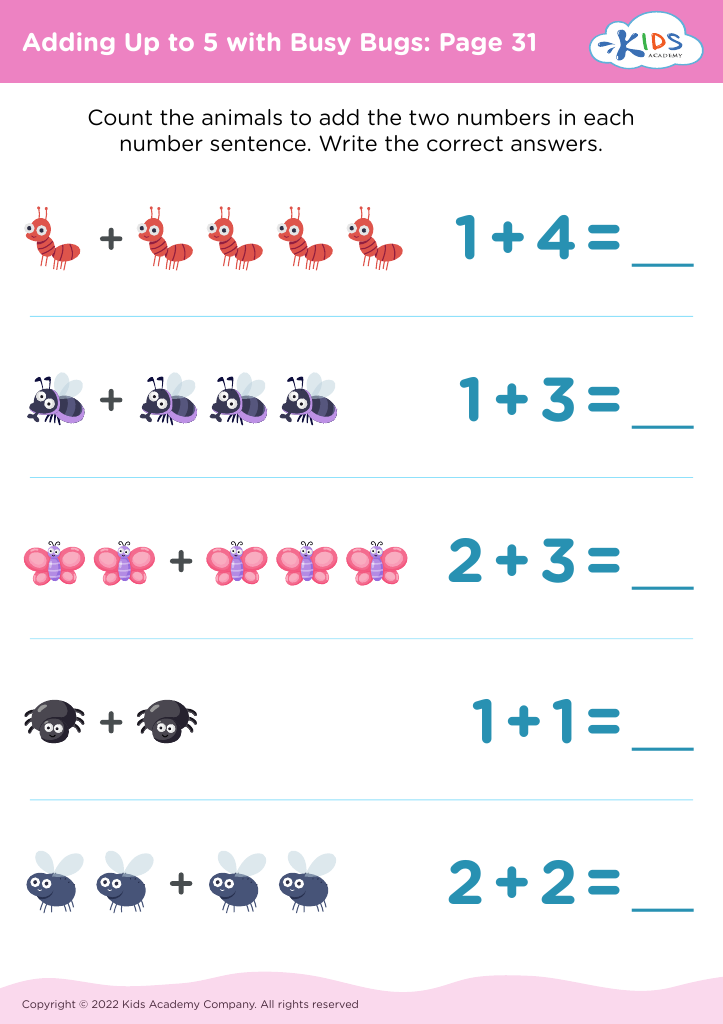
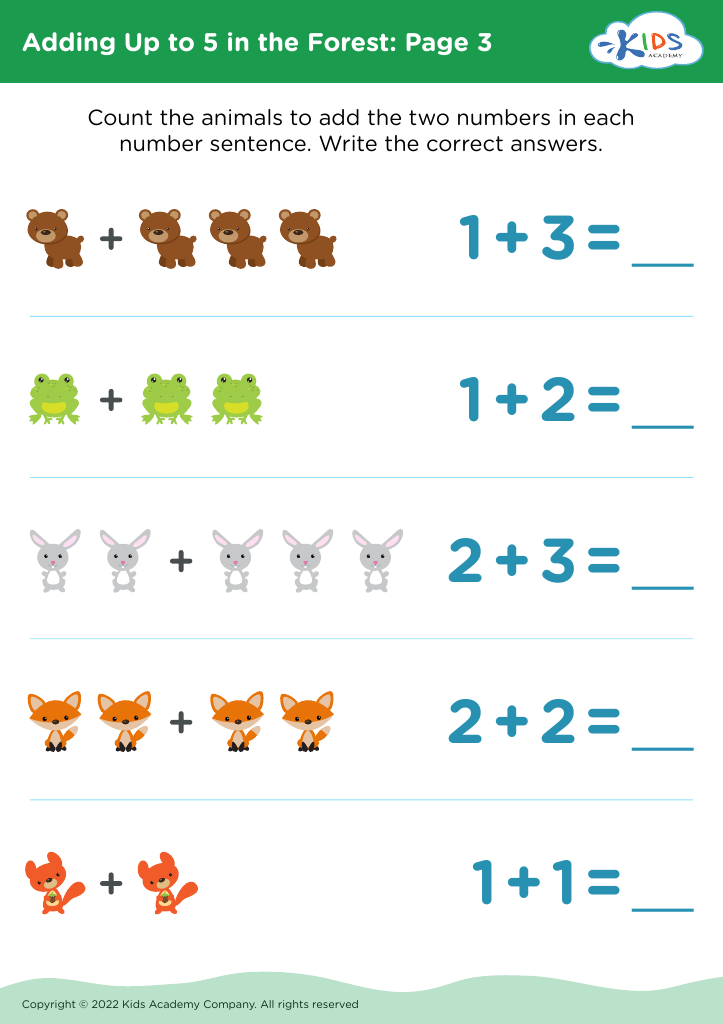
Enhance your child’s fine motor skills with our "Drawing Lines" worksheets designed for ages 3-5! These engaging activities provide a fun way for kids to practice drawing essential lines, which supports their writing and dexterity. Perfectly themed around adding up to 5, these worksheets seamlessly combine math and motor skill development, encouraging early numeracy in a playful manner. Each sheet is designed with colorful illustrations to maintain your child's interest while helping them gain confidence in their drawing capabilities. Get started today and watch your little learners thrive as they master both numbers and fine motor skills through creativity and practice!







%20(1).jpg)
Fine motor skills are essential for young children's overall development, particularly in the early years from ages 3 to 5. These skills involve the coordination of small muscles, which are crucial for tasks like drawing lines, gripping pencils, and manipulating objects. When children practice drawing lines, they improve their hand-eye coordination, dexterity, and strength, laying the groundwork for more complex tasks such as writing and crafting in the later years.
Moreover, the ability to add up to 5 enhances mathematical understanding in early childhood. It introduces the concept of number formation, quantity comparison, and basic addition, which are fundamental to more advanced math skills. Engaging in activities that combine both fine motor practice and early math can make learning enjoyable and interactive, as children often learn best through play.
Furthermore, parents and teachers play a vital role in encouraging these skills by providing stimulating activities that promote creativity and cognitive growth. As fine motor skills and early math abilities develop together, children gain confidence and are better prepared for future academic challenges. Fostering these foundational skills sets the stage for lifelong learning, enabling children to explore, create, and engage with the world around them confidently.








