Fine motor skills (writing) Adding Up to 5 Worksheets for Ages 3-5 - Page 2
32 filtered results
-
From - To




.jpg)



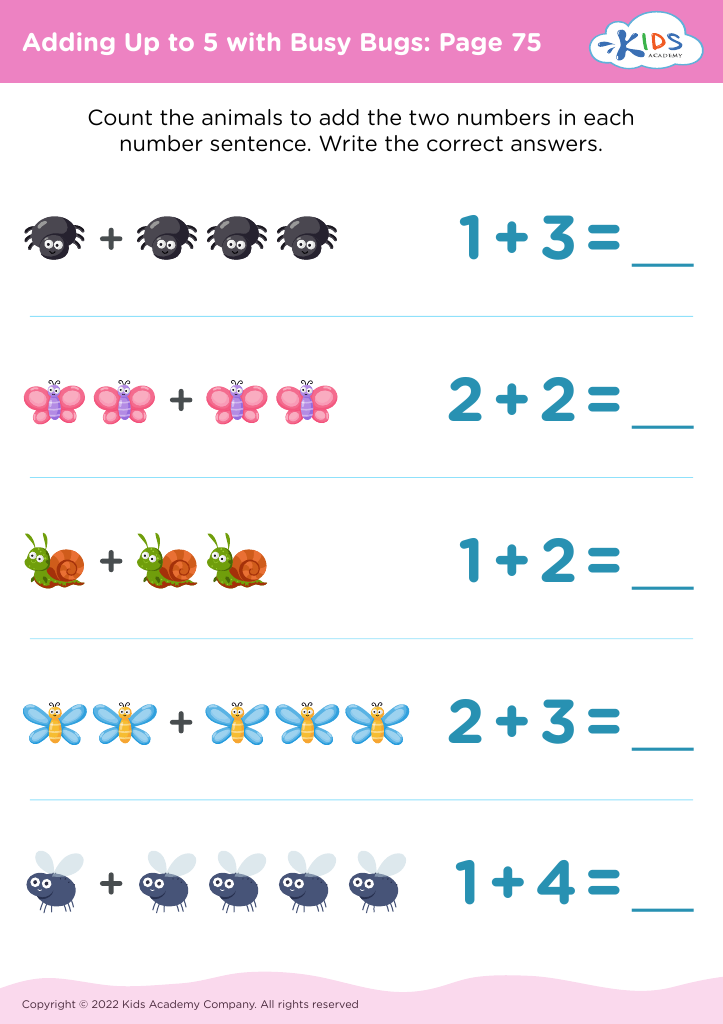
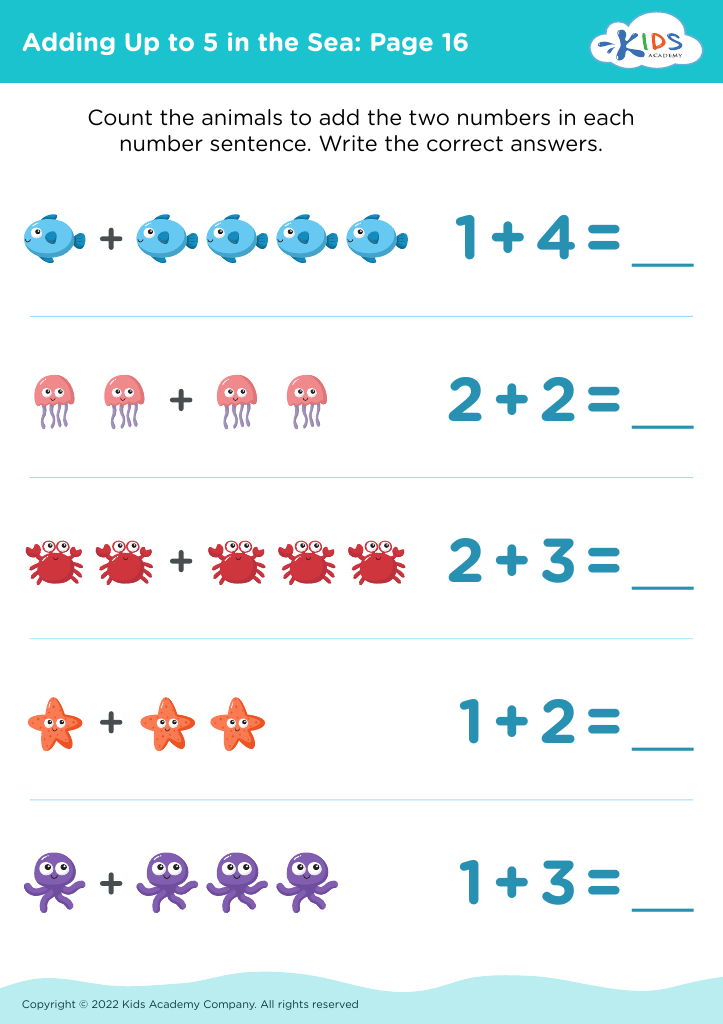
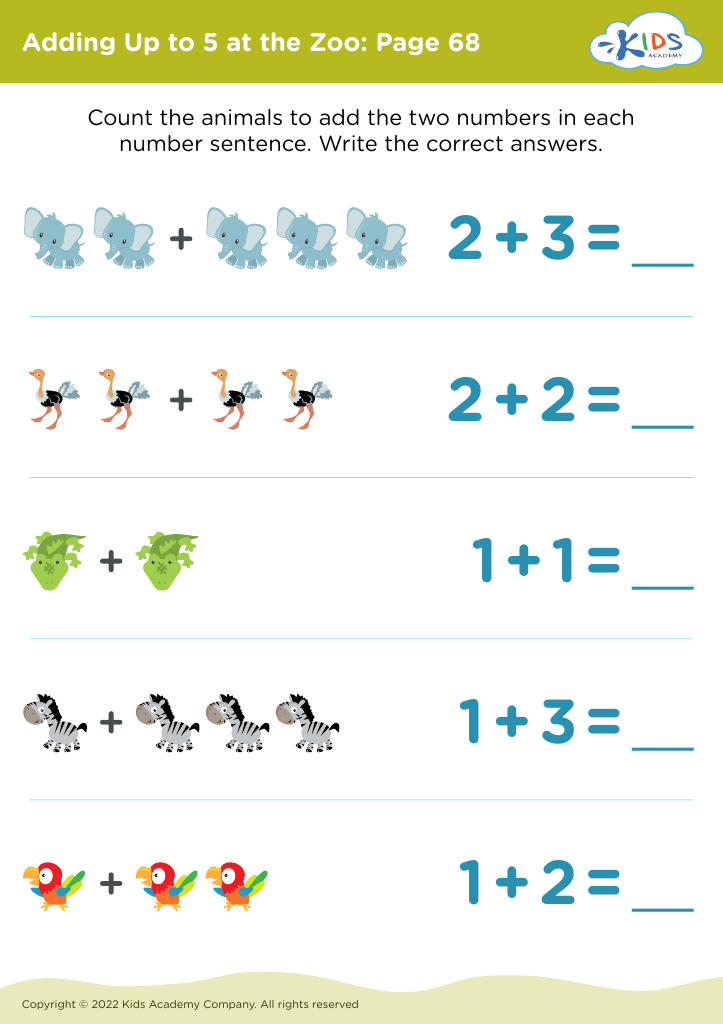
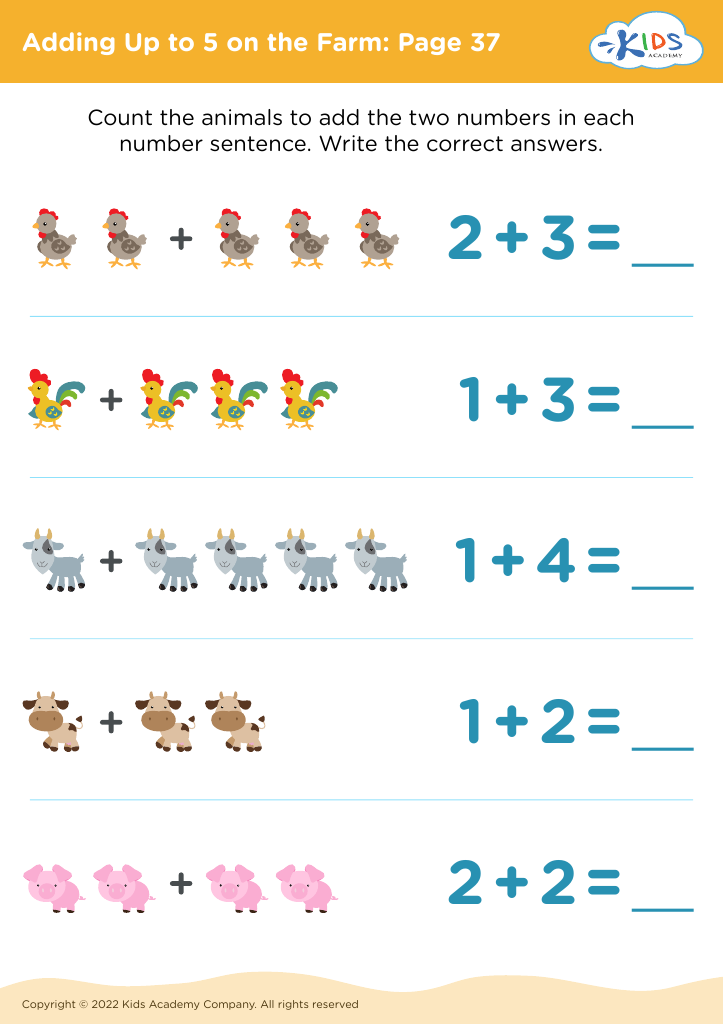
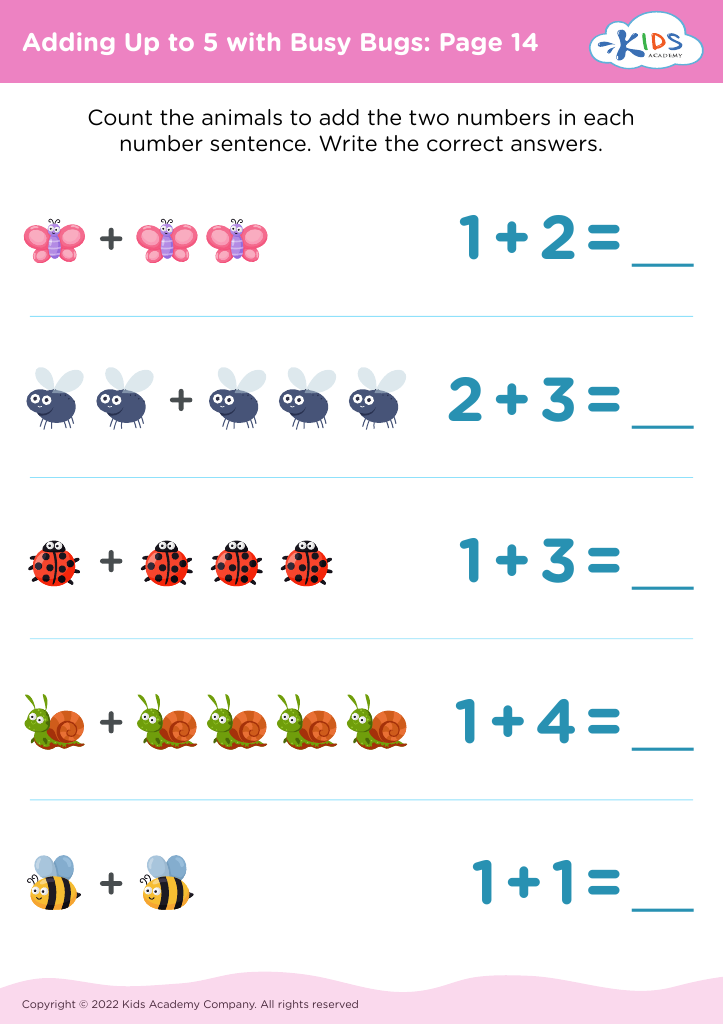
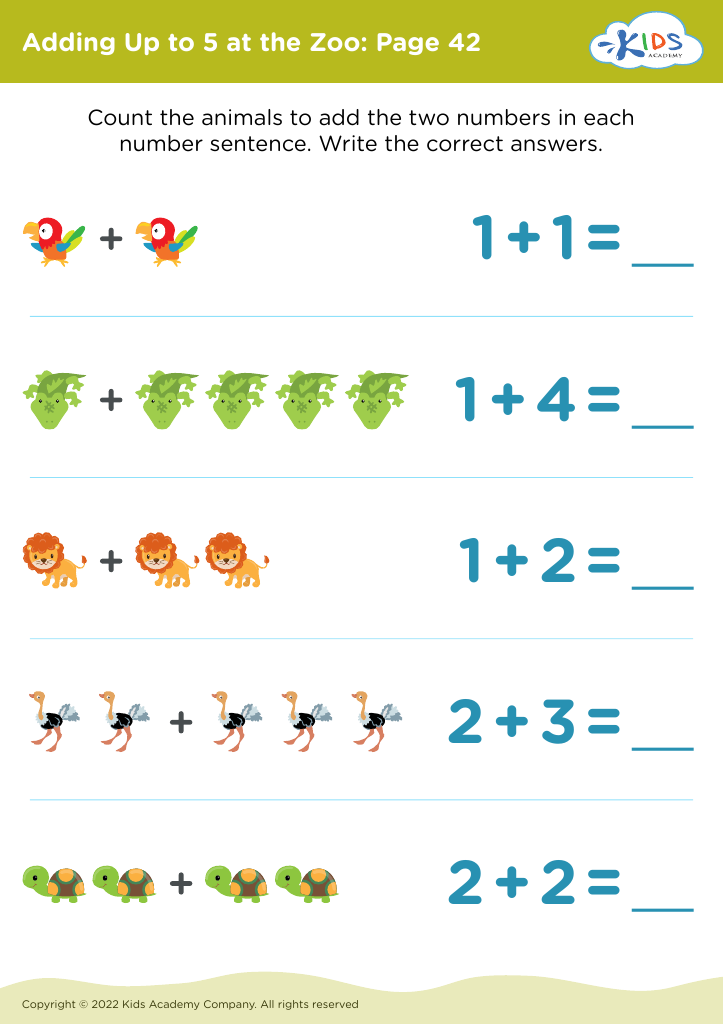
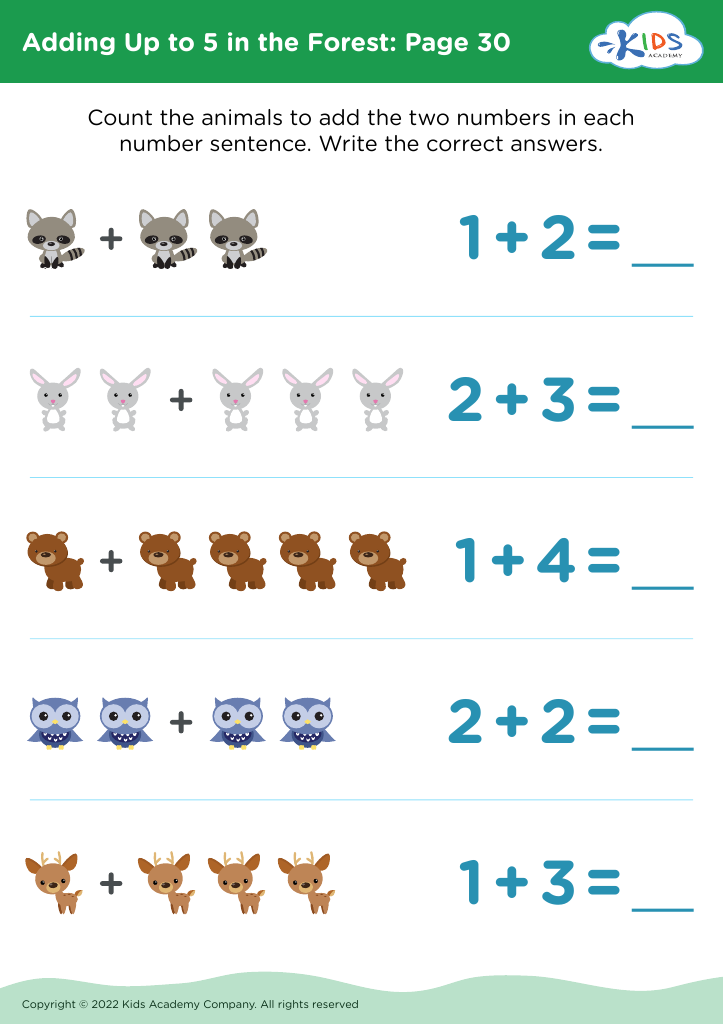
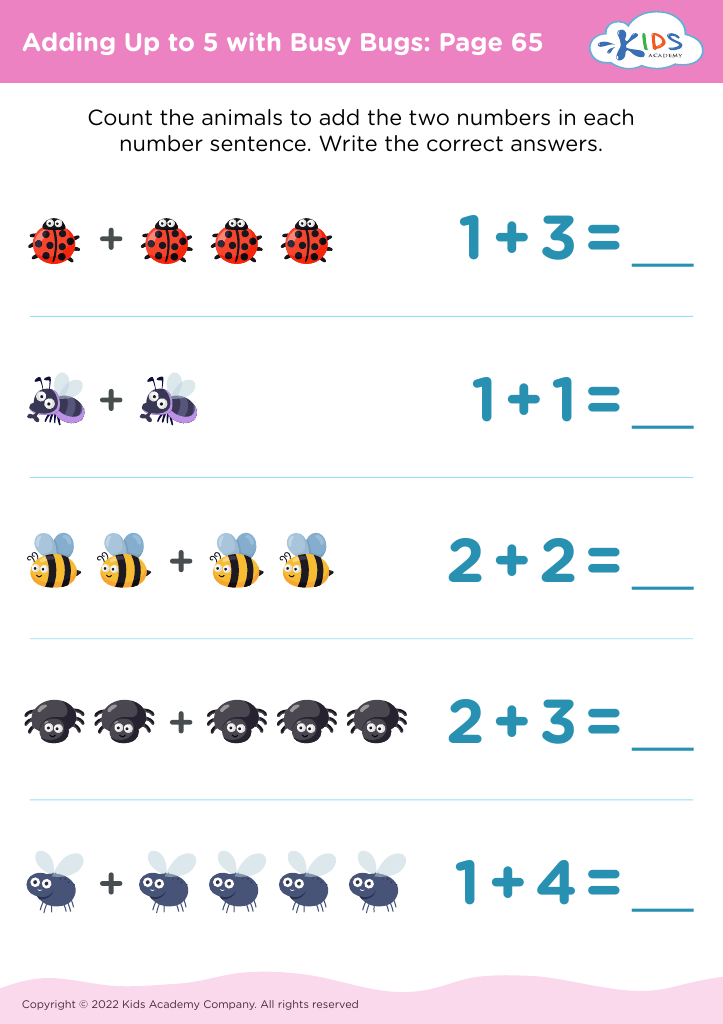
Fine motor skills are crucial in early childhood development, particularly for ages 3-5, as they lay the foundation for writing, drawing, and other essential tasks. Proficiency in fine motor skills, like manipulating small objects, enhances hand-eye coordination and dexterity, enabling children to perform tasks efficiently. Mastering writing essentials and the ability to count and add small numbers, such as adding up to 5, are pivotal milestones during this age.
For educators and parents, focusing on these skills promotes cognitive development and creativity in children. Writing helps children express themselves and communicate their ideas, while early math skills foster logical thinking. Engaging in activities that boost fine motor skills, such as coloring, cutting with safety scissors, and playing with building blocks, can significantly impact a child's readiness for school.
Moreover, reinforcing these competencies nurtures confidence. Children learn to take risks, attempt new challenges, and develop perseverance. As they successfully master these skills, they gain a sense of achievement that can encourage a lifelong love for learning. By emphasizing fine motor skills and basic math, parents and teachers integrate foundational abilities that are indispensable for academic success and overall growth.








