

.jpg)





Fine motor skills are essential for children's development, especially during the ages of 3 to 5. These skills involve the coordination of small muscles in the hands and fingers, which are crucial for tasks like holding a pencil, cutting with scissors, and buttoning clothes. When children enhance their fine motor skills, they also build the necessary foundational abilities for early math concepts like counting and simple addition.
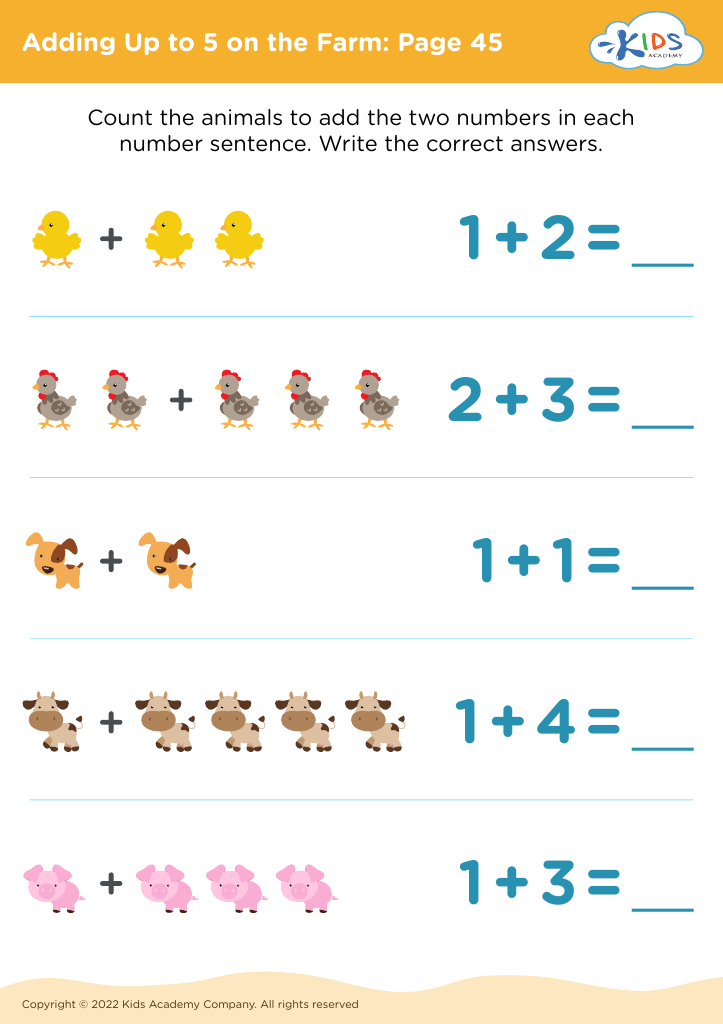
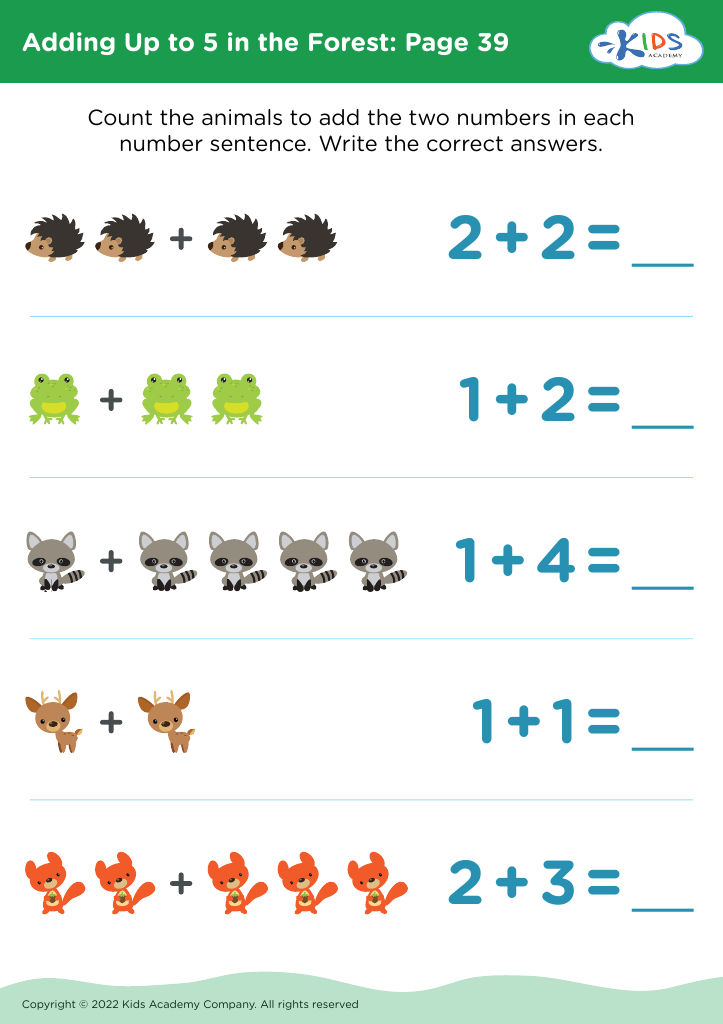
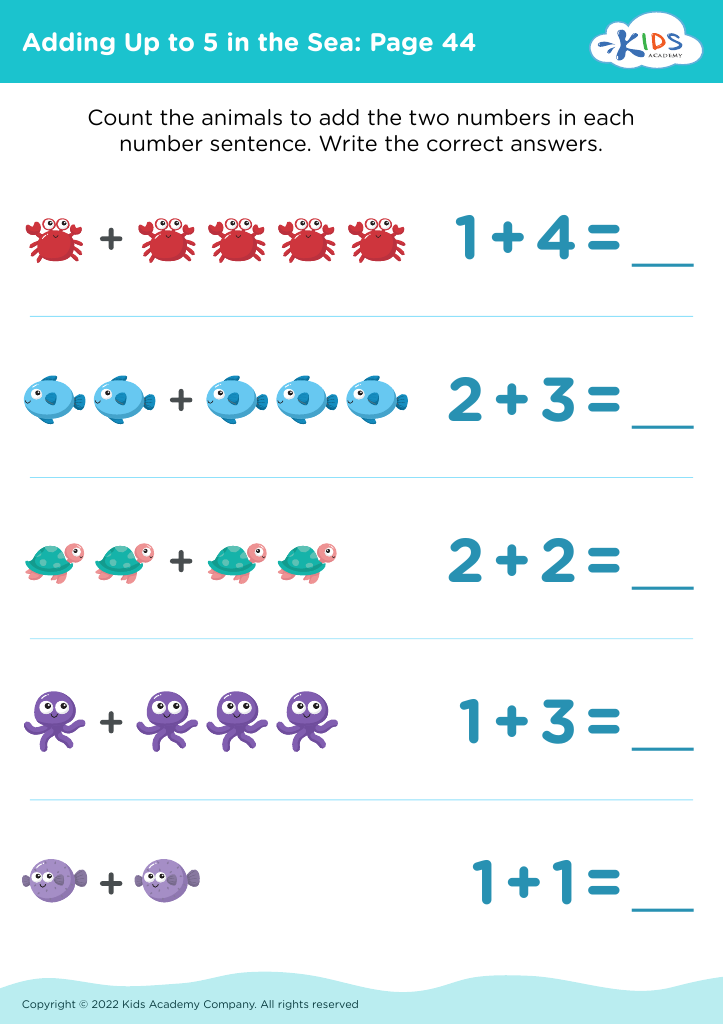
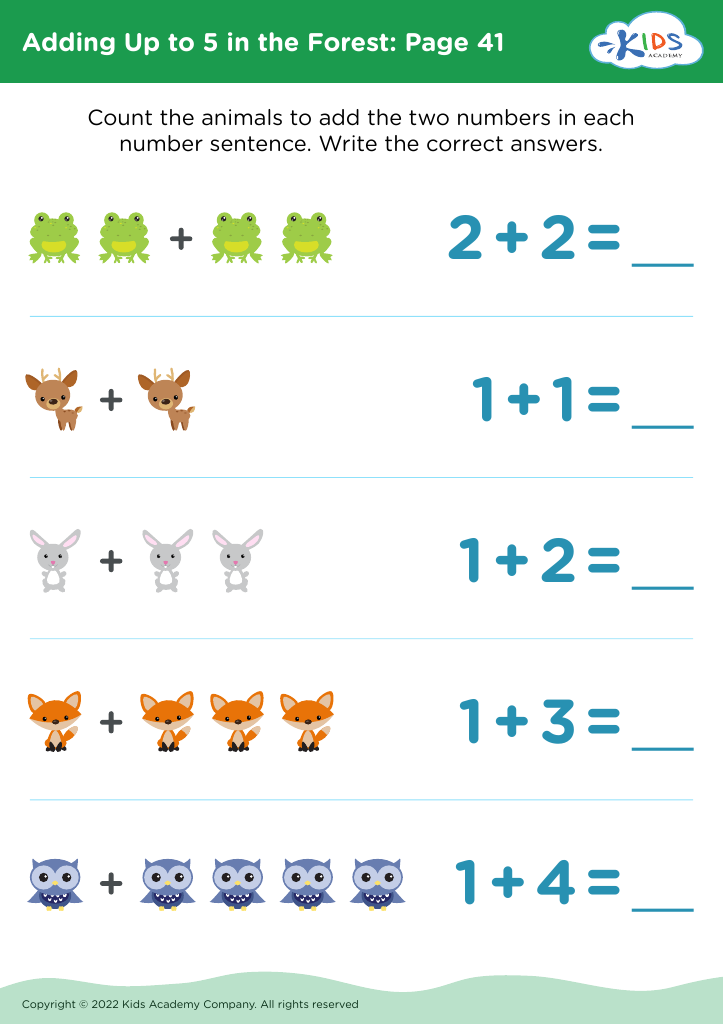
For young learners, adding up to 5 serves as a fundamental building block for understanding larger numbers and basic arithmetic. This skill not only develops number sense but also interlinks with fine motor experiences, such as using counting manipulatives—like blocks or beads—requiring precise finger movements to combine and arrange them.
Parents and teachers should care because mastering these skills promotes independence, confidence, and eventually, academic success. Activities like drawing, coloring, and playing with playdough not only improve fine motor skills but also make learning to add fun and engaging. Recognizing the connection between fine motor proficiency and early math skills can help adults support children's holistic development, laying the groundwork for future learning and problem-solving in school and life.








