Math problem-solving Adding Up to 5 Worksheets for Ages 3-5
3 filtered results
-
From - To
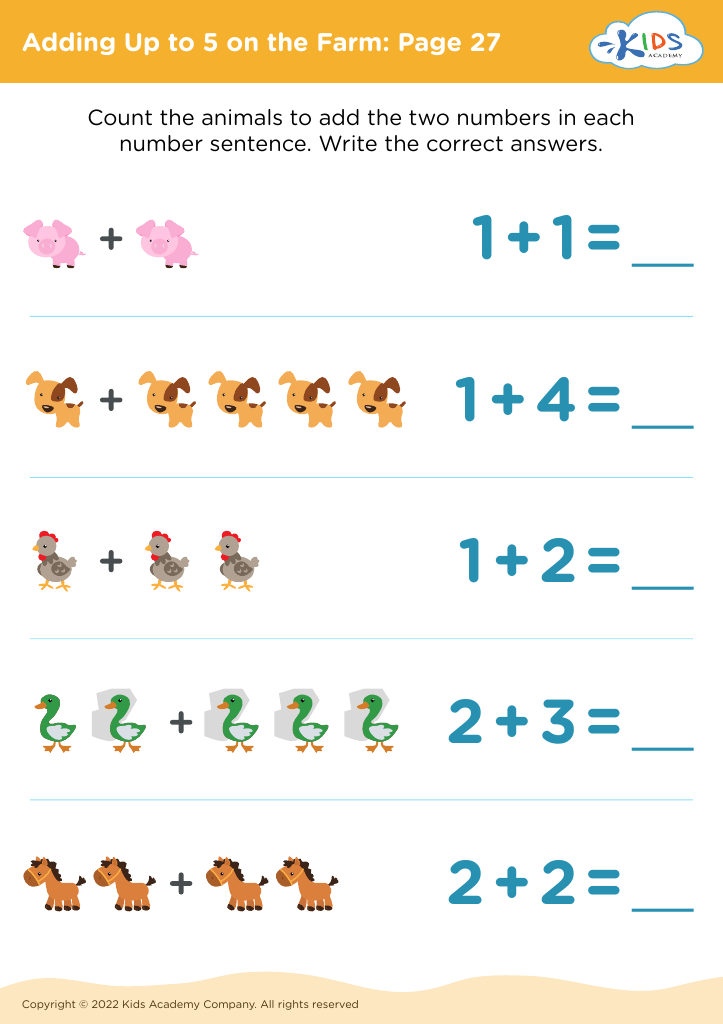
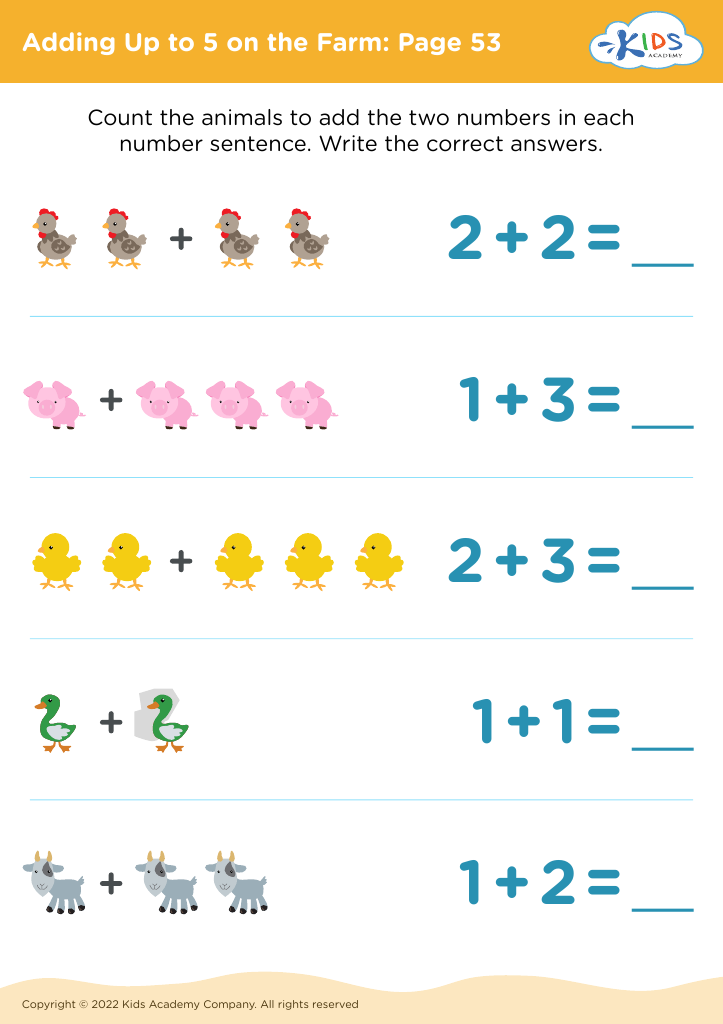
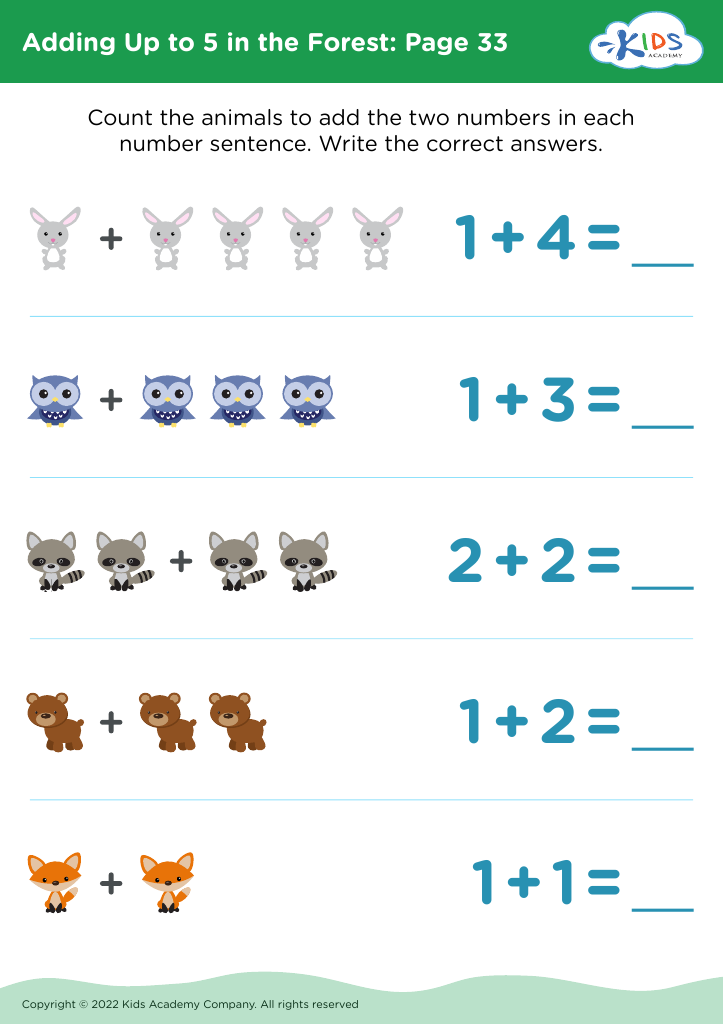
Discover engaging and educational "Math Problem-Solving: Adding Up to 5" worksheets designed for children ages 3-5! These printable worksheets introduce young learners to foundational math concepts through fun, interactive activities. Your little ones will master addition skills while enhancing their problem-solving abilities. Each worksheet encourages critical thinking and promotes the understanding of numbers up to 5 with vibrant images and playful scenarios. Ideal for homeschooling or classroom use, these resources aim to make math enjoyable and accessible. Foster your child's confidence in math and set them on a path to academic success with our expertly crafted worksheets!


.jpg)


%20(1).jpg)


Parents and teachers should care about math problem-solving for ages 3-5, particularly the concept of "Adding Up to 5," as it lays the foundational skills crucial for a child's cognitive and academic development. At this age, children are naturally curious and eager to explore numbers, making it an ideal time to introduce basic arithmetic concepts. Engaging with simple addition problems fosters a positive attitude toward math early on.
Adding up to 5 encourages critical thinking as children learn to visualize quantities and understand mathematical relationships. This stage promotes the development of fine motor skills through interactive activities like using manipulatives—such as blocks or beads—which enhance fine motor skills. It also nurtures language development as children articulate their thought processes and engage with parents and teachers about their methods.
Additionally, mastering these early math skills can boost a child’s confidence, setting the stage for more complex problem-solving in subsequent years. By providing both support and encouragement, parents and teachers can help children develop a robust mathematical foundation, fostering lifelong numeracy skills that are essential in our increasingly digital and data-driven world. Overall, early math experiences are integral to holistic development in young children.








