Sea creatures identification Adding Up to 5 Worksheets for Ages 3-5
3 filtered results
-
From - To
Discover our delightful "Sea Creatures Identification" worksheets designed for young learners aged 3-5. This engaging collection features five interactive worksheets that combine math skills with ocean-themed exploration. Children will identify various sea creatures while practicing their counting and addition skills, making learning enjoyable and memorable. Each worksheet is colorful and fun, capturing the imagination of little explorers. Perfect for reinforcing early math concepts, these resources promote critical thinking and foster a love for the marine environment. Dive into this educational adventure with your child, and watch them develop essential skills while discovering the wonders of the sea!
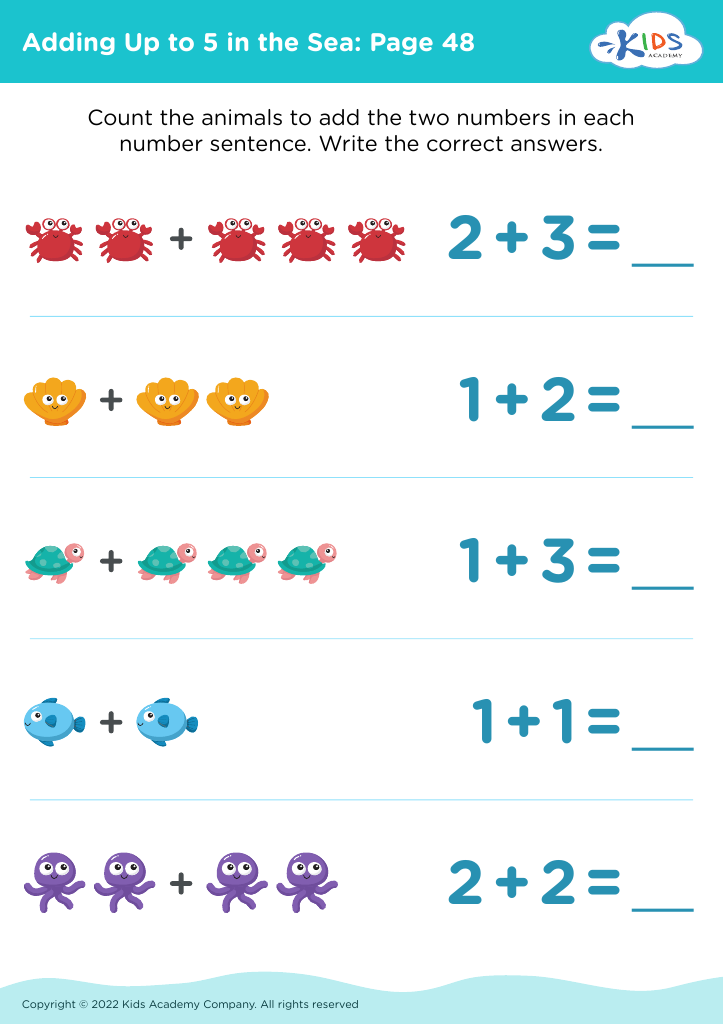
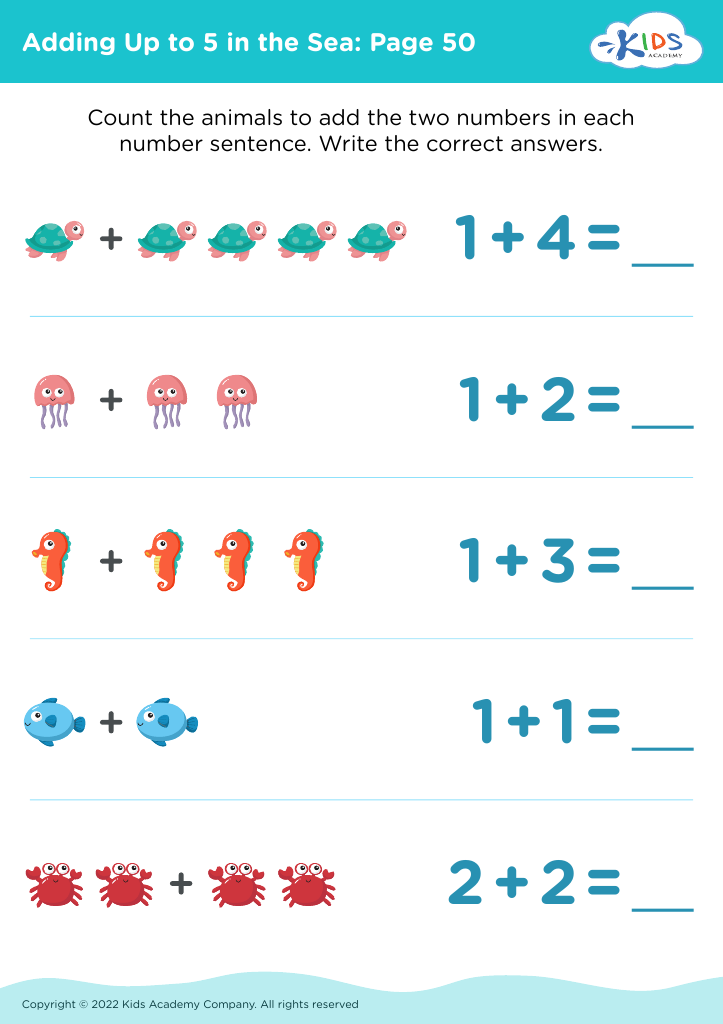
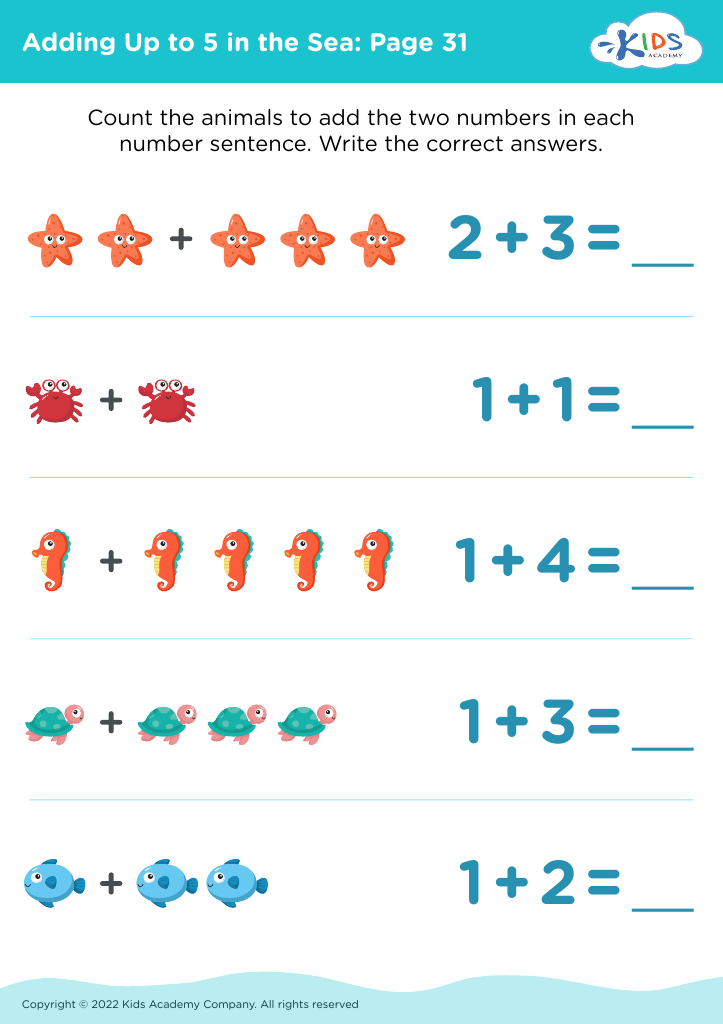





%20(1).jpg)
.jpg)

Understanding sea creatures is essential for young children as it explores their natural curiosity and encourages a love for the environment. When parents or teachers focus on sea creature identification for ages 3-5, they enrich a child's learning experience and foster a sense of wonder about the ocean.
-
Promotes Curiosity: Children are naturally inquisitive. Identifying various sea creatures such as fish, turtles, and crabs sparks their interest and invites questions, nurturing a desire to learn more about marine life.
-
Teaches Responsibility: Knowing about sea creatures can create awareness of ocean conservation. It instills respect for nature and encourages children to care for wildlife and habitats, fostering a sense of responsibility.
-
Enhances Vocabulary: Learning the names and characteristics of sea creatures builds language skills. Kids translate observation into vocabulary, developing communication abilities.
-
Encourages Imagination: Identifying sea creatures opens doors to imaginative play. Children can act out including ocean adventures, fostering creativity and storytelling skills.
-
Supports Teamwork: Through identifying and learning about sea creatures together, children develop social skills by engaging in discussions and collaborative learning.
In summary, prioritizing sea creature identification for young children offers delightful educational experiences that combine fun and valuable lessons about life and the environment.








