Understanding number relationships Adding Up to 5 Worksheets for Ages 3-5
3 filtered results
-
From - To
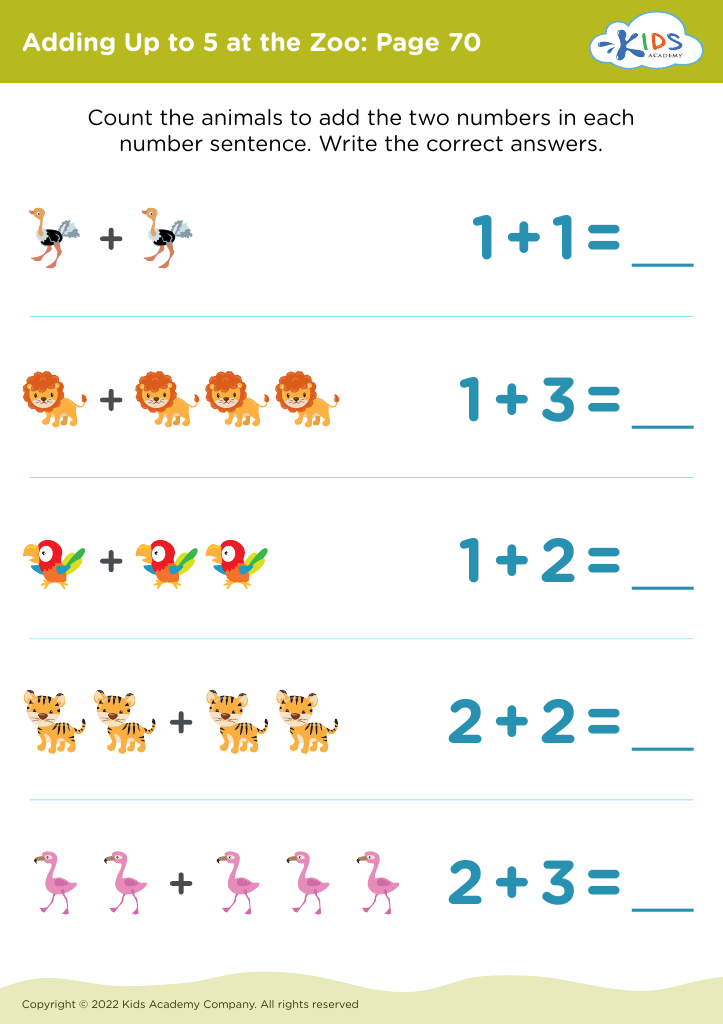
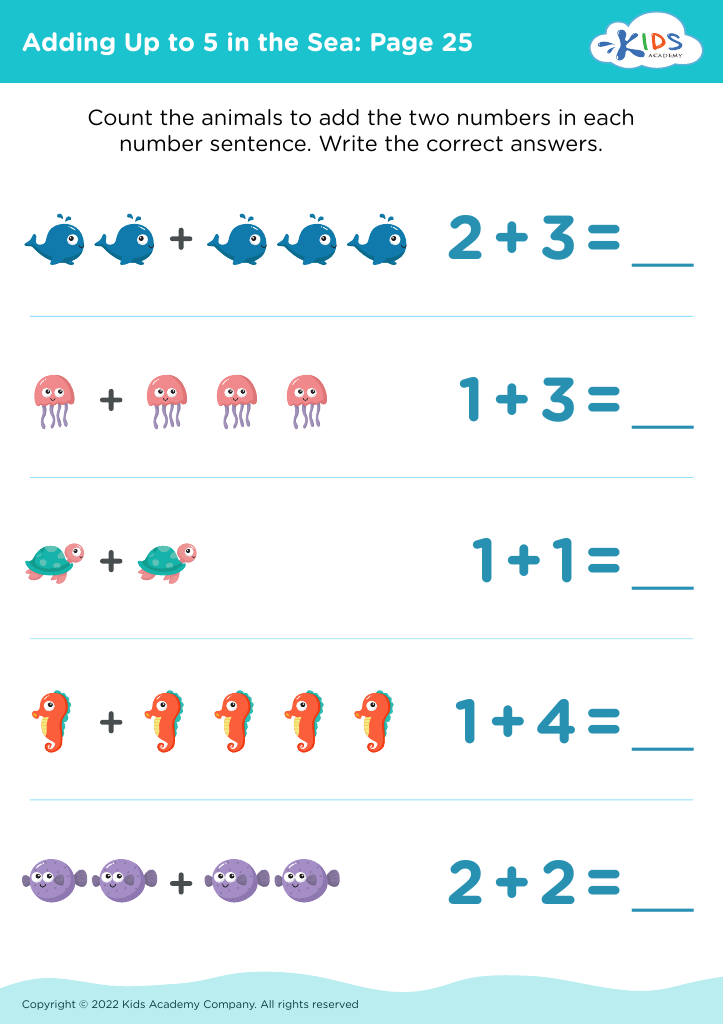
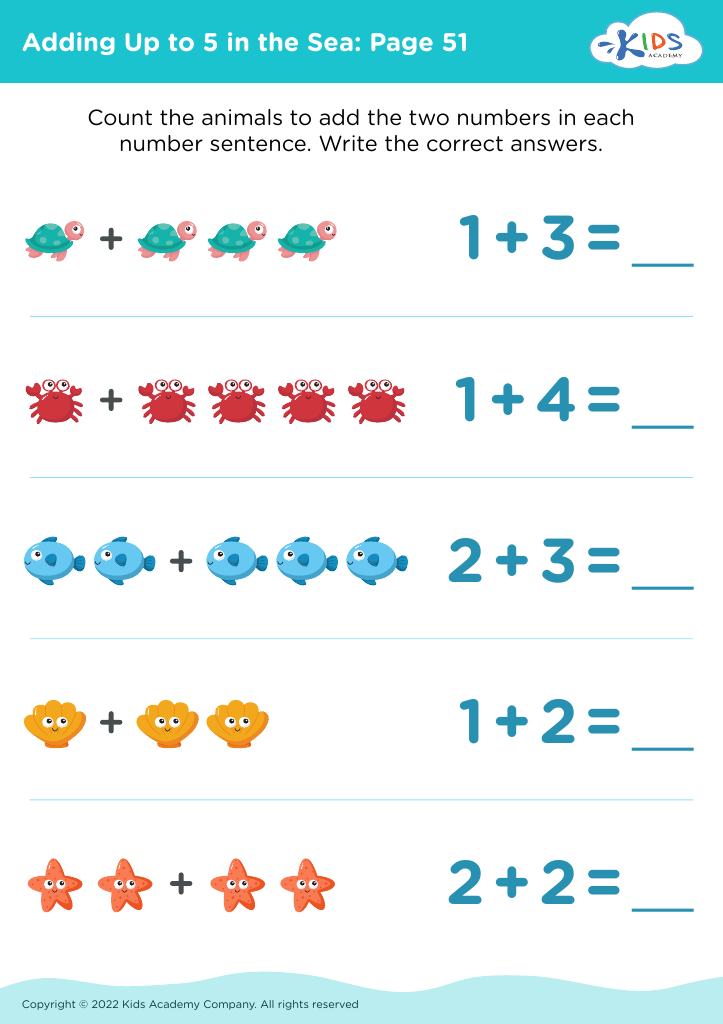
Discover our "Understanding Number Relationships: Adding Up to 5 Worksheets" designed for children aged 3 to 5. These engaging worksheets introduce foundational math concepts through fun and interactive activities that help young learners grasp the idea of addition and how numbers relate to one another. By incorporating colorful illustrations and relatable themes, children will enjoy practicing their counting and addition skills while exploring how different combinations can sum up to 5. These resources are perfect for homeschooling or classroom use, encouraging early numeracy readiness in a playful and supportive environment. Start building strong math skills and confidence with our thoughtfully crafted worksheets!





%20(1).jpg)


Understanding number relationships, particularly when adding up to 5, is crucial for children ages 3-5 as it lays the foundational skills for future math comprehension and problem-solving. During these formative years, children develop critical cognitive abilities. By grasping how numbers can combine to form a sum, they enhance their numerical fluency, which is essential for tackling more complex math concepts later on.
Fostering number relationships helps children recognize patterns and make connections, enabling them to visualize numbers rather than just memorizing them. This understanding supports their ability to count, perform simple addition and subtraction, and comprehend more advanced operations as they progress in their education. Furthermore, number relationships encourage logical thinking and reasoning, which are vital skills not only in math but in everyday decision-making.
Moreover, engaging with number relationships in playful and interactive ways can ignite curiosity and a love for learning. Activities like using manipulatives, games, and real-life scenarios help make math tangible and relatable for young learners. By prioritizing this skill early on, parents and teachers invest in instilling confidence and competence in their children, setting them up for long-term academic success.








