Understanding numeracy Adding Up to 5 Worksheets for Ages 3-5
4 filtered results
-
From - To
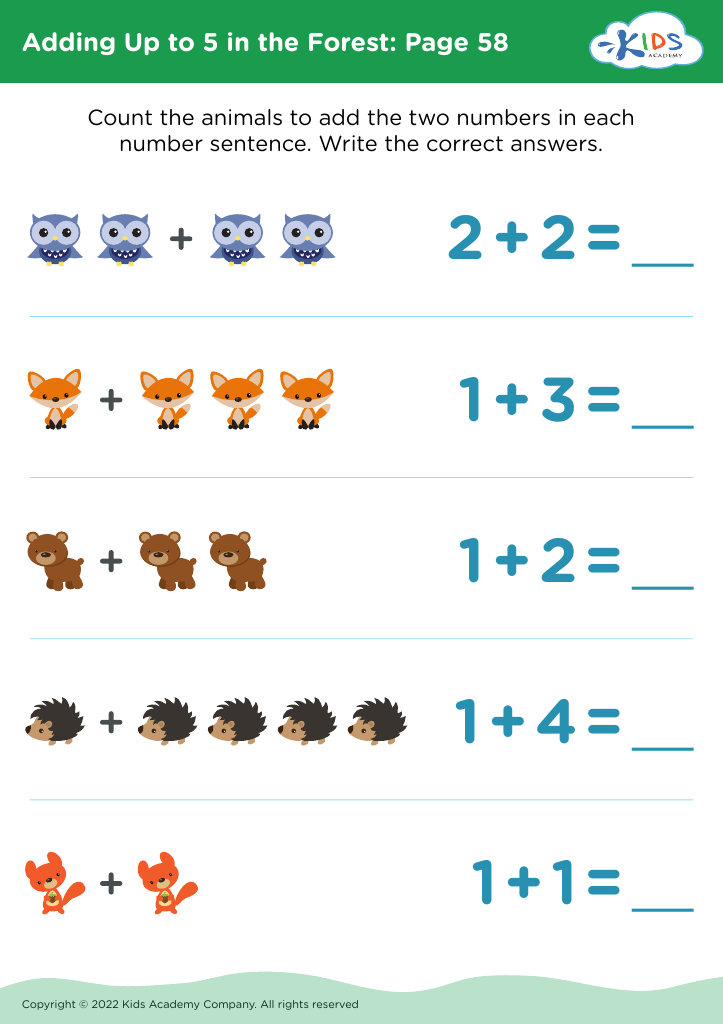
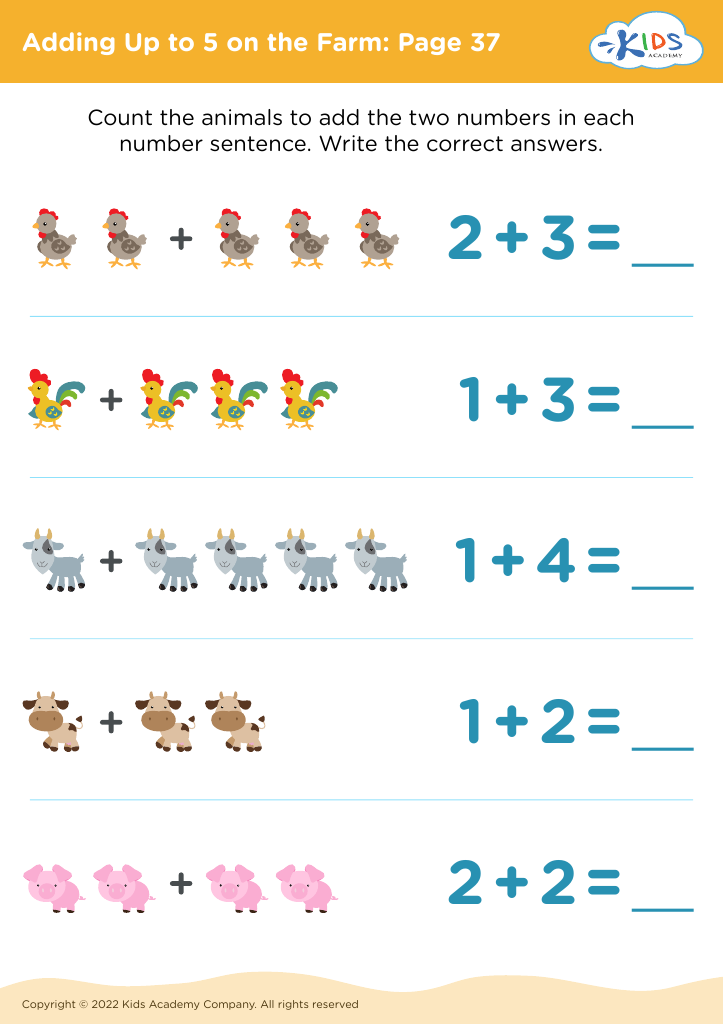
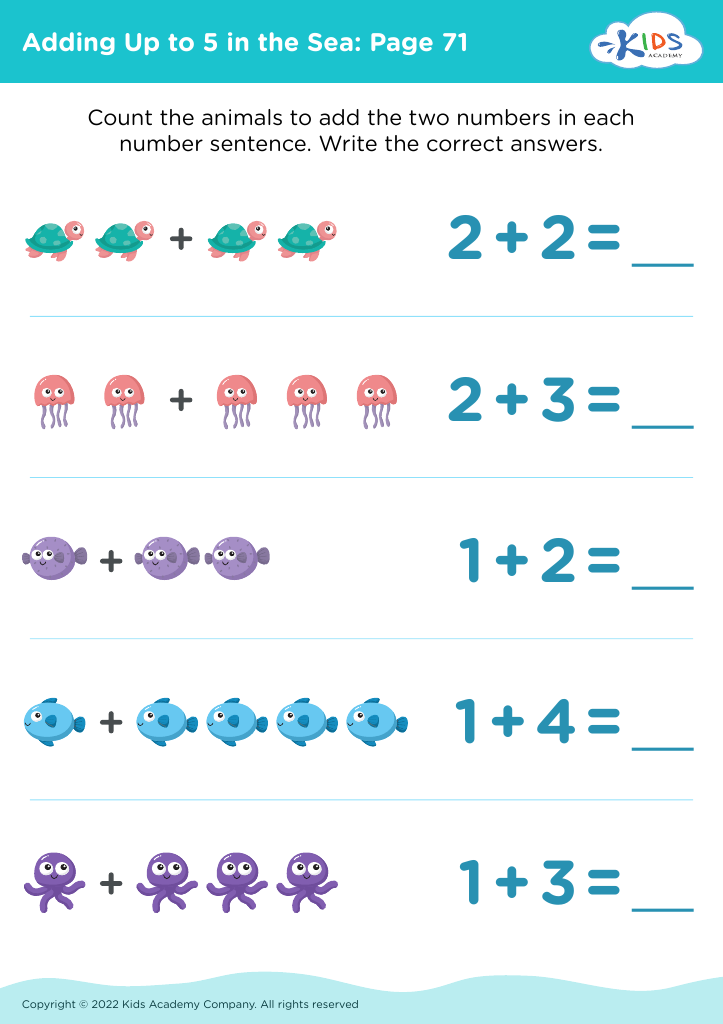
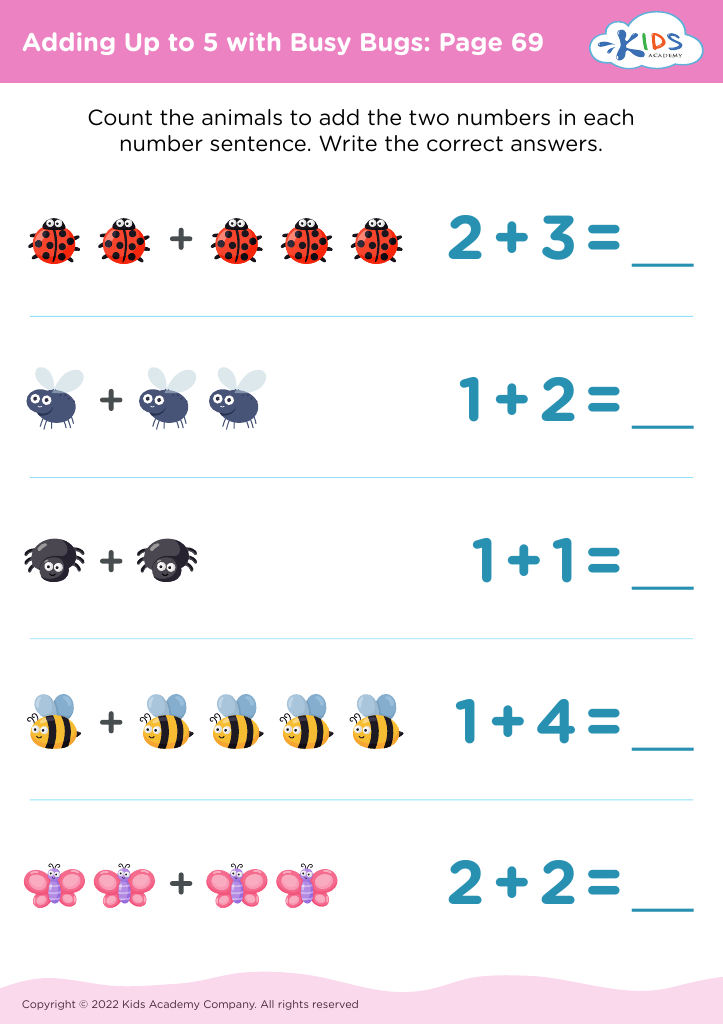
"Understanding Numeracy: Adding Up to 5 Worksheets for Ages 3-5" is designed to give young learners a strong foundation in basic math. These engaging worksheets help children practice simple addition with numbers up to 5. Colorful images and creative exercises make learning fun, aiding in the development of critical mathematical skills. Ideal for preschoolers, these worksheets support early numeracy understanding and build confidence in solving problems. Perfect for use at home or in the classroom, they offer a wonderful blend of education and play, setting the stage for future success in math. Get started, and watch your child flourish!








Understanding numeracy, especially the ability to add up to 5, is crucial for children ages 3-5 because it lays the foundation for their future mathematical learning and everyday problem-solving skills. During these formative years, developing basic numeracy can enhance cognitive function and trigger an interest in mathematics, paving the way for academic success later in life.
For parents and teachers, caring about teaching numeracy helps ensure children build essential skills such as counting, recognizing numbers, and understanding basic arithmetic. These skills are not only fundamental to math but also to logical thinking and reasoning. Children with a strong grasp of numeracy are better equipped to tackle complex mathematical concepts as they progress through their education.
Additionally, mastering early numeracy fosters confidence and encourages a positive attitude towards learning. Interactive activities that involve counting objects, simple addition games, and hands-on practice can make learning fun and engaging. This combination of enjoyment and education can make children enthusiastic learners.
Understanding numeracy also has practical benefits: it enables children to understand and navigate their world—be it through counting toys, measuring ingredients for a recipe, or dividing snacks among friends.
Ultimately, focusing on numeracy at an early age prepares children not just for school but for solving everyday problems, fostering a foundation for lifelong learning.








