Understanding numerical values Adding Up to 5 Worksheets for Ages 3-5
4 filtered results
-
From - To
Welcome to our "Understanding Numerical Values: Adding Up to 5 Worksheets for Ages 3-5" page! Designed specifically for young learners, these engaging worksheets help children grasp foundational math skills while having fun. Our interactive activities focus on counting, number recognition, and simple addition, ensuring your child builds confidence in their mathematical abilities. The vibrant illustrations and playful themes capture their attention, making learning a delightful experience. Ideal for homeschooling or classroom use, these worksheets complement your child's education by allowing them to explore numerical values while adding up to 5. Start your child’s math journey and watch them shine!
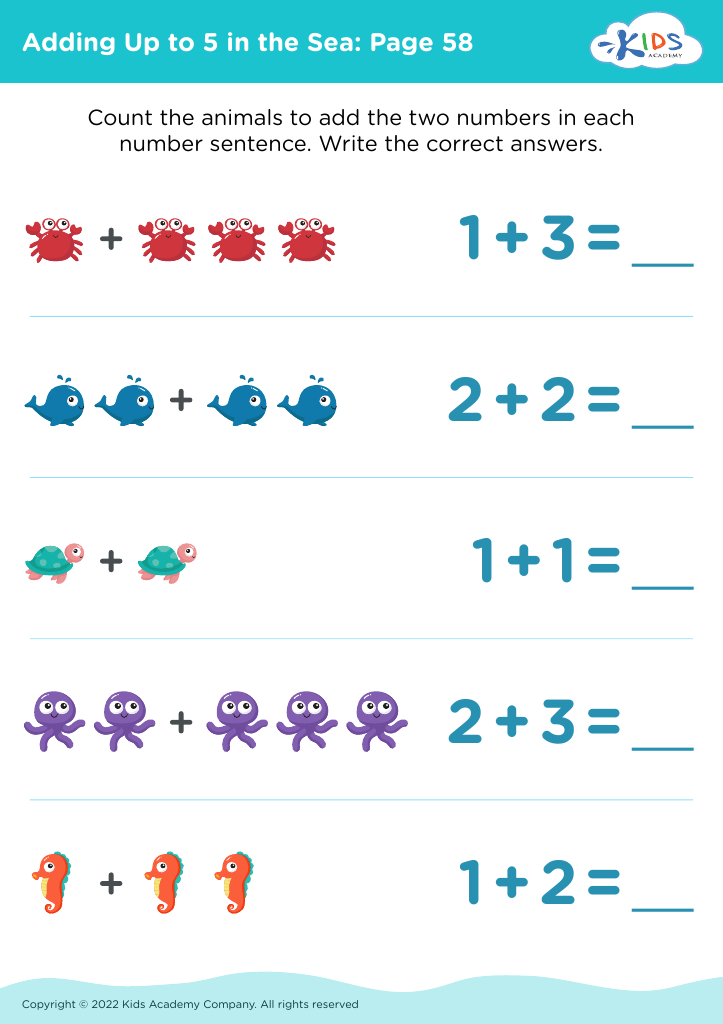
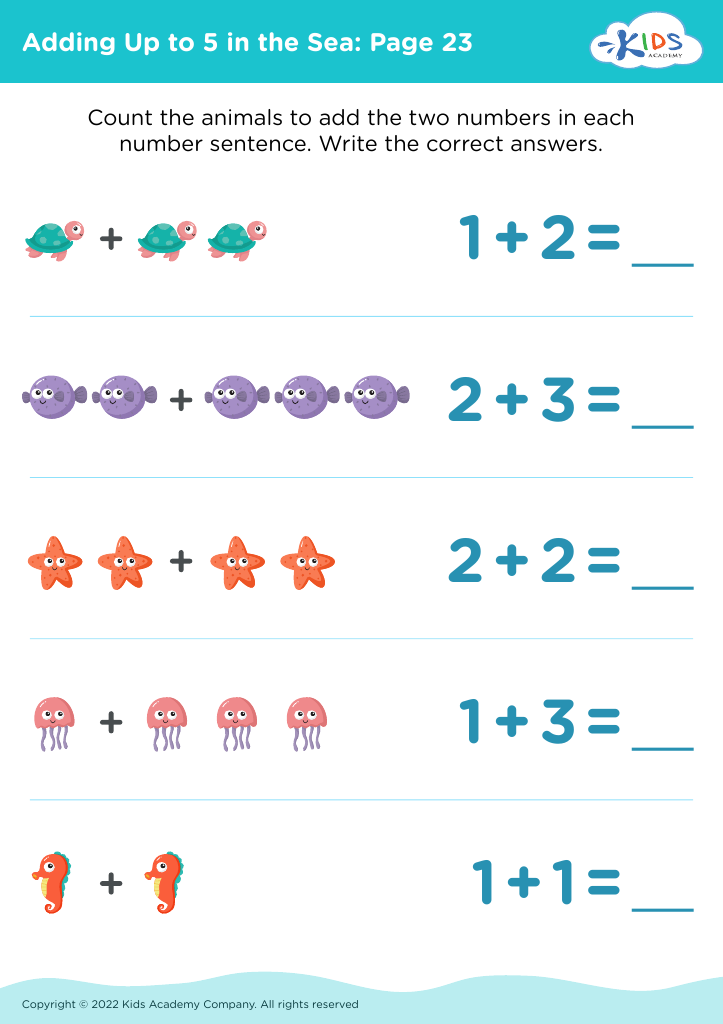
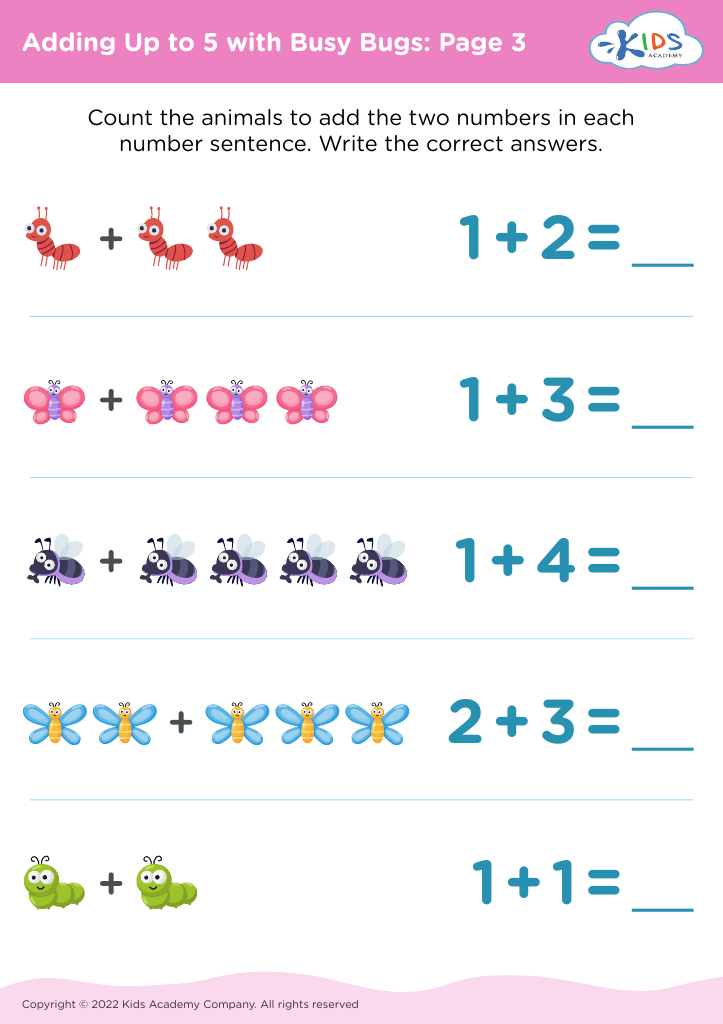
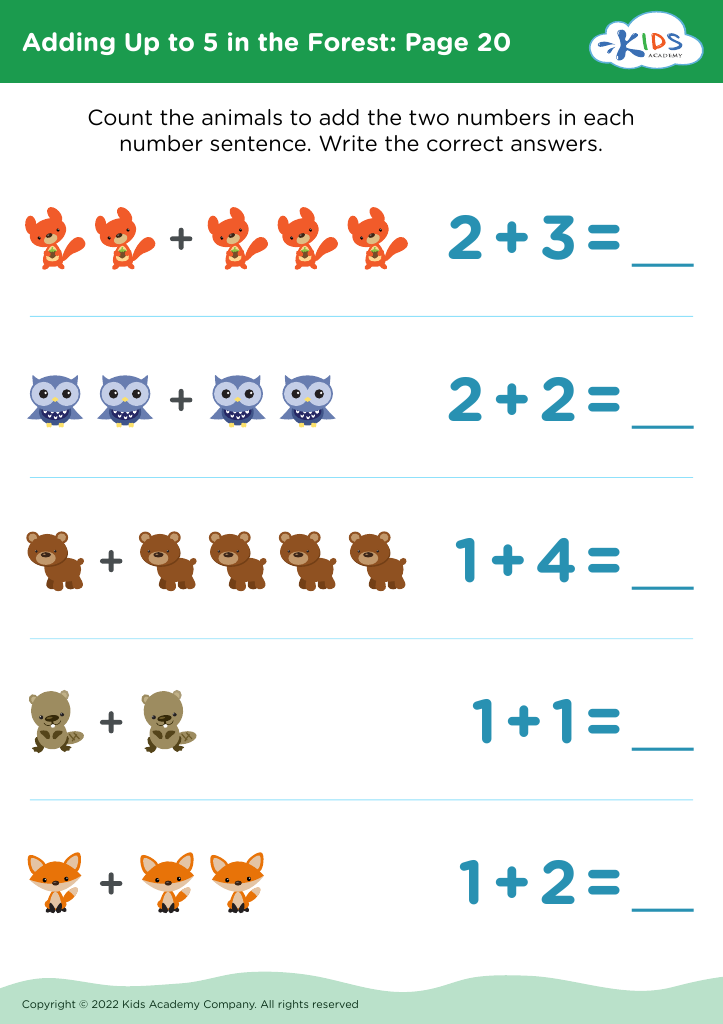




%20(1).jpg)

.jpg)

Understanding numerical values and the concept of adding up to 5 is a crucial developmental milestone for children aged 3-5. During these formative years, children begin to grasp foundational math concepts that support their cognitive and academic growth. Mastery of small numbers, such as 1 to 5, helps improve counting skills, comprehension of quantity, and recognition of number symbols.
Parents and teachers should care about this concept because it lays the groundwork for future mathematical learning. Early numerical understanding fosters critical thinking and problem-solving abilities, essential tools for academic success across various subjects. Additionally, engaging with numbers at this young age promotes social interactions through games and activities involving counting, helping children develop communication and cooperative skills.
Moreover, incorporating concepts of addition up to 5 allows young learners to explore patterns, arithmetic, and relational thinking in a playful context. With an early focus on numeracy, children experience increased confidence in their abilities, reducing math anxiety in later years. Fostering a love for math early on makes it an enjoyable part of learning, shaping positive attitudes toward education as they progress through school. Thus, prioritizing this foundational concept is essential for nurturing numeracy skills and overall development.








