Visual learning enhancement Adding Up to 5 Worksheets for Ages 3-5
4 filtered results
-
From - To
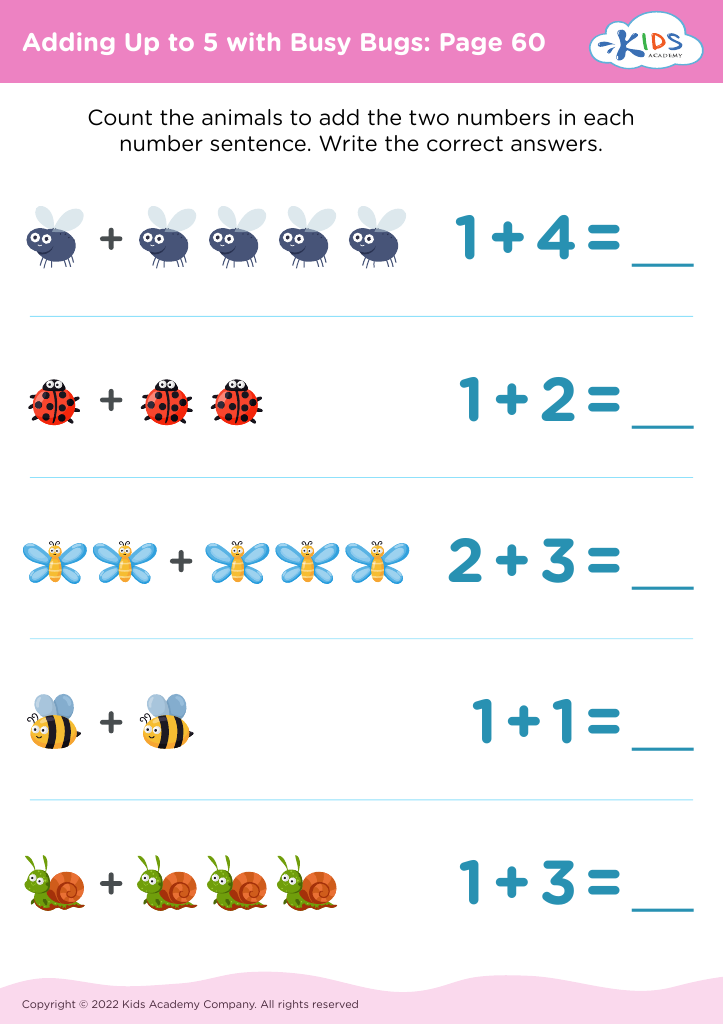
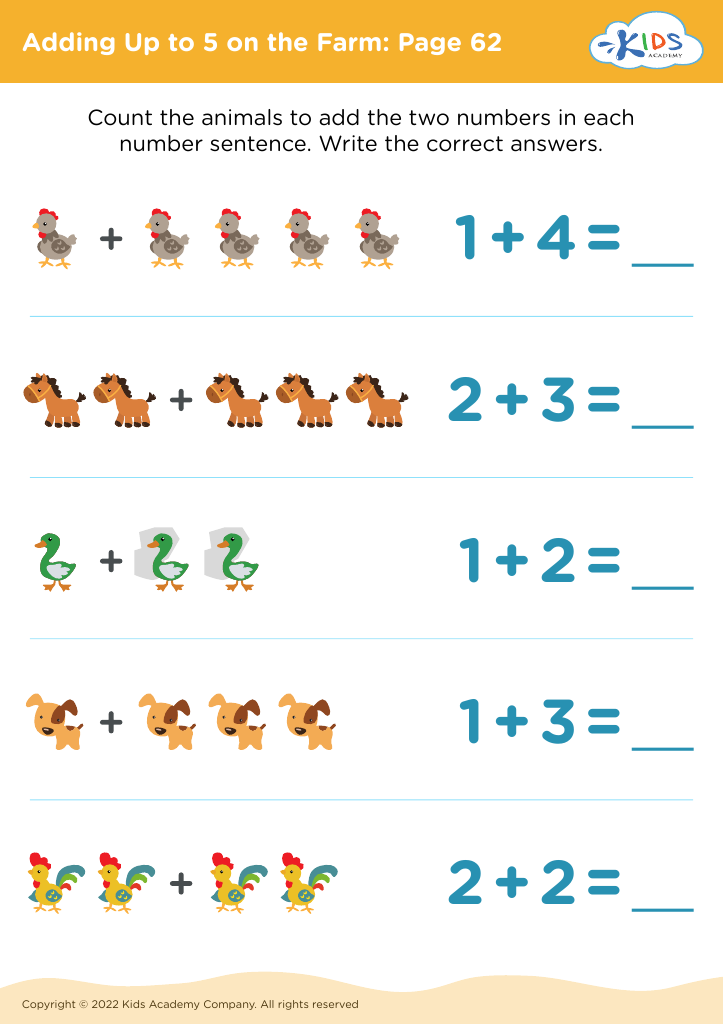
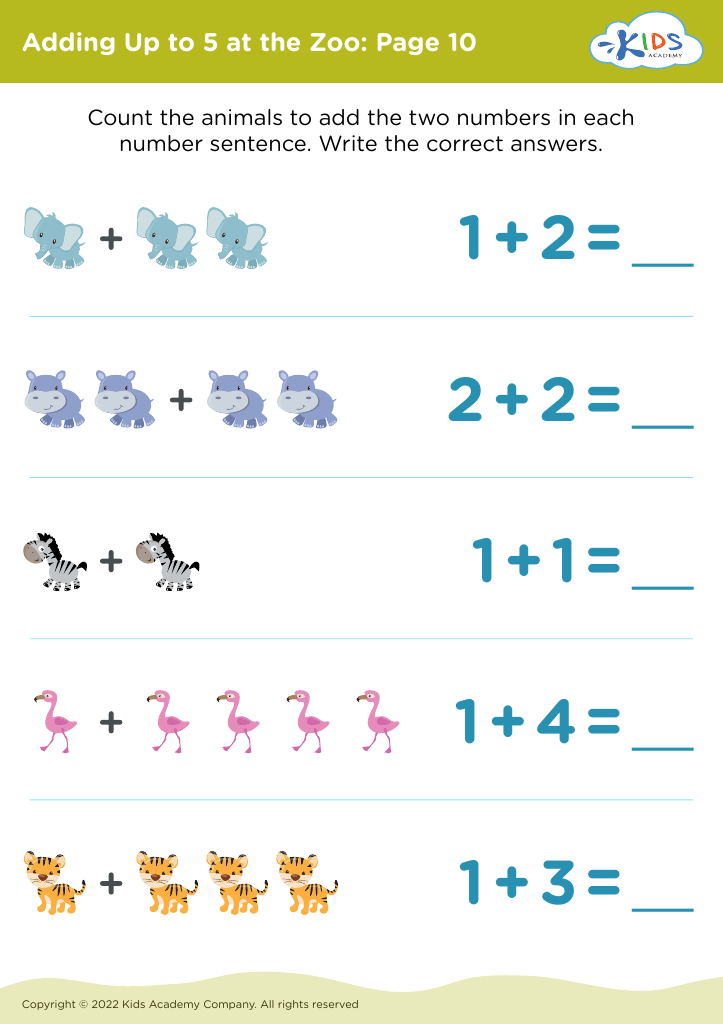
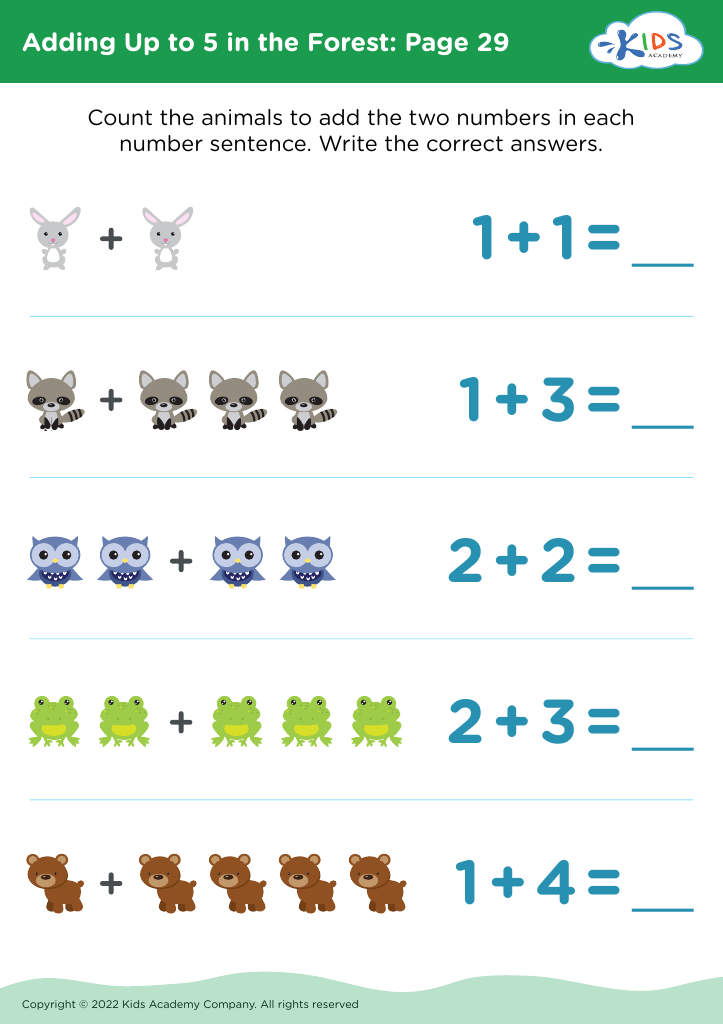
Boost your child's math skills with our "Visual Learning Enhancement: Adding Up to 5 Worksheets for Ages 3-5." These engaging worksheets are designed to help young learners master addition up to 5 through colorful visuals and interactive exercises. Ideal for preschoolers and kindergarteners, the activities encourage critical thinking, number recognition, and fundamental math fluency. By integrating playful themes and vibrant illustrations, our worksheets make learning fun and effective. Perfect for at-home practice or classroom support, these resources build a solid foundation for future math success. Nurture your child's potential with our expertly crafted, visually-rich math worksheets today!



%20(1).jpg)




Visual learning enhancement, specifically for fundamental math skills like adding up to 5, is crucial for children aged 3-5 due to various developmental benefits. At this age, children are highly visual and concrete thinkers, making visual aids an effective method to grasp basic concepts. Engaging visuals such as colorful counters, pictures, and interactive games attract their attention and foster a more profound interest in learning.
Parents and teachers should prioritize this method because it aligns with the children's developmental stage, thereby making learning more accessible and enjoyable. Visual learning helps establish a strong foundational understanding of numbers, sets, and counting. By seeing, touching, and moving objects, children can relate abstract concepts to tangible experiences, which aids comprehension and retention.
Moreover, early mastery of these essential skills can boost a child’s confidence, setting a positive tone for future academic endeavors. Visual learning can also cater to different learning styles, ensuring that children who may struggle with traditional numerical methods have an alternative pathway to success. Incorporating visual learning enhancements for adding up to 5 equips young learners with the necessary tools to build quantitative literacy, fostering a lifelong love for math and learning.








