Visual Perception Skills Adding Up to 5 Worksheets for Ages 3-5
4 filtered results
-
From - To
Introducing our "Visual Perception Skills Adding Up to 5 Worksheets for Ages 3-5", specially designed to enhance young learners' mathematical abilities through engaging and fun activities. These worksheets help children develop critical visual perception skills, which are fundamental for accurately interpreting and understanding visual information. Ideal for ages 3-5, our printable worksheets focus on adding up to 5, offering colorful pictures and playful exercises that make learning enjoyable. Each page is crafted to support foundational math skills, encouraging early learners to explore counting, addition, and number recognition while boosting their confidence and cognitive development.
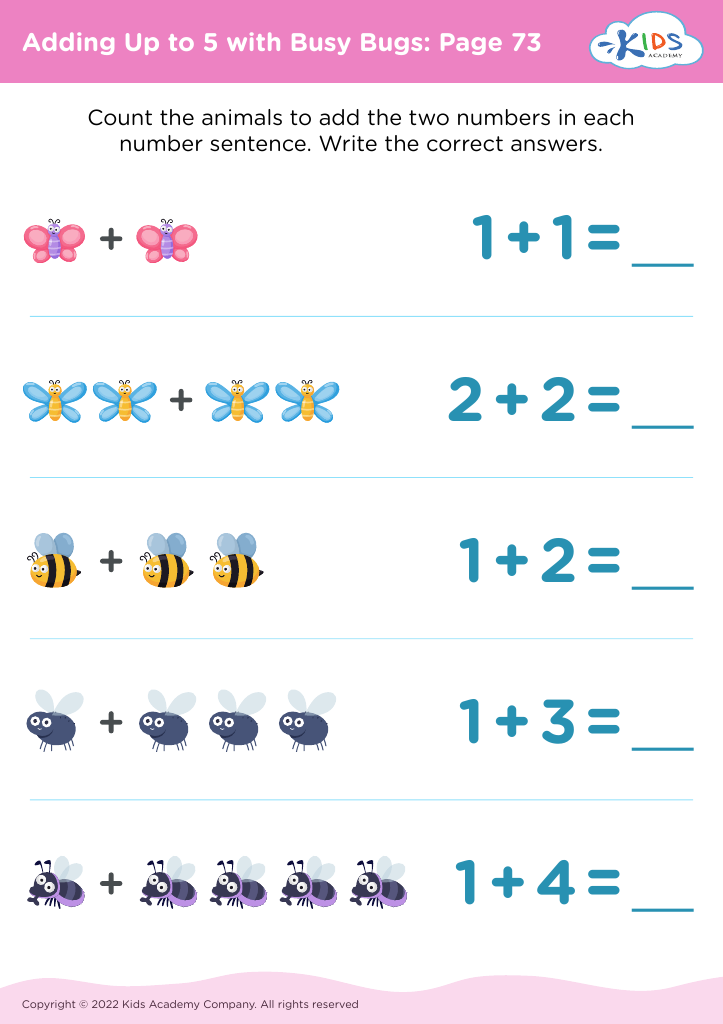
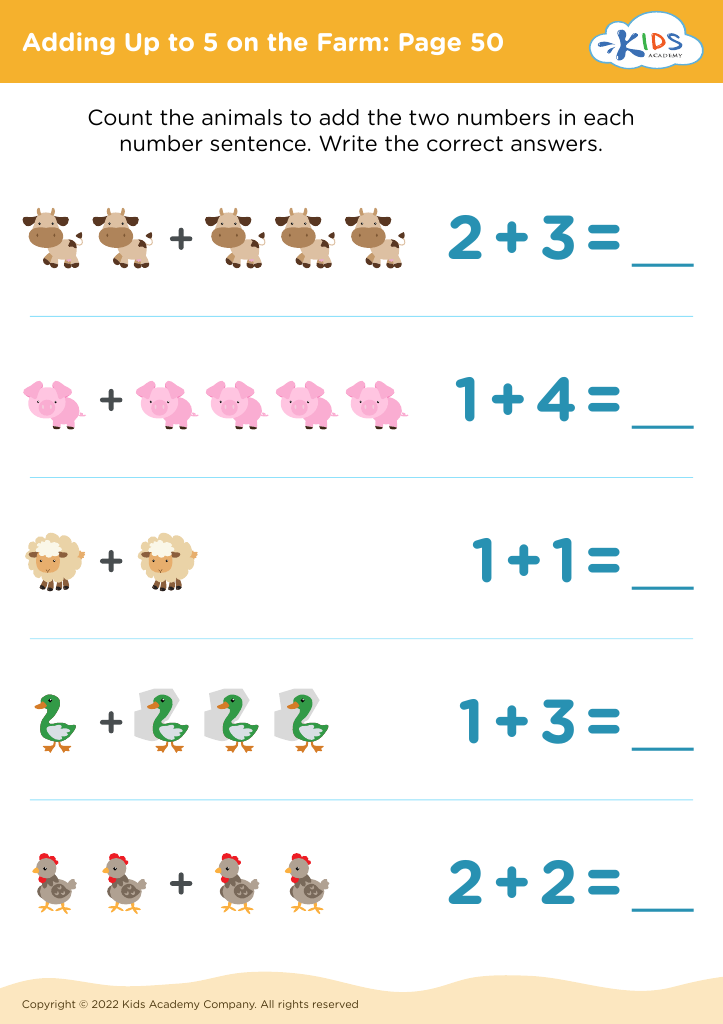
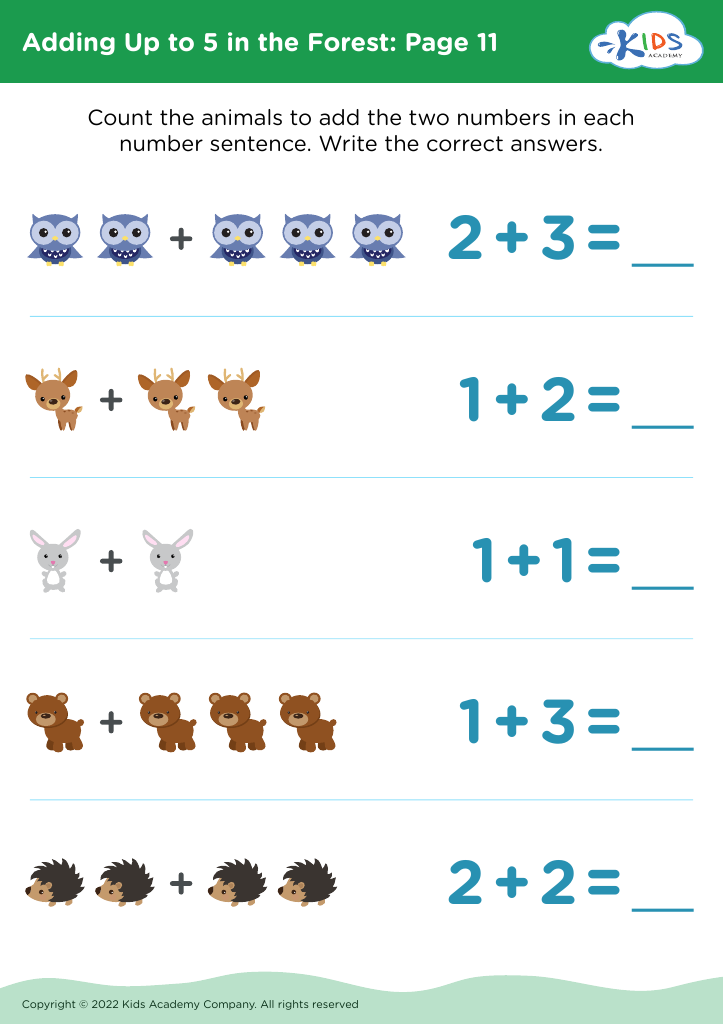
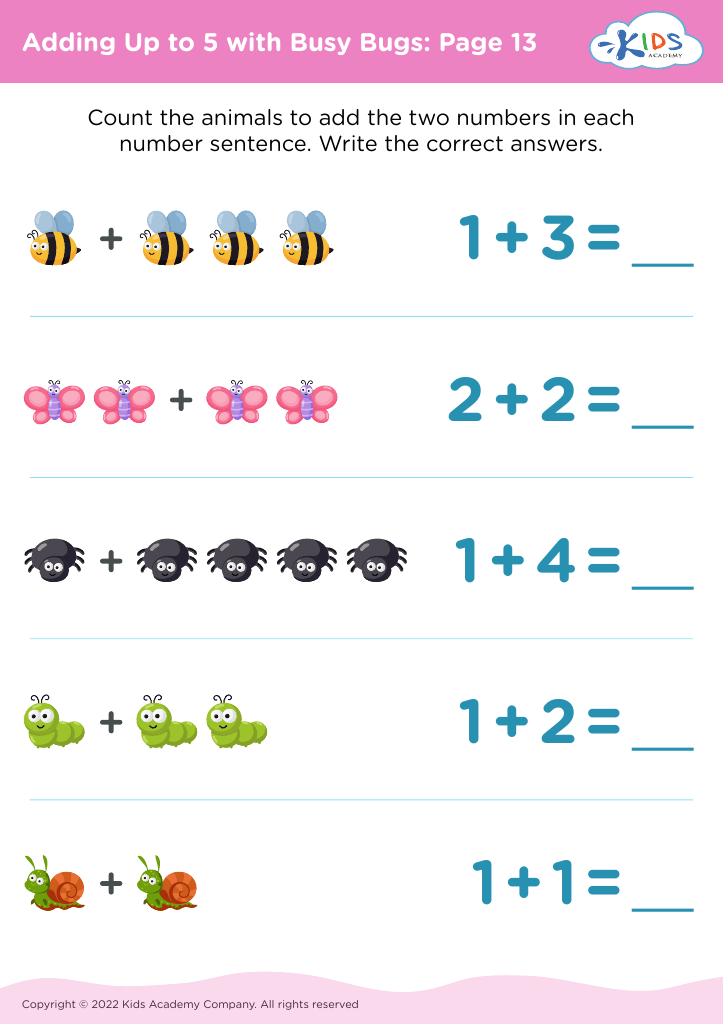





.jpg)


Visual perception skills are foundational cognitive abilities that enable children, particularly between the ages of 3 and 5, to interpret and understand visual information. These skills are crucial for various early learning activities and everyday tasks, including recognizing shapes, letters, numbers, and patterns. The ability to add up to 5 involves several key aspects of visual perception such as number recognition, spatial awareness, and memory.
Often, young children engage in activities like sorting objects, identifying differences and similarities, and assembling puzzles, which are essential for developing strong visual perception. Fostering these skills in the context of simple mathematical concepts like adding up to 5 prepares children for more complex arithmetic and logical reasoning in the future. Structured play and guided exercises that involve counting objects, matching numbers, or combining groups of items help children make tangible connections between numbers and real-world quantities.
For parents and teachers, understanding the importance of visual perception in mathematical contexts can inform effective educational strategies. Encouraging activities that combine visual and numerical skills not only nurtures cognitive development but also enhances a child's confidence and enthusiasm for learning math. This groundwork is vital for ensuring future academic success and fostering a lifelong curiosity and competence in mathematics.








