Logical thinking development Addition and Subtraction Word Problems Worksheets for Ages 3-5
3 filtered results
-
From - To
Explore our engaging "Logical Thinking Development: Addition and Subtraction Word Problems Worksheets" designed for children ages 3-5. These specially crafted worksheets provide fun and stimulating activities that promote critical thinking and problem-solving skills through relatable scenarios. Each word problem encourages young learners to apply basic addition and subtraction concepts in a playful context, enhancing their mathematical understanding while fostering logical reasoning. Perfect for teachers and parents, these worksheets support early childhood education by blending learning and play. Boost your child's confidence in math and help them develop essential cognitive skills with our colorful, interactive worksheets today!
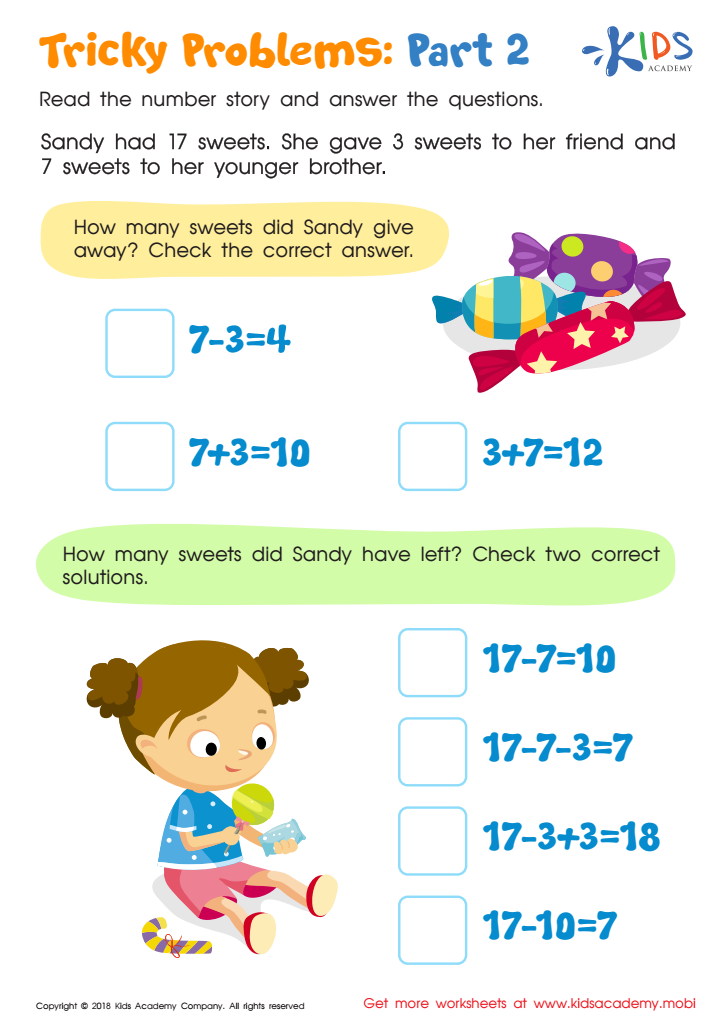
Tricky Problems Worksheet: Part 2
 Assign to My Students
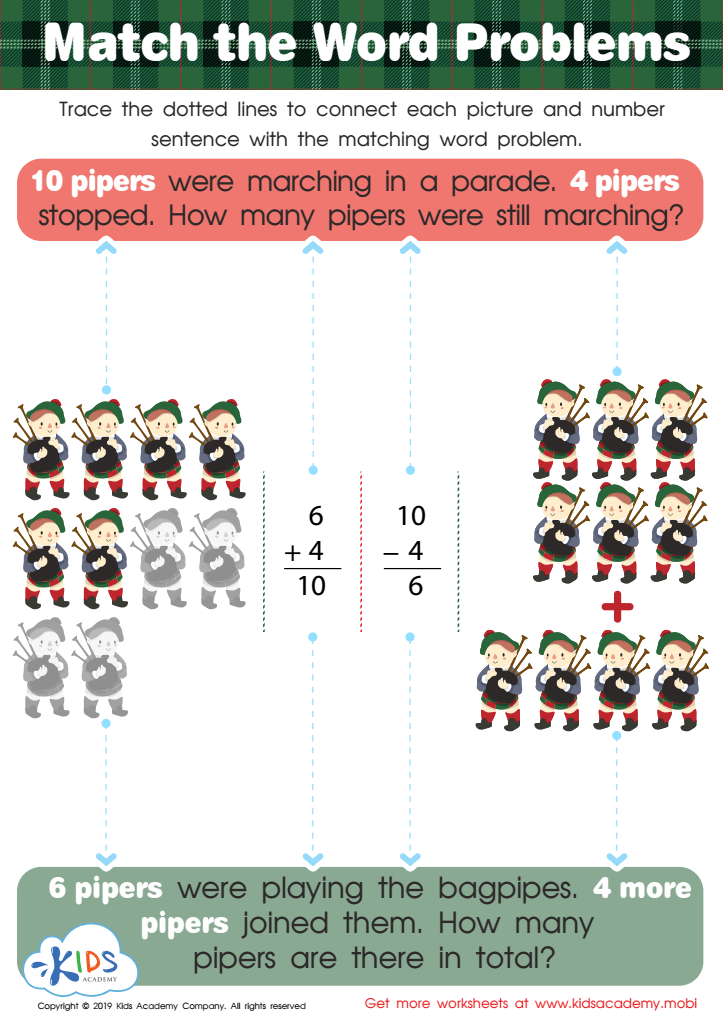
Match the Word Problems Worksheet
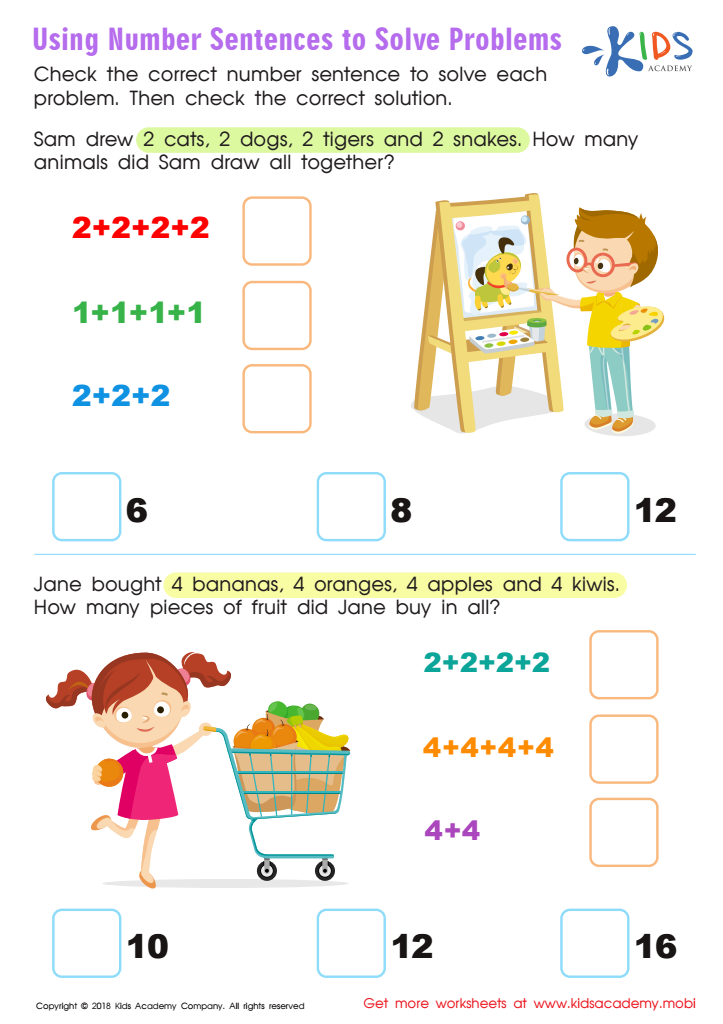
Using Number Sentences to Solve Problems Worksheet








Logical thinking development through addition and subtraction word problems is crucial for young children aged 3-5, as it lays the foundation for critical thinking and problem-solving skills. At this early stage, children's brains are highly receptive to learning, and engaging them with word problems enhances their understanding of basic mathematical concepts in a meaningful context.
Parents and teachers should prioritize this development because word problems encourage kids to process information, identify relevant data, and apply mathematical reasoning in real-life situations. By presenting addition and subtraction challenges through narratives, children learn to decode, visualize, and solve problems, which cultivates their analytical skills.
Furthermore, these activities foster language development, as children learn to articulate their thought processes and express their reasoning. This dual focus on math and language supports cognitive growth and prepares children for future academic successes.
Lastly, involving young learners in such problem-solving activities promotes a positive attitude toward math, reducing anxiety and building confidence. This early exposure can lead to a lasting love for learning, equipping children with essential skills that will serve them well beyond their formative years.