Addition up to 5 Addition & Subtraction Worksheets for Ages 3-5
4 filtered results
-
From - To
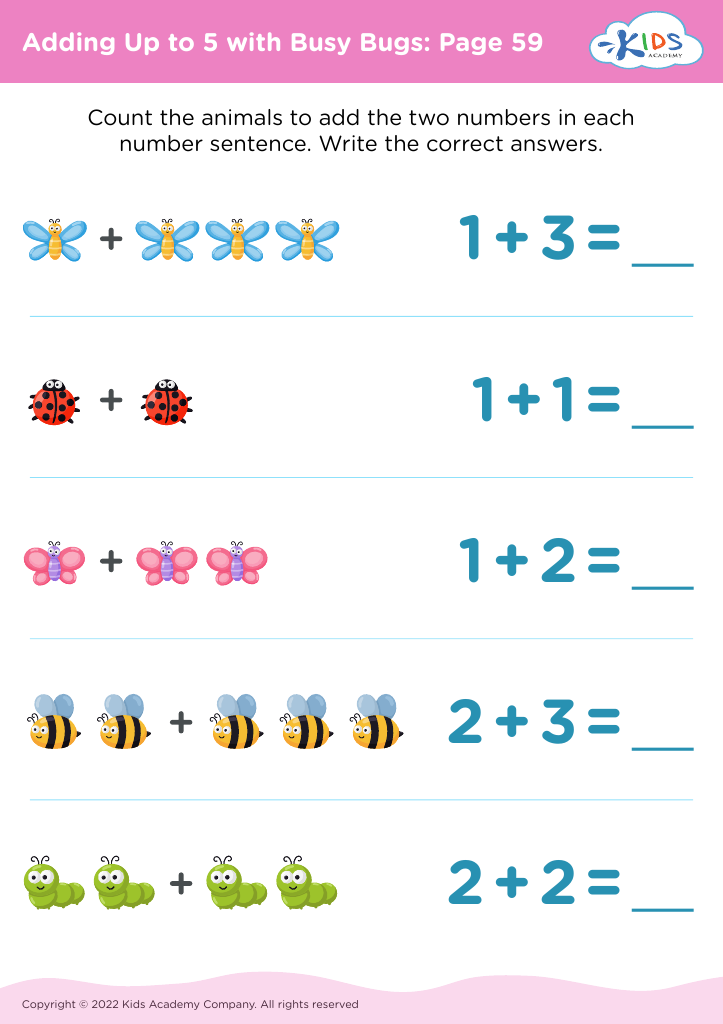
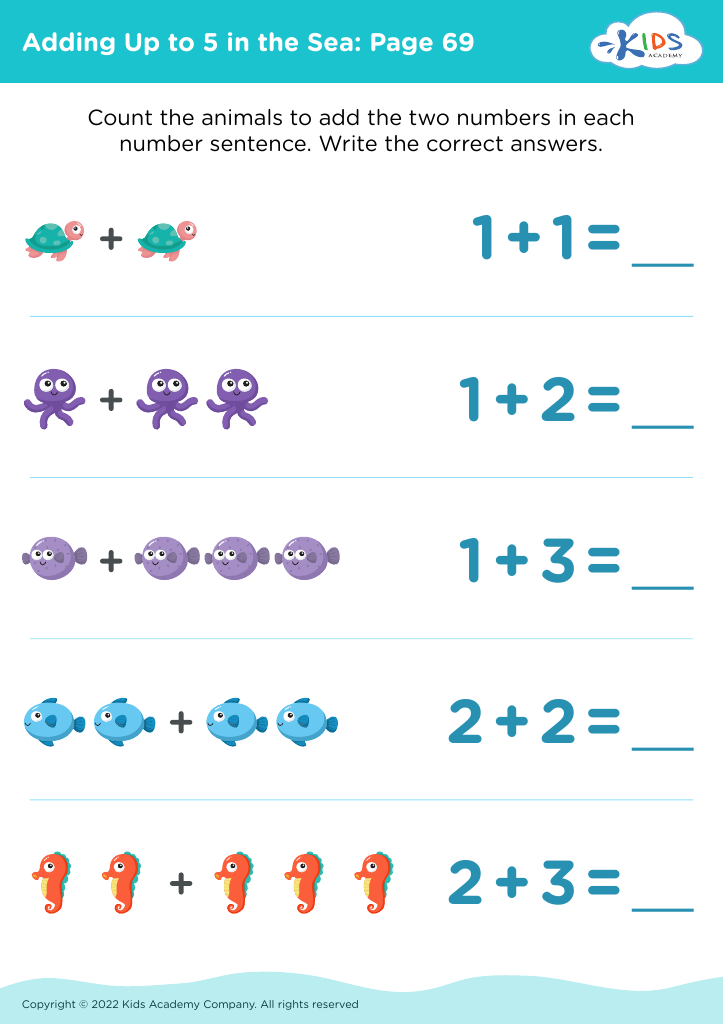
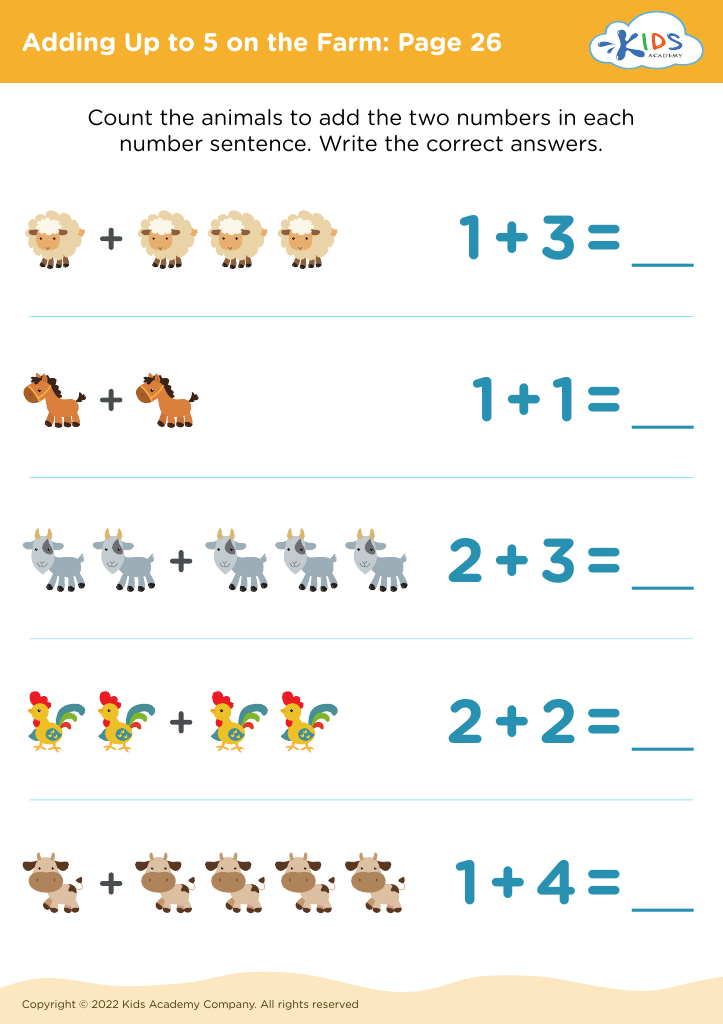
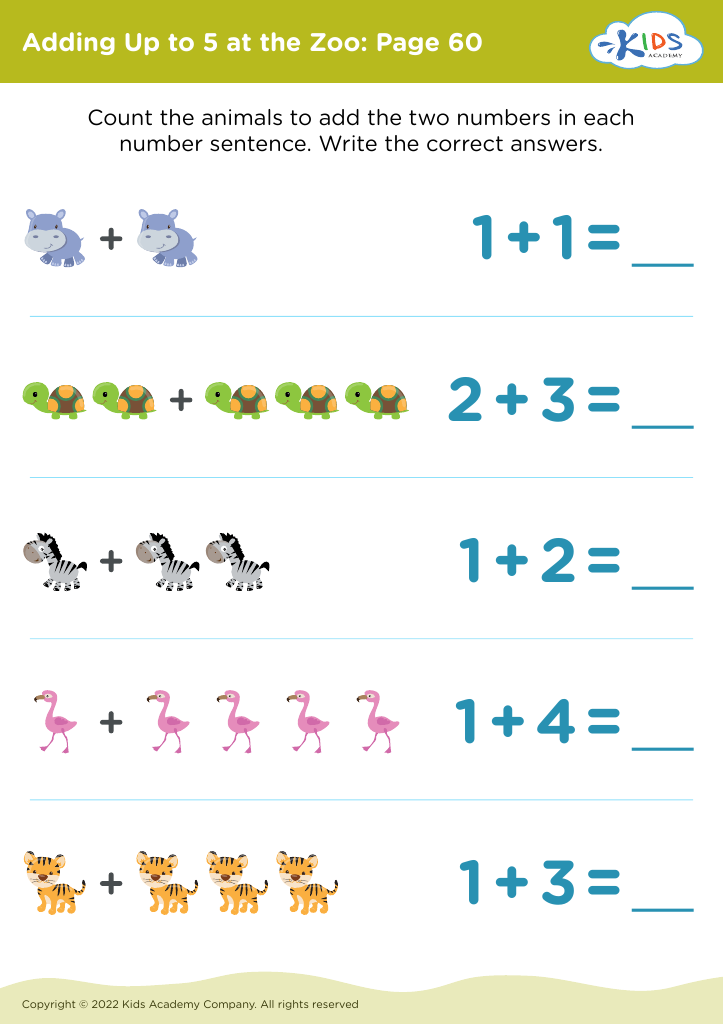
Welcome to our engaging "Addition up to 5" worksheets designed for children ages 3-5! These fun and interactive materials introduce young learners to the basics of addition and subtraction in a playful manner. Featuring colorful illustrations and simple exercises, our worksheets help build foundational math skills essential for early development. Kids will enjoy practicing their addition knowledge with hands-on activities that enhance their understanding of numbers while developing fine motor skills. Perfect for home or classroom use, these worksheets aim to make learning math enjoyable and effective. Begin your child’s mathematical journey today with our delightful addition and subtraction resources!








Parents and teachers should prioritize teaching Addition and Subtraction concepts up to 5 for children aged 3-5 because these early math skills lay the foundation for all future learning. At this developmental stage, children are naturally curious and motivated to explore numbers, and introducing basic math concepts enhances their cognitive development.
Understanding addition and subtraction through simple activities promotes critical thinking and problem-solving skills. Engaging children in playful, hands-on activities—such as using toys, blocks, or snacks—makes learning vibrant and enjoyable, fostering a positive attitude towards mathematics.
Additionally, early competency in basic arithmetic contributes to greater academic success in later years. Children who grasp these fundamental concepts are better prepared for more complex math tasks in school. Furthermore, mastery in early math helps enhance children's language skills and comprehension, as they learn to discuss and express their understanding of quantities and relationships.
Finally, nurturing mathematical skills at this age builds confidence, encouraging children to persevere through challenges and embrace learning. When parents and teachers actively participate in this aspect of development, they can cultivate a child’s enthusiasm for math, setting the stage for lifelong learning and success in various subjects.








