
Color Identification Addition & Subtraction Worksheets for Ages 3-5
4 filtered results
Difficulty Level
Grade
Age
-
From - To
Subject
Activity
Standards
Discover our engaging "Color Identification Addition & Subtraction Worksheets" designed specifically for children ages 3 to 5. These interactive worksheets combine essential early math skills with vibrant colors, making learning fun and effective. Young learners will enhance their color recognition while practicing simple addition and subtraction in a playful way. Each worksheet incorporates colorful visuals, allowing children to connect numbers with real-world objects in their favorite shades. Perfect for preschool educators and parents, these printable resources support a solid foundation in math while stimulating creativity. Download our worksheets today and inspire a love for learning in your little ones!
Favorites
With answer key
Interactive
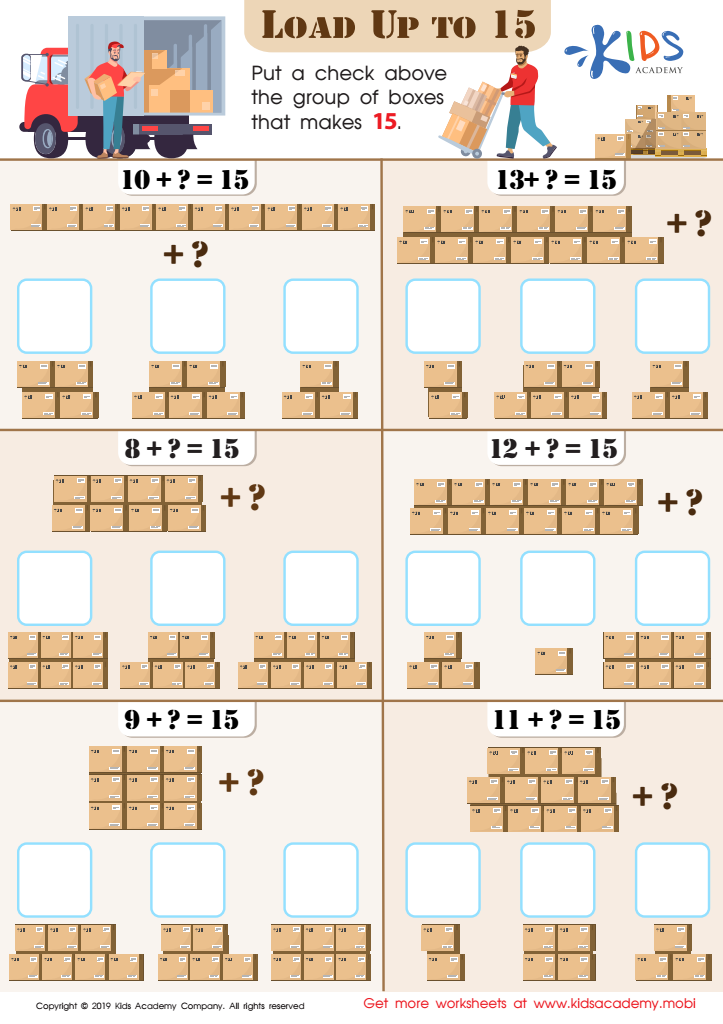
Load up to 15 Worksheet
Your students can practice addition and counting skills with this worksheet. Each equation has 6 boxes to count. Check the group that equals 15 to complete the exercise. Help your kindergartners if they need it.
 Assign to My Students
Load up to 15 Worksheet
Worksheet
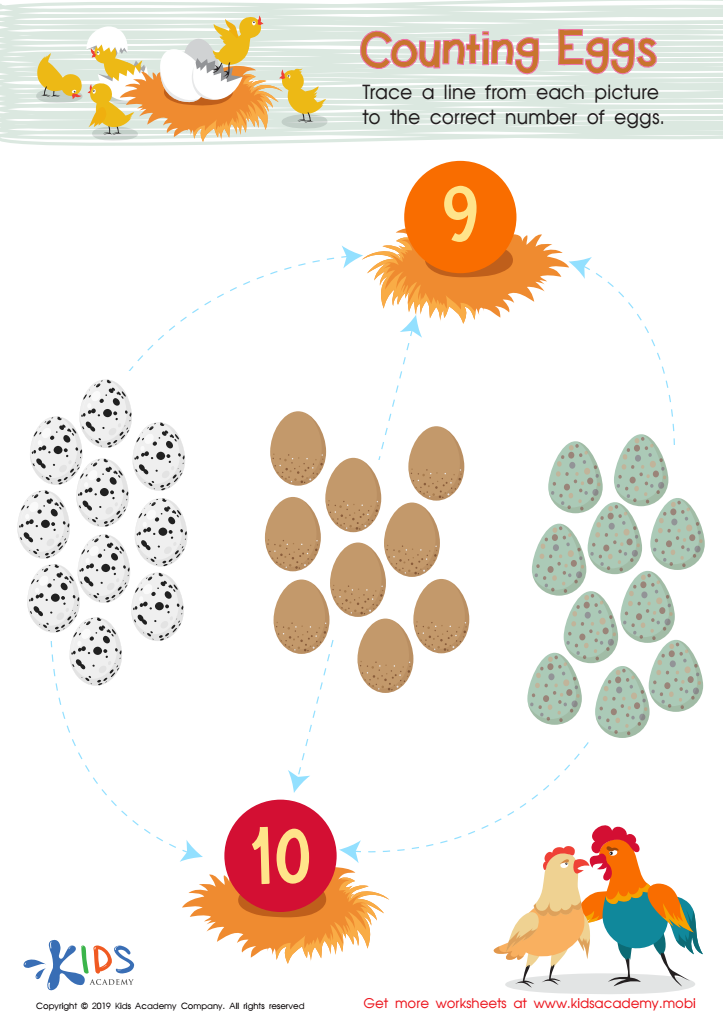
Counting Eggs Worksheet
This worksheet is great for teaching kindergarteners to count and add numbers. It includes colorful pictures of eggs with numbers to trace. Help students count the eggs and draw a line to the right number. This will make learning fun and easy!
Counting Eggs Worksheet
Worksheet
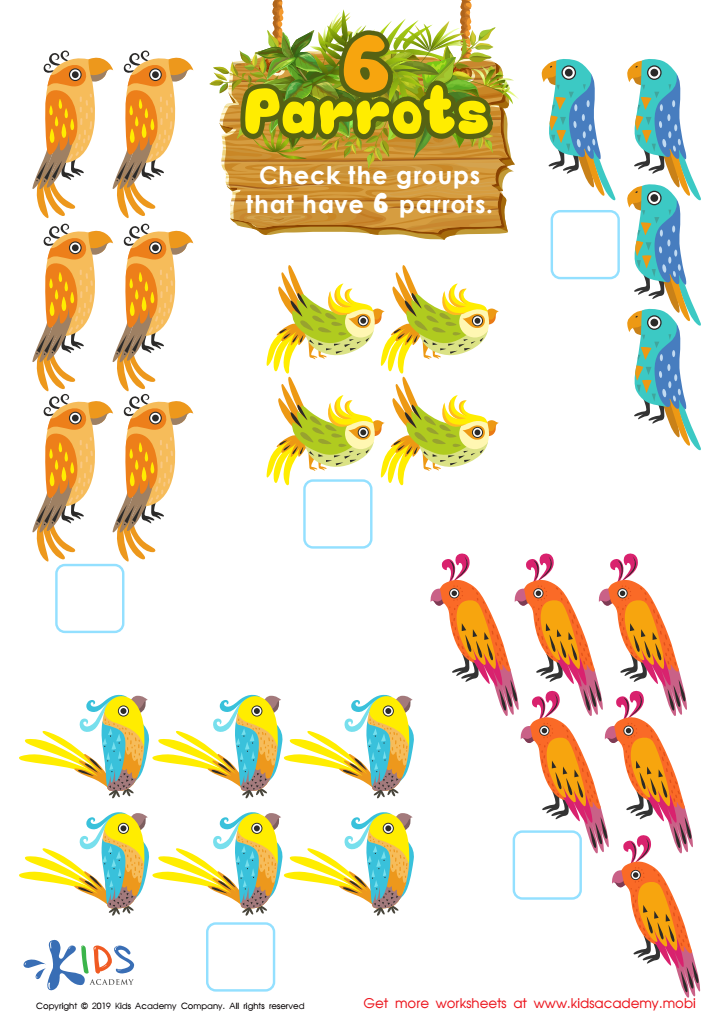
6 Parrots Worksheet
Love parrots? Here's a free worksheet to help your children practice counting to six with colorful parrot representations! Kids will adore counting the parrots and checking off groups of six - and it won't even feel like math! Just a fun way to make some new and exciting friends.
6 Parrots Worksheet
Worksheet
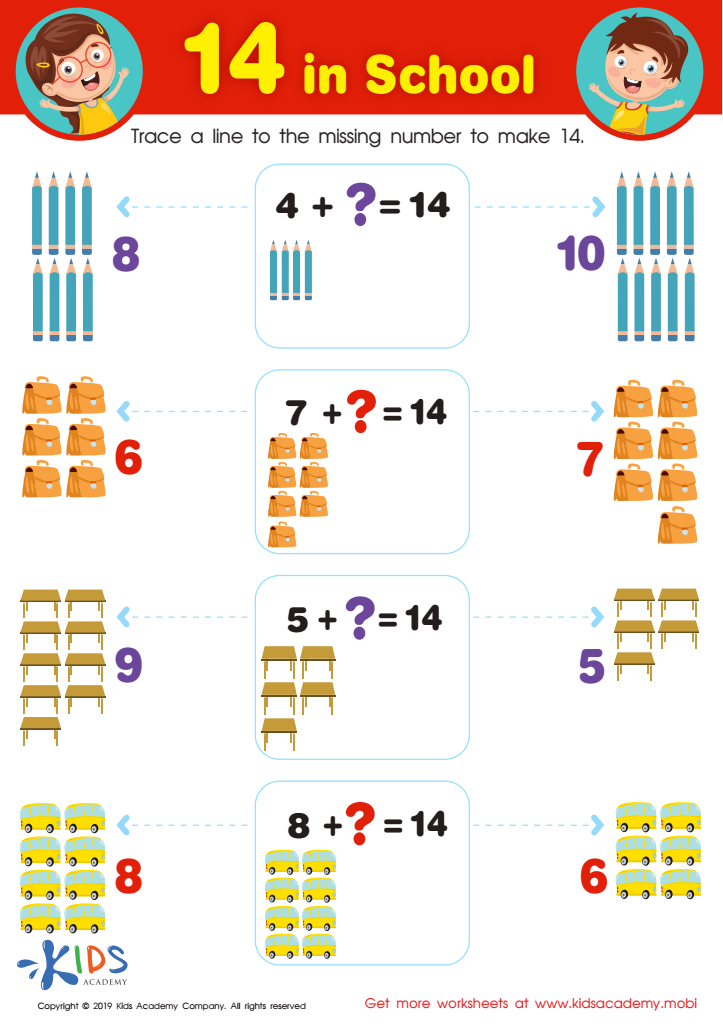
14 in School Worksheet
Remind your kids that adding different sets of numbers can give the same total (e.g. 2+3=5, 4+1=5). Ask them for more examples. Afterwards, work through the exercise. Help them count the objects and trace a line to the missing number that makes the total 14.
14 in School Worksheet
Worksheet
Join Kids Academy for Free
Who is primarily going to use this learning content?








Parents and teachers should care about Color Identification Addition and Subtraction for ages 3-5 because it captures young children's instinctive curiosity and intrinsic motivation to learn. At this age, kids are naturally developing their cognitive skills, and incorporating color identification into early math concepts lays a robust foundational reference for both math and language development.
Color reinforces memory and recognition; when children learn to associate numbers with colors while practicing addition and subtraction, it promotes engagement and fun. For example, using colored blocks to represent different quantities brings numbers to life, helping children understand abstract concepts in a tangible way. This multisensory approach makes learning math less intimidating and enhances children's enthusiasm for problem-solving.
Moreover, mastering these early math skills contributes to greater overall academic success, setting children up for a positive learning trajectory. It helps develop critical thinking and analytical capabilities, skills that are invaluable as they grow. With a harmonious blend of color-coding in math exercises, parents and teachers cultivate an inclusive, stimulating learning environment that fosters creativity while encouraging early numeracy skills. Ultimately, effectively engaging young learners in these foundational concepts can have lifelong benefits.








