Pattern recognition Addition & Subtraction Worksheets for Ages 3-5
3 filtered results
-
From - To
Introduce your little ones to the fundamentals of arithmetic with our engaging Pattern Recognition Addition & Subtraction Worksheets, tailor-made for children ages 3-5! Designed to blend learning with fun, these worksheets help kids identify patterns and build a strong foundation in basic math skills. Focusing on visual and hands-on activities, our resources assist young learners in mastering addition and subtraction through vibrant illustrations and interactive exercises. Ideal for preschoolers and kindergarteners, these worksheets promote cognitive development and early problem-solving abilities, making math an enjoyable adventure. Prepare your child for future mathematical success with these essential learning tools.
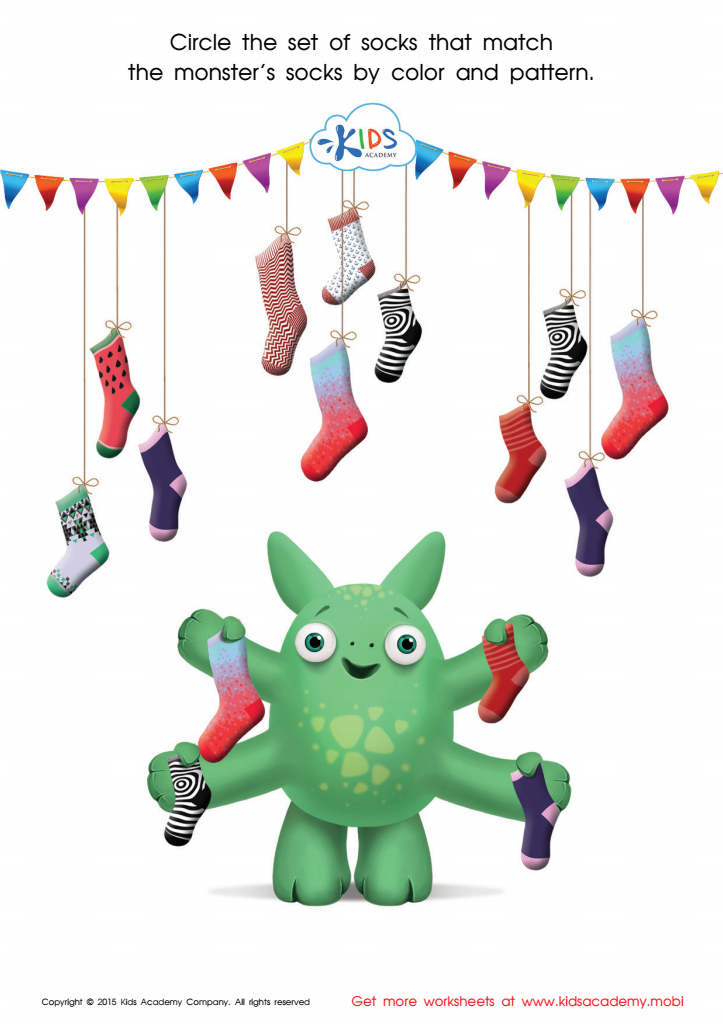
Sort the Monster's Socks Worksheet
 Assign to My Students
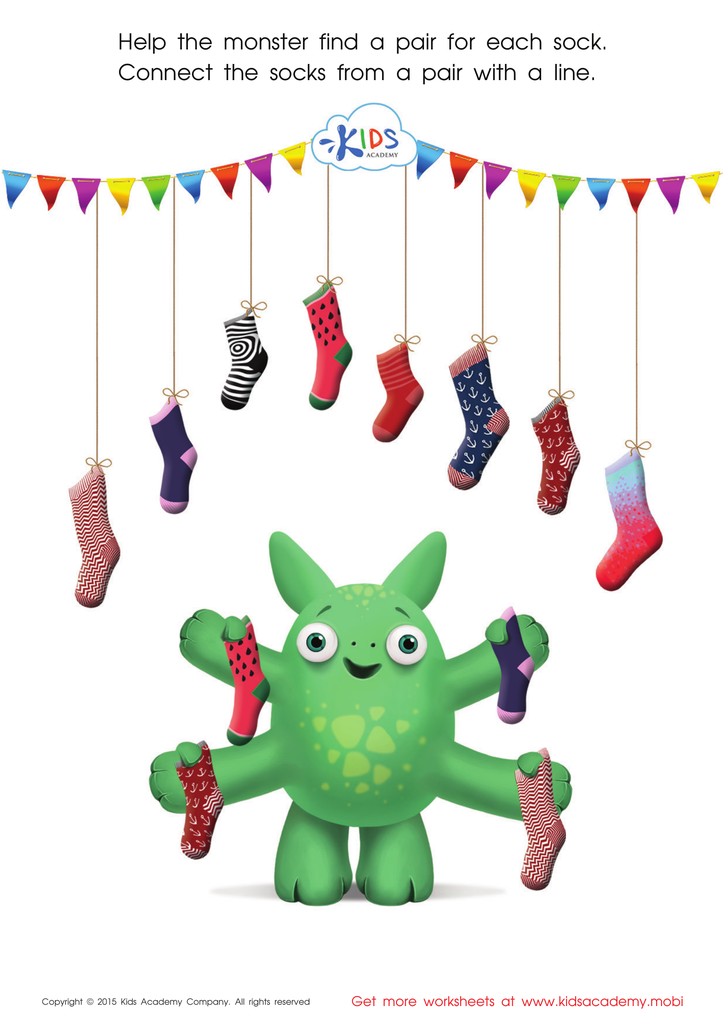
Math Matching Game: Monsterв's Socks Worksheet
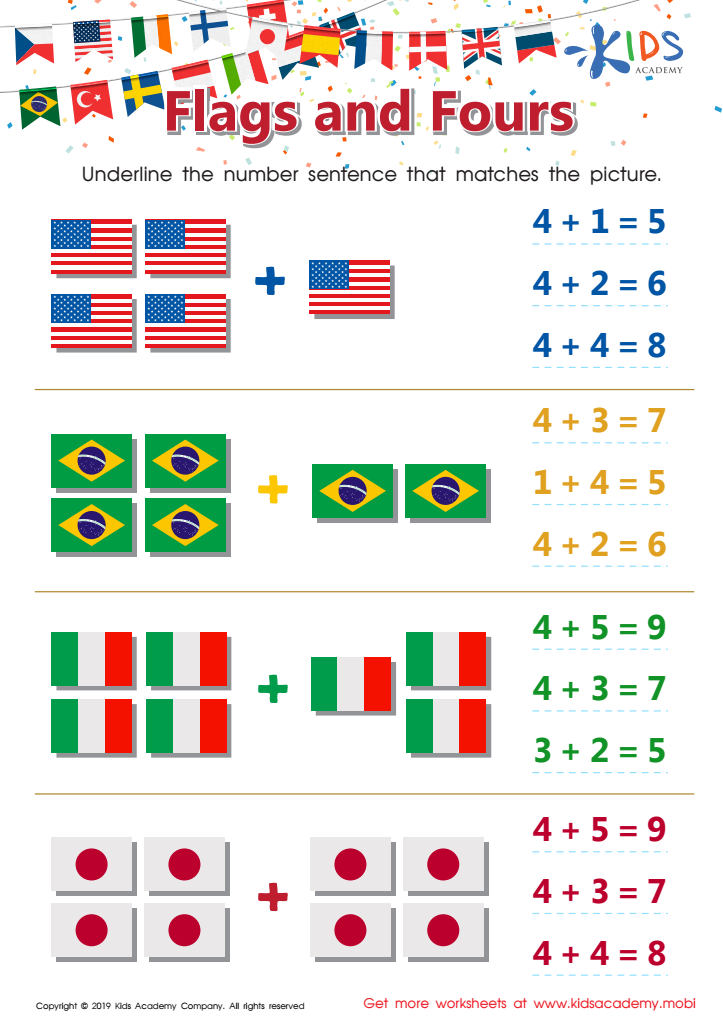
Flags and Fours Worksheet








Parents and teachers should care about pattern recognition, addition, and subtraction for ages 3-5 because these early math skills are fundamental building blocks for a child's cognitive development and future academic success. Pattern recognition helps young children make sense of the world around them, aiding in the development of critical thinking and problem-solving abilities. Recognizing patterns enhances their ability to predict and understand the sequence of events, fostering logical reasoning and spatial awareness.
Addition and subtraction at this age lay the groundwork for numerical fluency and comfort with basic arithmetic. These skills teach children about quantities, the concept of more and less, and enable them to grasp the idea of number relationships. Early mastery of these concepts contributes to a strong mathematical foundation, which benefits future learning in subjects ranging from science to economics.
Moreover, engaging with these math skills in enjoyable and interactive ways builds a positive attitude toward learning and breaks down any math anxiety early on. Games, puzzles, and hands-on activities are excellent tools to make these skills fun and relevant. Therefore, fostering an early interest in patterns, addition, and subtraction is essential to supporting a child's overall intellectual growth and enthusiasm for learning.








