Understanding number relationships Addition & Subtraction Worksheets for Ages 3-5
4 filtered results
-
From - To
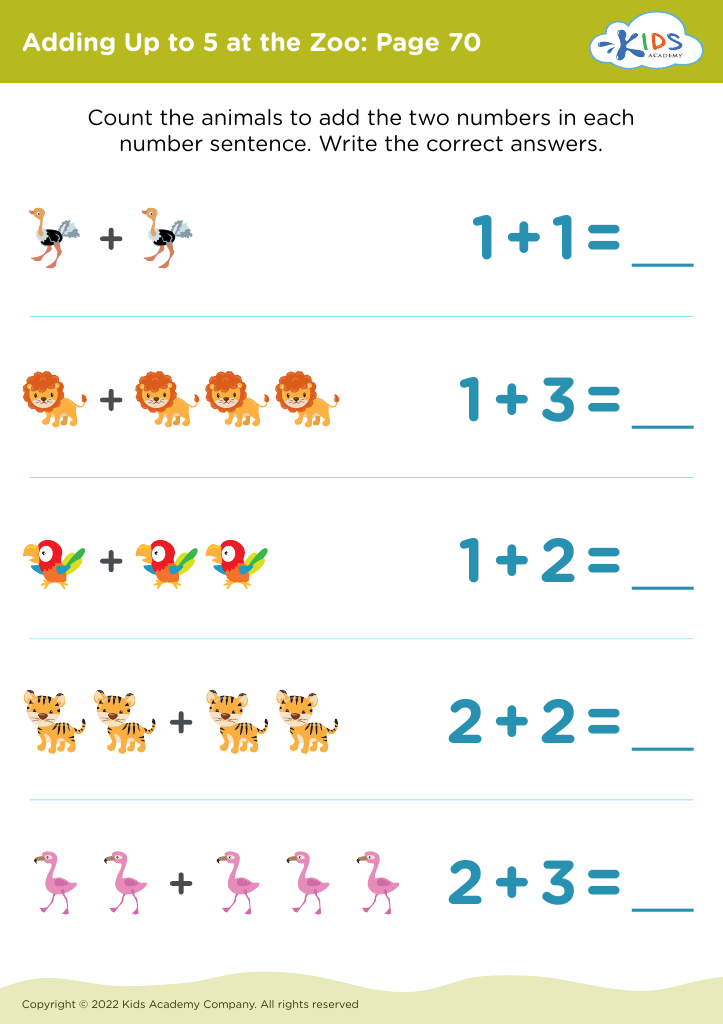
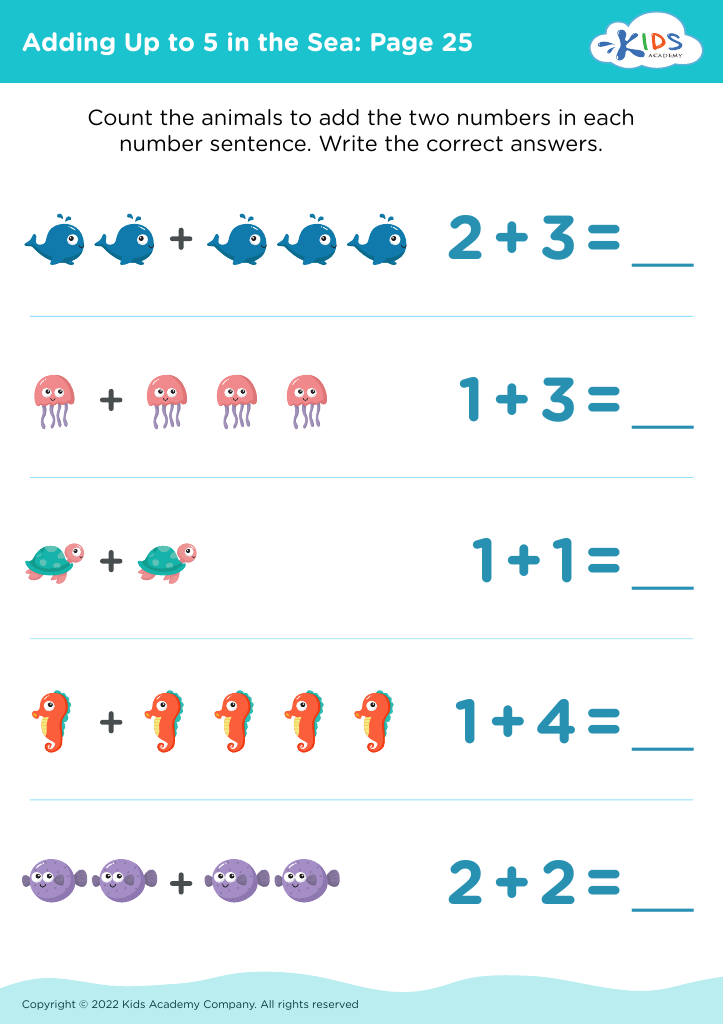
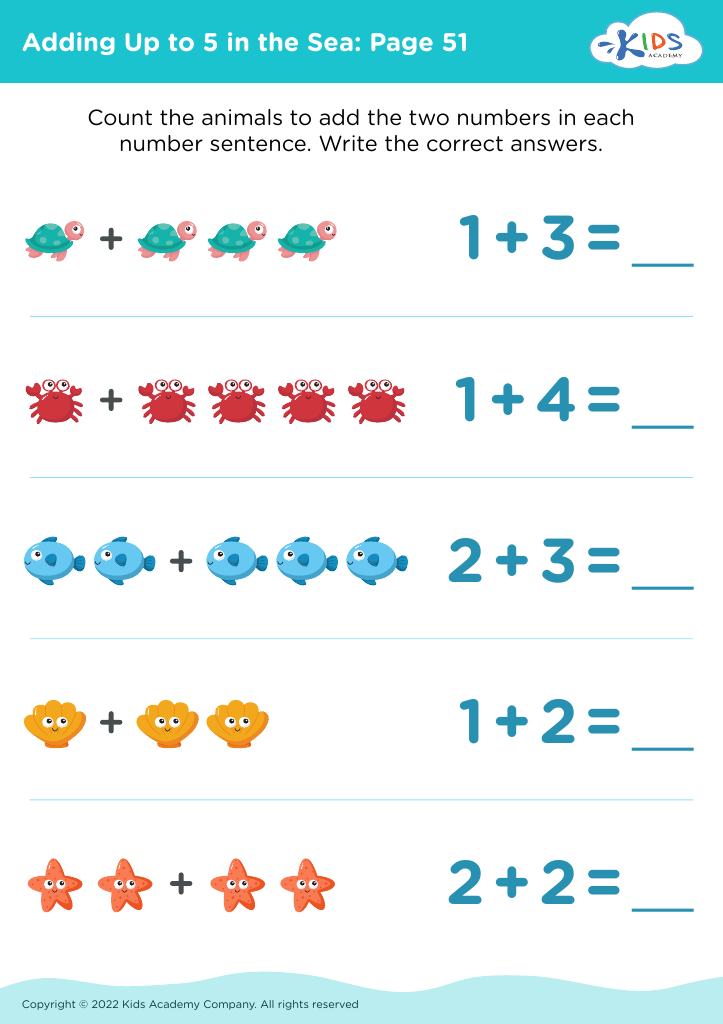
Explore our "Understanding Number Relationships: Addition & Subtraction Worksheets" designed for children ages 3-5. These engaging worksheets help young learners develop foundational math skills through fun and interactive exercises. Children will grasp key concepts such as the relationships between numbers, hone their addition and subtraction skills, and build confidence in math. Our age-appropriate activities encourage critical thinking and problem-solving, ensuring a solid mathematical understanding. Perfect for parents and educators, these worksheets offer a wonderful way to make learning enjoyable while preparing little ones for future academic success. Download and inspire your child's love for math today!
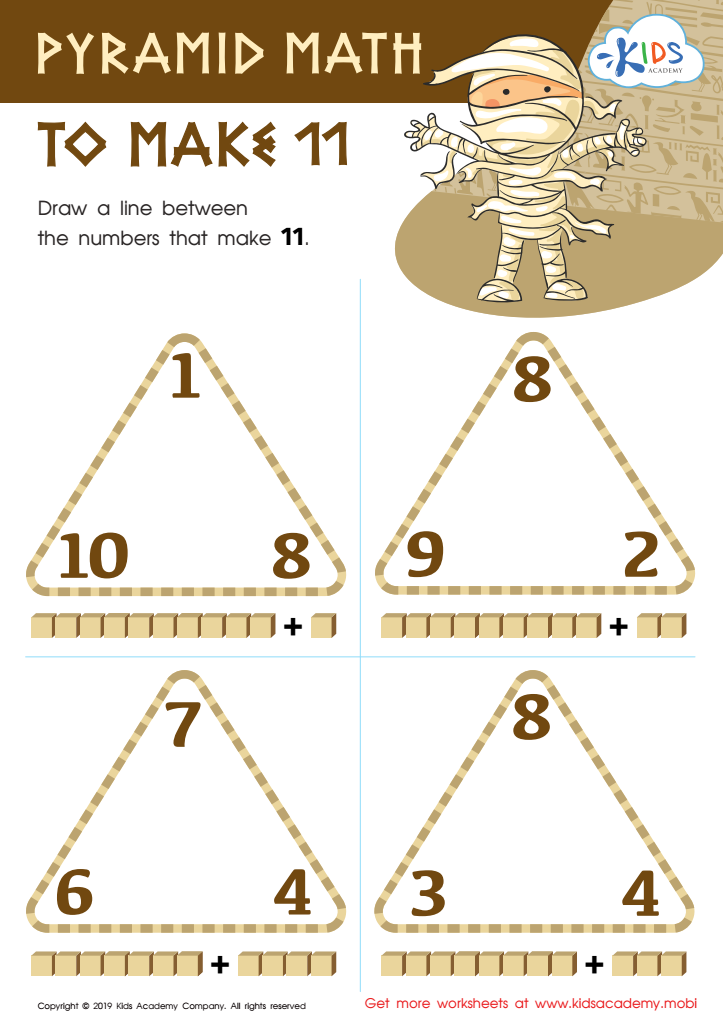
Pyramid Math to Make 11 Worksheet
 Assign to My Students








Understanding number relationships in addition and subtraction is crucial for children aged 3-5, as it lays the foundation for their mathematical development. At this stage, children are naturally curious and eager to make sense of the world around them. By introducing concepts of addition and subtraction early, parents and teachers can help them develop critical thinking and problem-solving skills.
Learning these number relationships fosters number sense, enabling children to recognize patterns, sequences, and relationships between numbers. This comprehension is essential as it prepares them for more complex mathematical concepts in later years. Additionally, engaging children in hands-on activities, such as counting objects or using visual aids, enhances their understanding and retention of these fundamental concepts.
Moreover, early exposure to number relationships promotes cognitive development and language skills. As children describe their thought processes during problem-solving, they practice articulating their ideas and reasoning. This holistic approach significantly benefits their overall learning experience.
Furthermore, understanding addition and subtraction encourages perseverance and resilience, nurturing a positive attitude toward mathematics. When parents and teachers prioritize these early number concepts, they empower children to become confident learners, setting the stage for academic success.








