Addition skills Addition Worksheets for Ages 3-5 - Page 4
89 filtered results
-
From - To
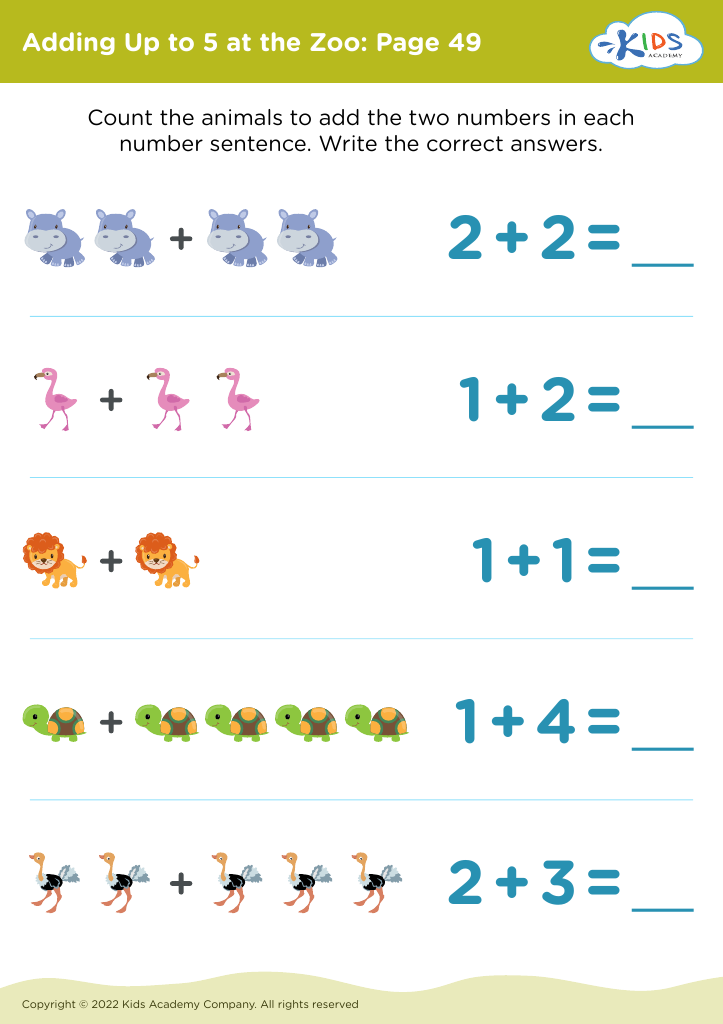
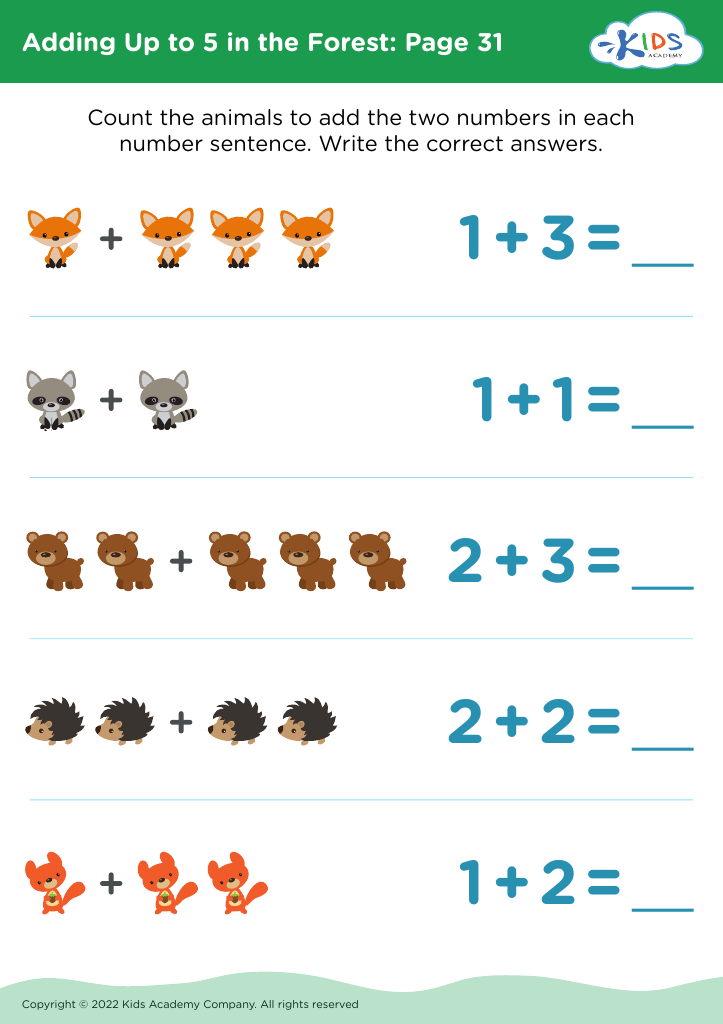
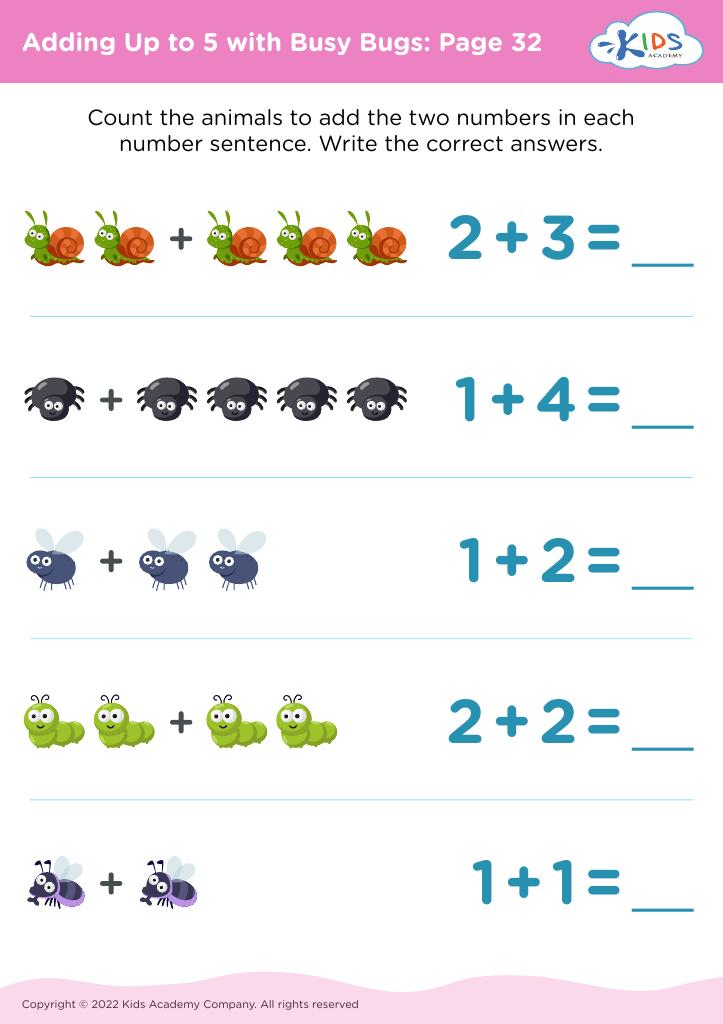
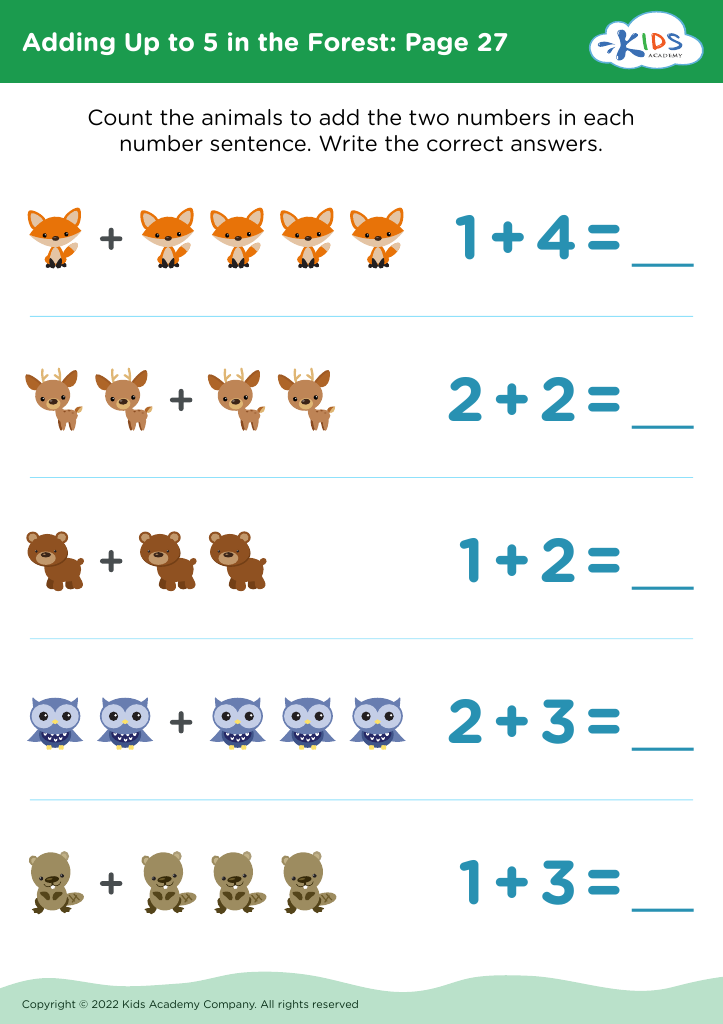
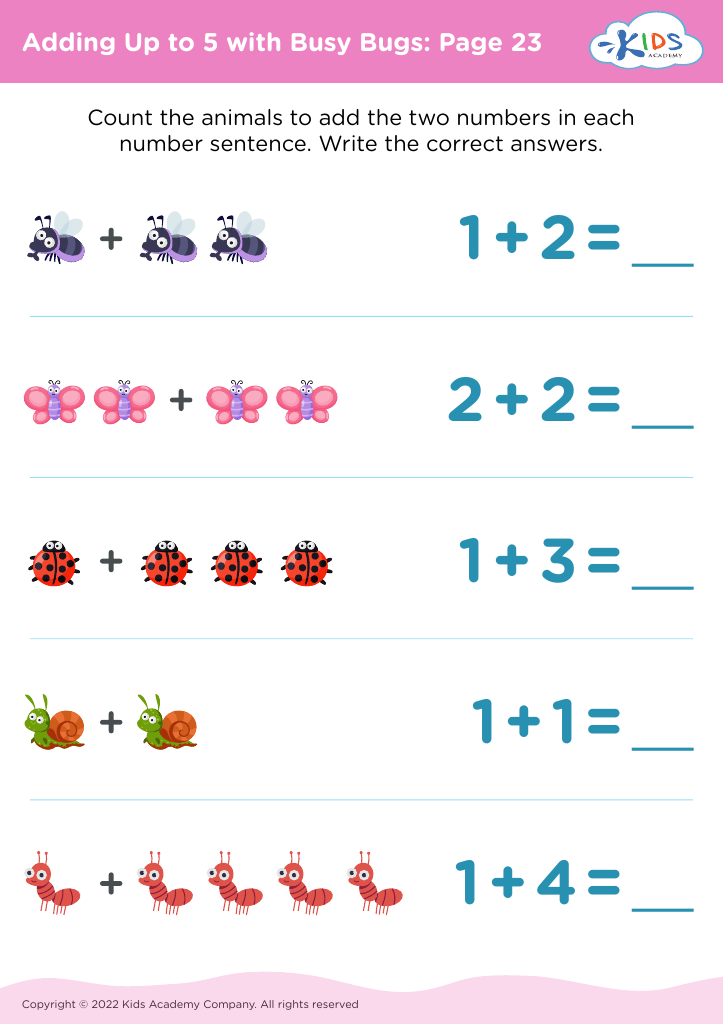
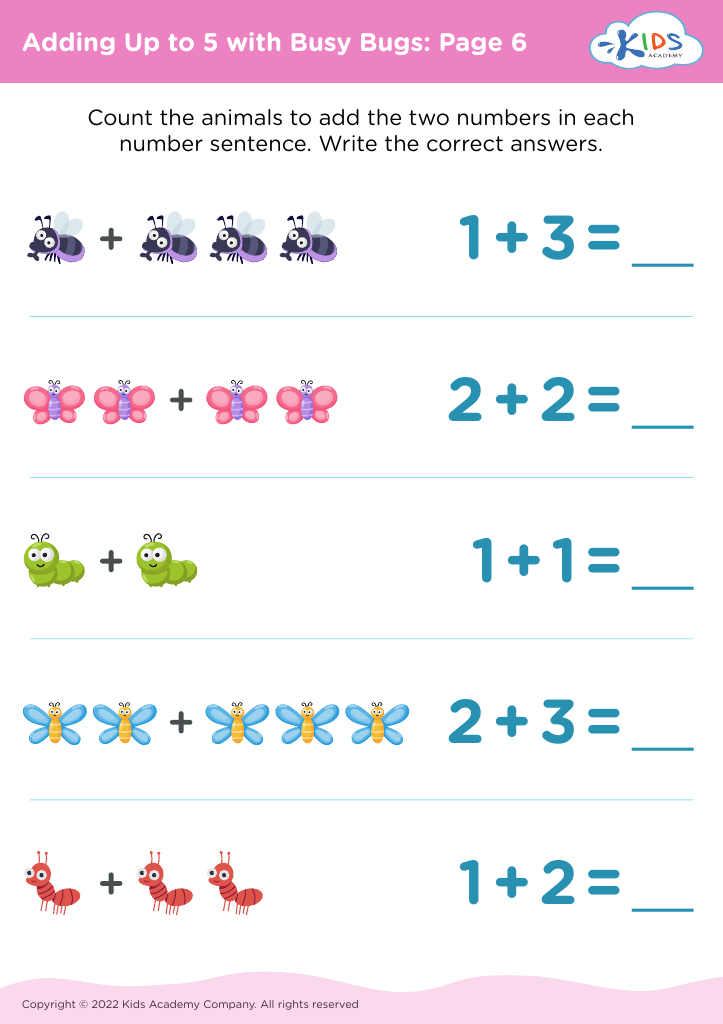
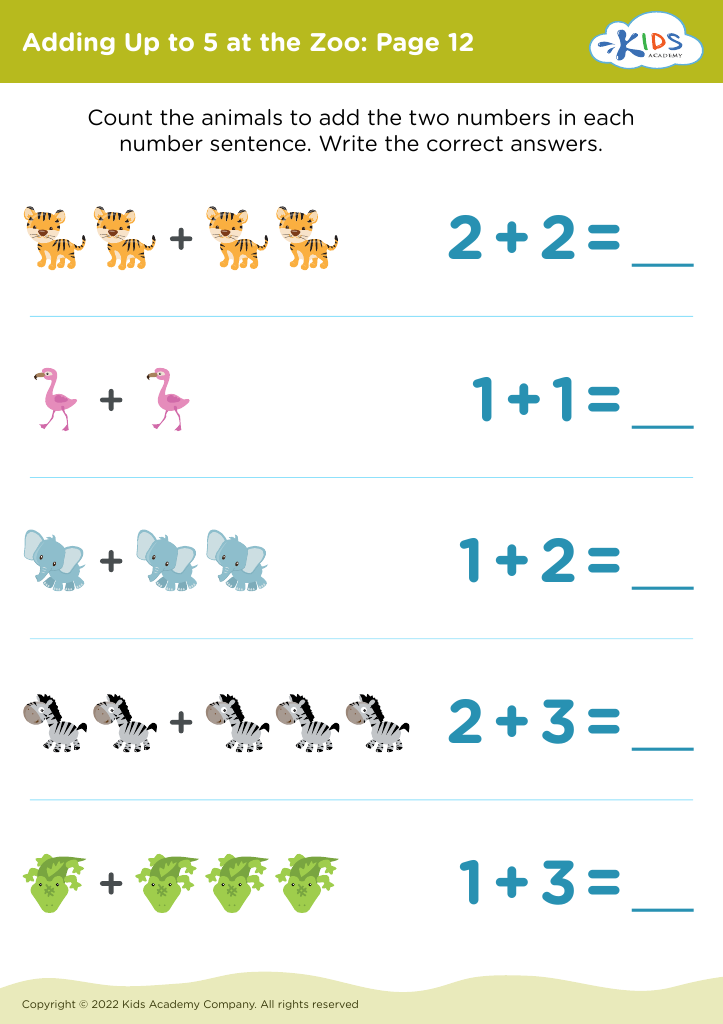
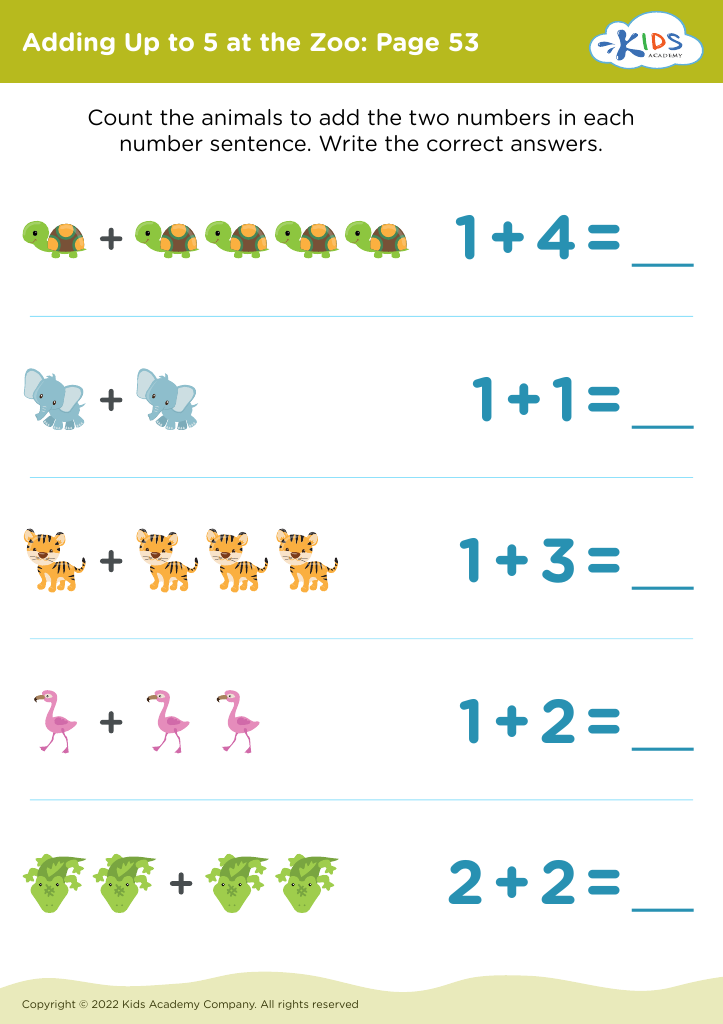
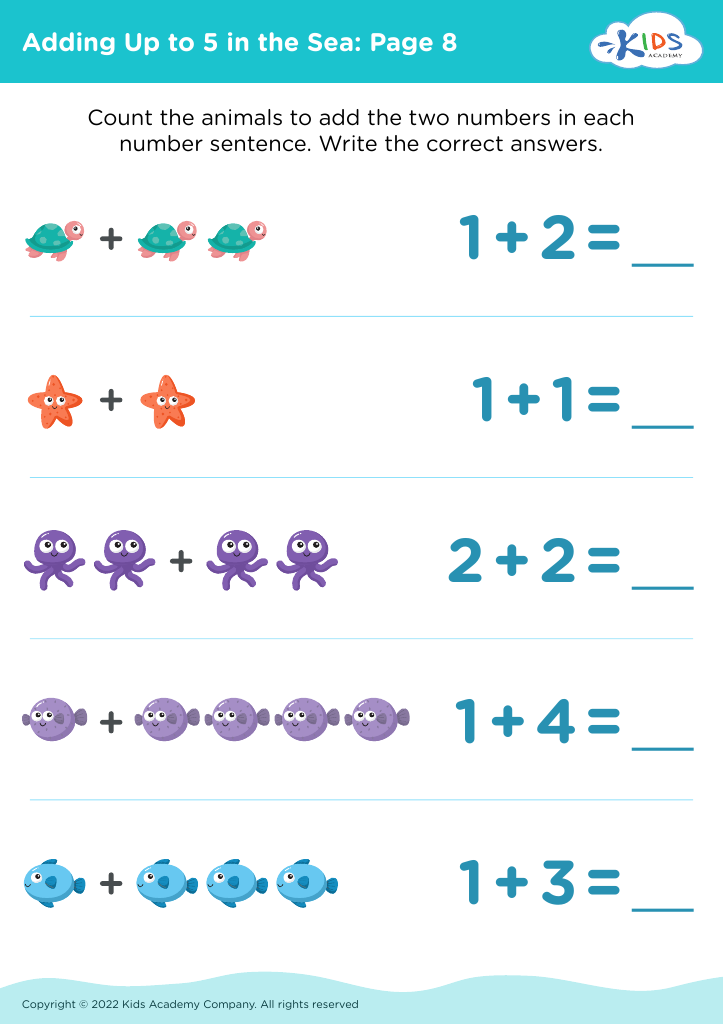
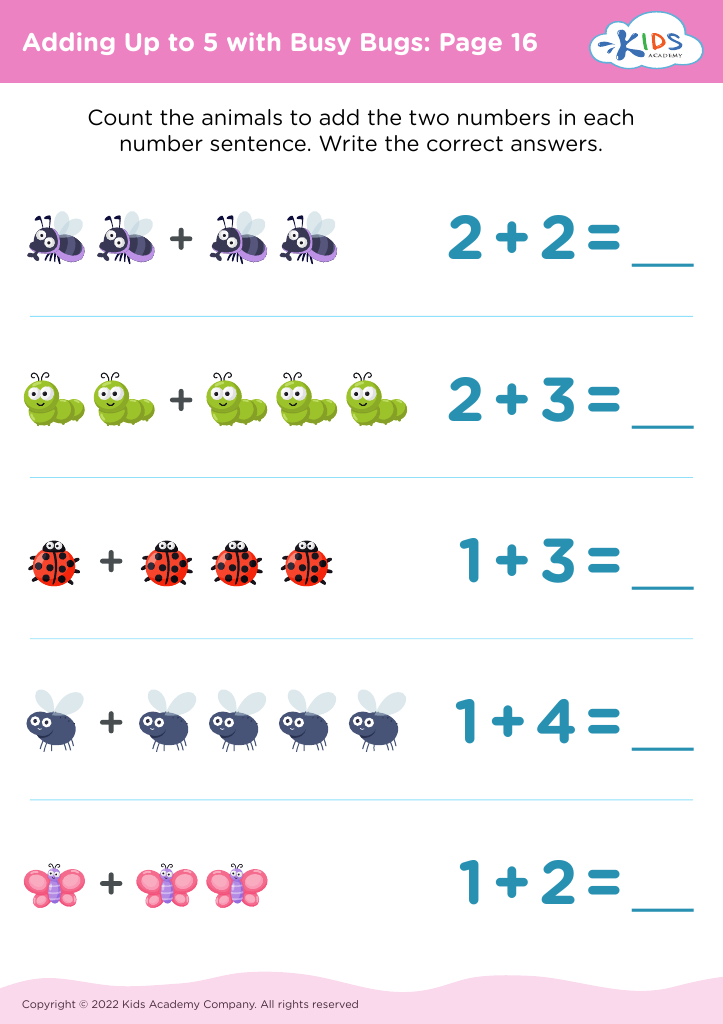
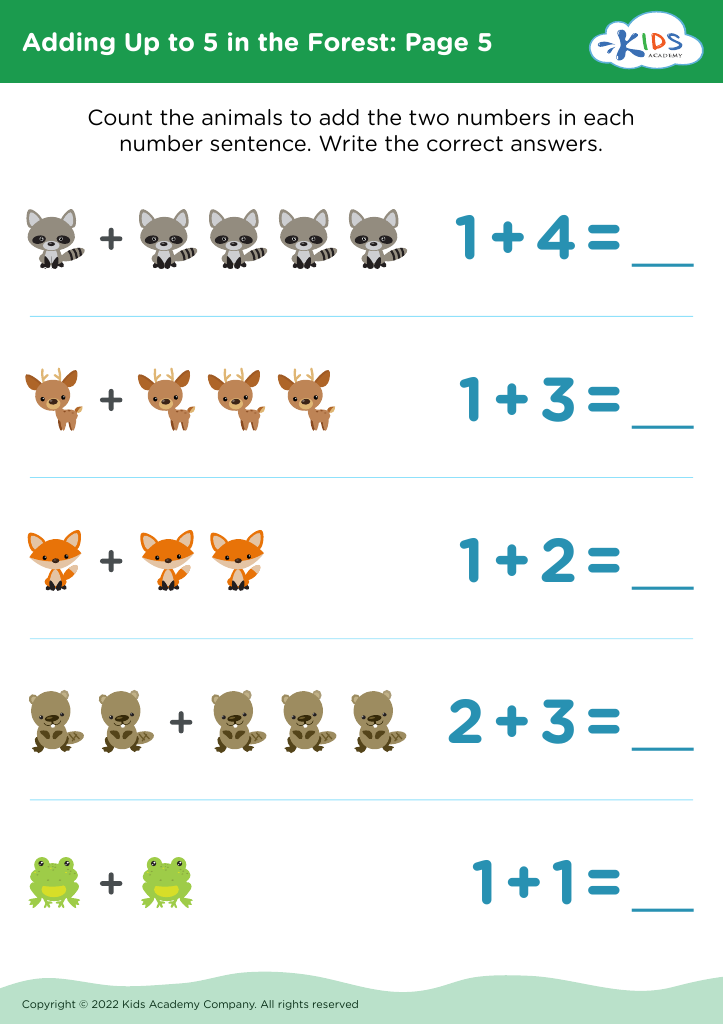
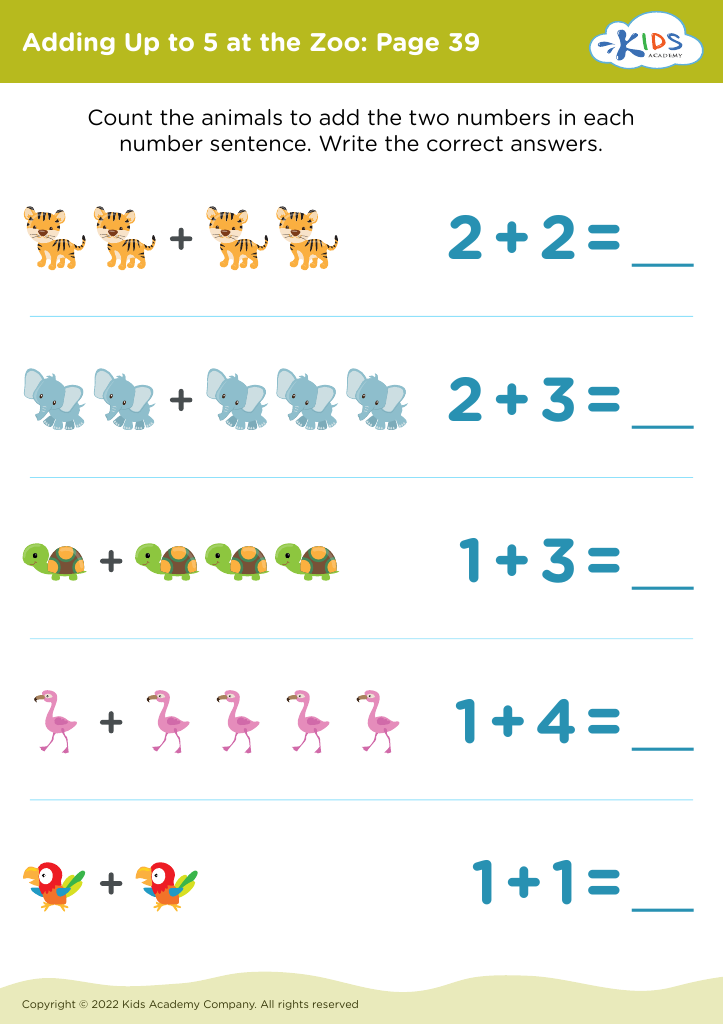
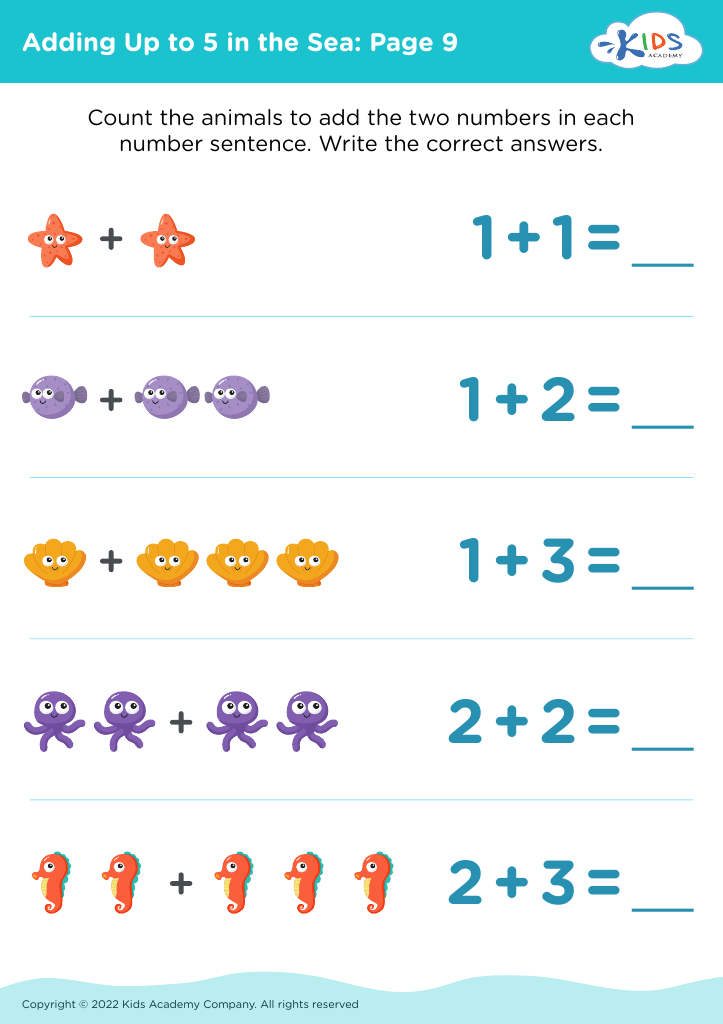




.jpg)



Addition skills are foundational for young children, especially between the ages of 3-5. At this stage, children are developing critical cognitive and social-emotional skills that set the groundwork for their future learning. Understanding basic addition fosters problem-solving abilities, logical thinking, and number sense, which are vital in early math development.
When children learn to add, they begin to understand concepts of quantity and relationships between numbers, making it easier for them to grasp more complex mathematical ideas later on. Additionally, early addition activities promote fine motor skills and cognitive coordination, as they often involve physical objects, such as counters or blocks, engaging children both mentally and physically.
Moreover, addition can aid in social-emotional development. Working on addition with peers or parents encourages collaboration and communication, helping children develop essential social skills.
Lastly, consistent practice with addition can greatly boost a child's confidence in their mathematical abilities, laying a positive attitude toward math as they progress in their education. This early encouragement not only enhances their analytical thinking but also helps cultivate a lifelong appreciation for learning. Parents and teachers should prioritize addition skills to equip young learners for future academic success and deeper understanding of the world around them.








