Filters

94 filtered results

Clear all filters
Favorites
With answer key
Interactive

94 filtered results

Difficulty Level

Grade


Check out this FREE Trial Lesson on Addition for age 3-5!

A

Favorites
With answer key
Interactive
  • 3-5
  • Animal recognition
  • Addition
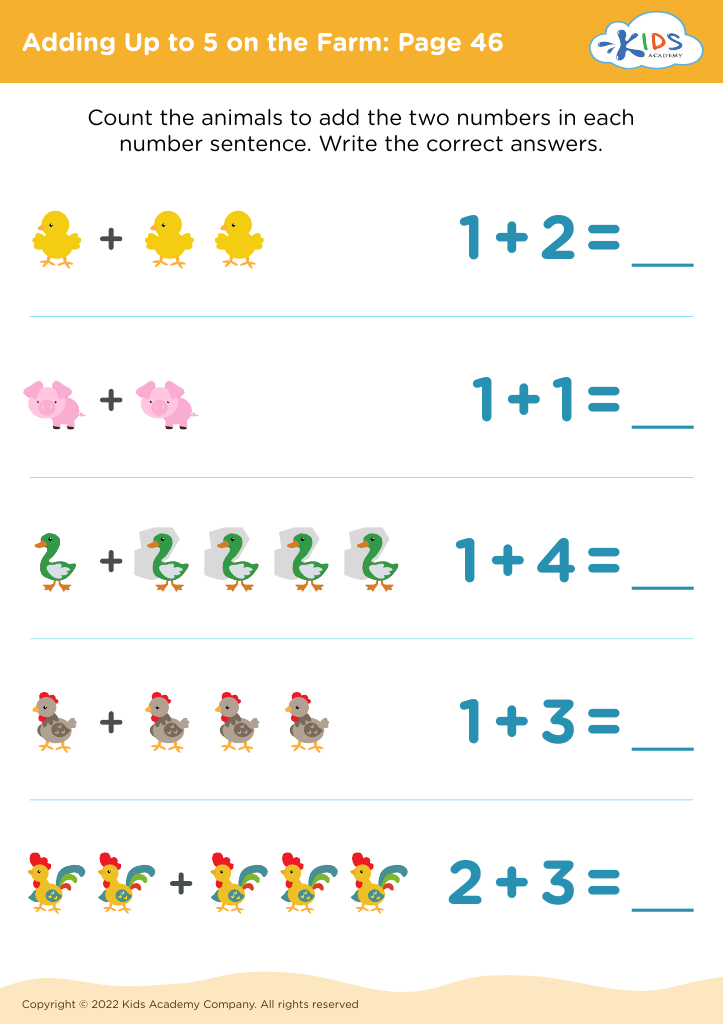
Adding Up to 5 on the Farm: Page 46
Worksheet
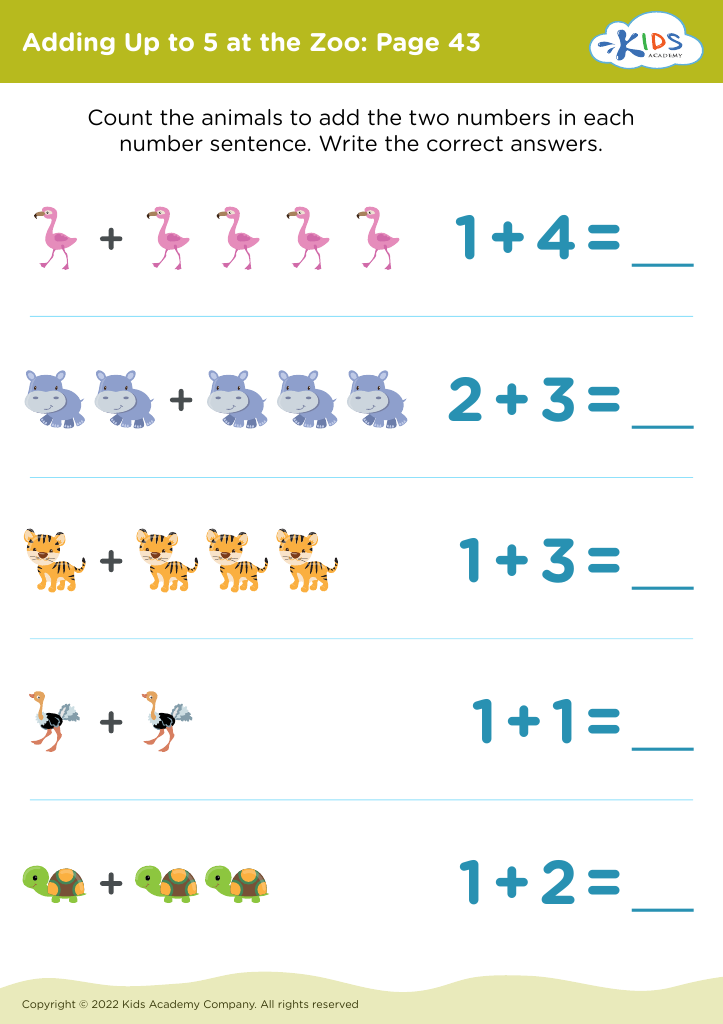
Adding Up to 5 at the Zoo: Page 43
Worksheet
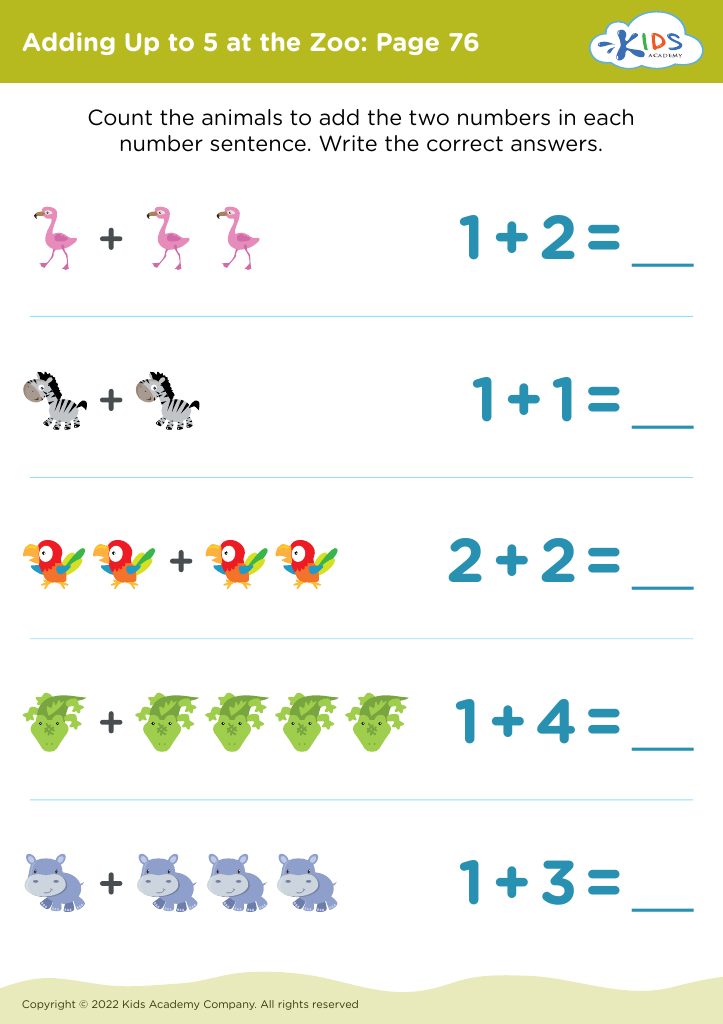
Adding Up to 5 at the Zoo: Page 76
Worksheet
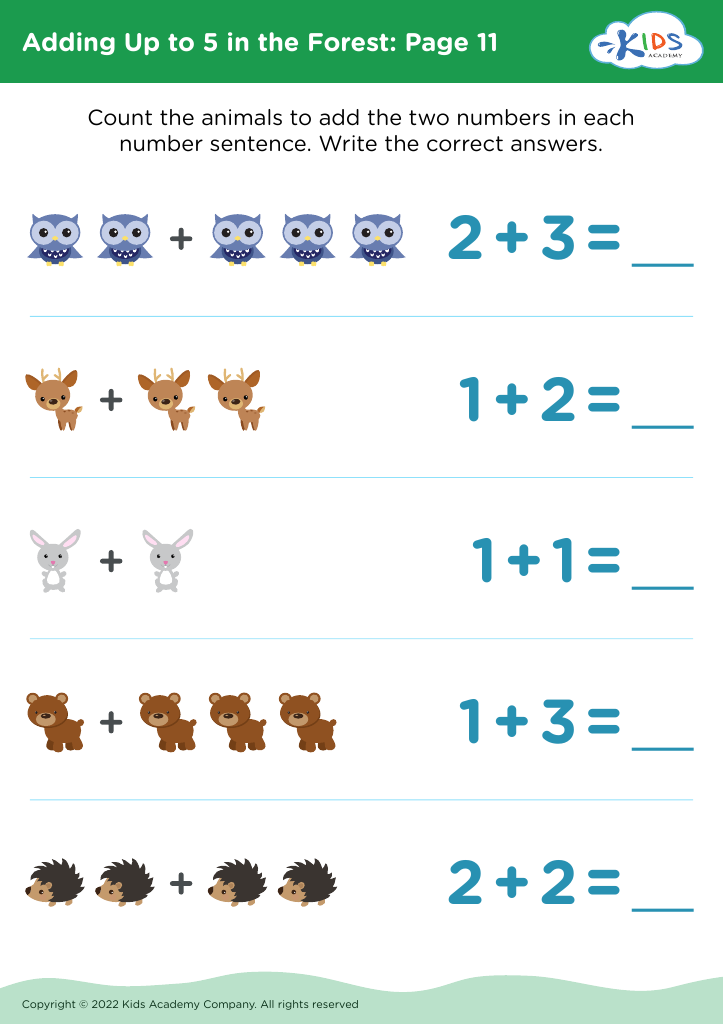
Adding Up to 5 in the Forest: Page 11
Worksheet
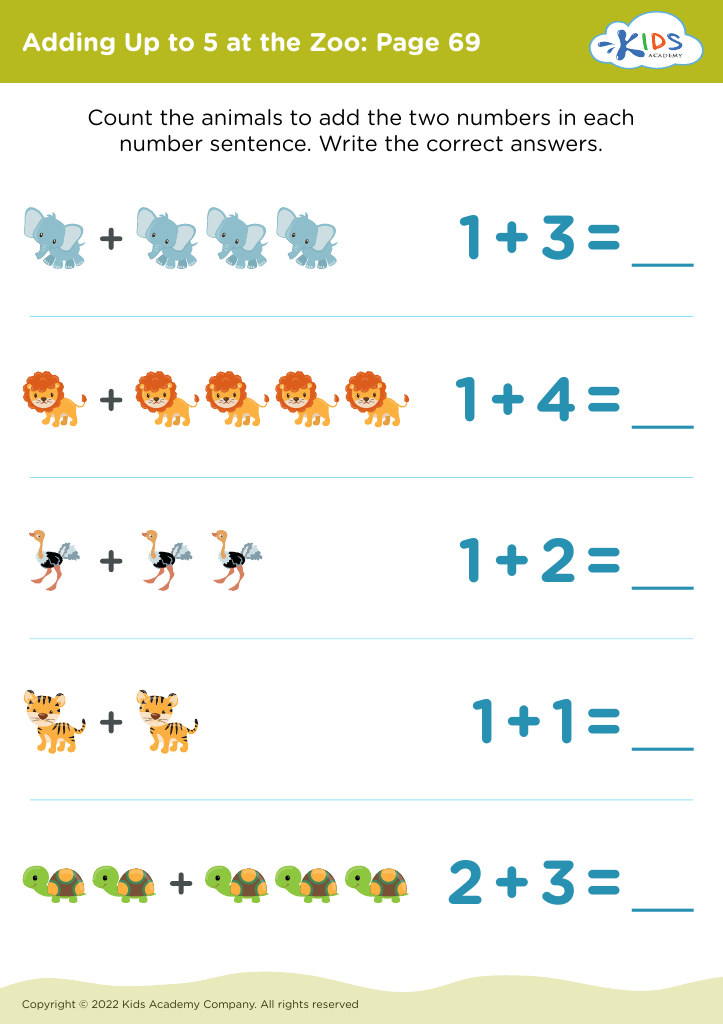
Adding Up to 5 at the Zoo: Page 69
Worksheet
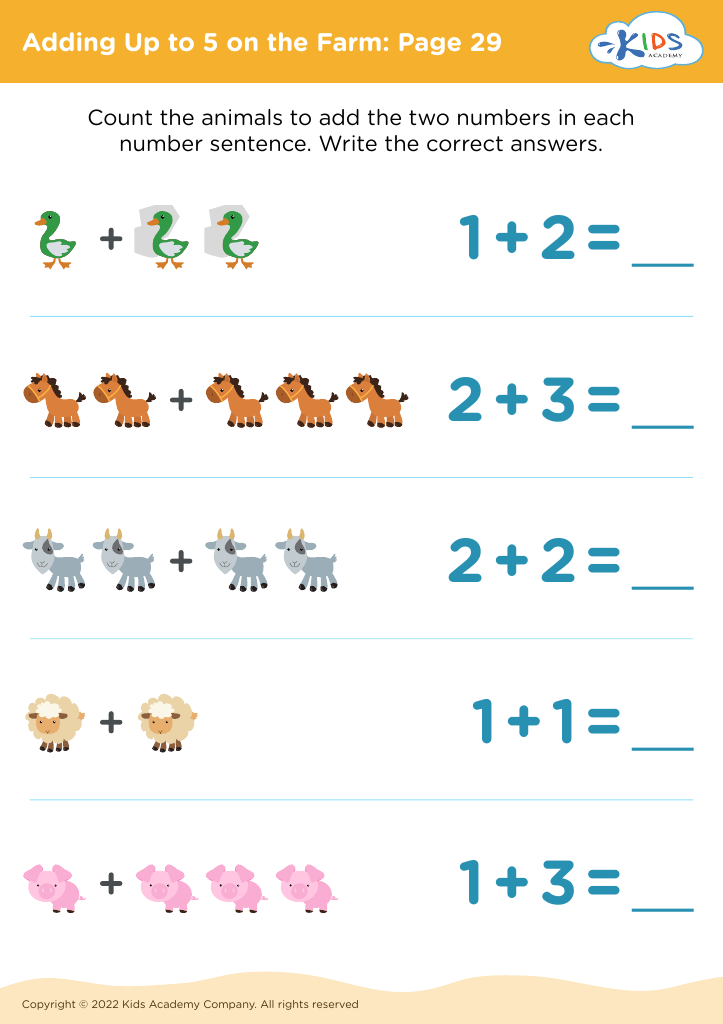
Adding Up to 5 on the Farm: Page 29
Worksheet
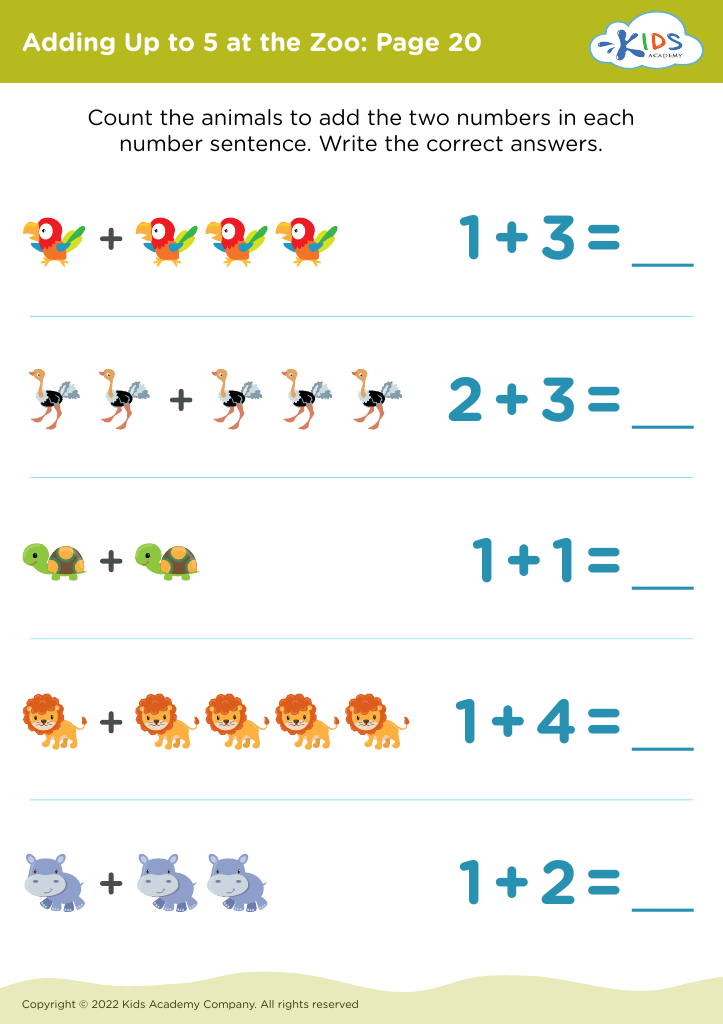
Adding Up to 5 at the Zoo: Page 20
Worksheet
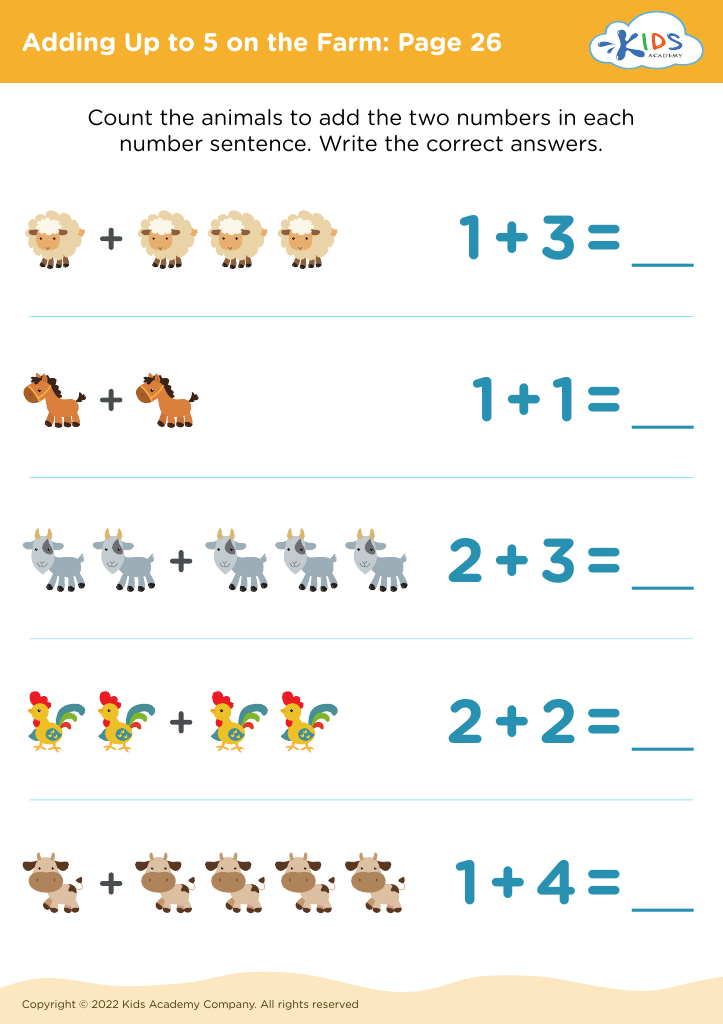
Adding Up to 5 on the Farm: Page 26
Worksheet
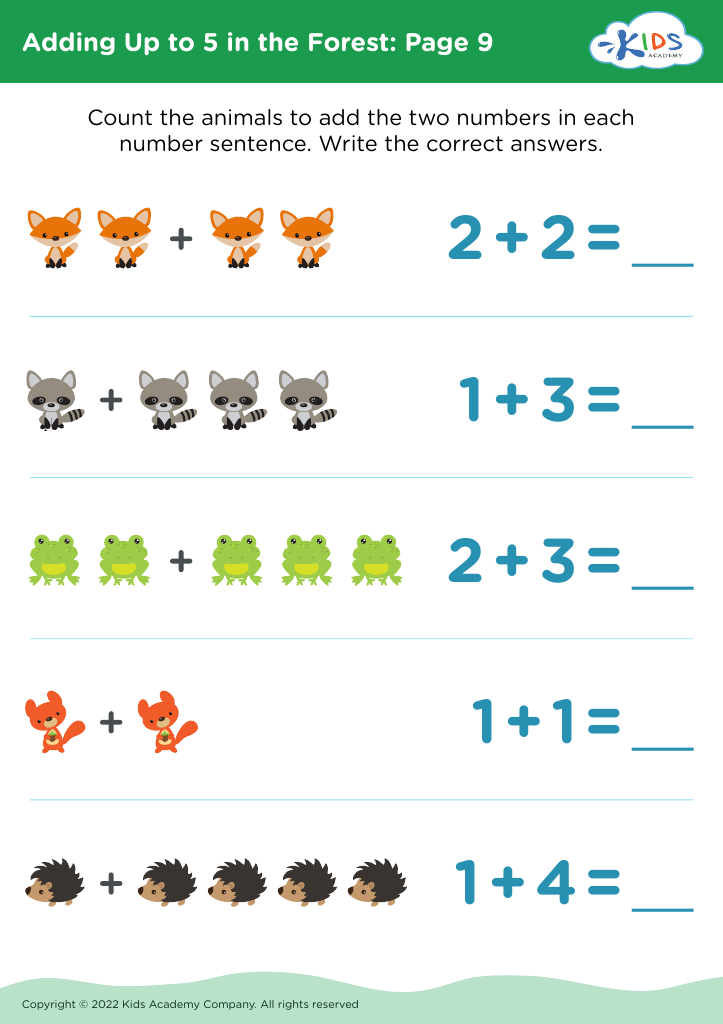
Adding Up to 5 in the Forest: Page 9
Worksheet
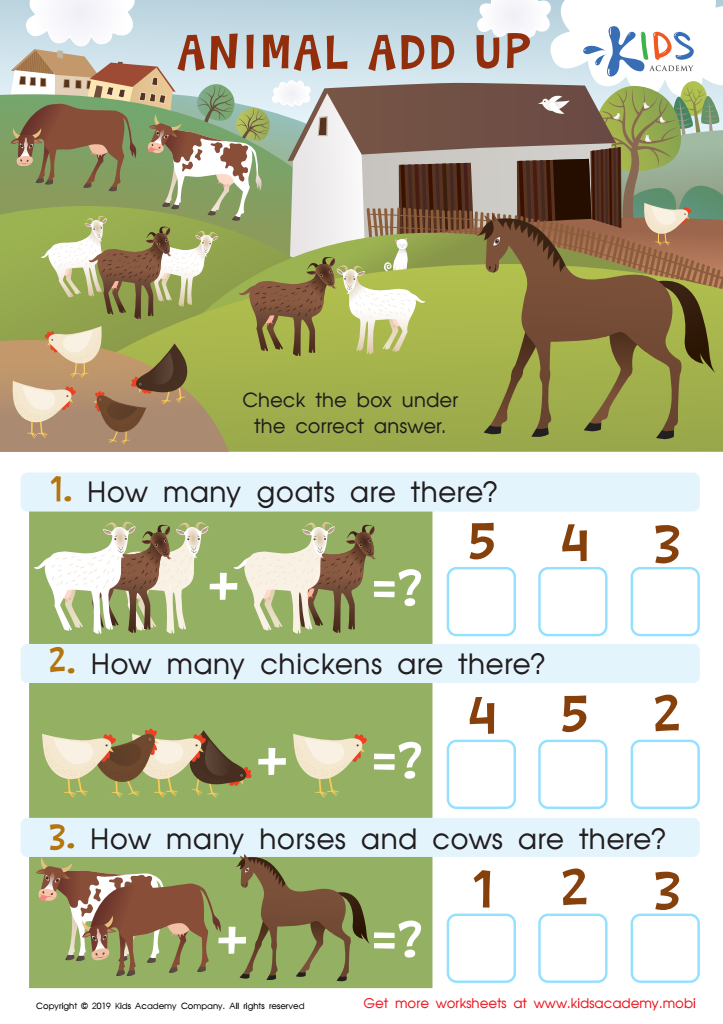
Animal Add Up Worksheet

Animal Add Up Worksheet

Animals are fun to observe and interact with. They can be seen at the zoo, parks, farms and in homes with pets. This worksheet helps kids identify animals, and build addition skills. Look at the picture with them and help name each animal. After that, add the animals up and check the box for the correct answer. 80 words.
Animal Add Up Worksheet
Worksheet
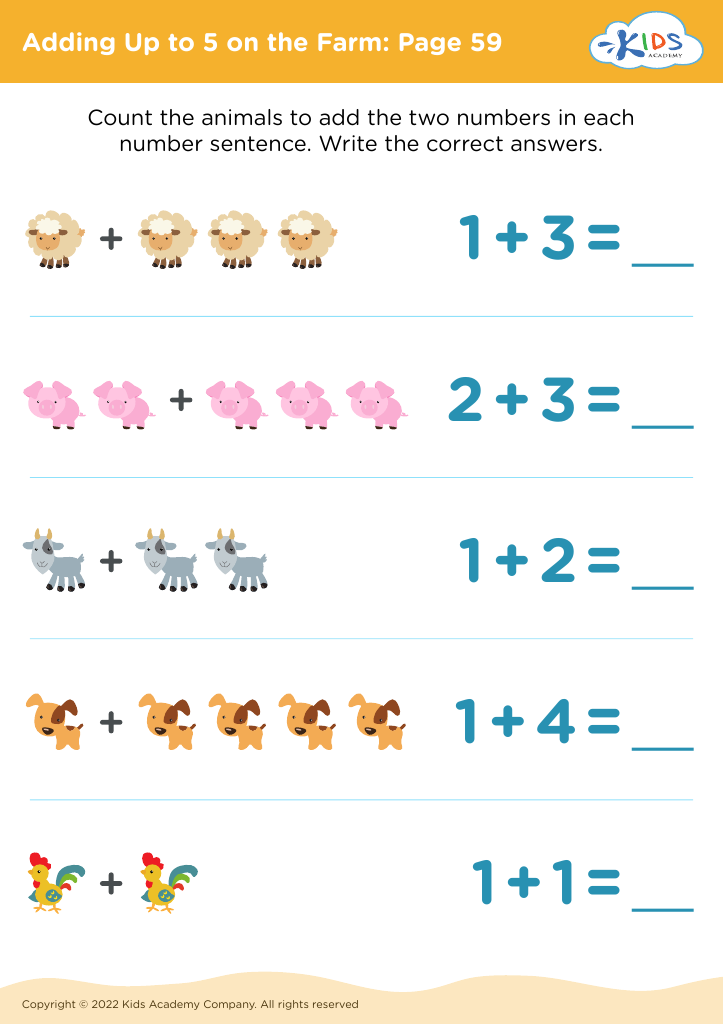
Adding Up to 5 on the Farm: Page 59
Worksheet
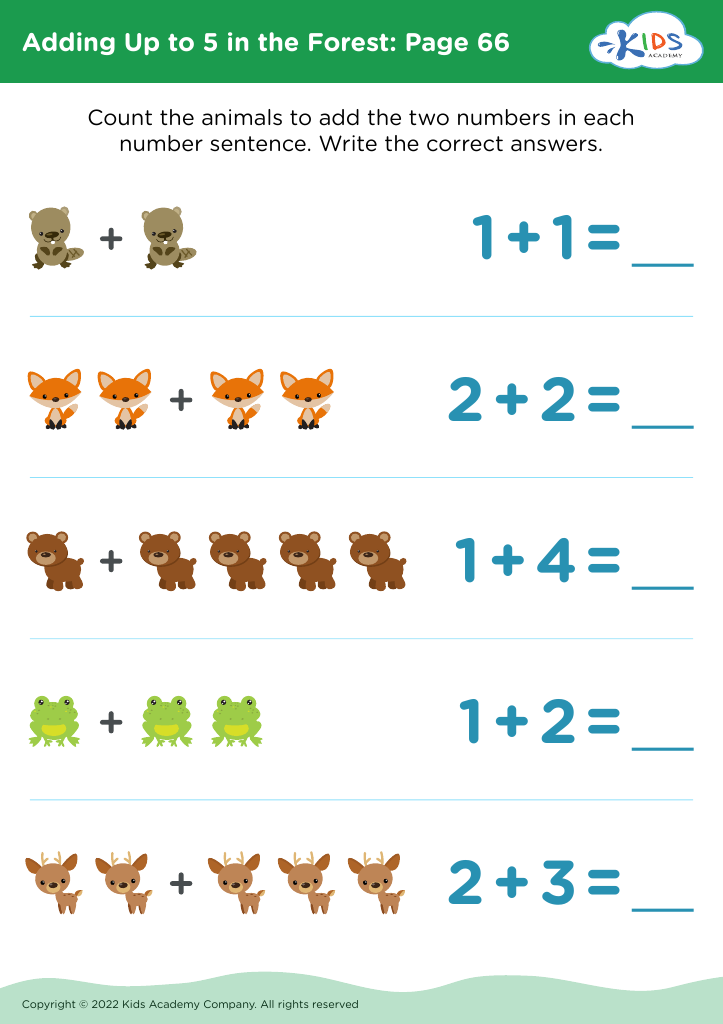
Adding Up to 5 in the Forest: Page 66
Worksheet
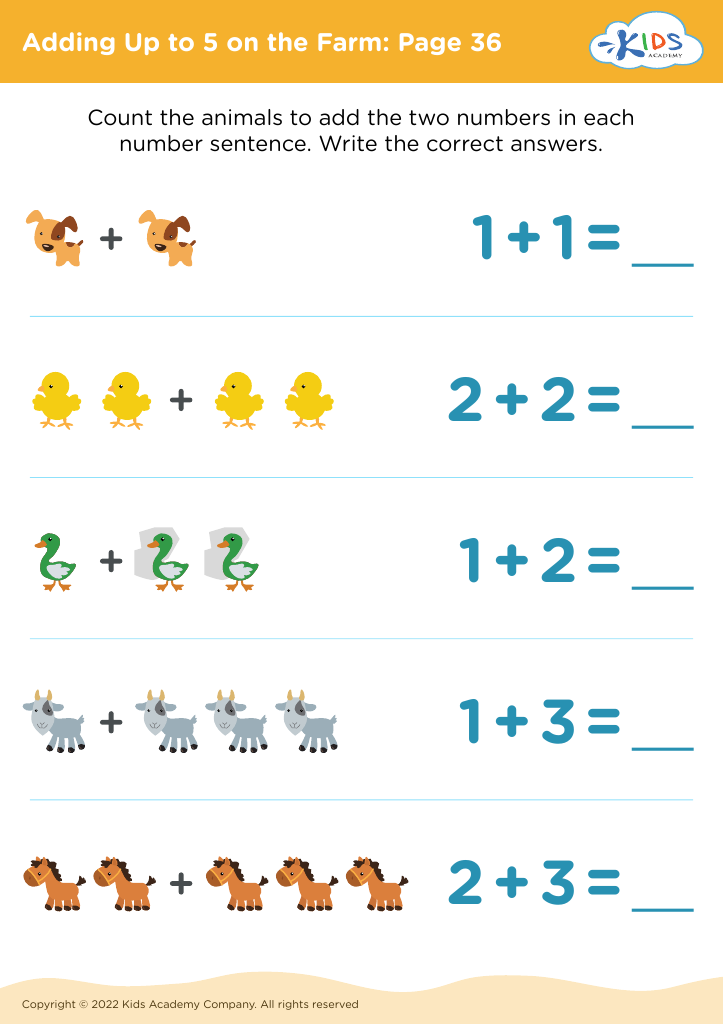
Adding Up to 5 on the Farm: Page 36
Worksheet
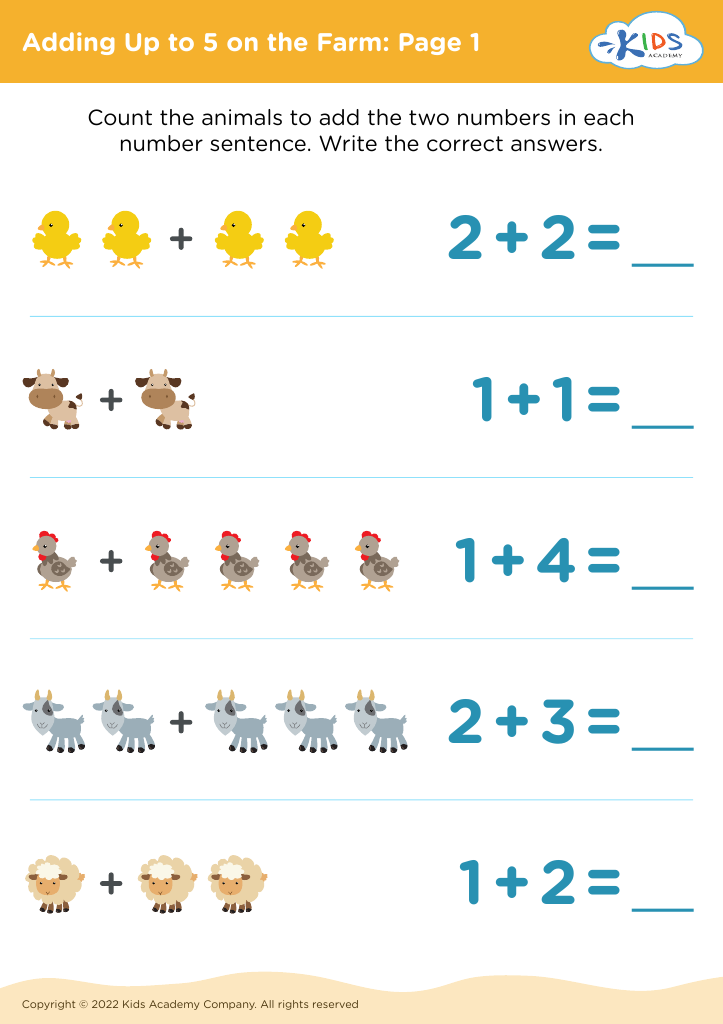
Adding Up to 5 on the Farm: Page 1
Worksheet
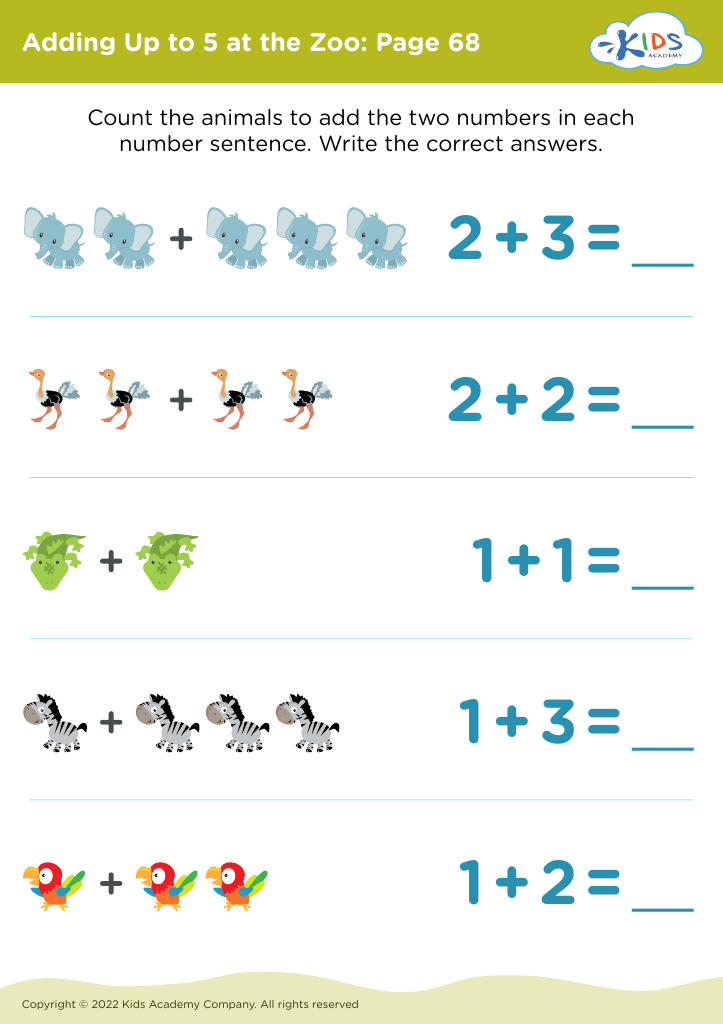
Adding Up to 5 at the Zoo: Page 68
Worksheet
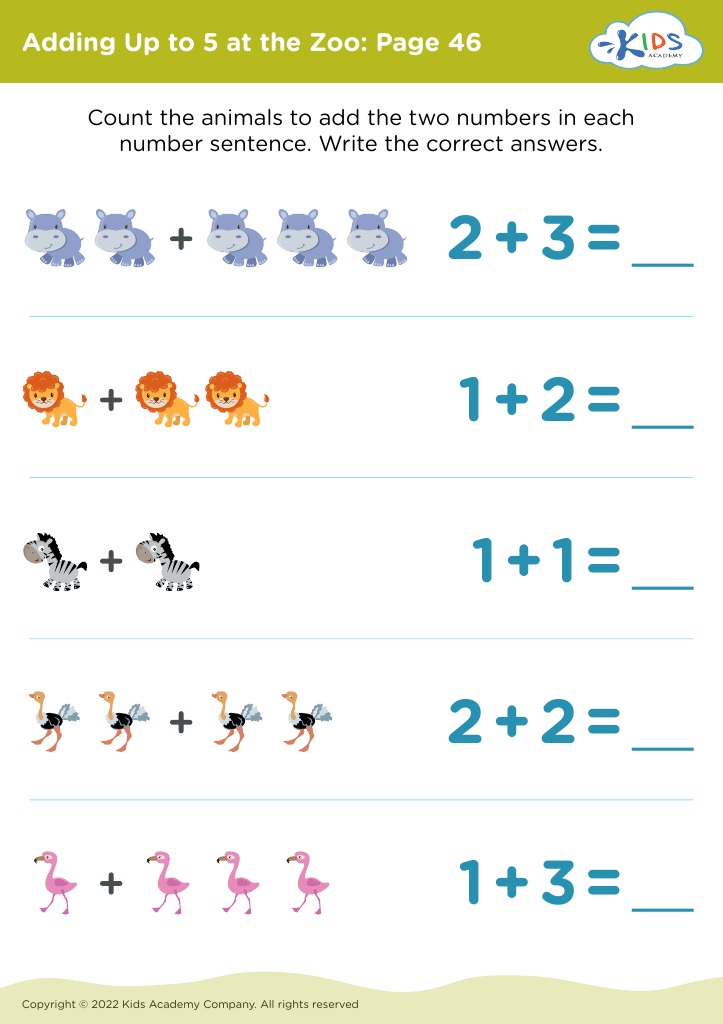
Adding Up to 5 at the Zoo: Page 46
Worksheet
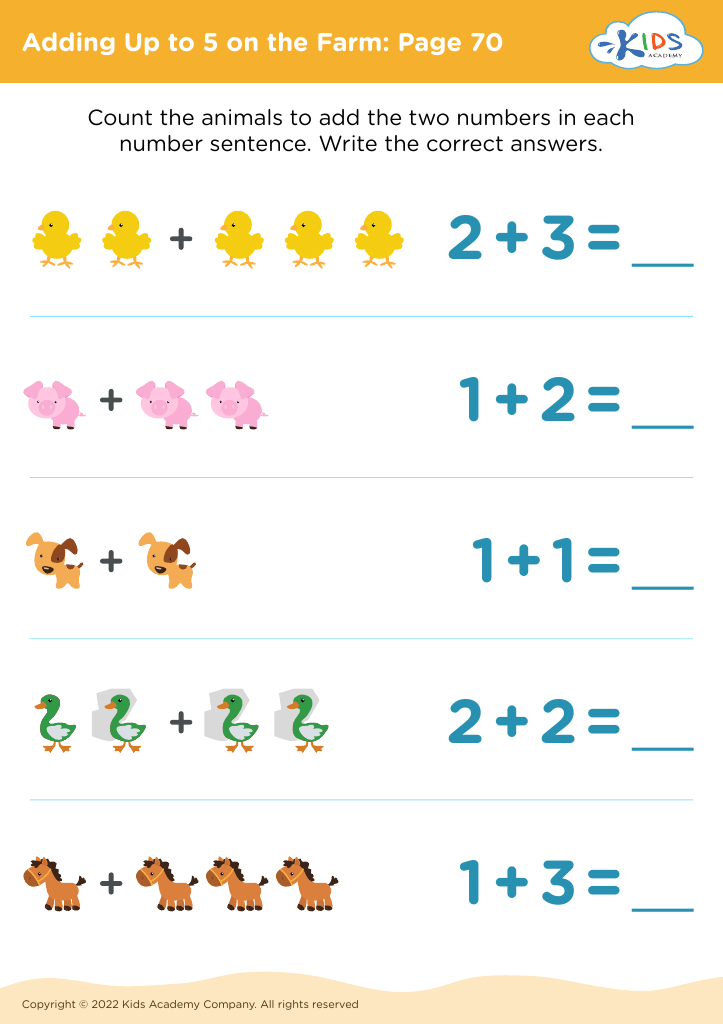
Adding Up to 5 on the Farm: Page 70
Worksheet
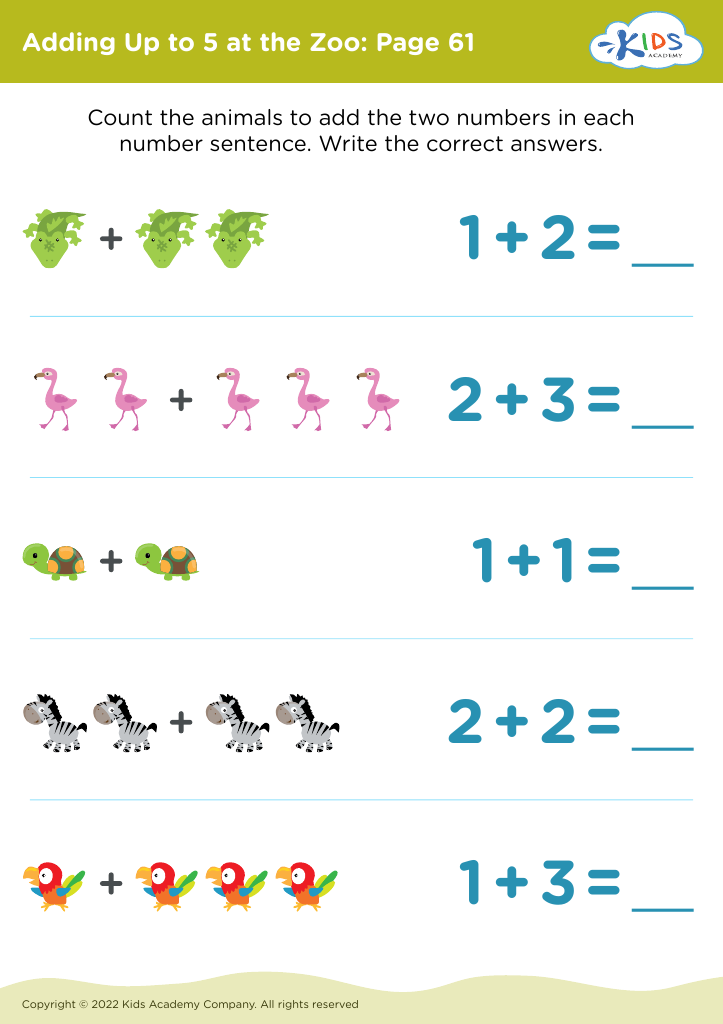
Adding Up to 5 at the Zoo: Page 61
Worksheet
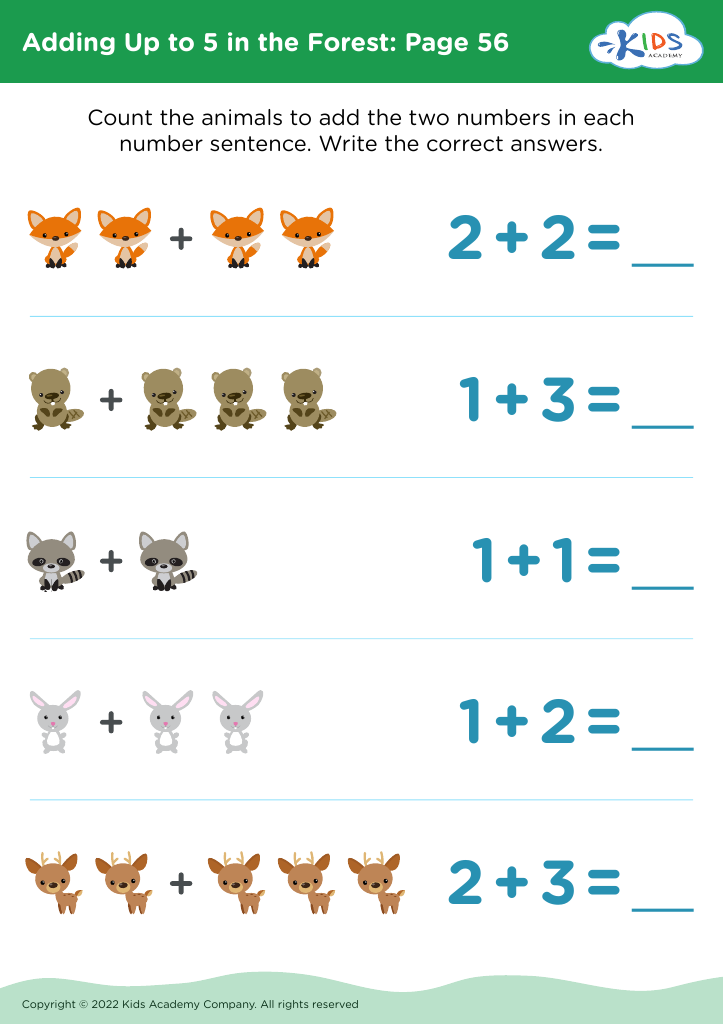
Adding Up to 5 in the Forest: Page 56
Worksheet
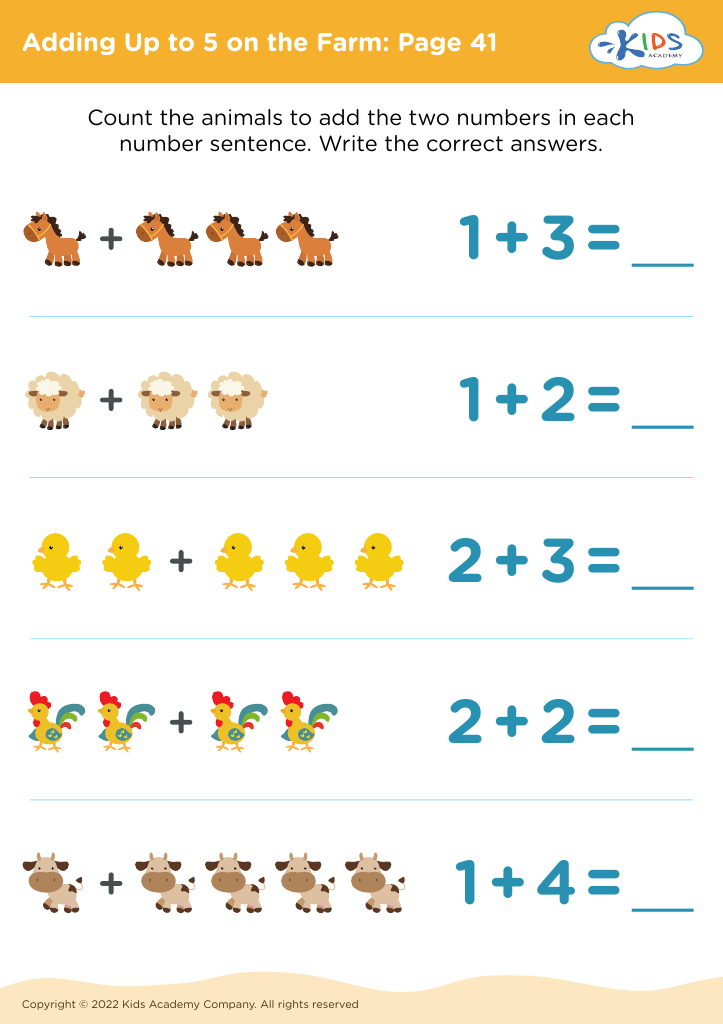
Adding Up to 5 on the Farm: Page 41
Worksheet
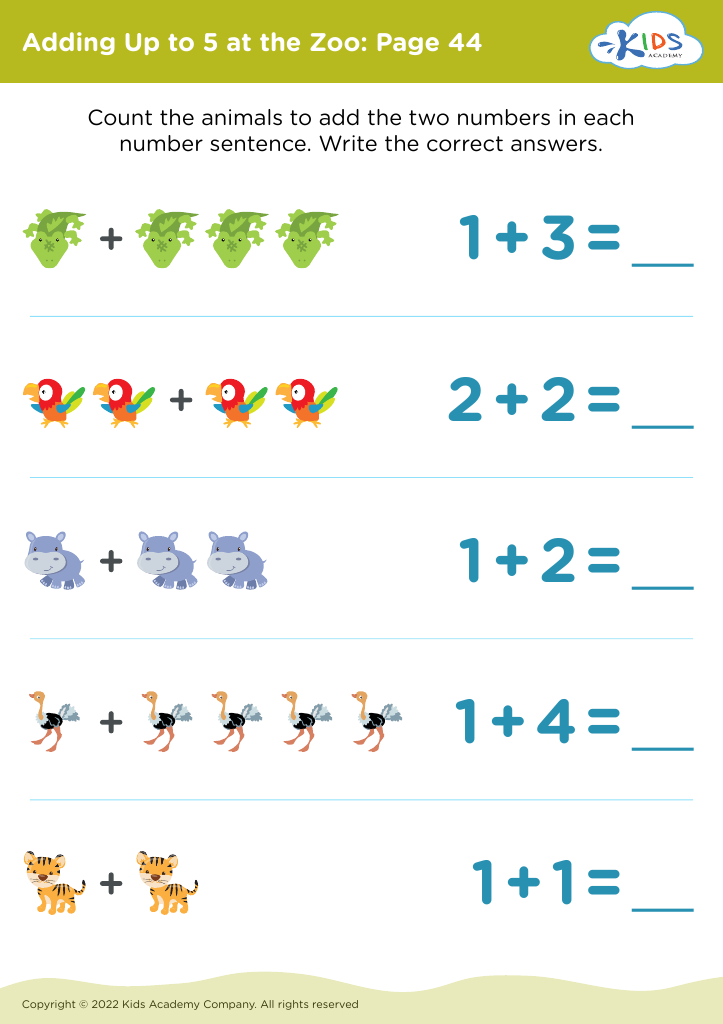
Adding Up to 5 at the Zoo: Page 44
Worksheet
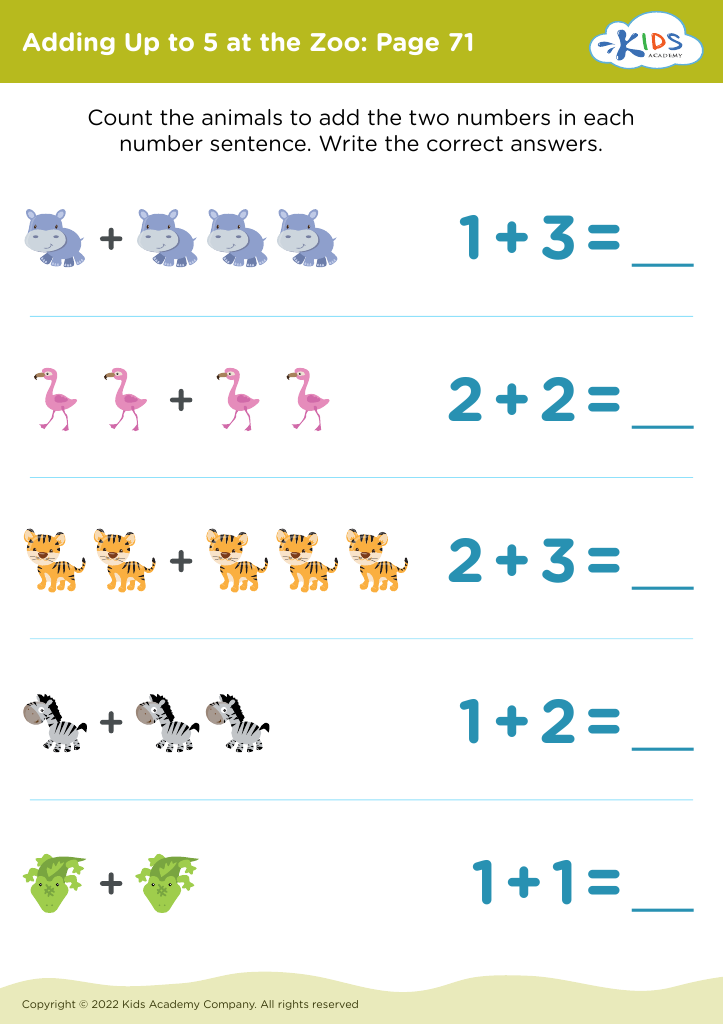
Adding Up to 5 at the Zoo: Page 71
Worksheet
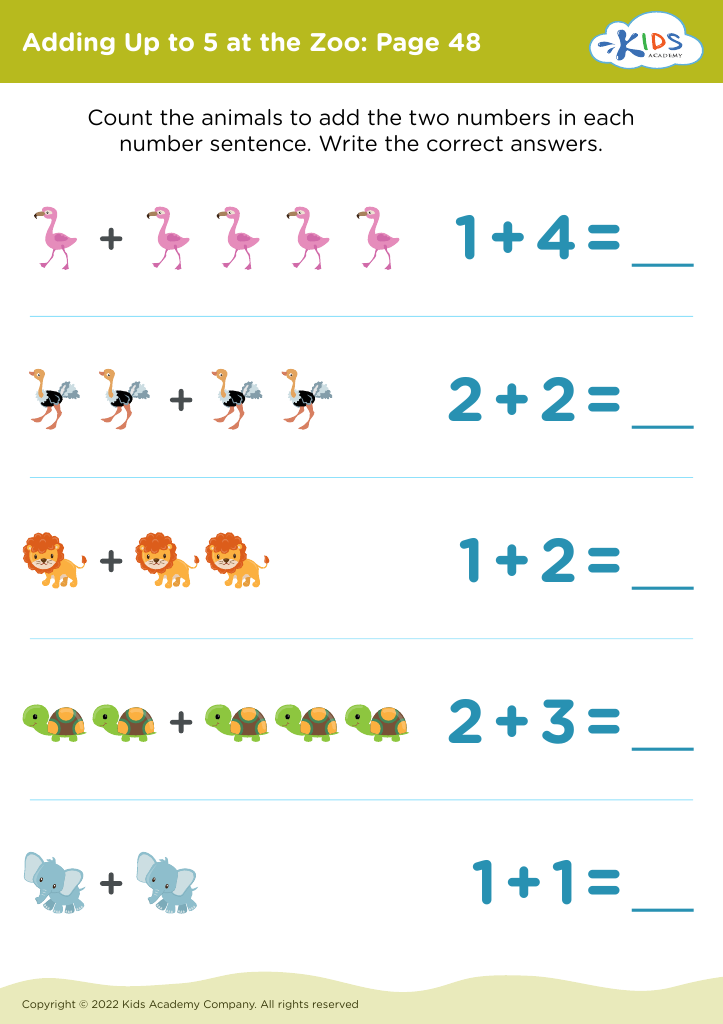
Adding Up to 5 at the Zoo: Page 48
Worksheet
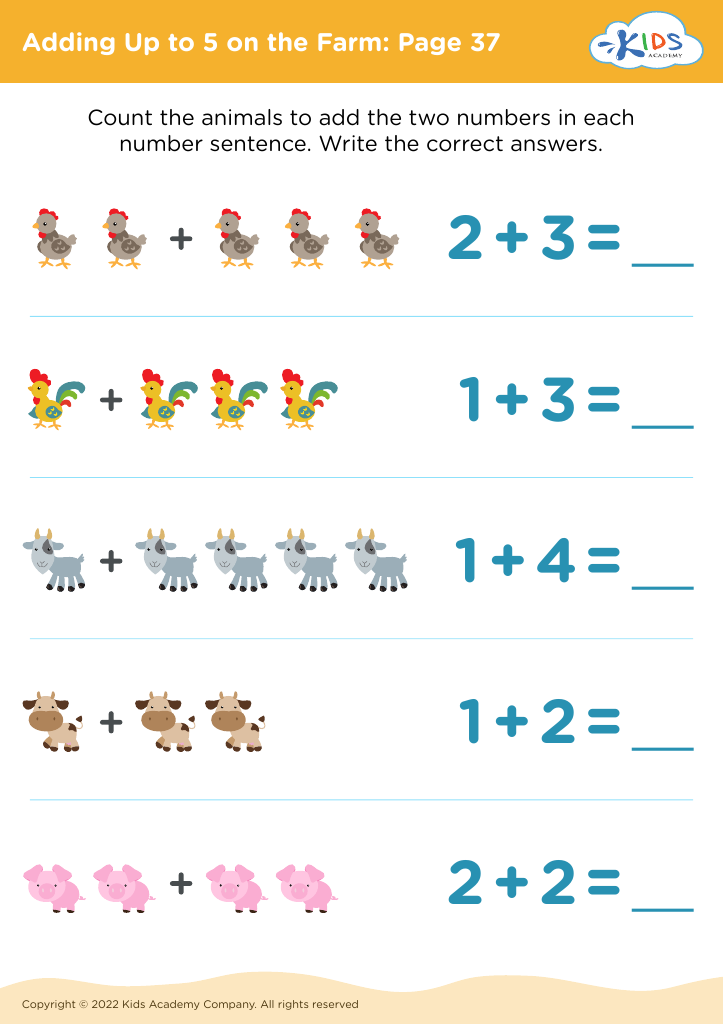
Adding Up to 5 on the Farm: Page 37
Worksheet


Animal recognition and addition activities designed for children ages 3-5 hold significant value for both parents and teachers for several reasons. First and foremost, these activities provide an engaging and relatable way to introduce foundational math concepts. Young children often have a natural fascination with animals, so incorporating animals into learning can capture their interest and make abstract concepts like numbers and addition more tangible and understandable.

Additionally, animal recognition enhances cognitive skills by encouraging children to observe, identify, and differentiate between various animals. This boosts their memory, attention to detail, and critical thinking. Adding numbers within this familiar context helps children grasp the idea of combining items to form a new total, laying a foundation for more complex mathematical operations in the future.

Moreover, these activities can instill a sense of curiosity and love for learning in young children. When learning is fun and connected to topics they care about, children are more likely to develop positive attitudes toward education. Social skills also benefit as children often work together in group activities, learning to share, take turns, and cooperate.

In summary, for children ages 3-5, animal recognition and addition activities are an effective, multi-faceted approach to early education that integrates math skills with cognitive and social development.