Basic addition practice Addition Worksheets for Ages 3-5
9 filtered results
-
From - To
Introduce your child to the fun world of math with basic addition practice worksheets for ages 3-5! Our carefully designed worksheets make learning addition engaging and effective for preschoolers and kindergarteners. Bright visuals and simple problems help young learners develop essential math skills and boost confidence. Ideal for parents and teachers alike, these downloadable resources are perfect for classroom or home use. Support your child's budding arithmetic abilities and lay a strong foundation for future success in math. Start today with our basic addition practice worksheets, and watch them master numbers in no time!
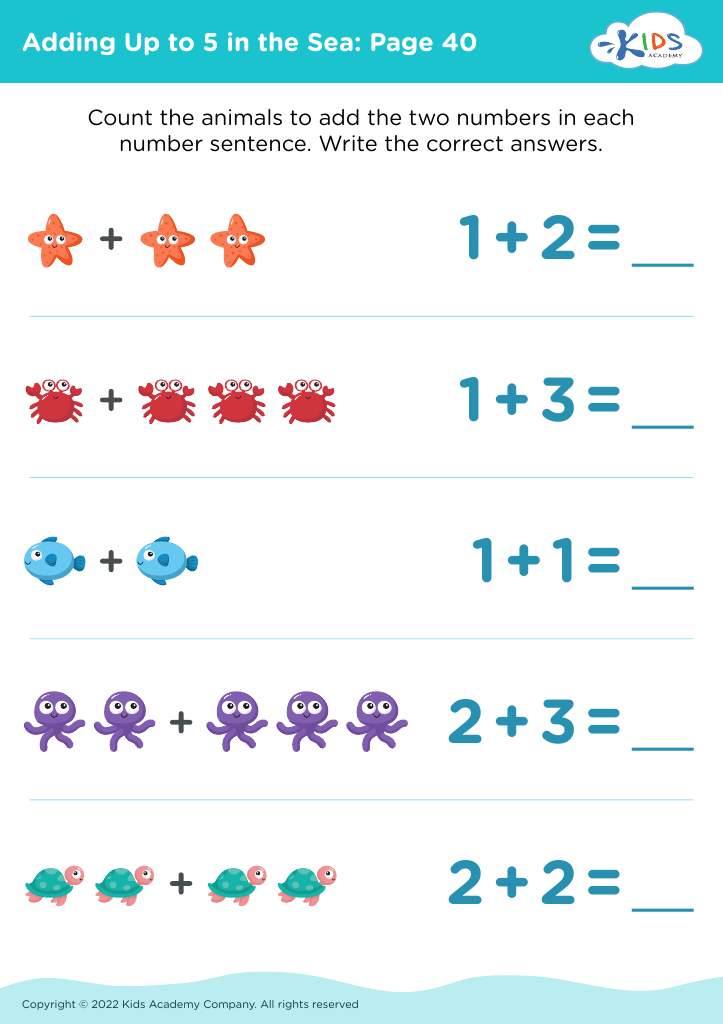
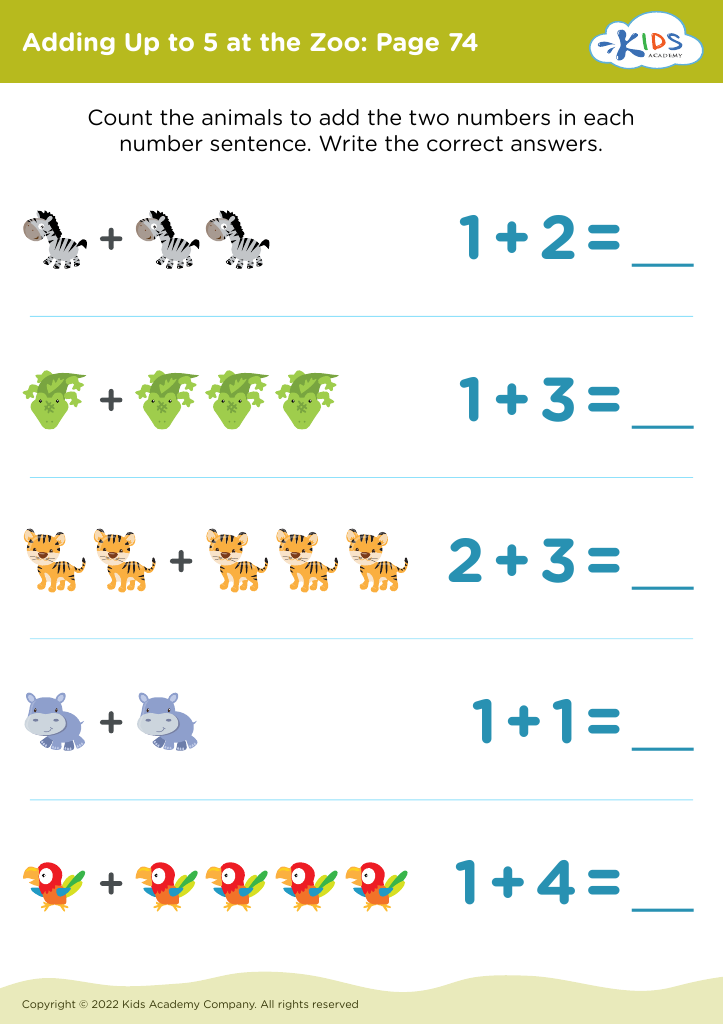
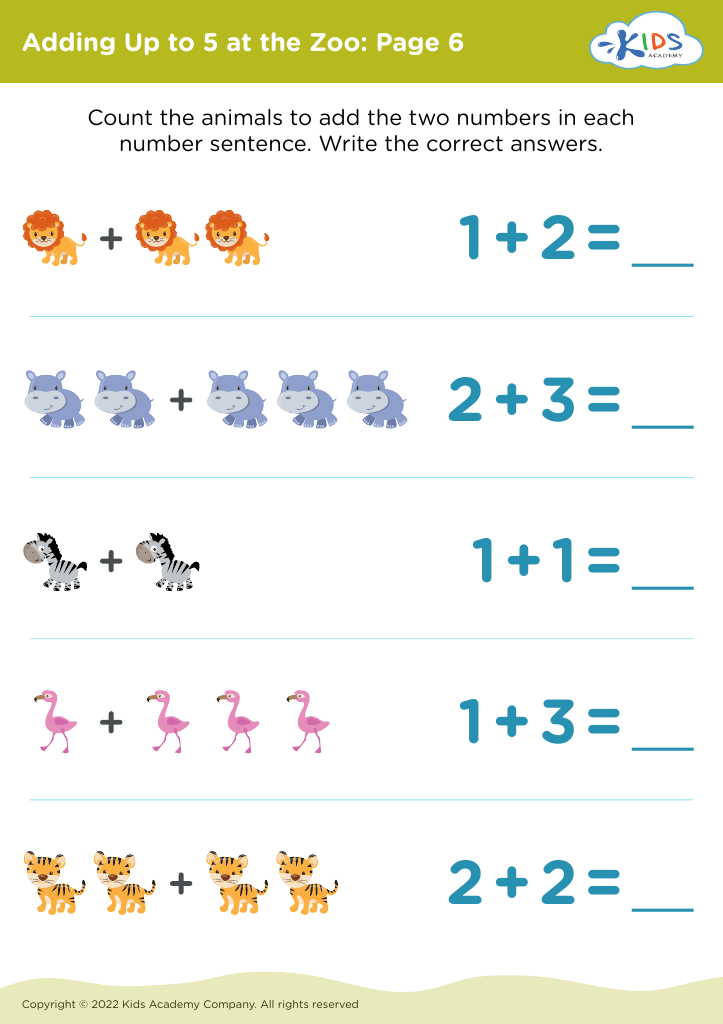
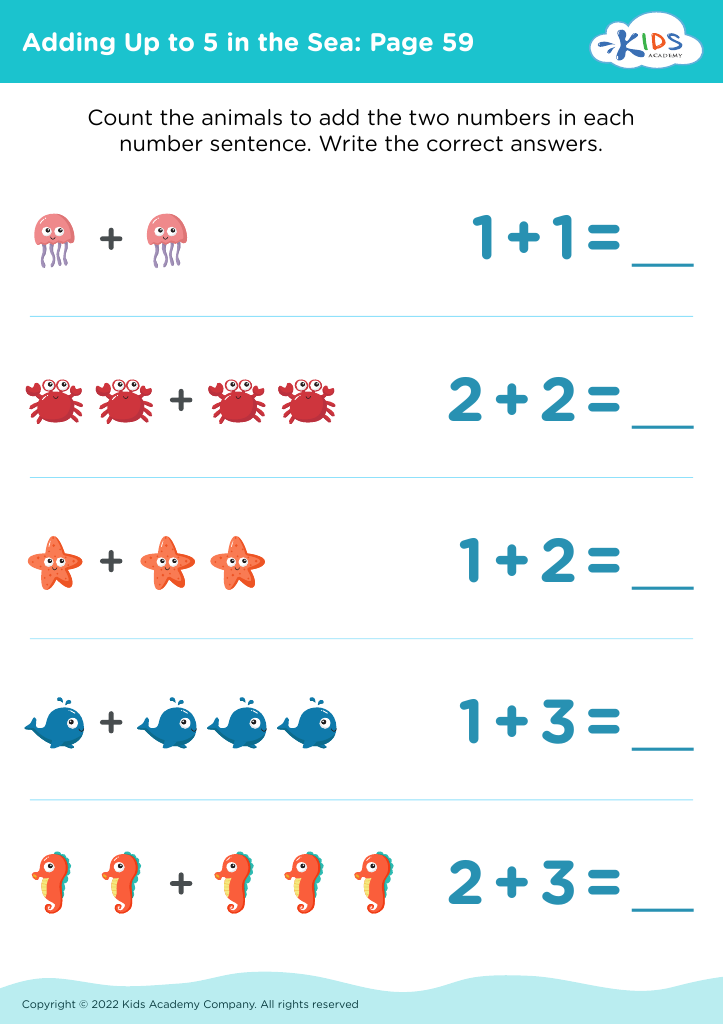
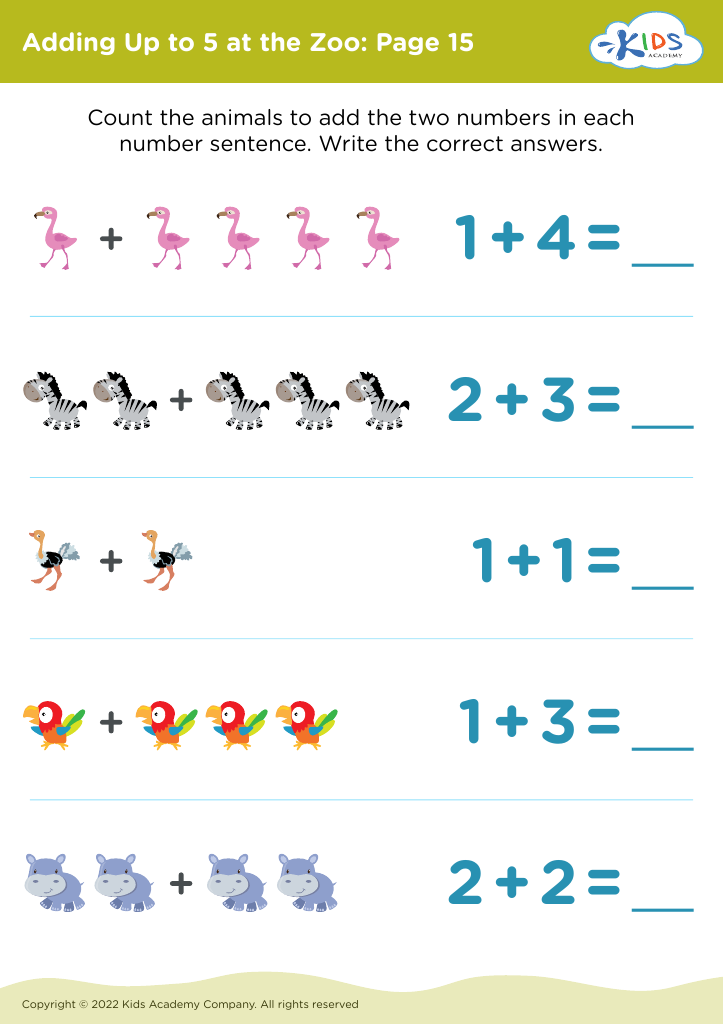
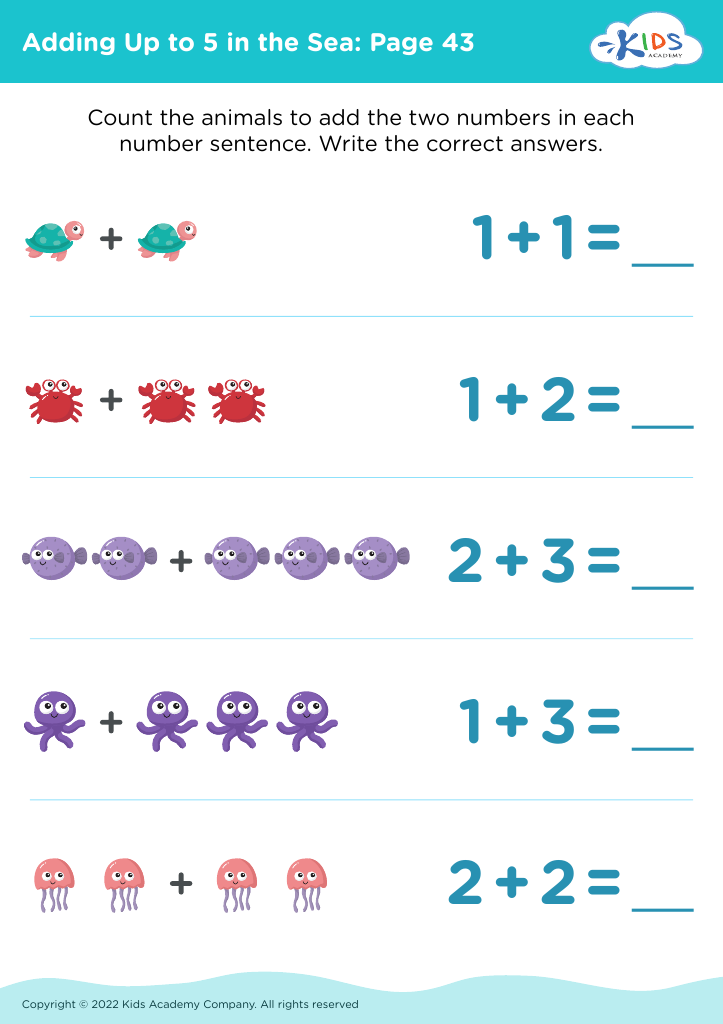
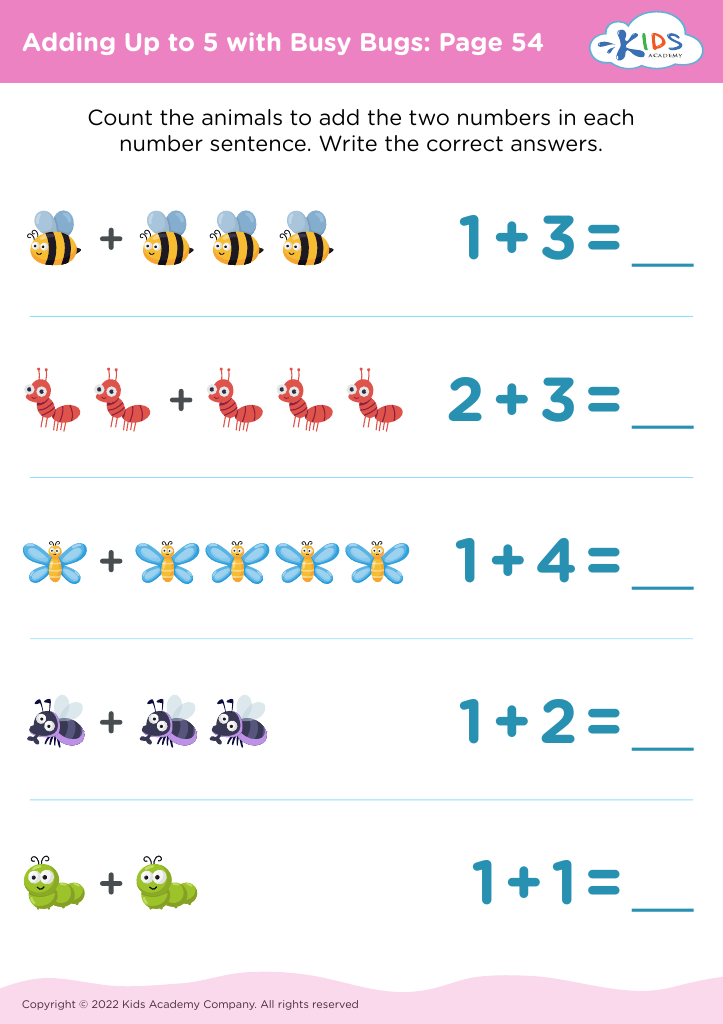
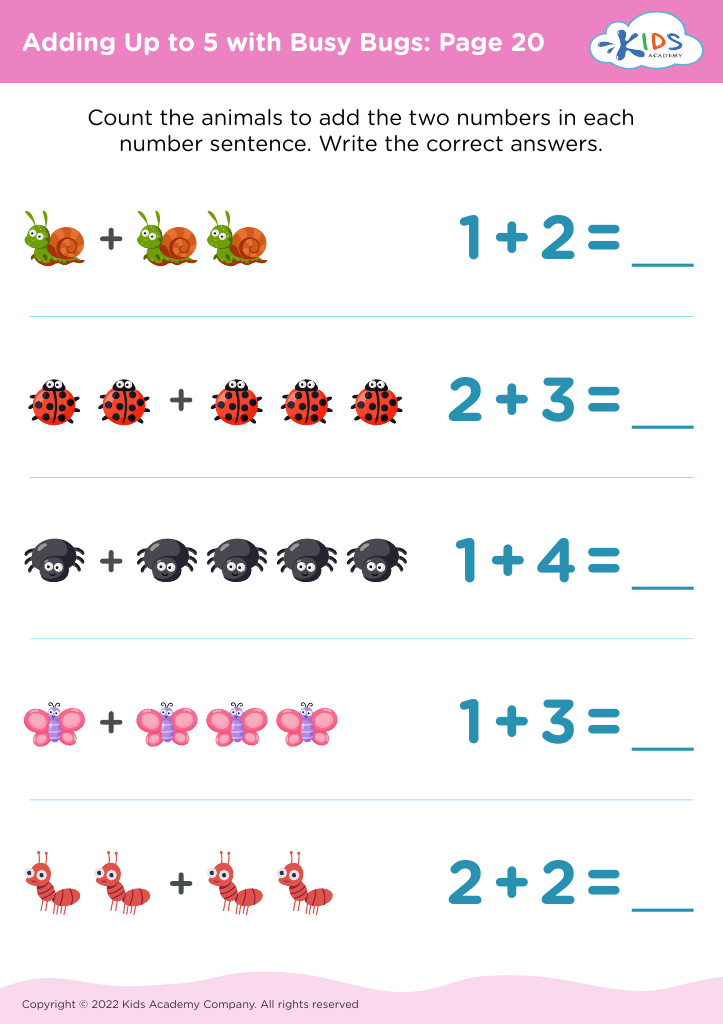
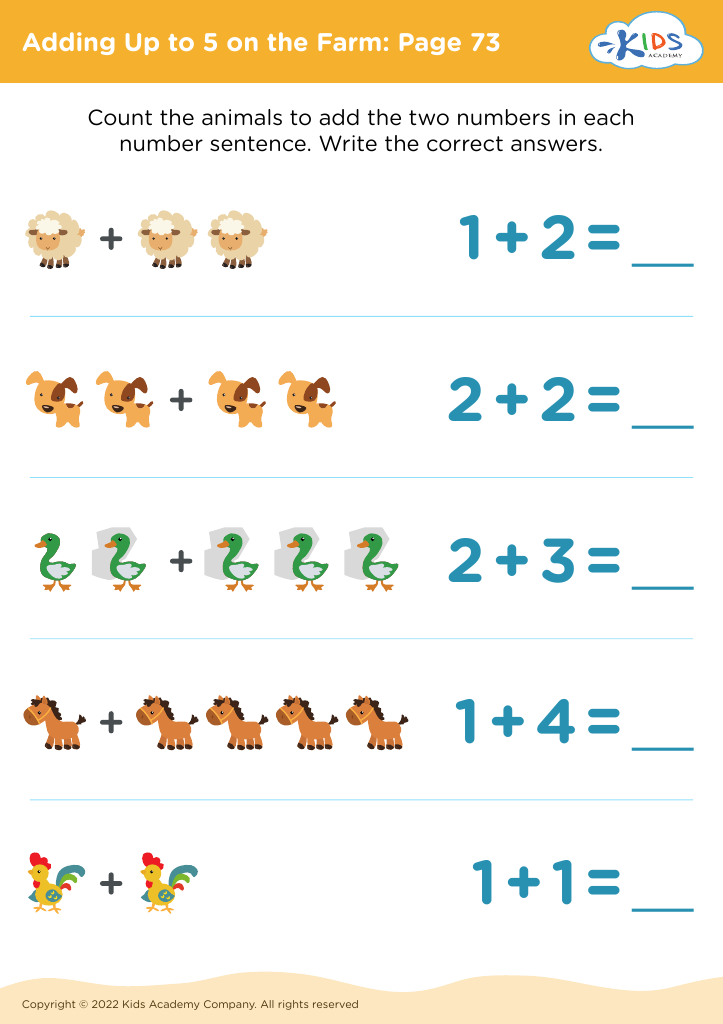








Parents and teachers should recognize the importance of basic addition practice for children aged 3-5, as it lays the critical foundation for future mathematical learning and cognitive development. At this tender age, children's brains are exceedingly receptive, and introducing fundamental arithmetic concepts like addition can significantly enhance their number sense and problem-solving skills.
Practicing basic addition helps children understand the concept of quantities and the relationships between them, which is a cornerstone of all future math learning. It boosts their confidence by allowing them to master easy and achievable tasks, fostering a positive and can-do attitude towards learning math generally. This increased self-confidence can lead to greater enthusiasm and a stronger aptitude in tackling more complex math challenges later on.
Additionally, engaging in addition activities nurtures a child's cognitive skills such as memory, attention, and logical thinking. Everyday practice can be seamlessly integrated with playful activities, making learning enjoyable. Teachers and parents play vital roles in providing a supportive and encouraging environment, where consistent practice and positive reinforcement help children associate math with fun, rather than frustration, paving the way for lifelong mathematical competence and success.








