Basic Math understanding Addition Worksheets for Ages 3-5
7 filtered results
-
From - To
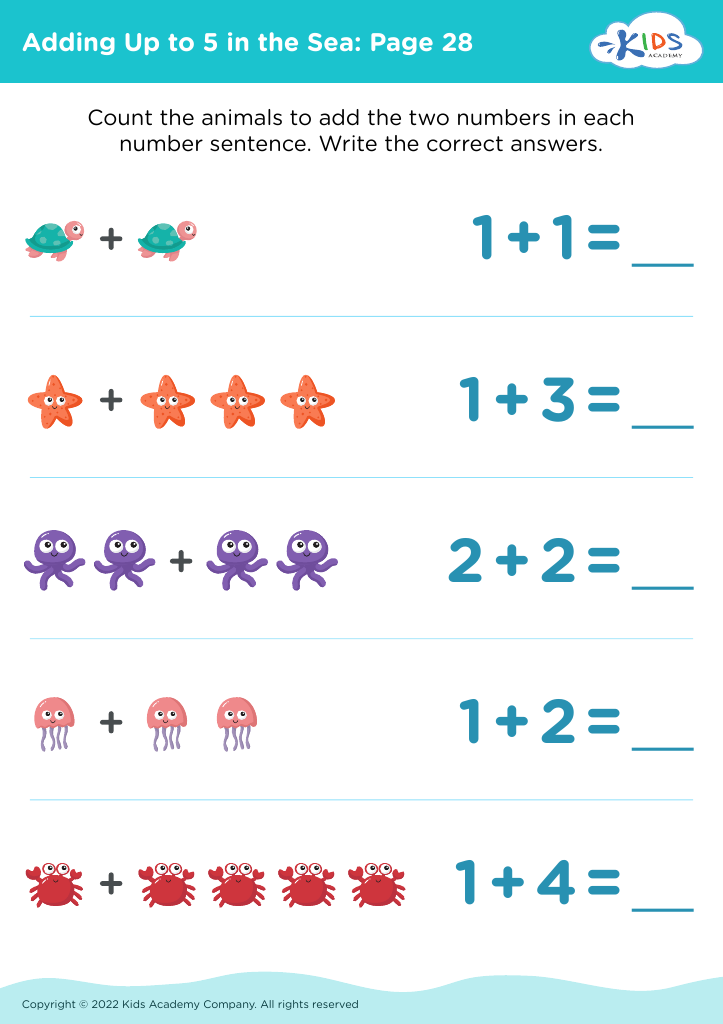
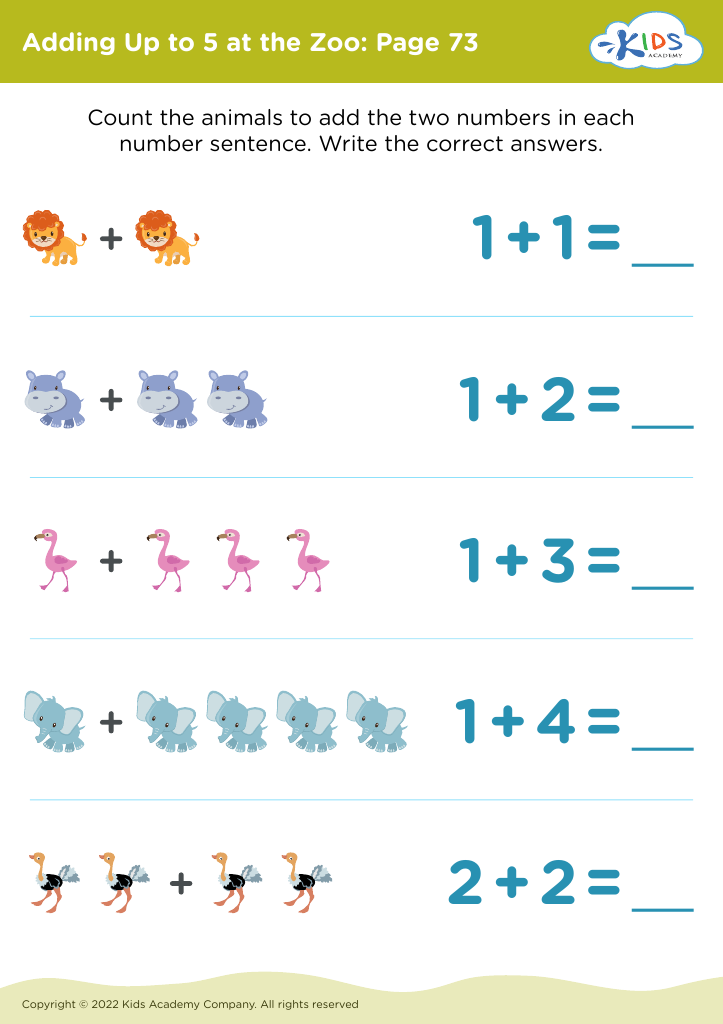
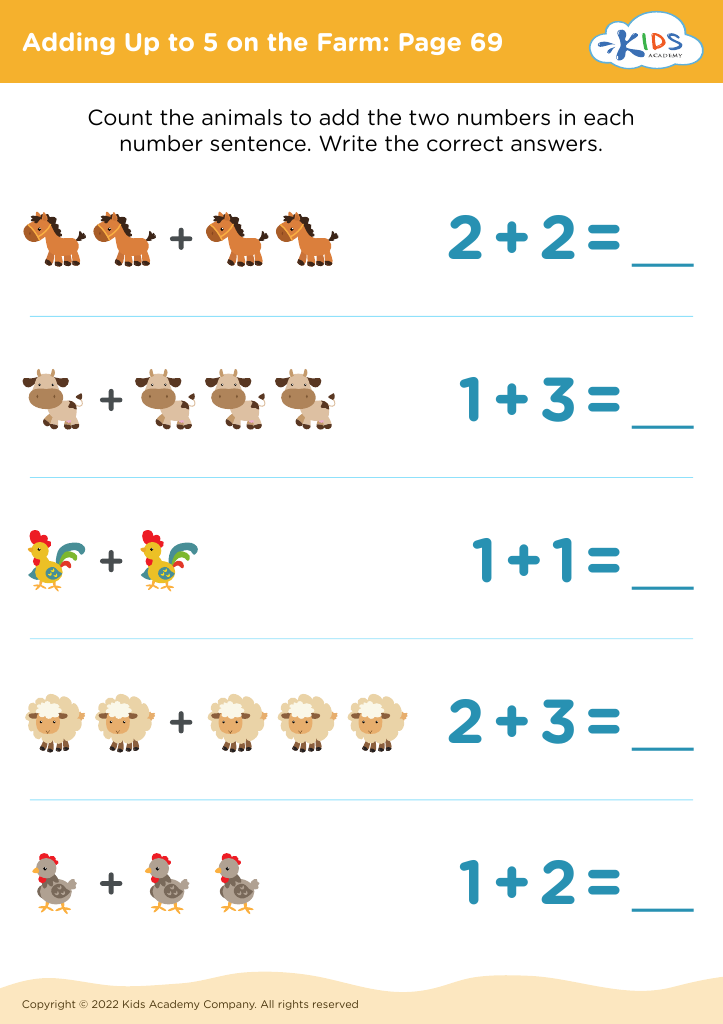
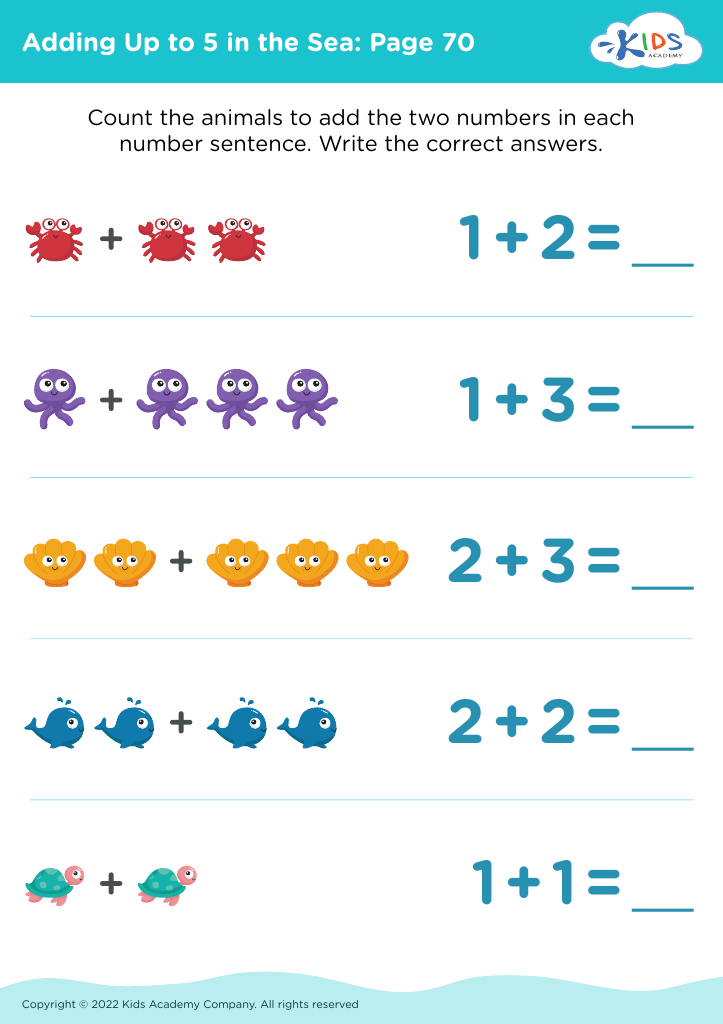
Welcome to our Basic Math Understanding Addition Worksheets designed specifically for ages 3-5! These engaging worksheets introduce young learners to the fundamental concepts of addition in a fun and interactive way. With colorful visuals and age-appropriate activities, children will explore counting, number recognition, and simple addition problems. Each worksheet promotes skill development through playful learning, enhancing problem-solving abilities and fostering a love for math from an early age. Perfect for parents and educators, our resources are tailored to support early childhood education. Download our addition worksheets today and give your child a solid foundation in basic math skills!
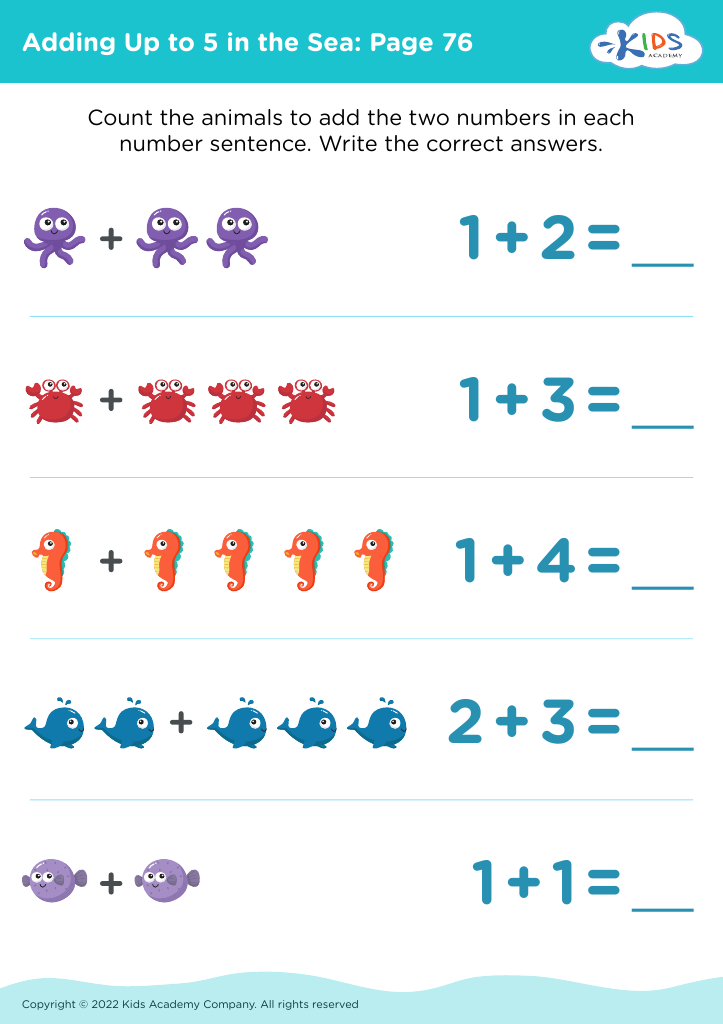
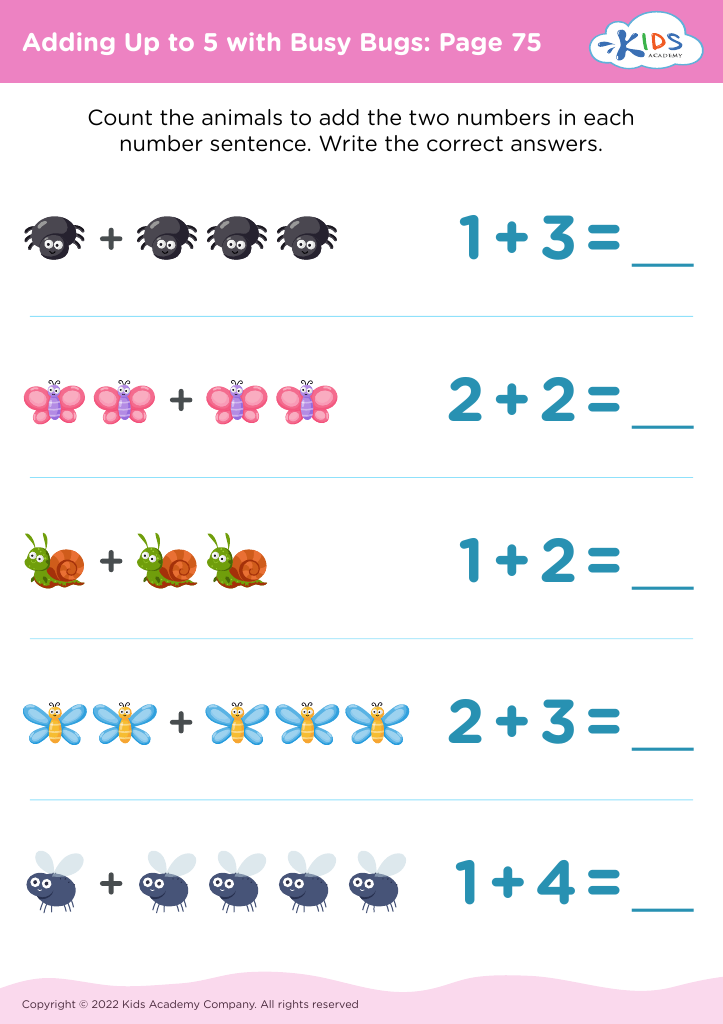
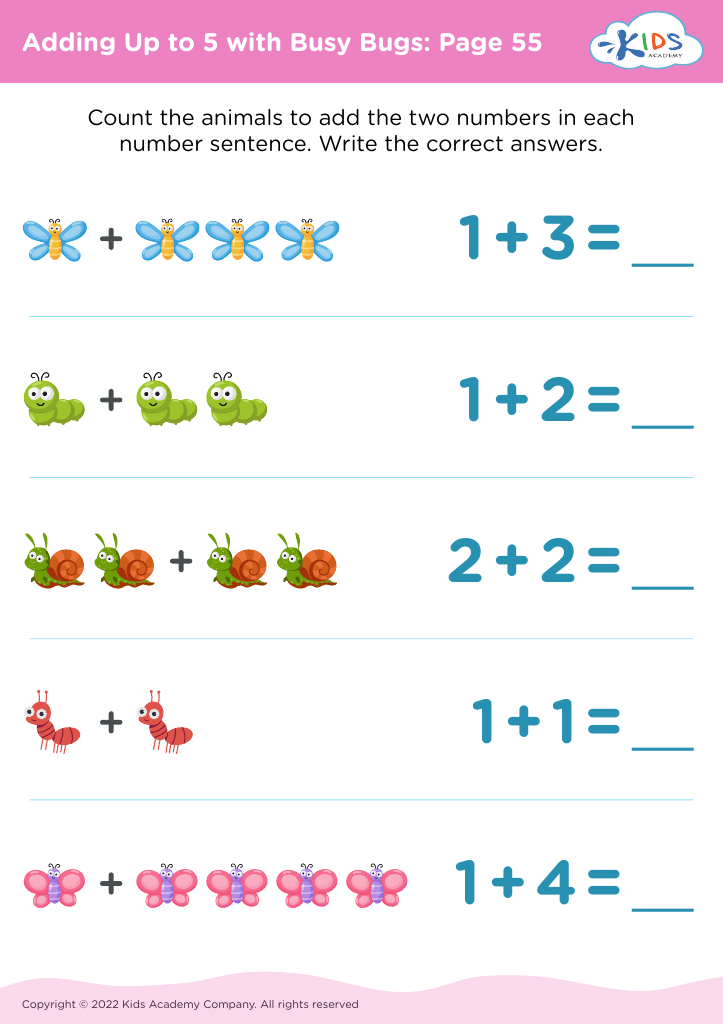








Understanding basic math concepts, particularly addition, is crucial for children aged 3-5 as it forms the foundation for their overall cognitive growth and future learning. At this stage, children's brains are rapidly developing, and early exposure to mathematical concepts enhances their problem-solving abilities and critical thinking skills. Addition is one of the first mathematical operations that children encounter, and grasping this concept fosters a sense of accomplishment and builds confidence.
Parents and teachers play a pivotal role in cultivating a child’s interest in math through interactive activities and playful approaches. Engaging children in everyday scenarios—like counting toys, distributing snacks, or simple game-based activities—can make learning addition fun and relatable. This approach helps young learners develop strong number sense and an understanding of quantities, laying the groundwork for more complex math concepts as they progress in school.
Furthermore, basic math skills go beyond academics; they empower children to make sense of the world around them, encouraging logical reasoning and enhancing their communication skills. By prioritizing early math skills like addition, parents and teachers can support children’s growth into critical thinkers and competent learners in their educational journeys.








