
Fine Motor Skills Addition Worksheets for Ages 3-5
34 filtered results
Difficulty Level
Grade
Age
-
From - To
Subject
Activity
Standards
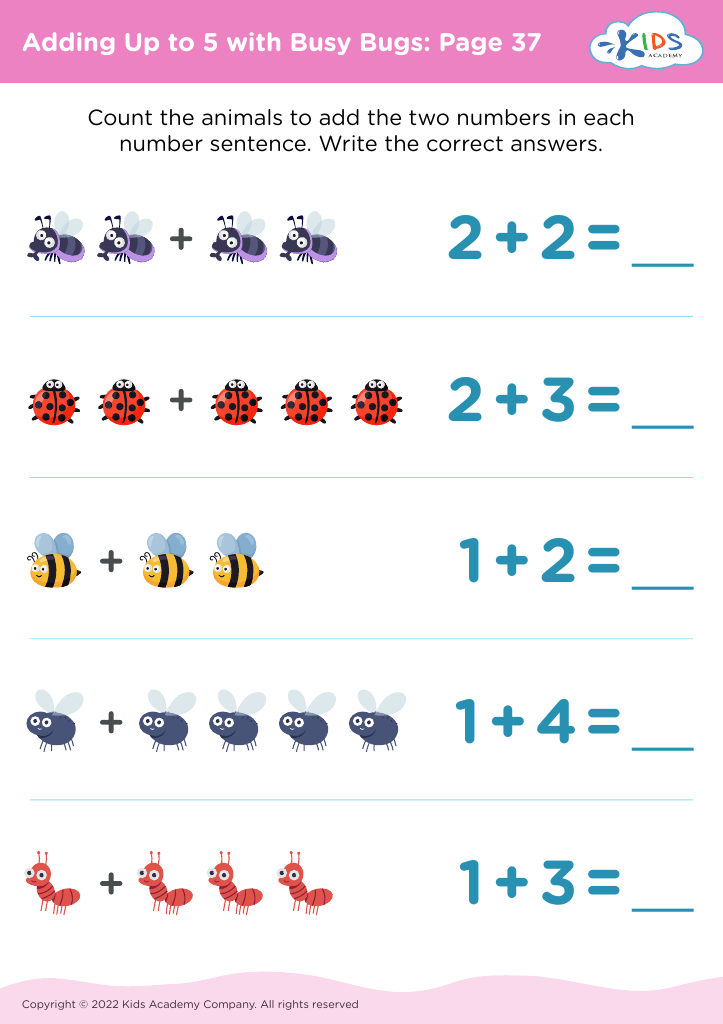
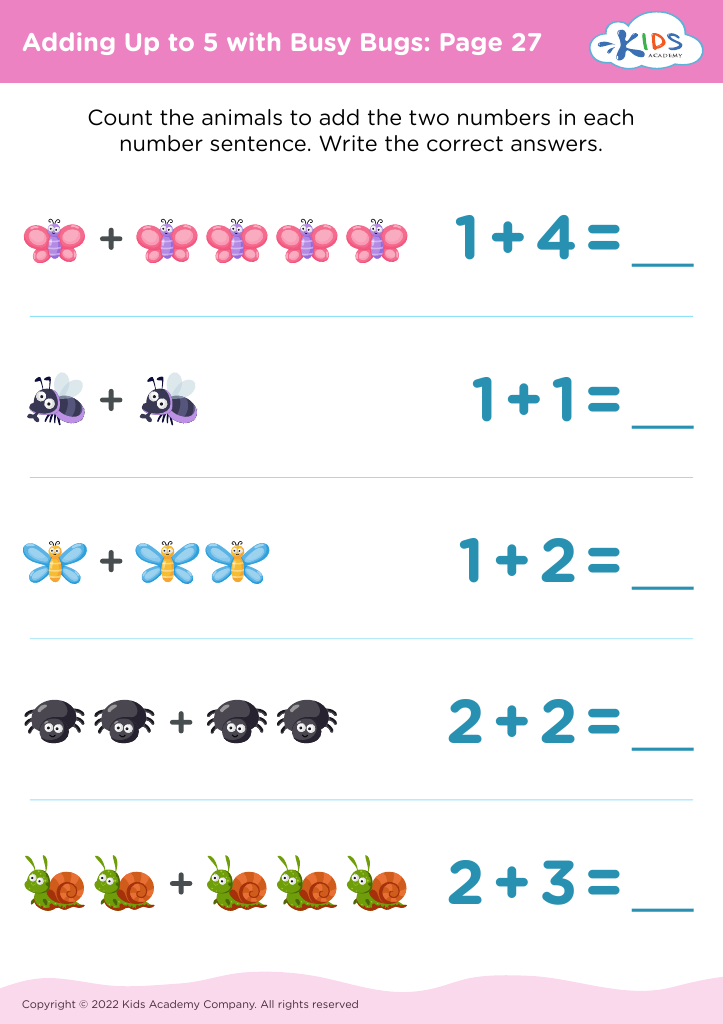
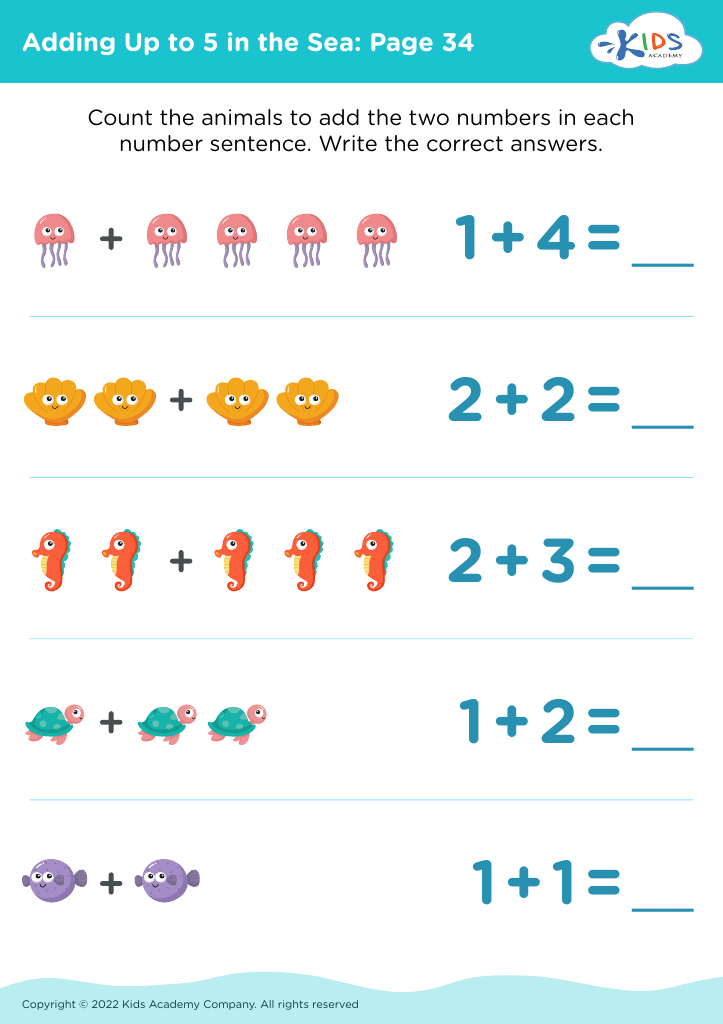
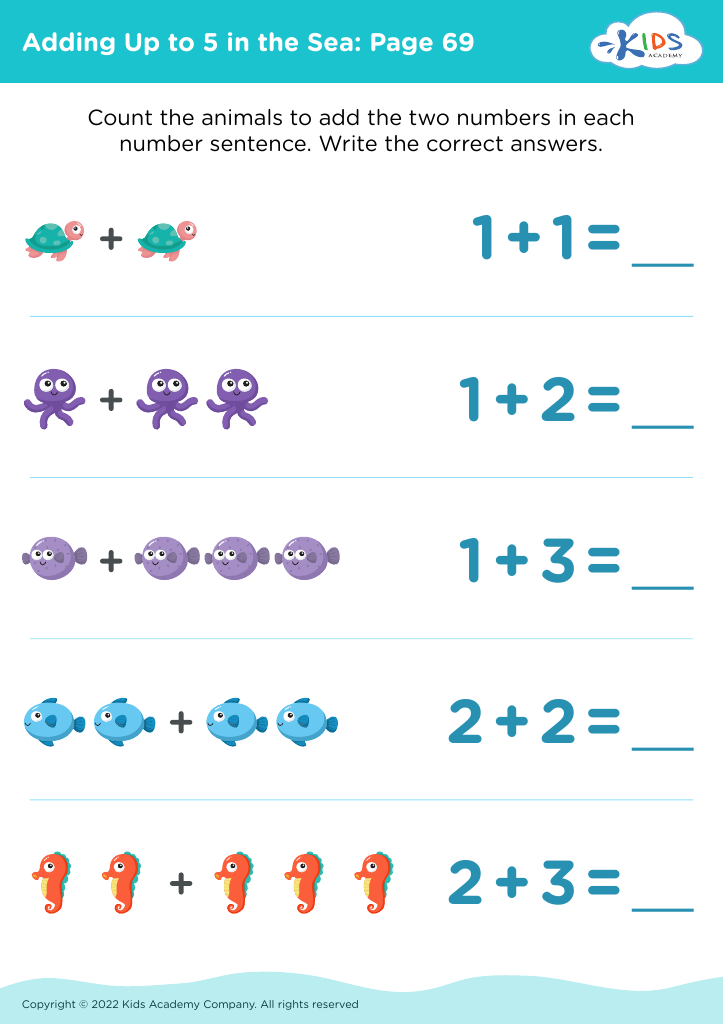
Nurture your child's early learning with our Fine Motor Skills Addition Worksheets for ages 3-5. These engaging worksheets blend math concepts with crucial fine motor development, offering activities like tracing, coloring, and simple addition. Perfectly designed for little hands, they help improve hand-eye coordination, pencil control, and focus, preparing your child for future academic success. Our interactive exercises captivate young learners and make addition practice enjoyable and effective. Ideal for both parents and teachers, these printable worksheets are a fun and educational tool to boost your child's confidence and skills in math. Download now and watch them thrive!
Favorites
With answer key
Interactive
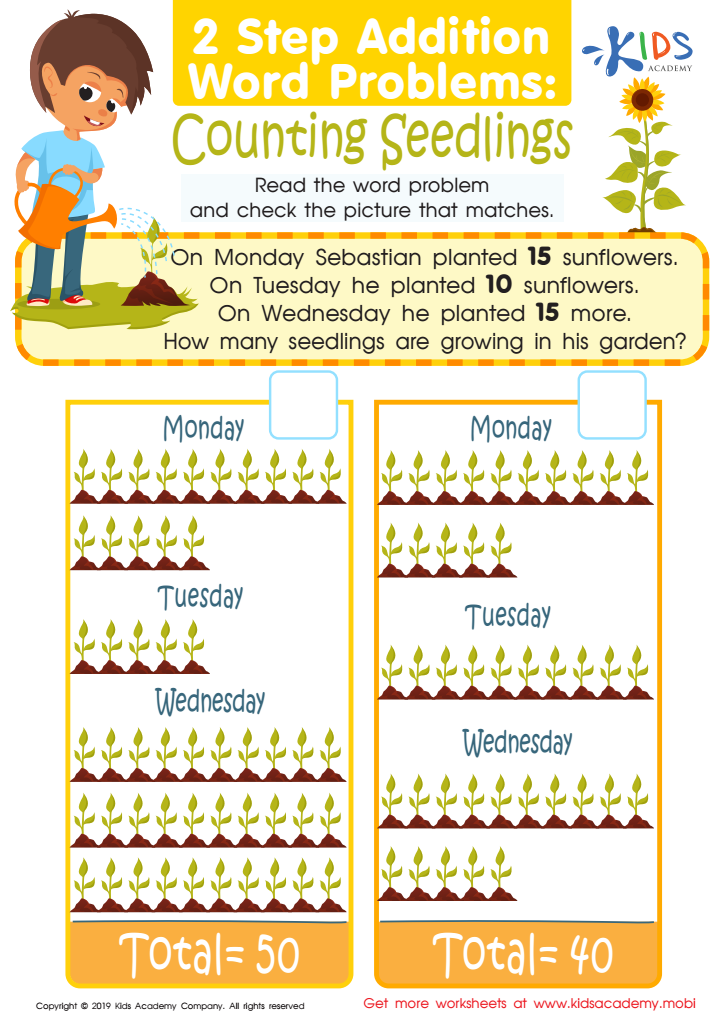
Counting Seedlings Worksheet
Understanding math word problems is key. Multiple steps can prove challenging - this free worksheet provides one-to-one picture representation to help kids solve multi-step addition word problems. Strengthen addition skills by choosing the matching picture to the answer.
 Assign to My Students
Counting Seedlings Worksheet
Worksheet
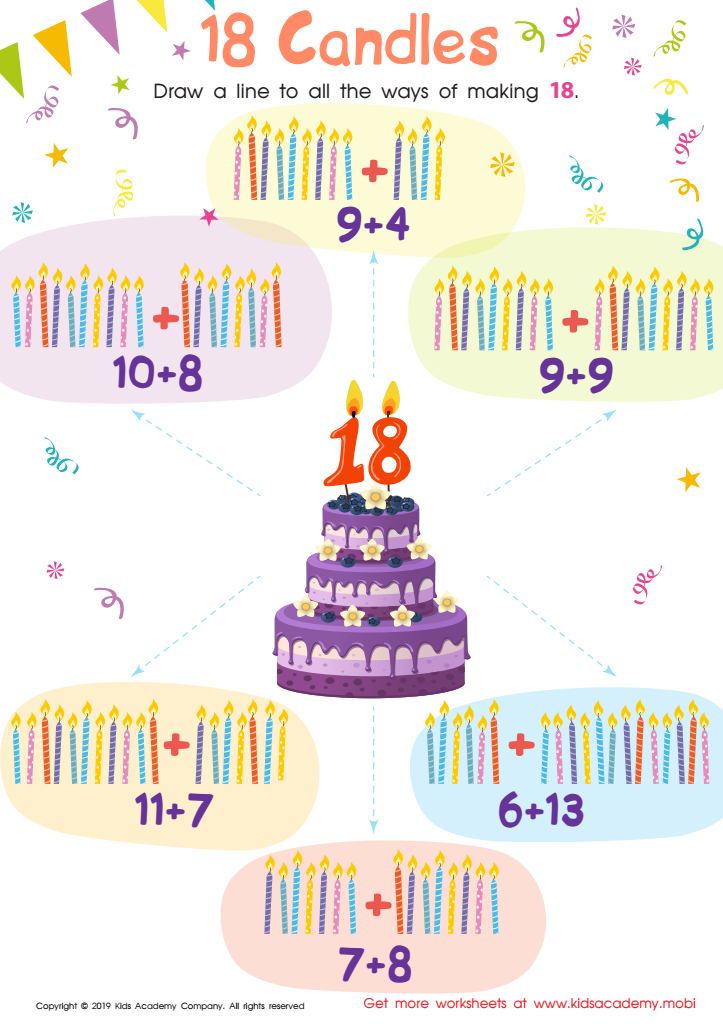
18 Candles Worksheet
This worksheet is great for introducing your students to addition and subtraction. Help your kids solve the simple equations on it and draw a line from the birthday cake with 18 on it to all the solutions. Practice like this will prepare them to tackle more complex math problems.
18 Candles Worksheet
Worksheet
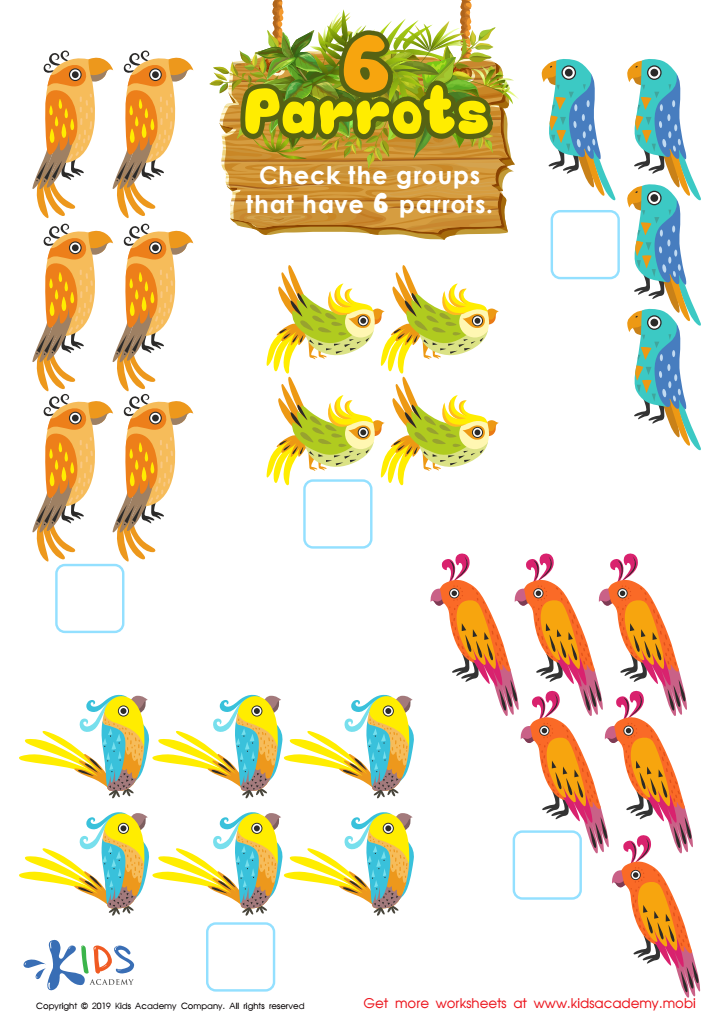
6 Parrots Worksheet
Love parrots? Here's a free worksheet to help your children practice counting to six with colorful parrot representations! Kids will adore counting the parrots and checking off groups of six - and it won't even feel like math! Just a fun way to make some new and exciting friends.
6 Parrots Worksheet
Worksheet
Join Kids Academy for Free
Who is primarily going to use this learning content?








Parents and teachers should prioritize the development of fine motor skills in children aged 3-5 because these skills are fundamental for various essential tasks. Fine motor skills involve small muscle movements, particularly in the hands and fingers, coordinating with the eyes. This coordination is crucial as it underpins many everyday activities such as writing, dressing, eating, and playing, which are pivotal for children’s autonomy and self-esteem.
At this developmental stage, children are at a critical period where their brains and muscles are quickly developing. Engaging in fine motor skill activities not only strengthens these muscles but also enhances brain development. Activities such as cutting with scissors, stringing beads, drawing, and manipulating small objects provide excellent practice for these skills.
Moreover, proficient fine motor skills are directly linked to academic success. Tasks such as holding a pencil correctly, turning pages in a book, and using a computer mouse all require well-developed fine motor abilities. Enhancing these skills early on positions children for a smoother academic journey.
Neglecting fine motor skill development can lead to future challenges, including difficulties with handwriting and performing basic self-care tasks. Therefore, embedding fine motor skill activities into daily routines supports cognitive development, boosts confidence, and lays a strong foundation for future learning and independence.








