Fine Motor Skills Addition Worksheets for Ages 3-5 - Page 2
34 filtered results
-
From - To
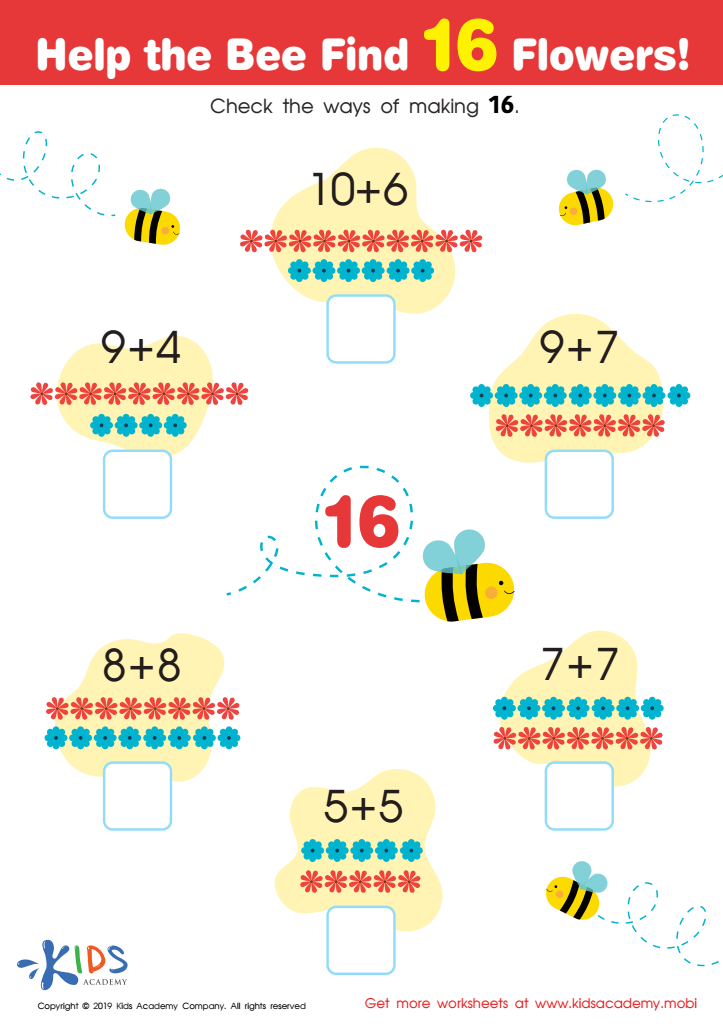
Help the Bee Find 16 Flowers Worksheet
 Assign to My Students
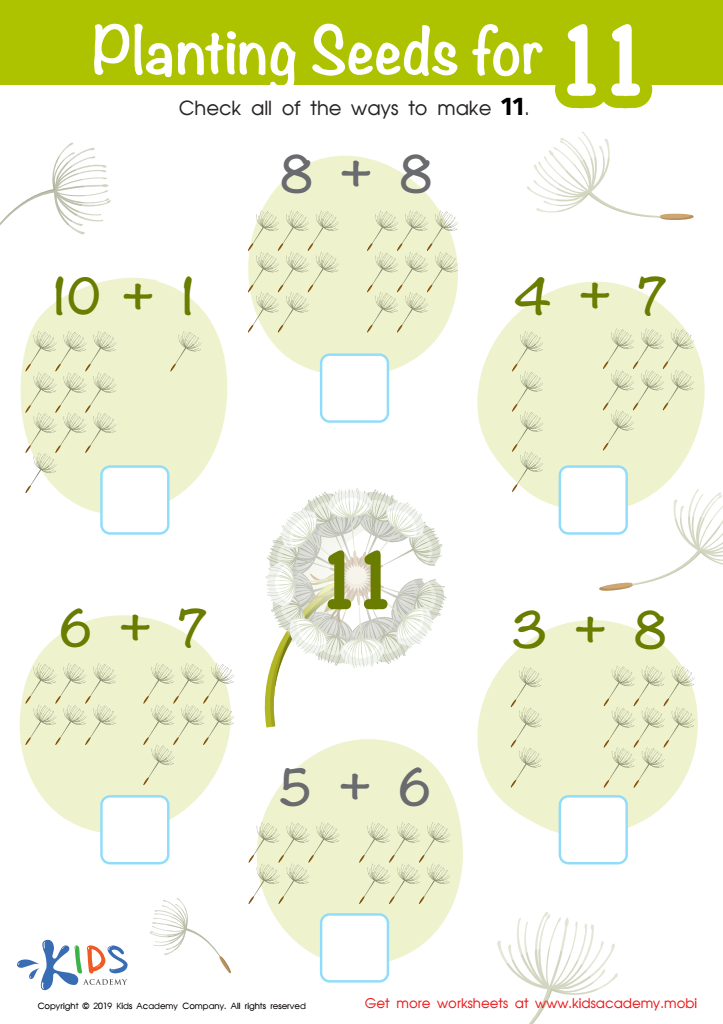
Planting Seeds for 11 Worksheet
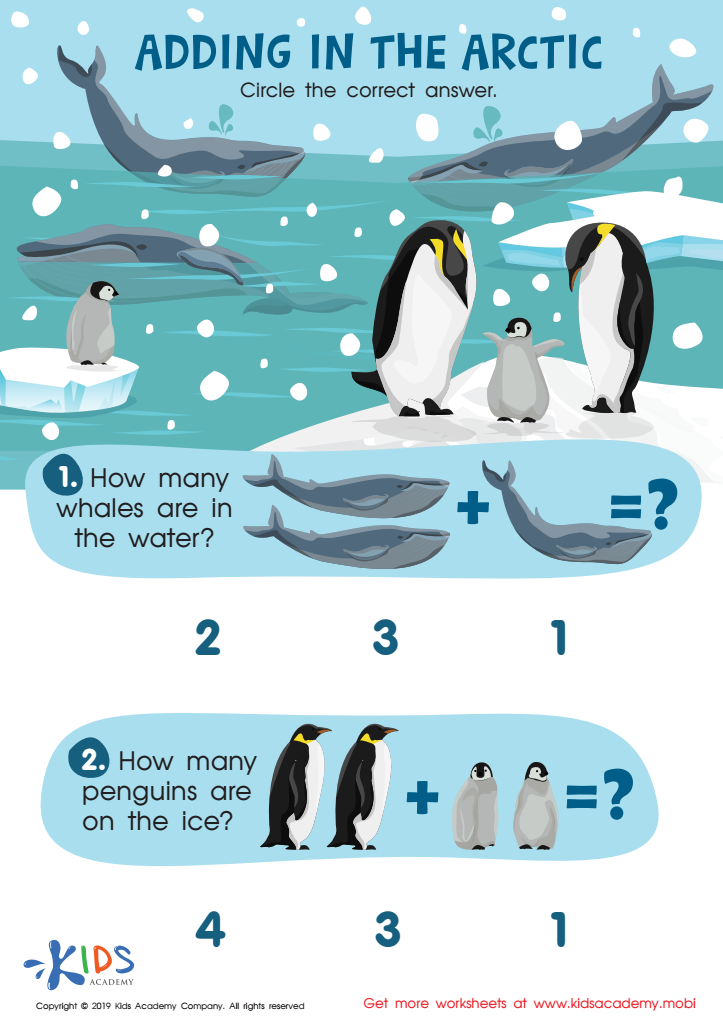
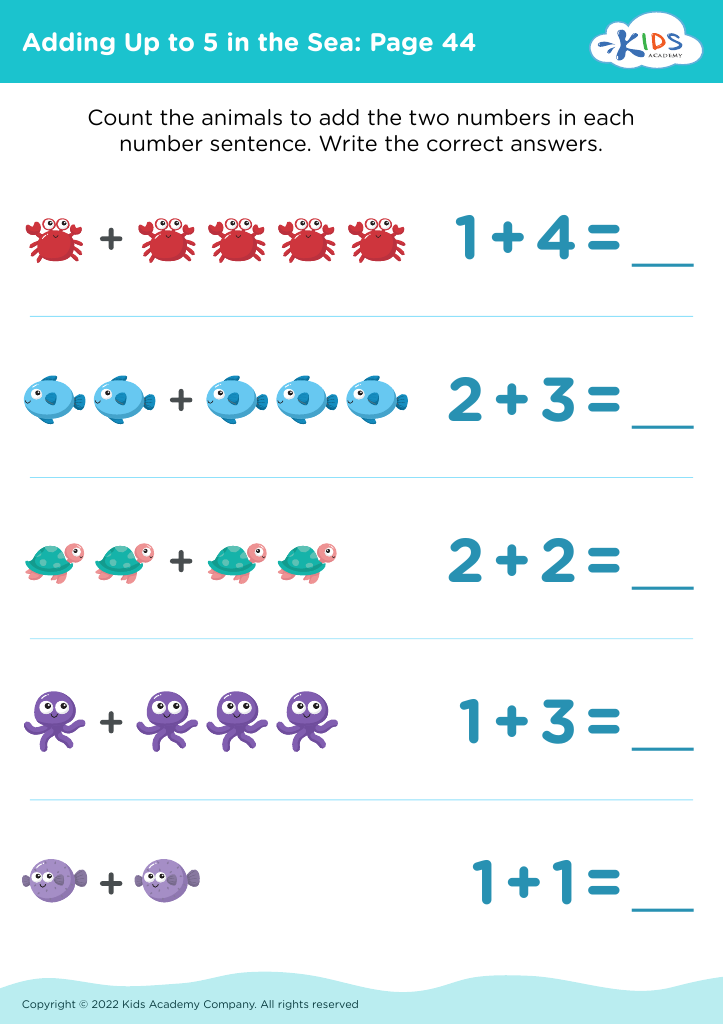
Adding in the Arctic Worksheet


.jpg)





Parents and teachers should prioritize the development of fine motor skills in children aged 3-5 because these skills are fundamental for various essential tasks. Fine motor skills involve small muscle movements, particularly in the hands and fingers, coordinating with the eyes. This coordination is crucial as it underpins many everyday activities such as writing, dressing, eating, and playing, which are pivotal for children’s autonomy and self-esteem.
At this developmental stage, children are at a critical period where their brains and muscles are quickly developing. Engaging in fine motor skill activities not only strengthens these muscles but also enhances brain development. Activities such as cutting with scissors, stringing beads, drawing, and manipulating small objects provide excellent practice for these skills.
Moreover, proficient fine motor skills are directly linked to academic success. Tasks such as holding a pencil correctly, turning pages in a book, and using a computer mouse all require well-developed fine motor abilities. Enhancing these skills early on positions children for a smoother academic journey.
Neglecting fine motor skill development can lead to future challenges, including difficulties with handwriting and performing basic self-care tasks. Therefore, embedding fine motor skill activities into daily routines supports cognitive development, boosts confidence, and lays a strong foundation for future learning and independence.








