
Observational skills Addition Worksheets for Ages 3-5
3 filtered results
Difficulty Level
Grade
Age
-
From - To
Subject
Activity
Standards
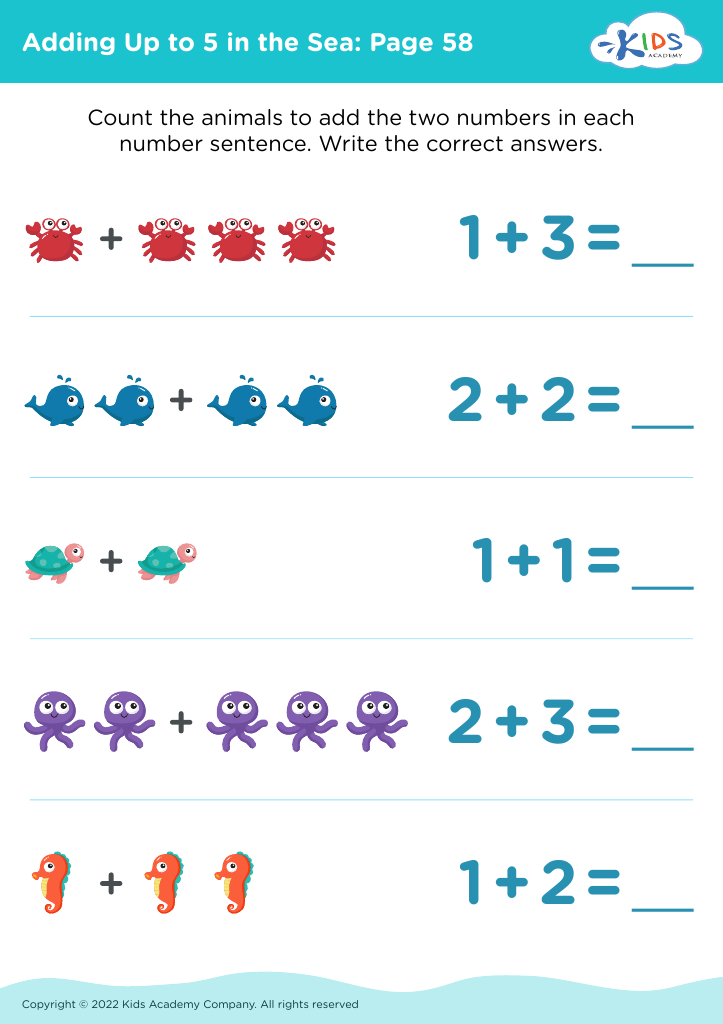
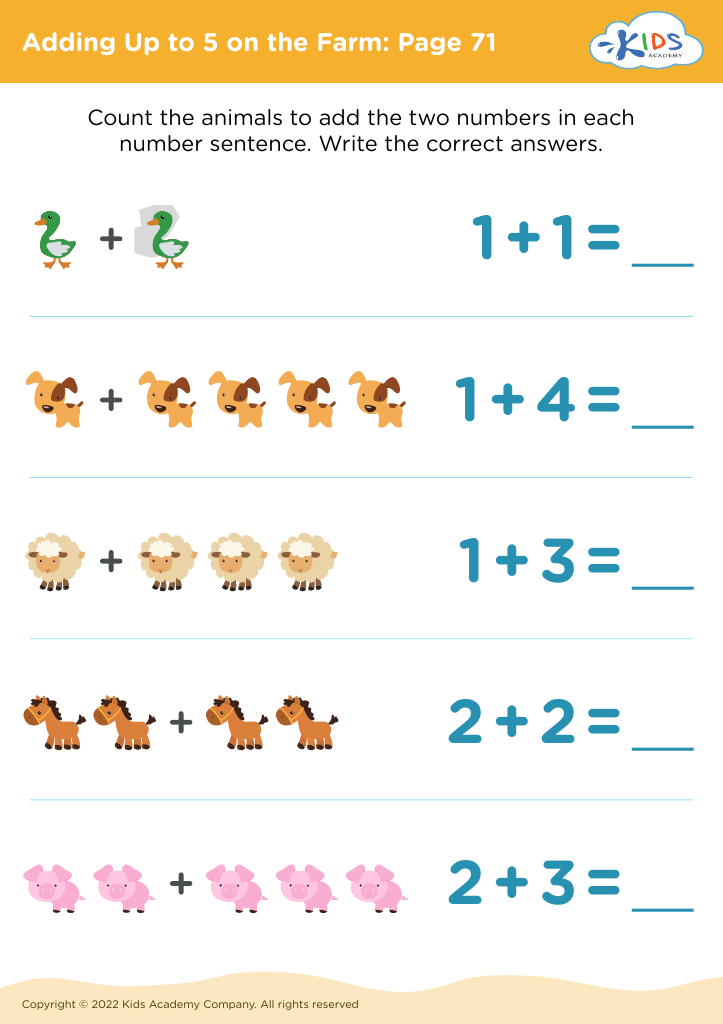
Enhance your child's observational skills with our engaging Addition Worksheets, specifically designed for ages 3-5! These worksheets foster critical thinking and attention to detail, inviting young learners to explore and solve fun addition problems through vibrant illustrations and relatable scenarios. By encouraging kids to observe patterns and relationships, these activities promote early math skills while making learning enjoyable. Perfect for use at home or in preschool settings, our worksheets not only support cognitive development but also help children build confidence in their abilities. Discover a world of fun-filled learning as your little ones sharpen their observational skills while mastering basic addition!
Favorites
With answer key
Interactive
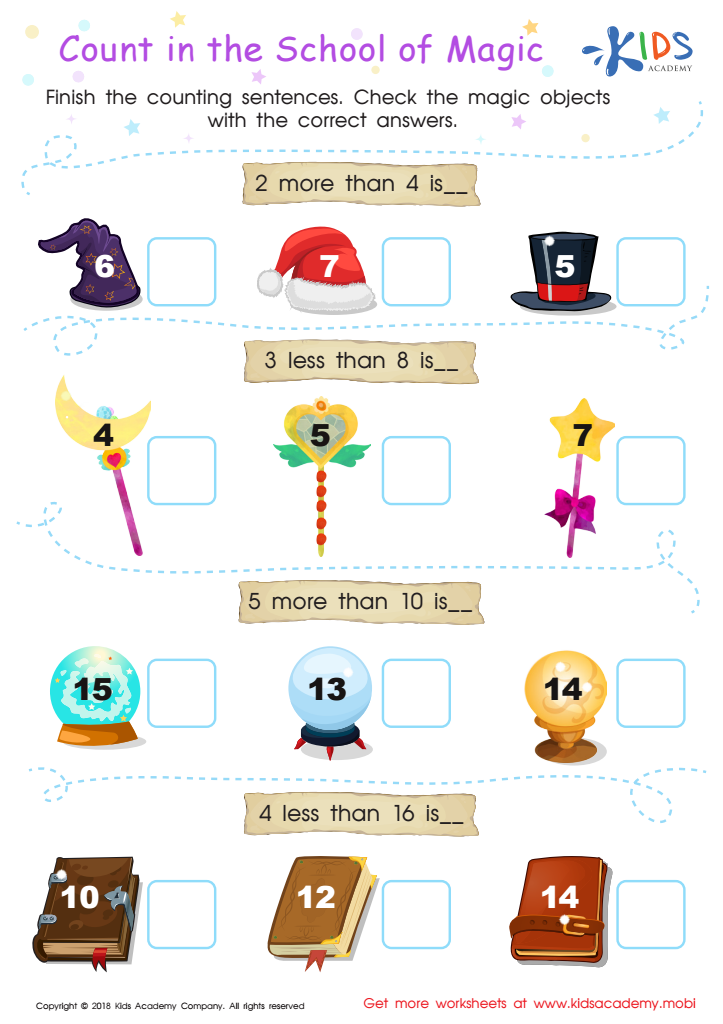
Count in the School of Magic Worksheet
Your math learners can explore the School of Magic with this worksheet. They'll read equations with addition and subtraction numbers under 20, count back and forth to find the answer, then complete the counting sentences. Fun pictures and easy accuracy make it an enjoyable and successful learning experience.
 Assign to My Students
Count in the School of Magic Worksheet
Worksheet
Join Kids Academy for Free
Who is primarily going to use this learning content?








Observational skills are critical for children aged 3-5 as they lay the foundation for effective learning and development. For parents and teachers, fostering these skills is essential because they support children's ability to make sense of their environment. At this age, children are naturally curious and prone to exploration. By enhancing their observational skills, adults can help them notice patterns, details, and relationships in everyday situations, which are driving forces behind cognitive growth.
Furthermore, strong observational skills promote language development. When children articulate what they observe, they enhance their vocabulary and comprehension. They learn to ask questions and articulate their thoughts, which deepens their engagement with learning materials.
Additionally, teaching observational skills can lead to important social-emotional benefits. Children who observe social cues develop empathy and understand different perspectives, crucial traits for building relationships.
Incorporating observational skills into activities like nature walks, guided play, or storytelling ensures that learning is authentic and interactive. As parents and educators nurture these skills, they're equipping children not just for academic success but also for life skills that promote critical thinking, problem-solving, and emotional intelligence, all vital for a bright future.








