Problem-Solving Skills Addition Worksheets for Ages 3-5 - Page 3
54 filtered results
-
From - To
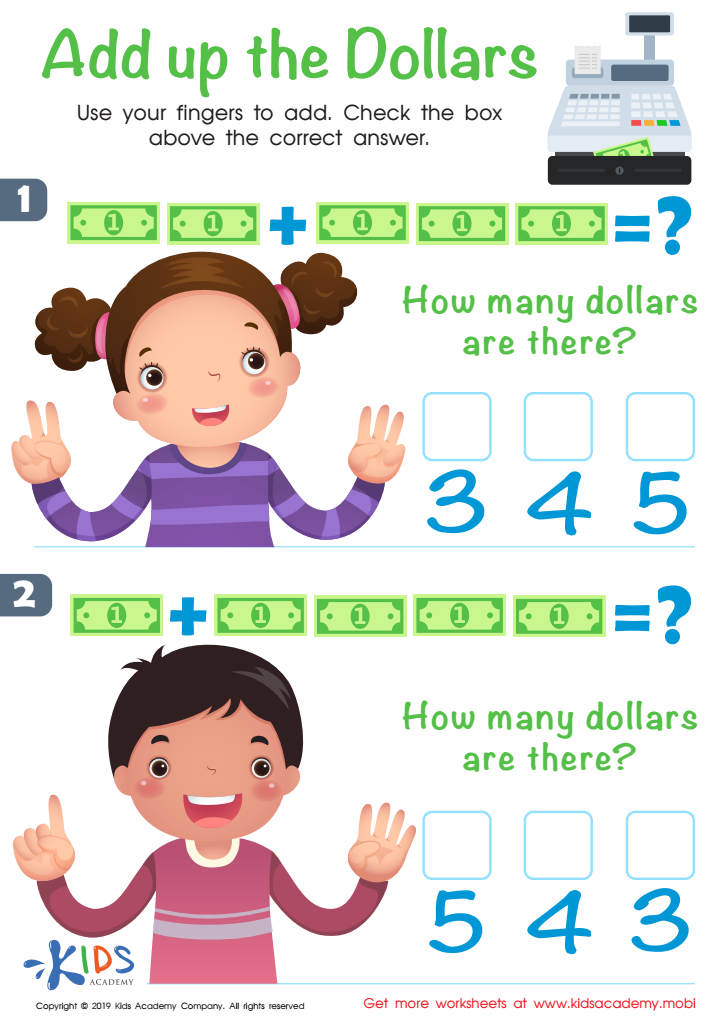
Add up the Dollars Worksheet
 Assign to My Students
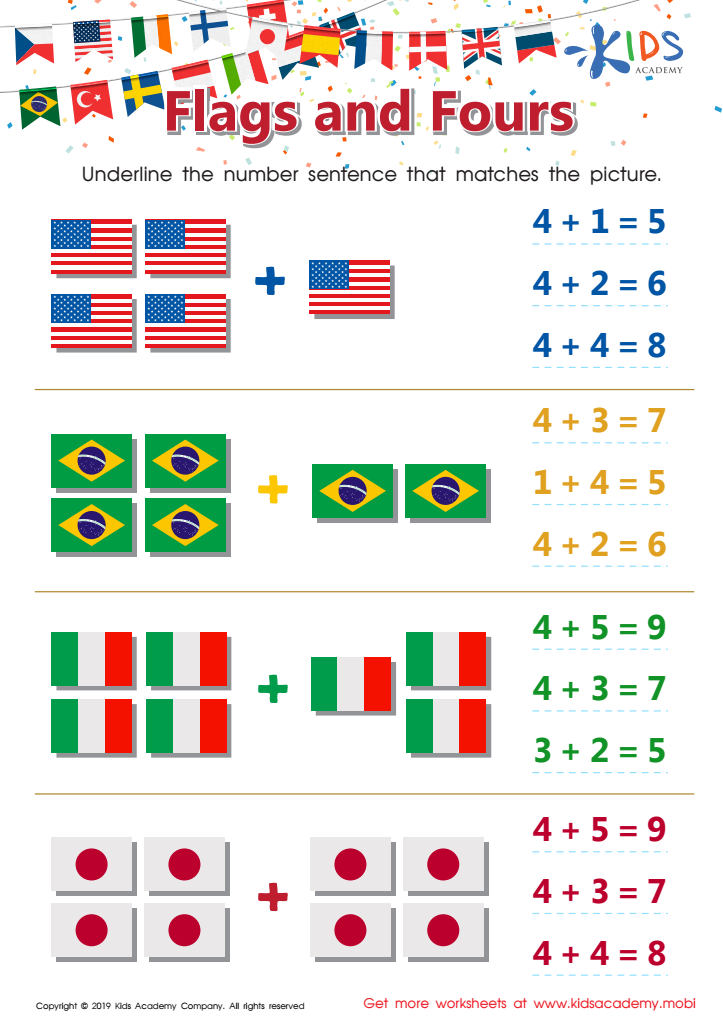
Flags and Fours Worksheet








Problem-solving skills are crucial for children aged 3-5 as they lay the groundwork for future cognitive and social development. At this early stage, young minds are exceptionally adaptable and capable of absorbing new concepts. Engaging in problem-solving activities helps them develop critical thinking, perseverance, and creativity, all of which are foundational skills they will use throughout their lives.
Parents and teachers should prioritize incorporating problem-solving exercises because these activities can enhance children's understanding of the world around them. For example, by solving simple puzzles or figuring out how to share toys, children learn fundamental math concepts, spatial awareness, and effective communication skills. This not only prepares them for academic success but also for navigating everyday situations.
Moreover, problem-solving activities encourage children to approach challenges with a positive mindset, teaching them that persistence and effort can overcome obstacles. This helps build resilience, a trait that is invaluable as they encounter more complex problems both in school and in life.
Additionally, these skills also improve social interactions. When children solve problems together, they learn to listen to others' viewpoints, cooperate, and negotiate. Such teamwork experiences are beneficial for their emotional development and ability to form healthy relationships.
In summary, investing in problem-solving skill development for children aged 3-5 equips them with essential tools for intellectual growth, resilience, and social competence, setting a robust foundation for their future learning and interactions.








