Reading comprehension Addition Worksheets for Ages 3-5
7 filtered results
-
From - To
Welcome to our Reading Comprehension Addition Worksheets, designed specifically for children ages 3-5! These engaging materials combine foundational math skills with essential reading comprehension practice. Our worksheets introduce young learners to basic addition concepts while enhancing their ability to understand and follow directions within simple texts. Each worksheet features colorful illustrations and age-appropriate language, making learning fun and accessible. By integrating reading skills with addition practice, children develop critical cognitive abilities that set the stage for future academic success. Foster your child's love for learning with our interactive, easy-to-use worksheets that ensure a well-rounded educational experience for early learners!
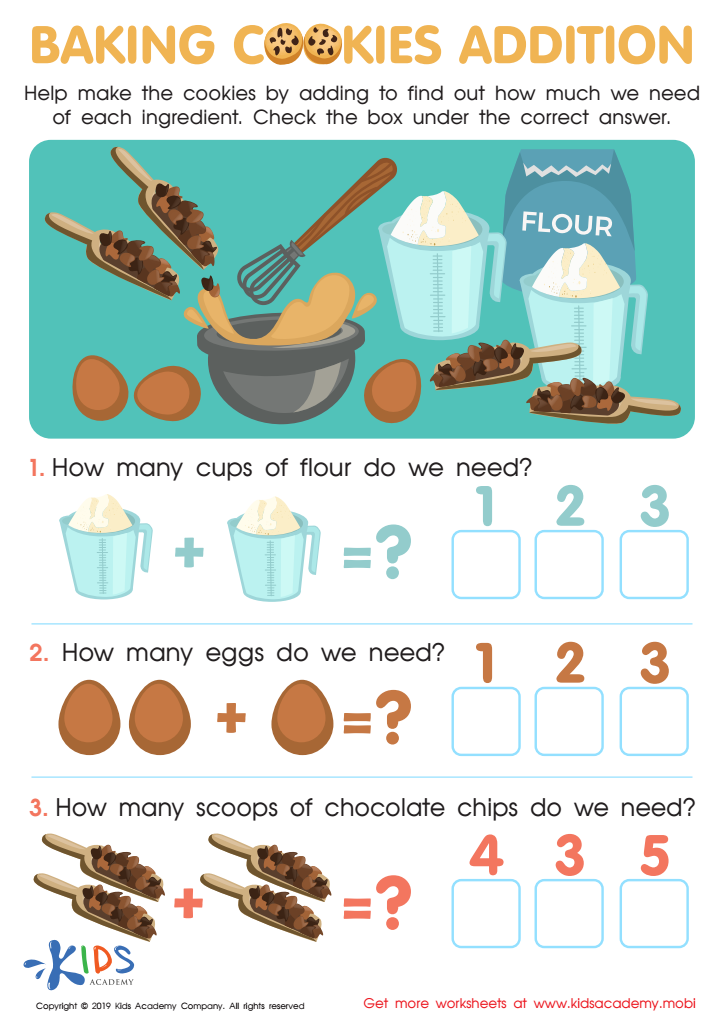
Baking Cookies Addition Worksheet
 Assign to My Students
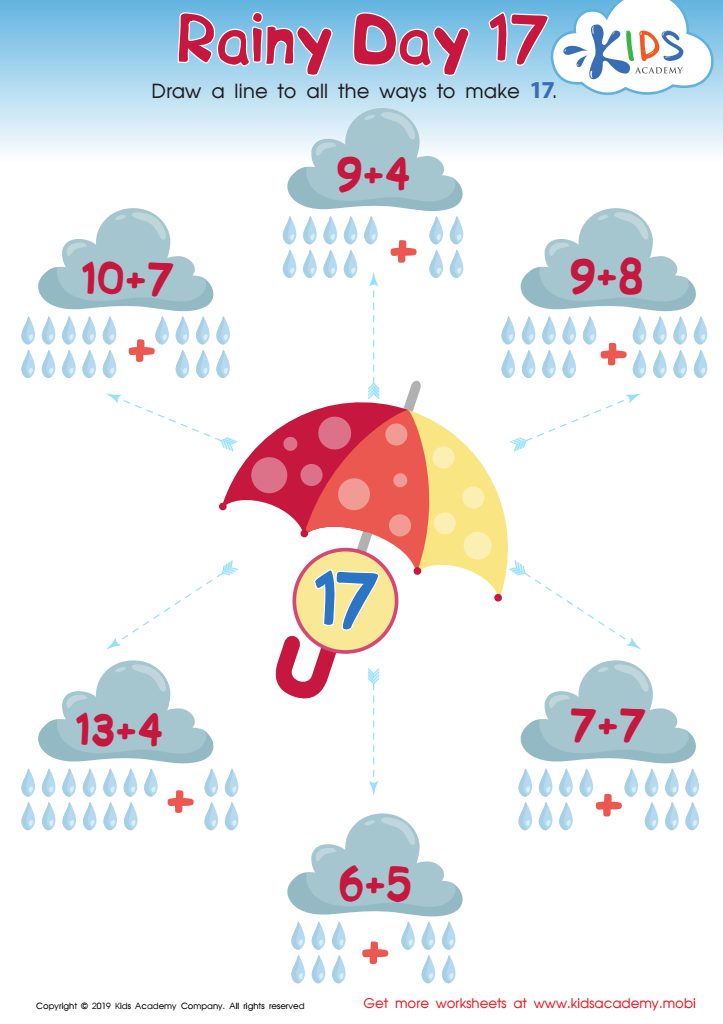
Rainy Day 17 Worksheet
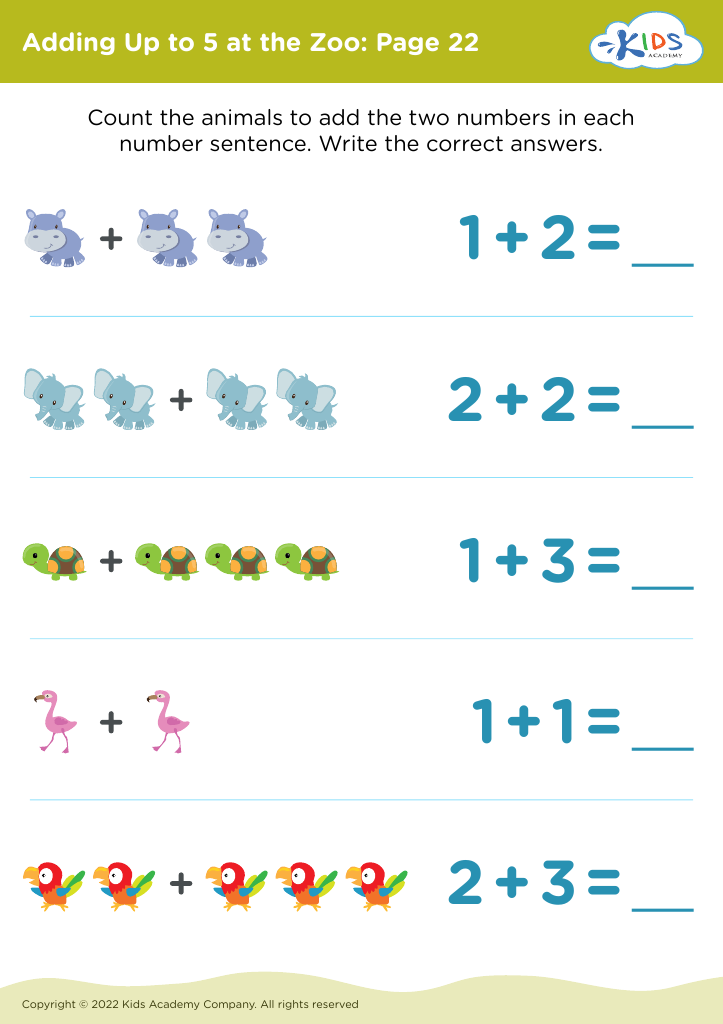
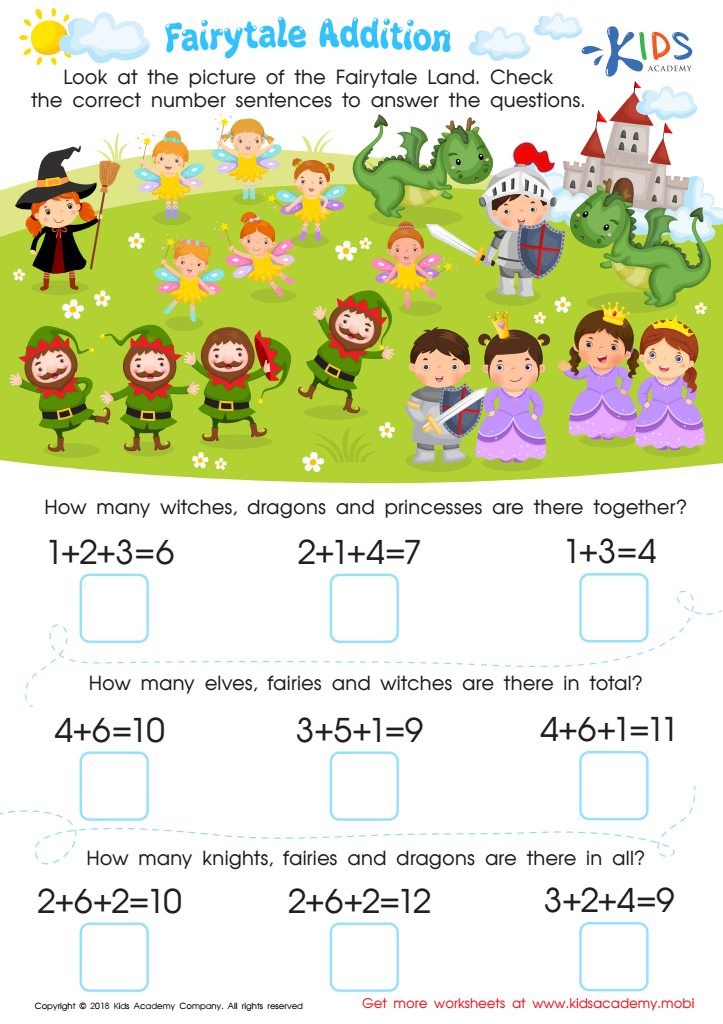
Fairytale Addition Worksheet
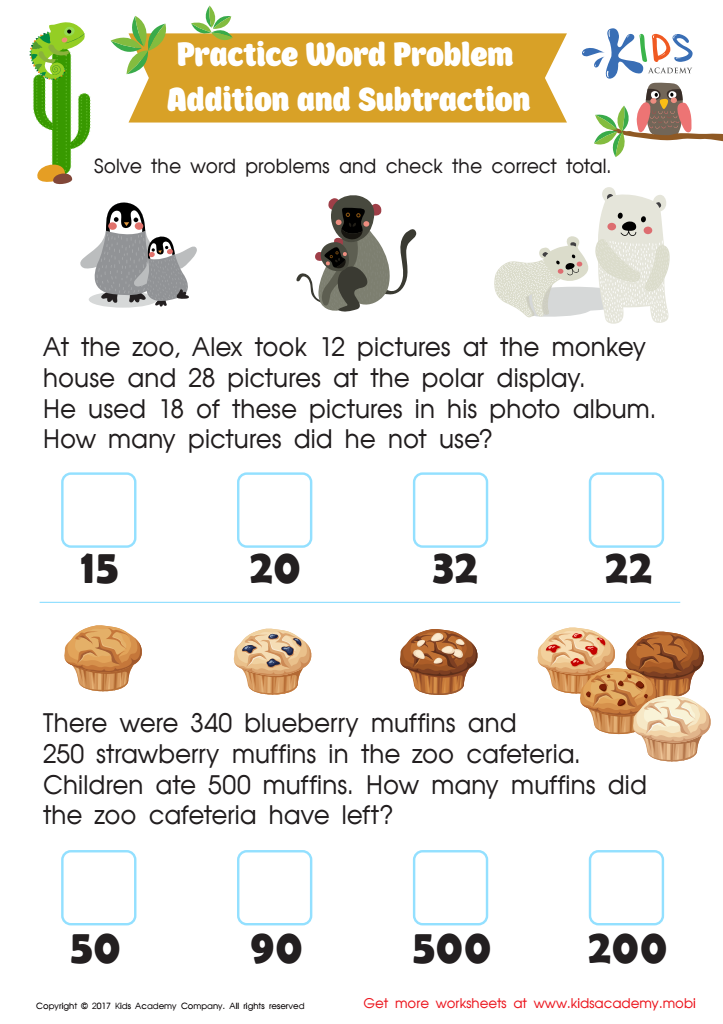
Addition and Subtraction: Word Problems Worksheet
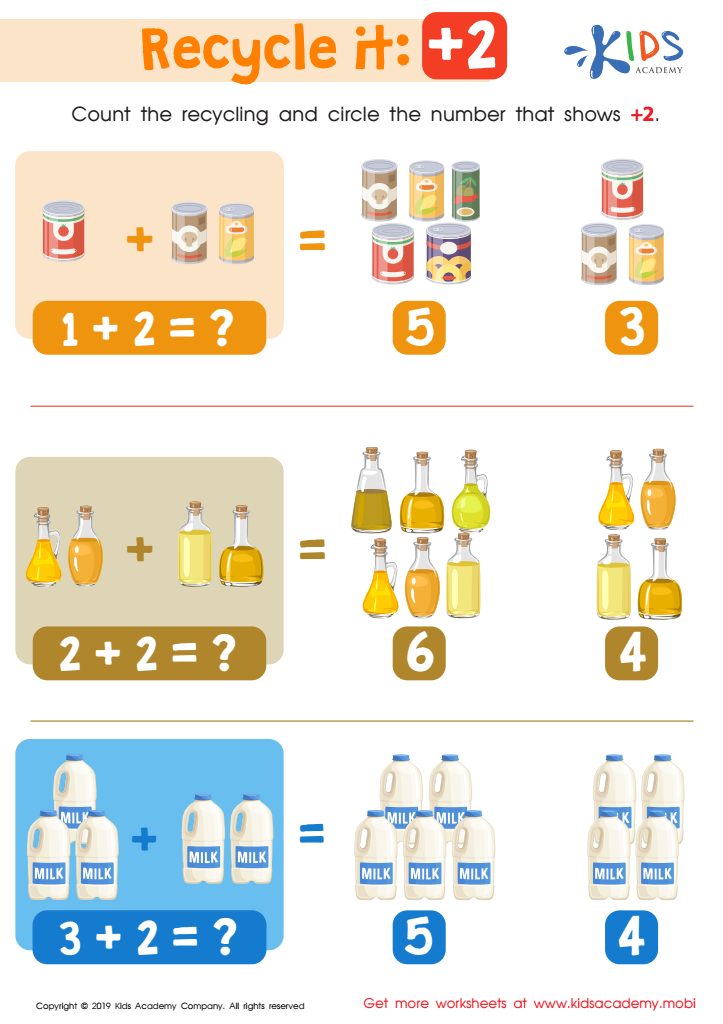
Recycle It: +2 Worksheet








Reading comprehension is vital for children aged 3-5 as it establishes the foundation for their literacy skills and overall academic success. At this early age, engaging with stories and narratives helps children develop critical thinking skills, enhances their vocabulary, and fosters a love for reading. When parents and teachers prioritize reading comprehension, they not only promote understanding but also encourage curiosity and imagination.
During these formative years, children learn to connect spoken and written language, develop their ability to predict, infer, and summarize stories, and identify main ideas and details. This lays the groundwork for more complex comprehension skills required in later grades. Furthermore, strong early reading skills correlate with improved performance in mathematics and other subjects.
By incorporating reading comprehension activities—such as asking questions about a story, discussing characters, and predicting outcomes—parents and teachers engage children in meaningful discussions. This interactive approach promotes a rich dialogue around literature, nurturing an environment where kids feel confident expressing their thoughts. Ultimately, by prioritizing reading comprehension in these crucial early years, parents and teachers play a pivotal role in cultivating lifelong learners who are prepared for future academic challenges.








