Sea creatures identification Addition Worksheets for Ages 3-5
3 filtered results
-
From - To
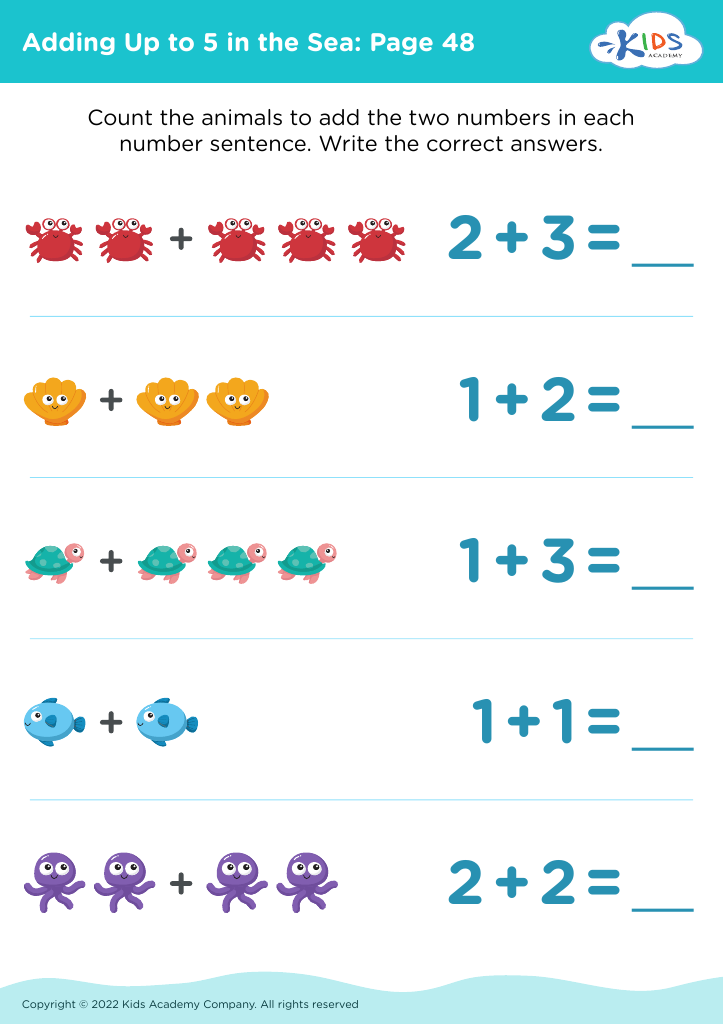
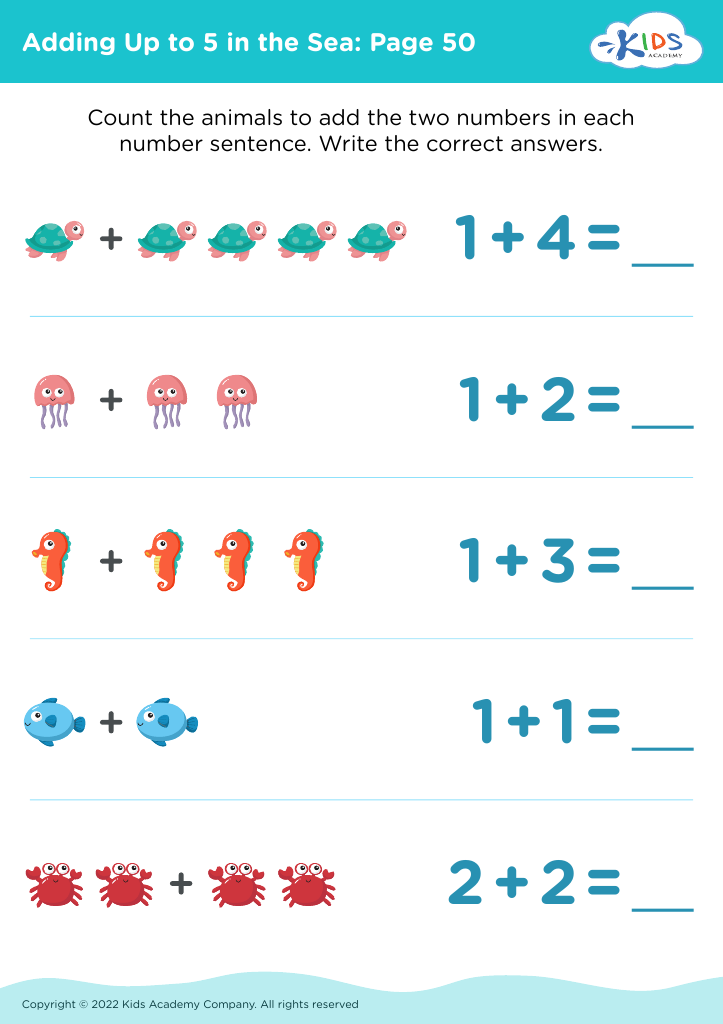
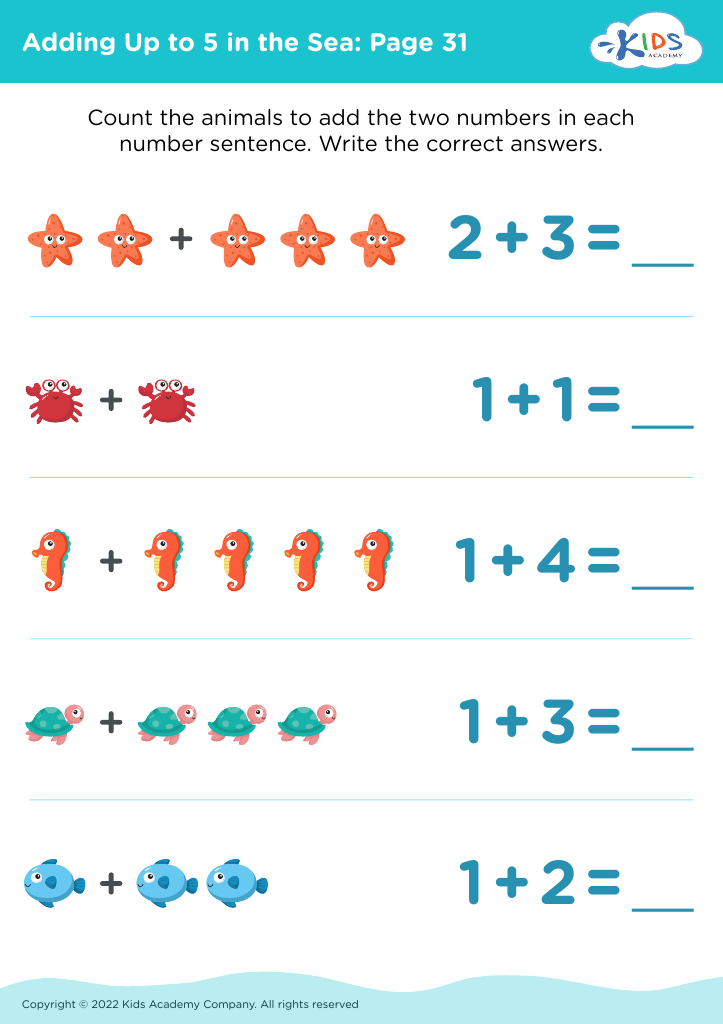
Discover our engaging Sea Creatures Identification Addition Worksheets designed specifically for children ages 3-5! These fun, colorful worksheets merge the wonders of ocean life with foundational math skills, making learning an enjoyable adventure. Young learners will identify various sea creatures while practicing essential addition skills through delightful illustrations and simple problems. Ideal for home and classroom use, these worksheets encourage both cognitive development and creativity. Perfect for preschool and kindergarten settings, they foster a love for nature and math in early learners. Dive into the world of sea creatures and watch your child's confidence and enthusiasm for learning grow!








Understanding sea creatures and their identification is crucial for children aged 3-5, as it enhances early development in multiple ways. First, this activity fosters curiosity and a sense of wonder about the natural world. When children learn about marine life, they engage their innate curiosity, paving the way for a lifelong love of learning.
Secondly, identifying sea creatures promotes cognitive development. Children develop language skills by learning names and characteristics, while also engaging in critical thinking as they categorize animals and understand their environments. For example, discussing whether an animal is a mammal or a fish can spark exciting conversations.
Additionally, this activity encourages social skills. Whether collaborating with peers in a classroom setting or sharing knowledge at home, learning about sea creatures encourages communication and teamwork.
Furthermore, it provokes discussions around conservation and the importance of protecting marine ecosystems. Teaching young children about marine biology instills values of responsibility and stewardship toward the planet from an early age.
In summary, sea creatures identification not only enriches young minds but also nurtures empathy and a sense of responsibility towards the environment, making it a vital aspect of early education and parenting.








