Understanding number value Addition Worksheets for Ages 3-5
3 filtered results
-
From - To
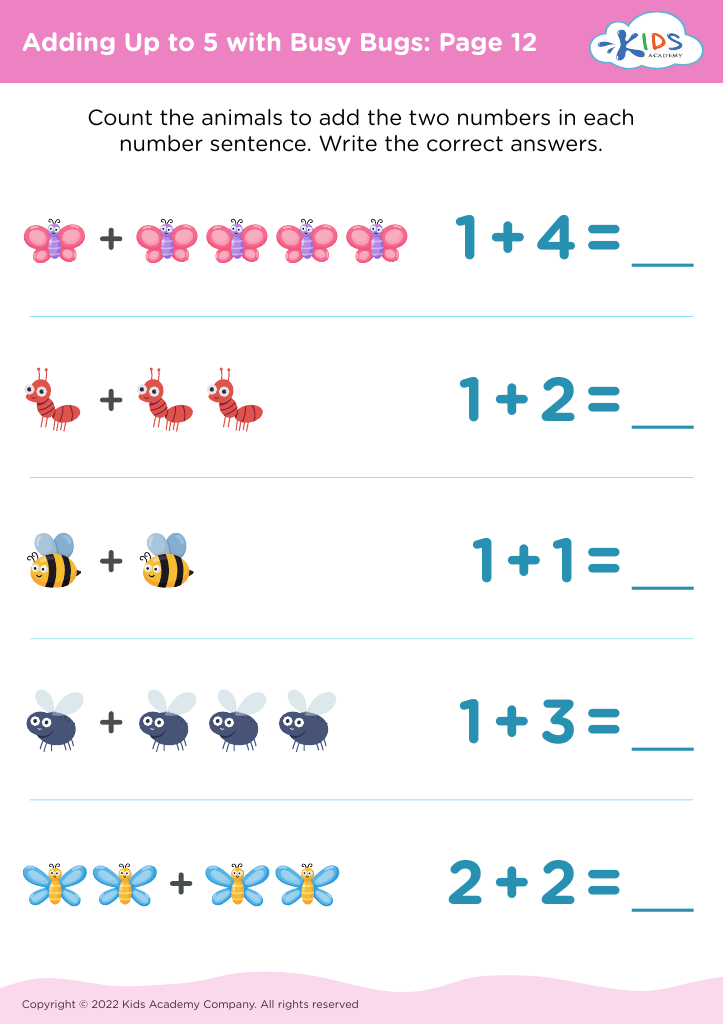
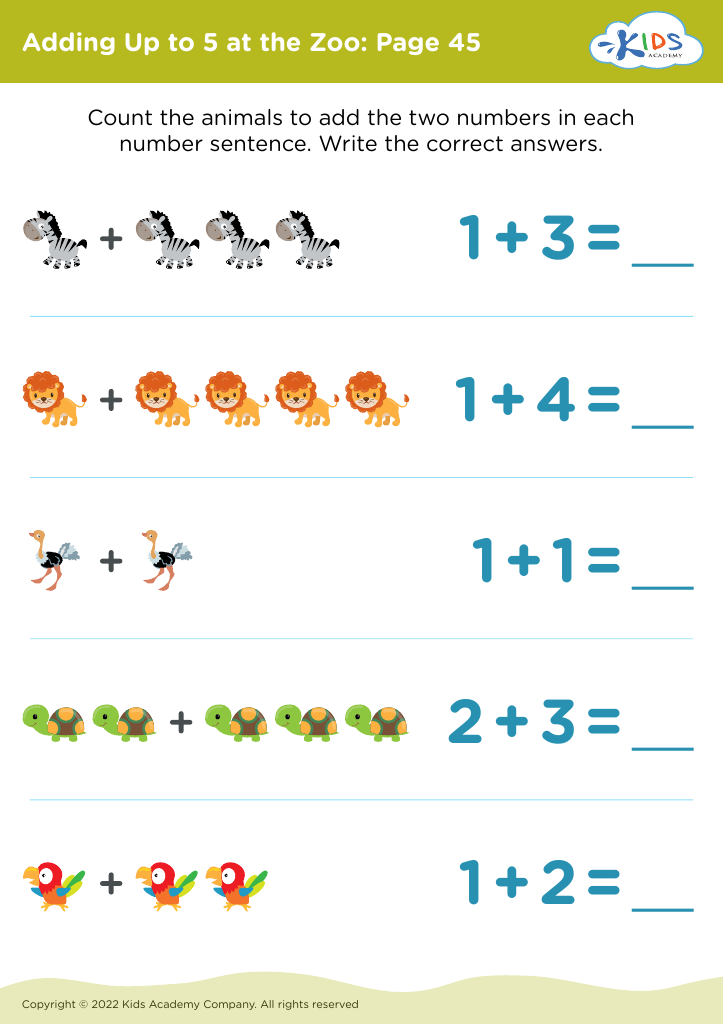
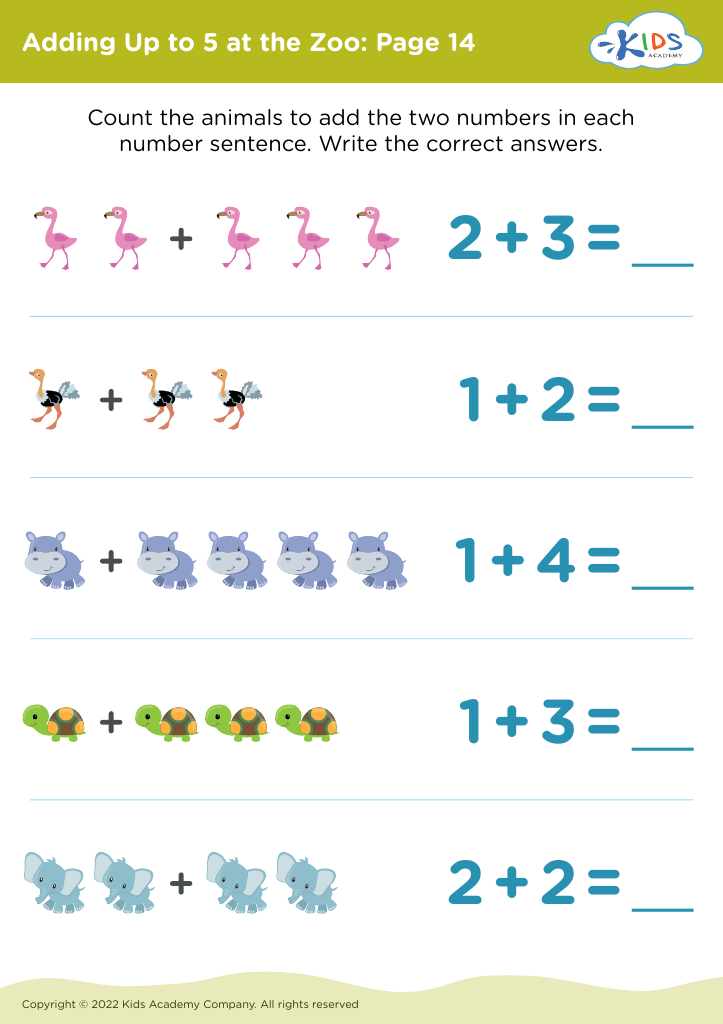
Introduce your child to the foundational skill of number recognition and early addition with our "Understanding Number Value Addition Worksheets" designed for ages 3-5. These engaging and colorful worksheets help young learners grasp the concept of number value and basic addition. Through fun activities involving counting, matching, and simple arithmetic problems, kids will develop their math skills in a playful and interactive way. Perfect for home or classroom use, these resources ensure a solid mathematical foundation, promoting confidence and a love for numbers. Download now to see your child's math skills blossom!


.jpg)





Understanding number value and basic addition for children ages 3-5 is foundational for their future mathematical proficiency. At this tender age, children's brains are rapidly developing, making it an ideal time to introduce fundamental concepts that pave the way for more complex math skills.
When children grasp number value, they learn to appreciate that numbers represent specific quantities. This fundamental understanding helps them engage with the world quantitatively, which is an essential life skill. Knowing that "3" means three objects, whether they are apples or blocks, allows children to relate numbers to real-world items, enhancing their problem-solving abilities and logical thinking.
Introducing addition early encourages mental arithmetic, helping children to quickly and efficiently compute simple problems, improving cognitive development. This will build a strong mathematical foundation and boost confidence, which is crucial for tackling challenging subjects later in life.
Moreover, familiarity with numbers and addition can promote positive attitudes toward mathematics, reducing math anxiety. When children find joy and success in these early math experiences, they are more likely to approach future learning with curiosity and enthusiasm.
In essence, understanding number value and addition at an early age equips children for academic and everyday successes, fosters critical thinking, encourages logical reasoning, and lays the groundwork for lifelong learning. Parents and teachers play a critical role in nurturing these early skills through engaging and positive experiences.








