Understanding numerical values Addition Worksheets for Ages 3-5
4 filtered results
-
From - To
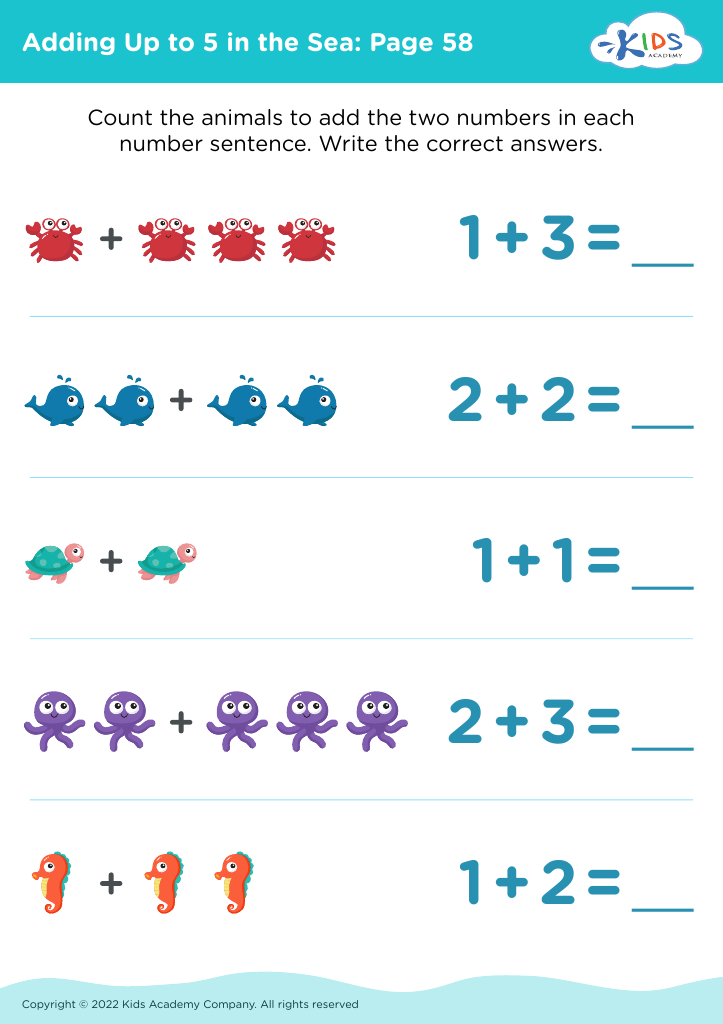
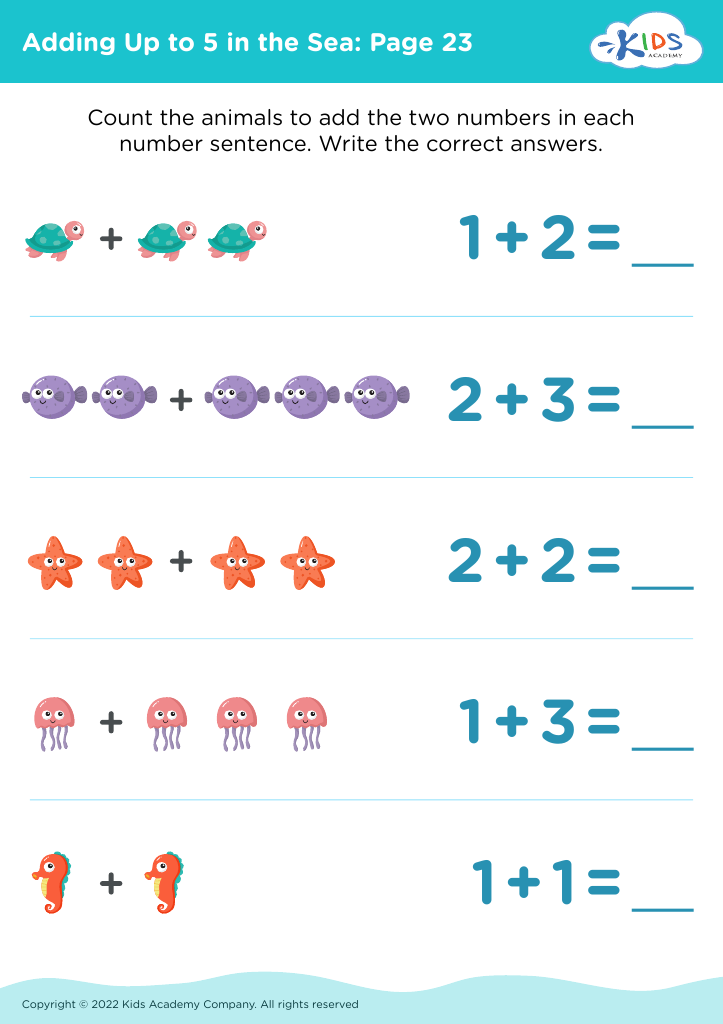
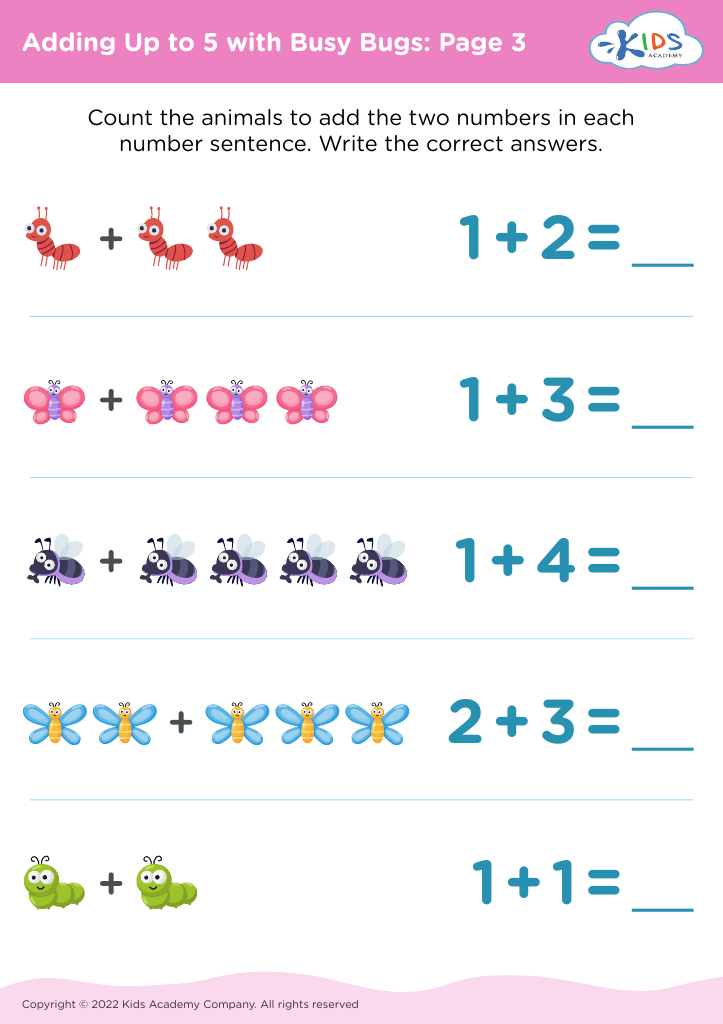
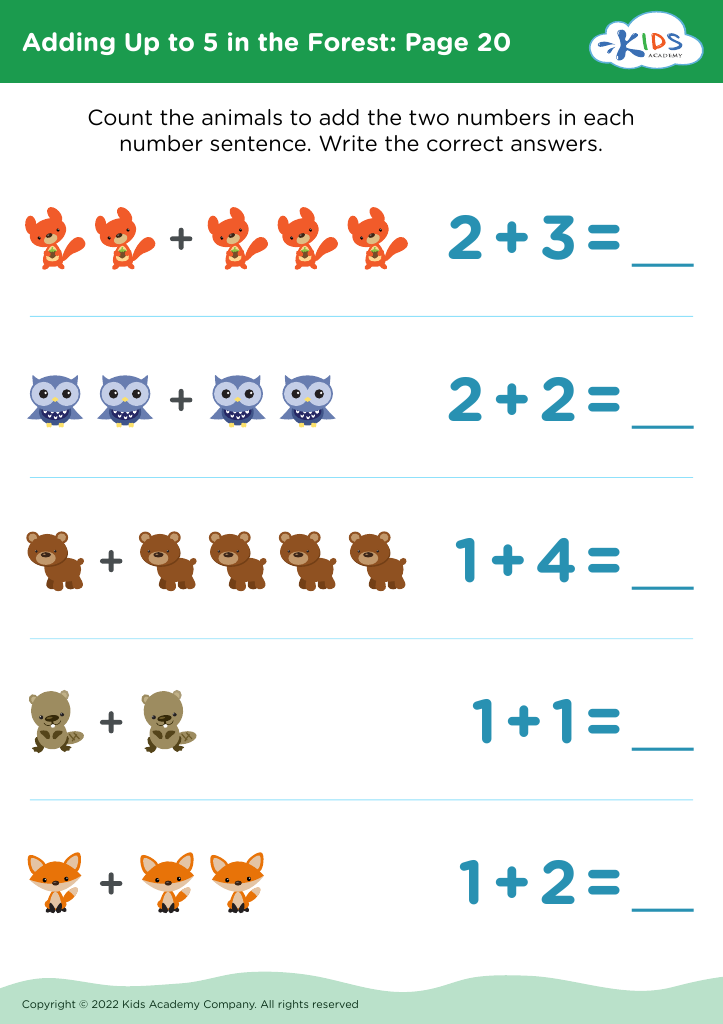
Discover our "Understanding Numerical Values Addition Worksheets" designed for children aged 3-5! These engaging printables help young learners grasp basic numerical concepts while developing essential pre-math skills. Through fun activities, kids will explore numbers and practice simple addition in a playful way. Each worksheet is tailored to enhance understanding of numerical values, laying a strong foundation for future math success. Perfect for parents and educators, these resources promote hands-on learning that keeps children motivated and excited about math. Download your worksheets today and watch your little ones thrive in their numerical adventures!








Understanding numerical values and addition in early childhood (ages 3-5) is crucial for foundational mathematical development. At this age, children are naturally curious and eager to explore concepts around numbers. Parents and teachers should care deeply about fostering this interest, as it significantly impacts a child’s future academic success.
Numerical values help children recognize quantities and develop counting skills, laying the groundwork for more complex math concepts. Addition, in particular, introduces children to the idea of combining quantities, which is integral to their overall cognitive development. Mastery of basic addition encourages problem-solving skills and logical thinking, essential for later learning in mathematics and other subjects.
Additionally, early exposure to numerical values and addition enhances social skills through collaborative play and activities. When children engage in group activities that involve counting or simple addition, they learn to communicate, share, and cooperate with their peers, fostering a sense of community.
Furthermore, establishing a positive attitude toward math at this stage can reduce math anxiety later in life, encouraging lifelong learning and curiosity. By emphasizing the importance of understanding numerical values and addition, parents and teachers can nurture a solid, confident, and enthusiastic foundation for a child’s educational journey.








