Understanding Quantities Addition Worksheets for Ages 3-5
38 filtered results
-
From - To
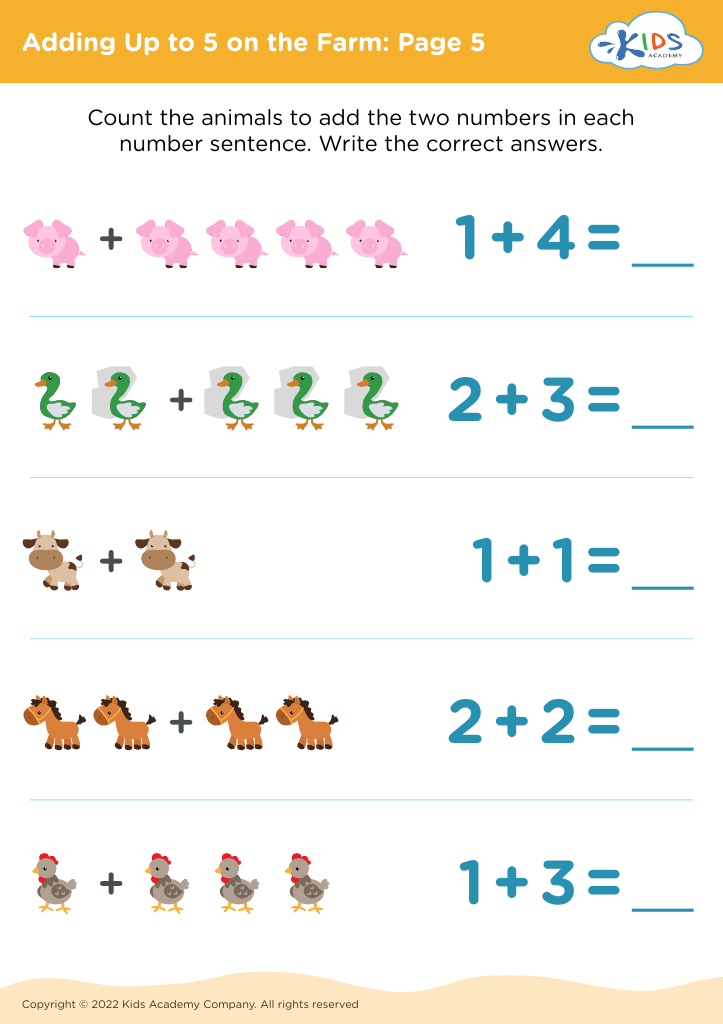
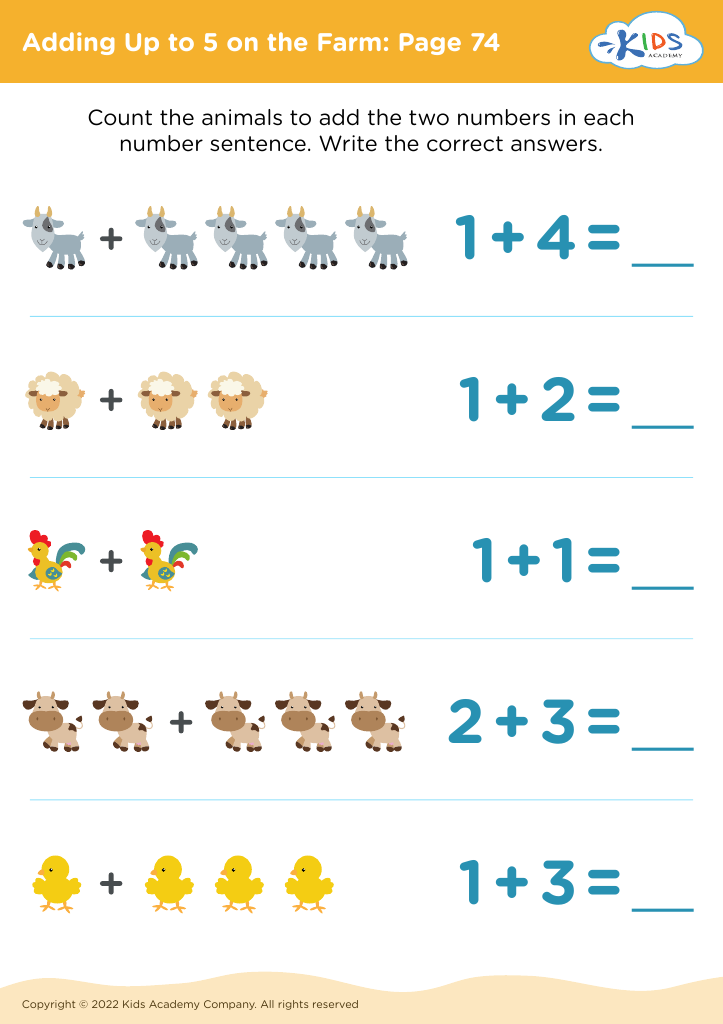
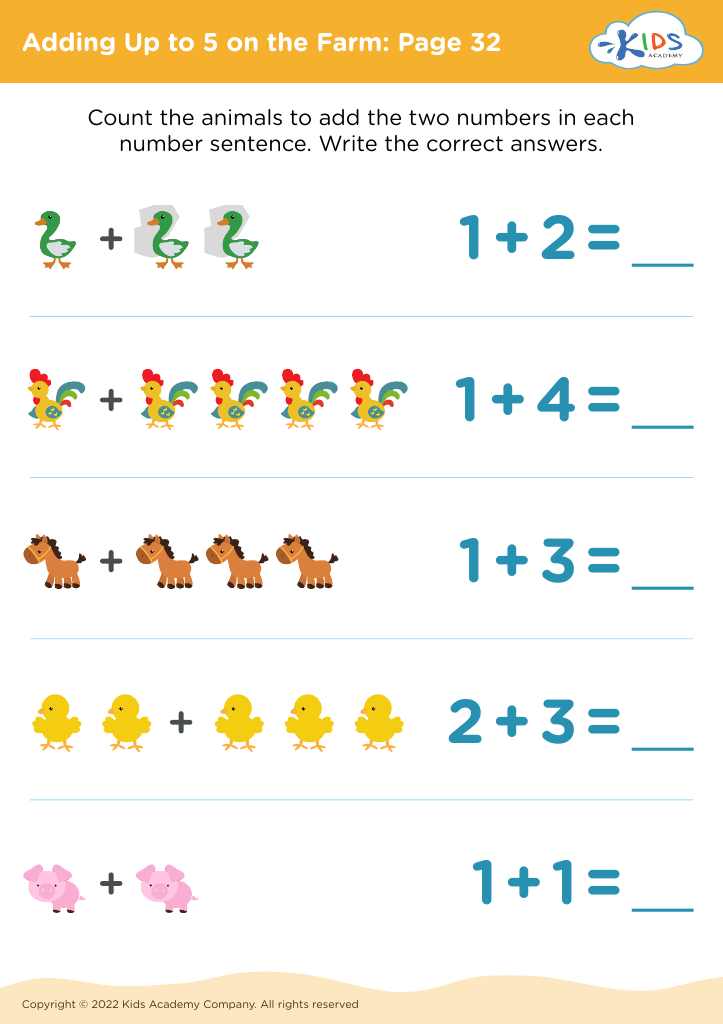
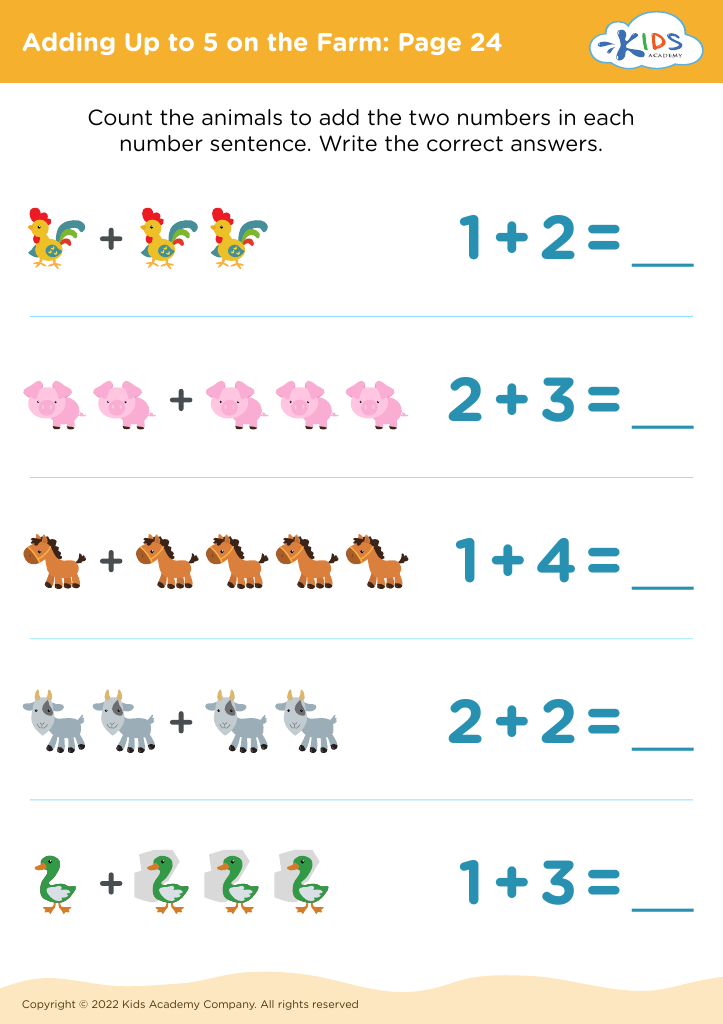
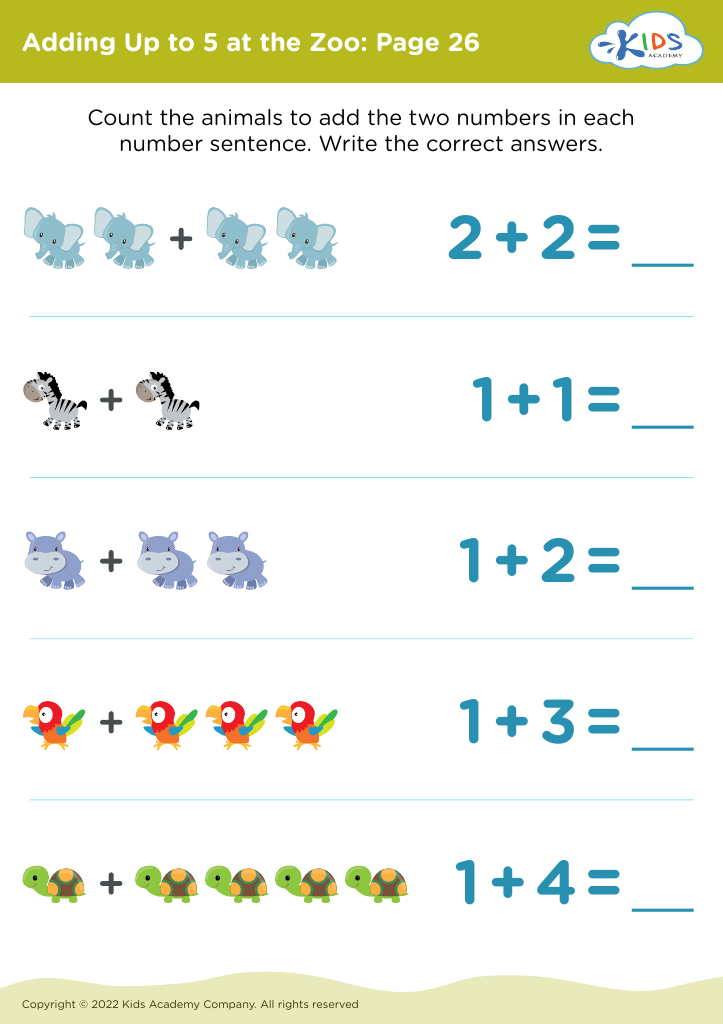
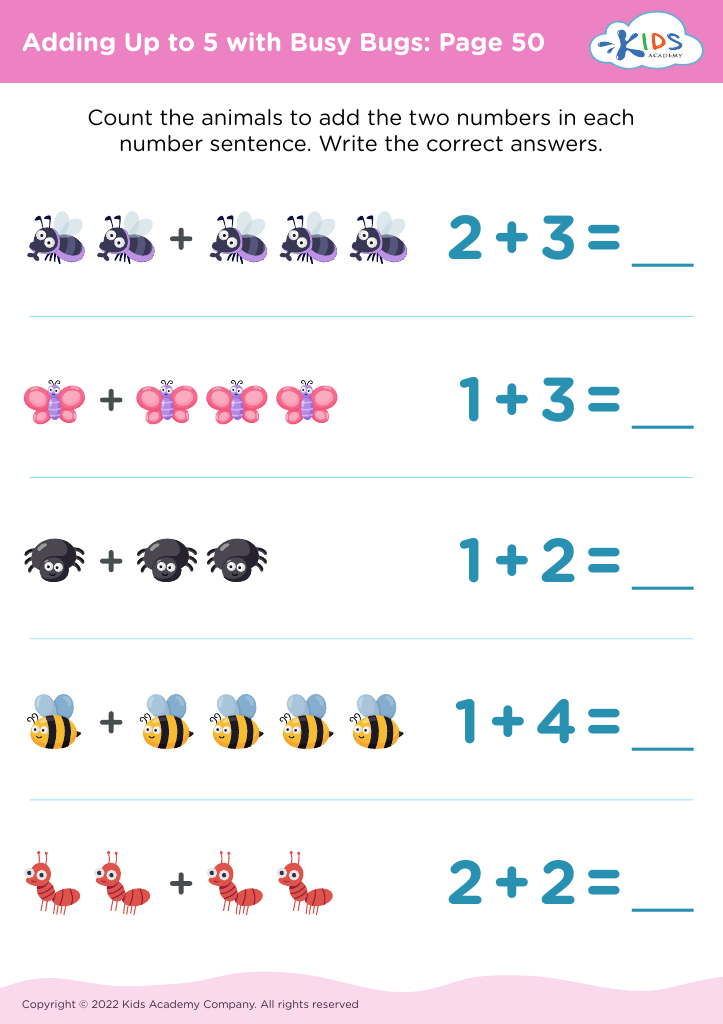
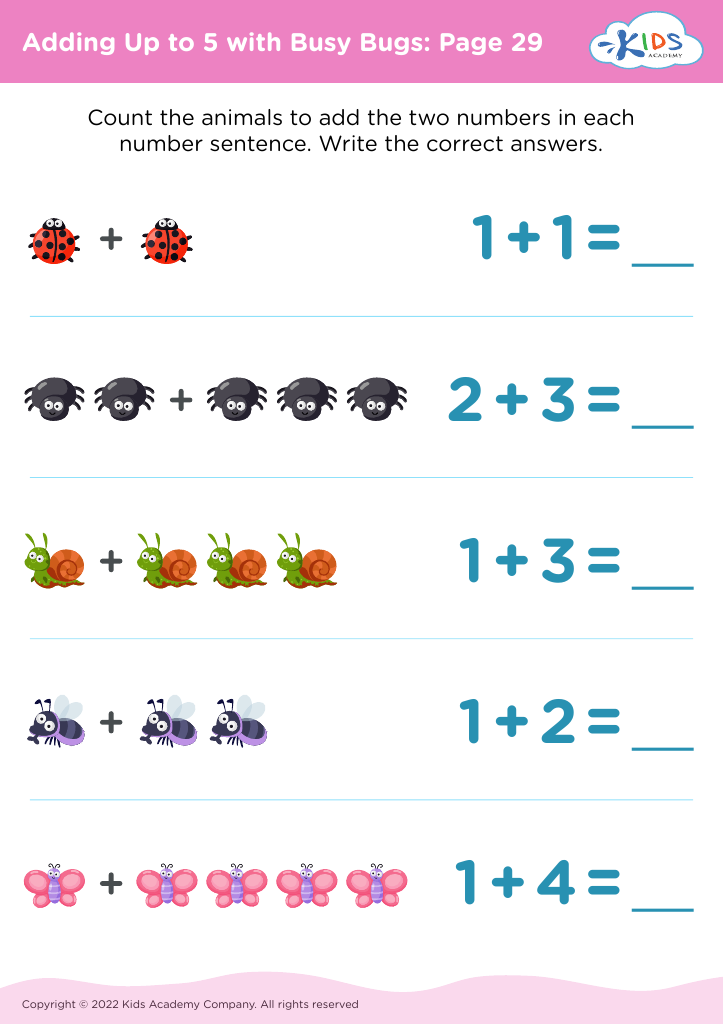
Introducing our "Understanding Quantities Addition Worksheets for Ages 3-5," designed to make early math learning fun and engaging. These worksheets help young learners grasp the basic concept of addition by connecting numerical values to different quantities. With visually appealing graphics and easy-to-follow exercises, children can develop secure foundational skills. Perfect for parents and teachers aiming to boost kids' numerical confidence, these worksheets utilize interactive and hands-on activities tailored to keep preschoolers and kindergartners excited about math. Equip your little one with the tools needed for early math success by integrating these essential resources into their learning routine.
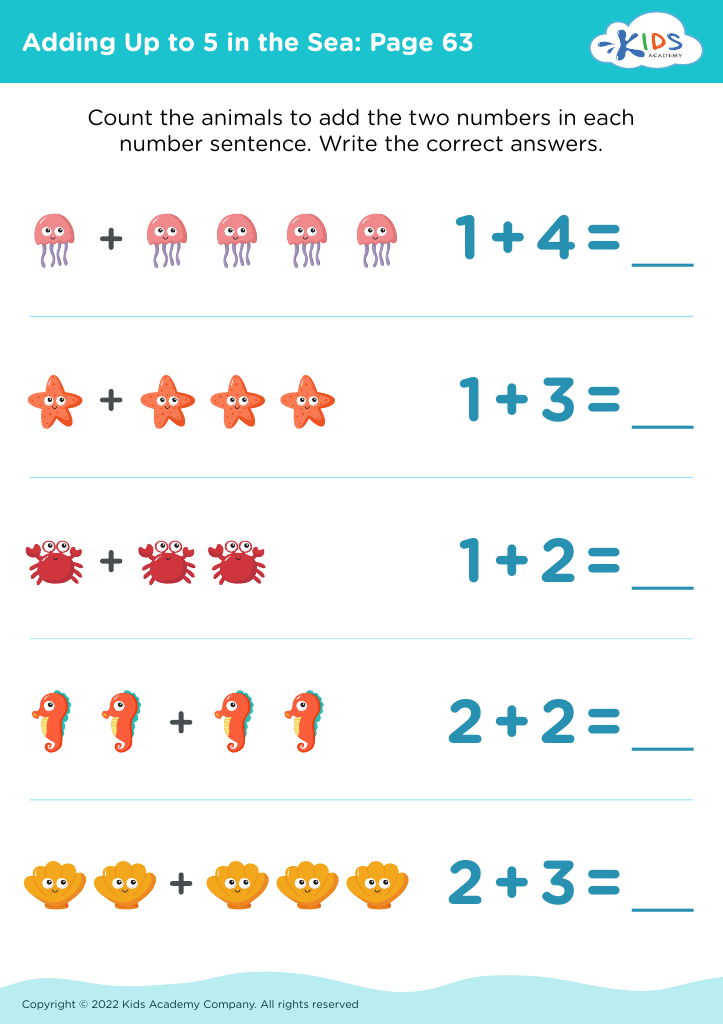
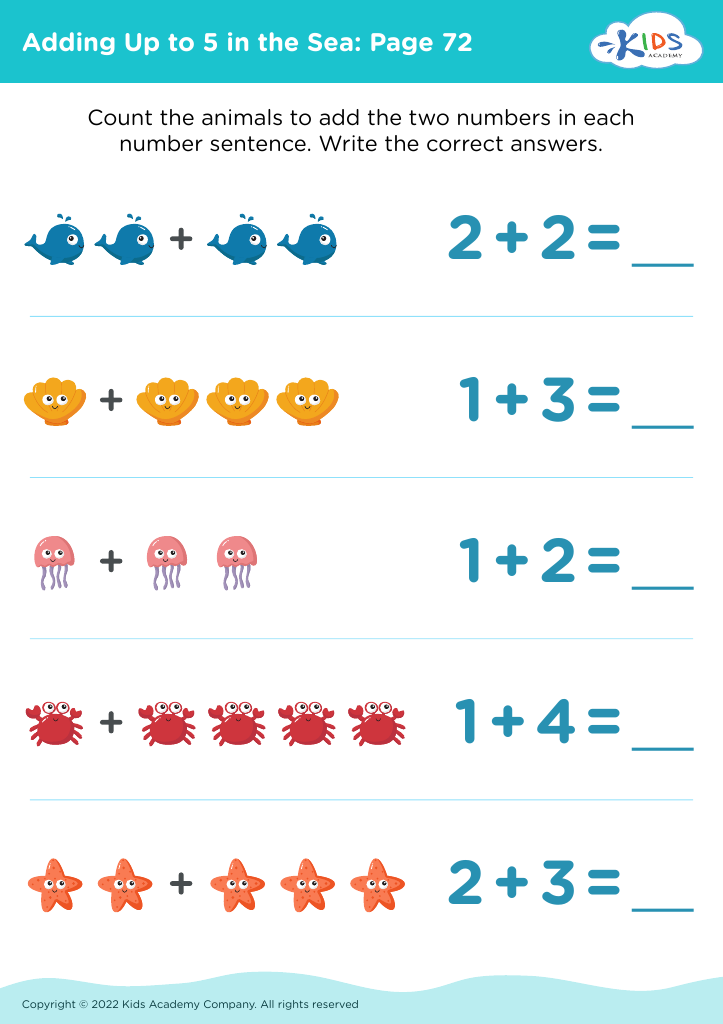
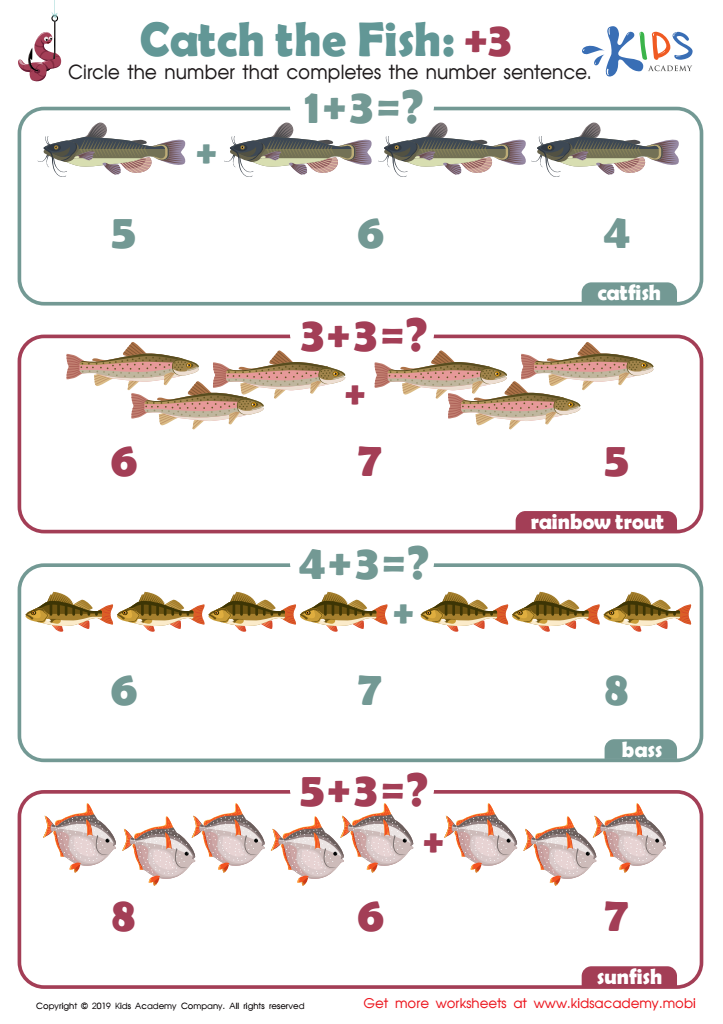
Catch the Fish: +3 Worksheet
 Assign to My Students
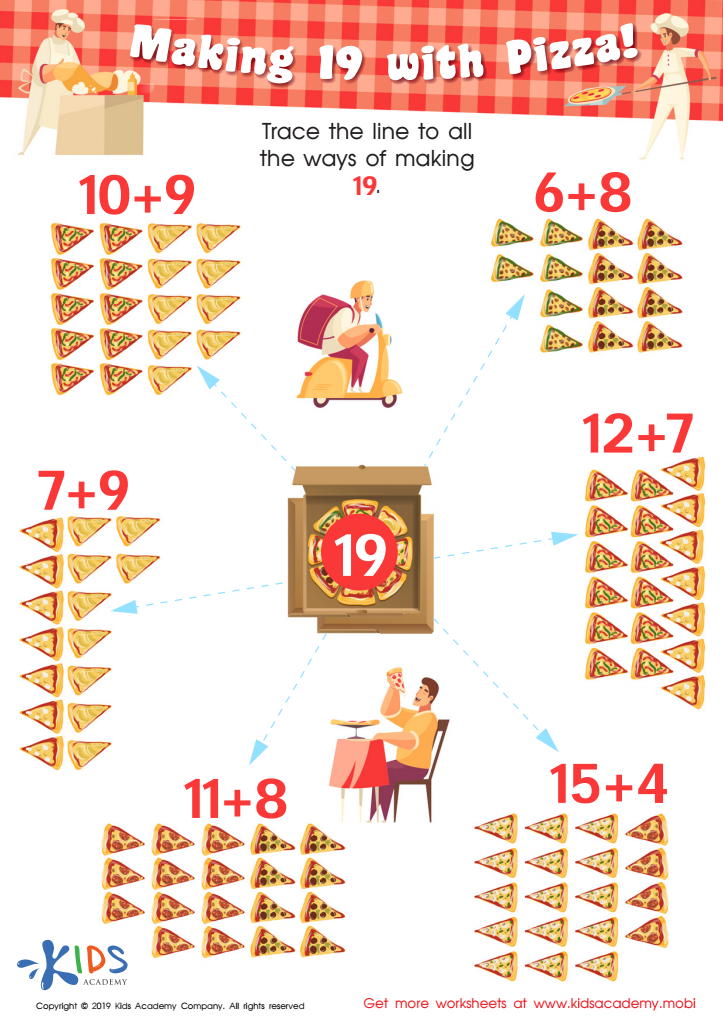
Making 19 with Pizza! Worksheet
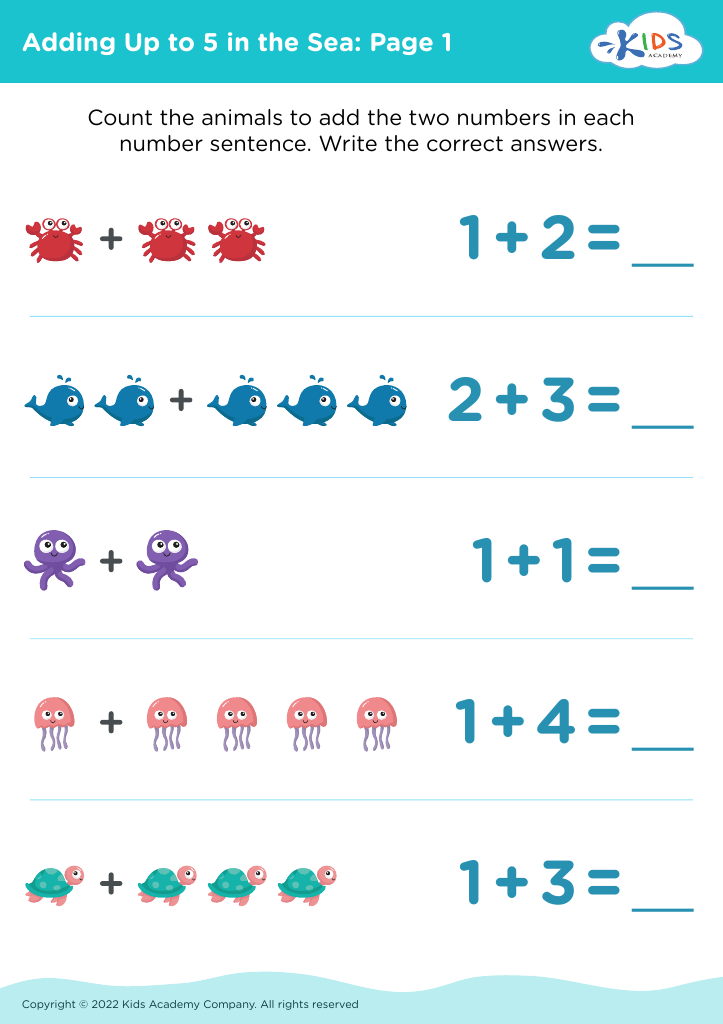
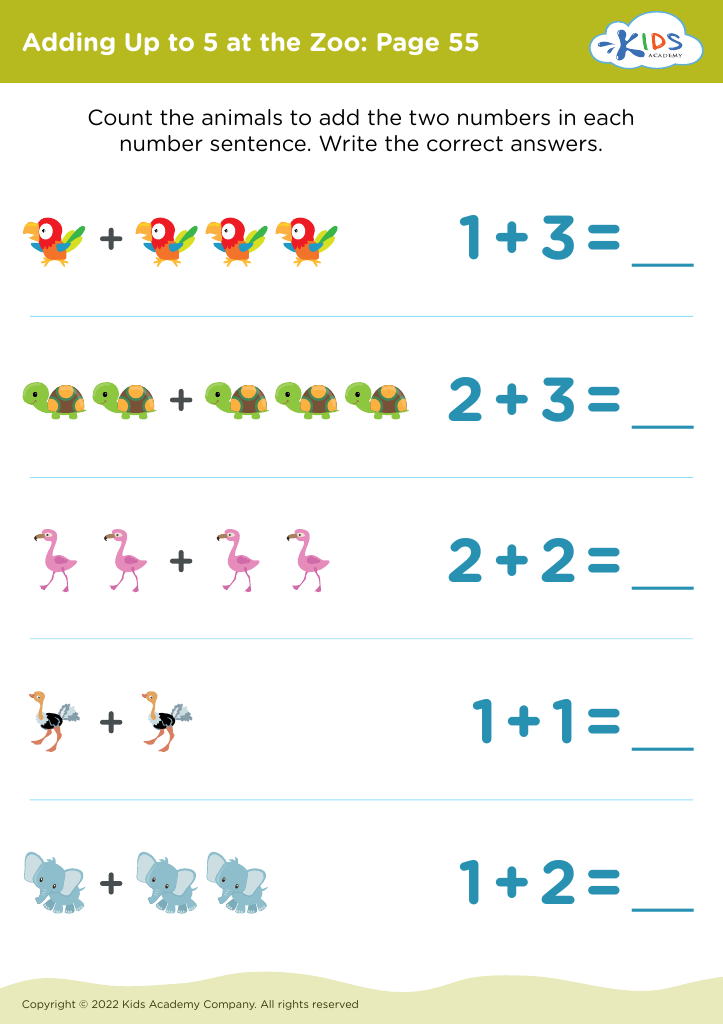
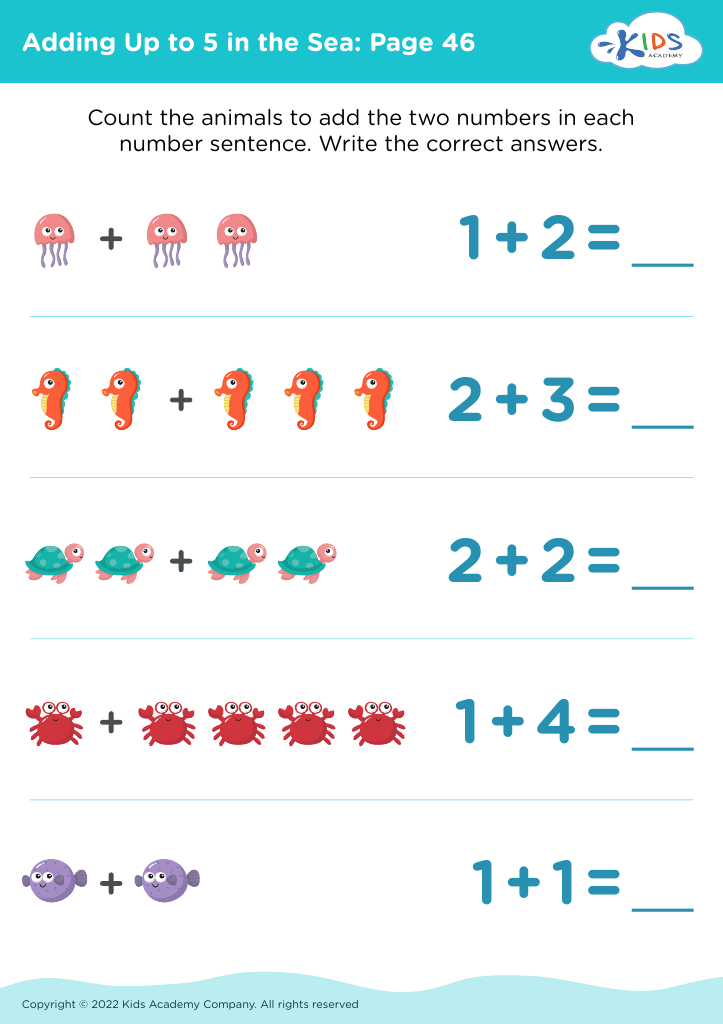
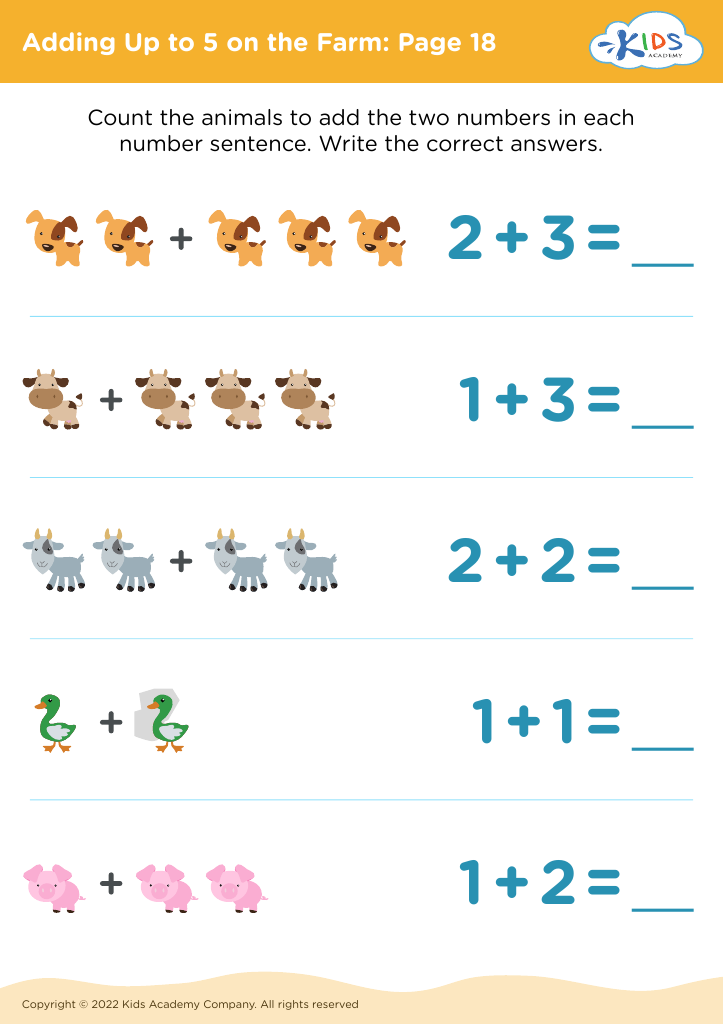
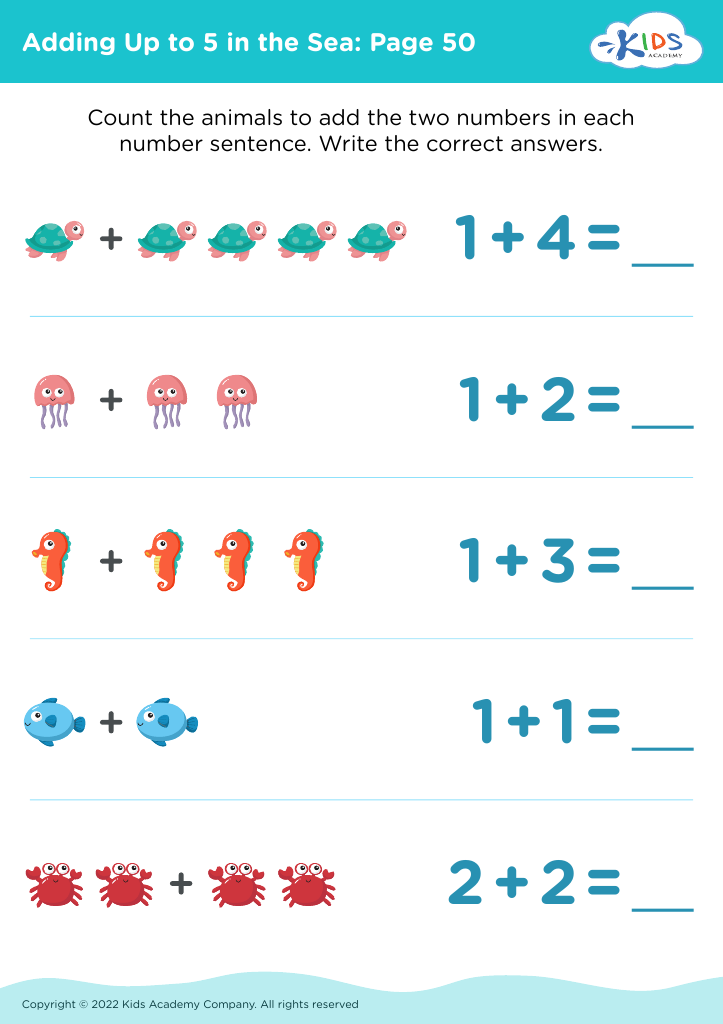
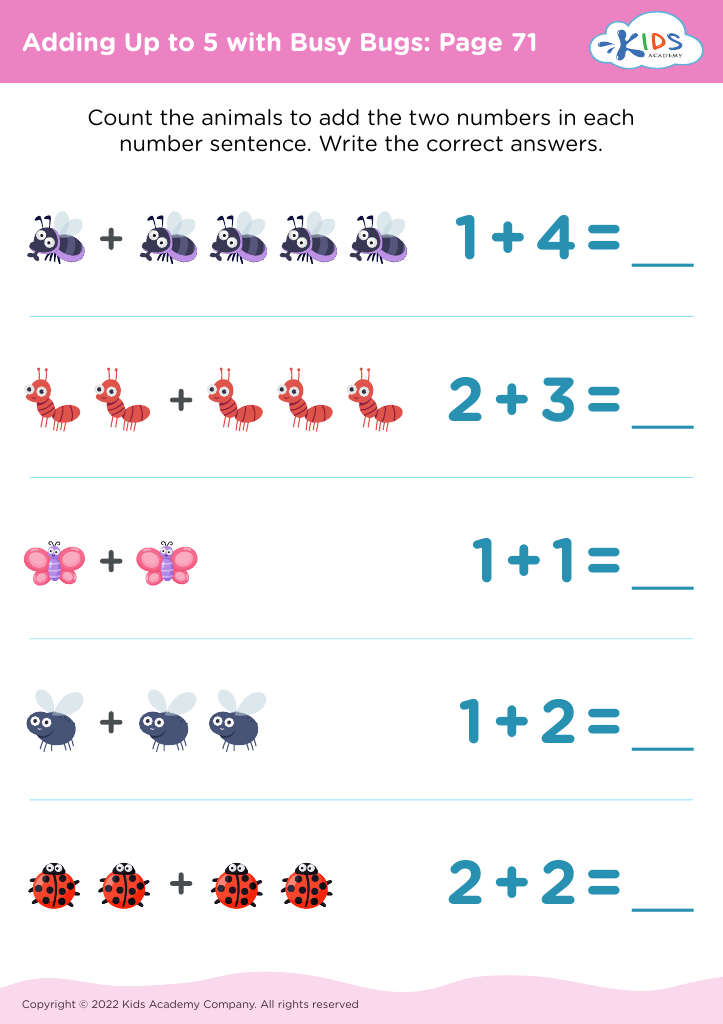
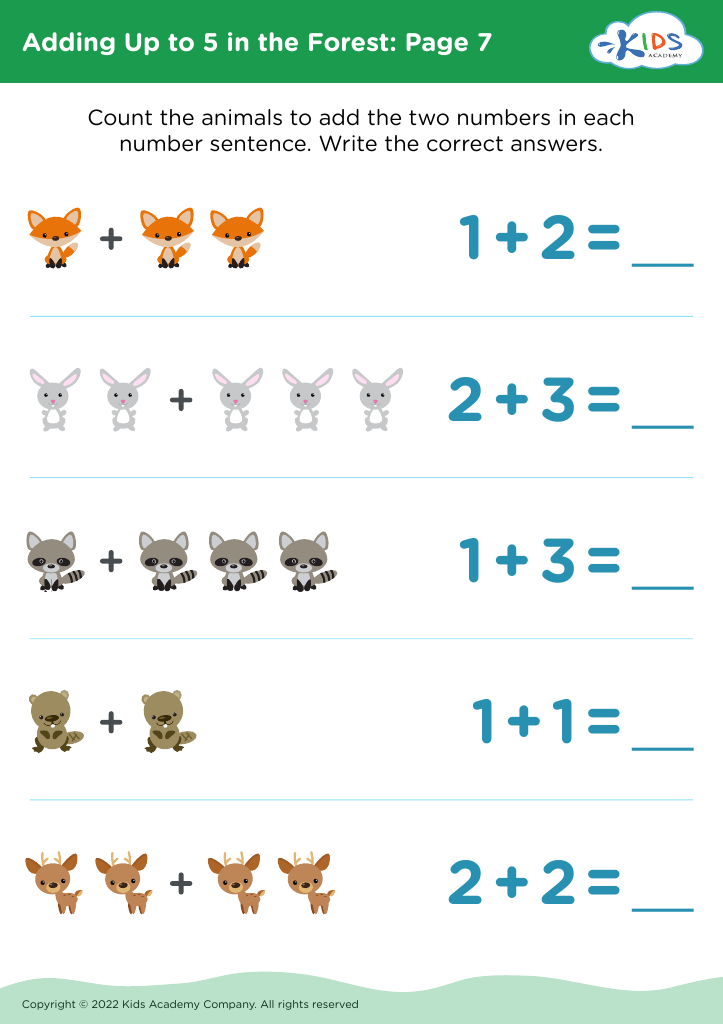
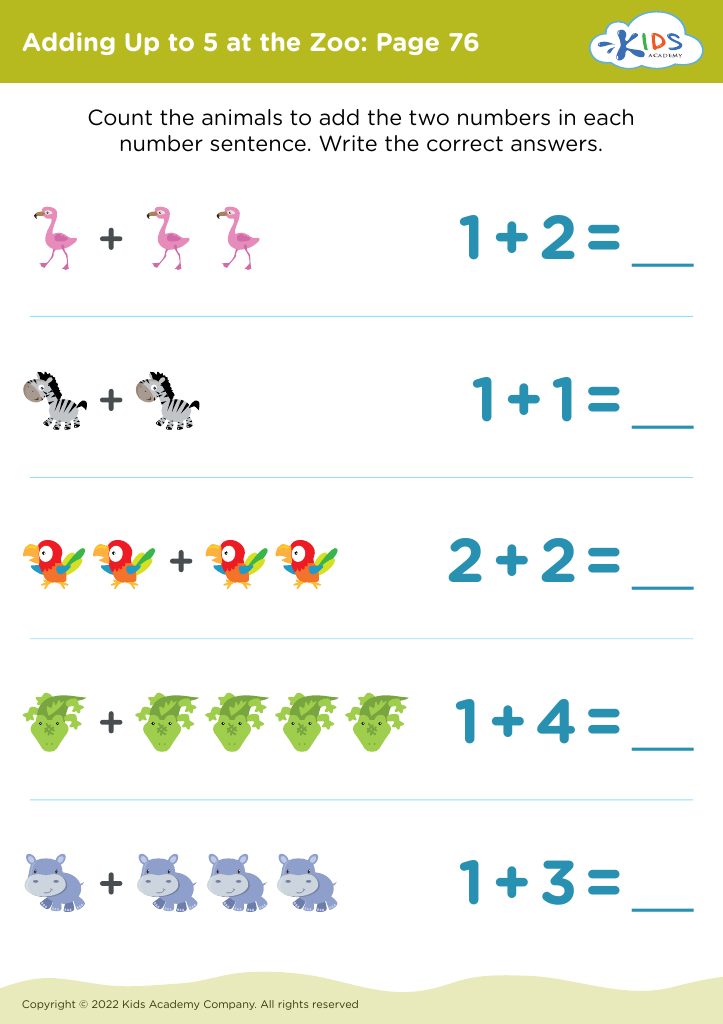
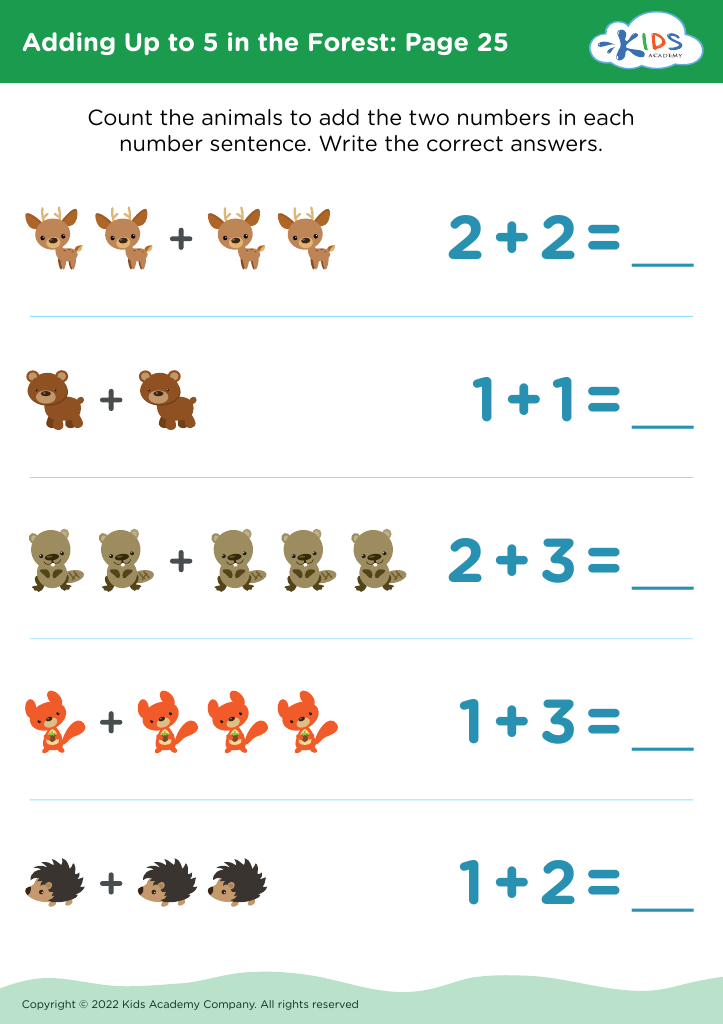
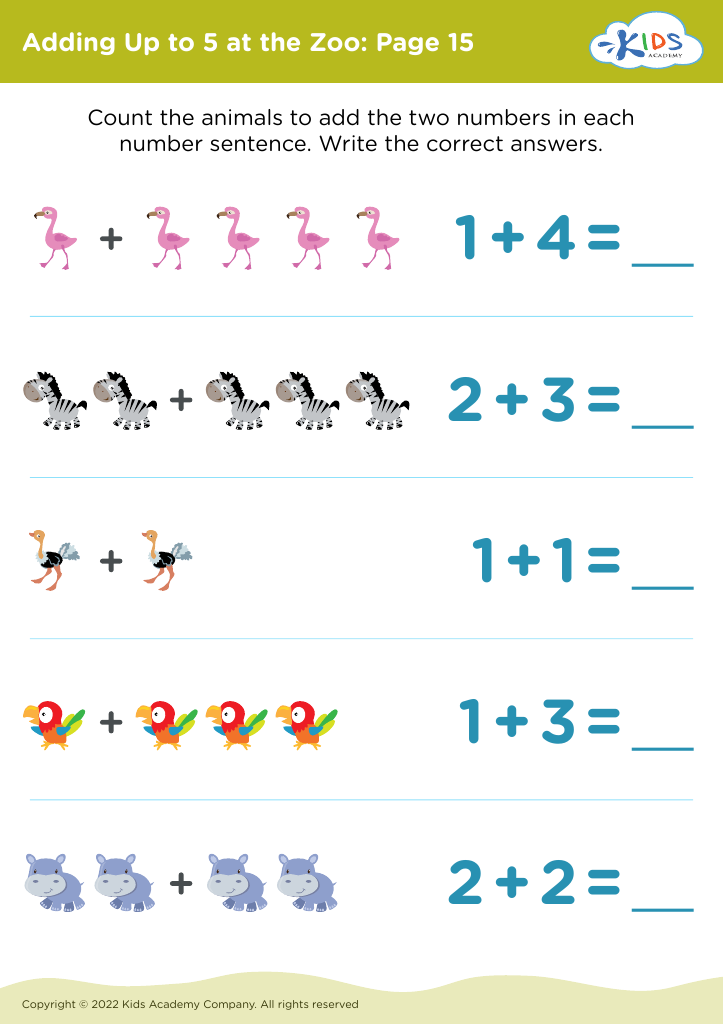
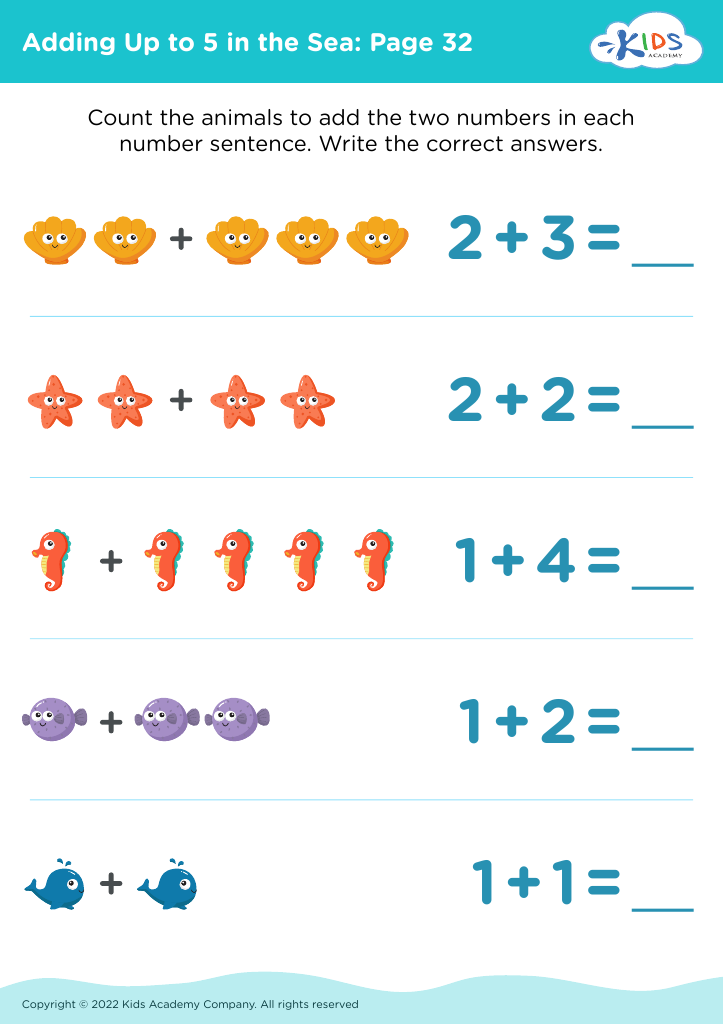
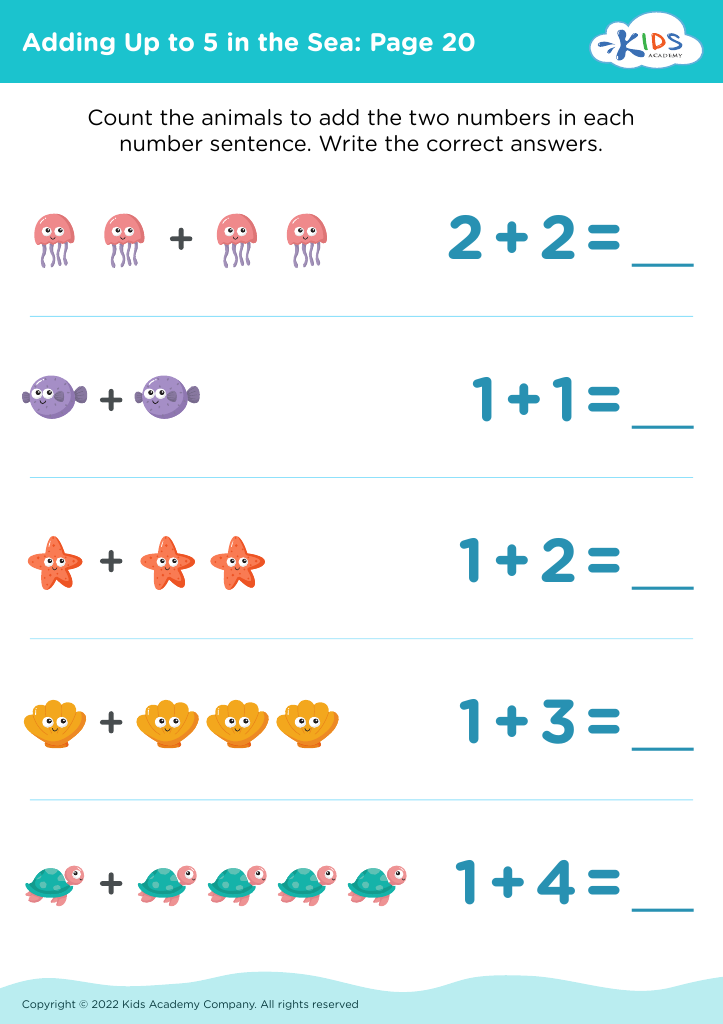








Understanding quantities and addition at an early age (3-5 years) is foundational for children's cognitive development and later academic success. At this stage, kids are highly receptive to new concepts, and introducing them to basic math can stimulate their logical thinking and problem-solving abilities.
Firstly, early exposure to quantities and addition helps children develop number sense, the intuitive understanding of numbers and their relationships. This skill is crucial for everyday tasks and future mathematical learning. Recognizing quantities enables kids to compare, sequence, and classify objects, which are essential for higher-level math concepts.
Secondly, grasping basic addition teaches children to understand part-whole relationships, laying the groundwork for more complex operations like subtraction, multiplication, and division. It fosters their analytical skills as they learn to solve simple problems, promoting confidence and a positive attitude towards mathematics.
Furthermore, integrating math learning with day-to-day activities, such as counting toys or adding fruits, makes it relatable and engaging. This not only strengthens their early math skills but also enhances their language, memory, and concentration.
For parents and teachers, nurturing these skills in children ages 3-5 sets a supportive learning environment, encouraging a natural curiosity and predisposition towards learning. This early intervention can lead to greater academic achievements and a lifelong interest in discovery and problem-solving.








