Understanding Sequences Addition Worksheets for Ages 3-5
3 filtered results
-
From - To
Unlock the magic of math early! Our "Understanding Sequences Addition Worksheets for Ages 3-5" are expertly designed to boost children's foundational math skills through fun, engaging activities. While they learn to recognize patterns and sequences, your little ones will also enhance their addition abilities. Vibrant illustrations and easy-to-follow exercises keep preschoolers excited and eager to learn. Perfect for parents and teachers, these worksheets help young learners develop critical thinking and problem-solving skills. Dive into our collection today and watch your child’s confidence in math flourish! Ideal for preschool and kindergarten readiness.
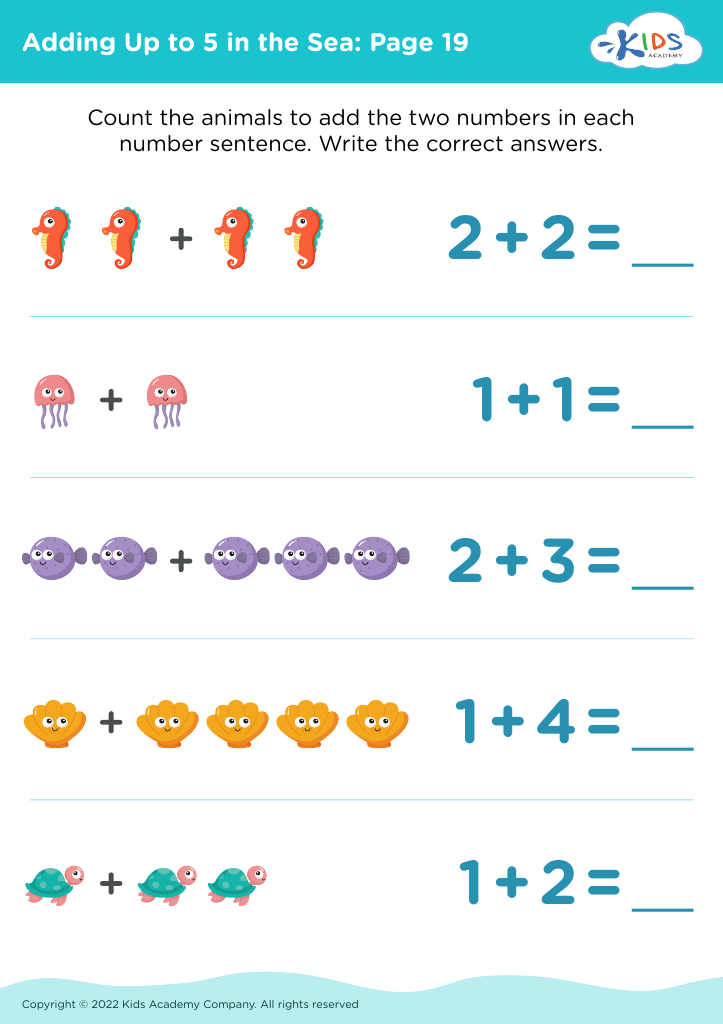
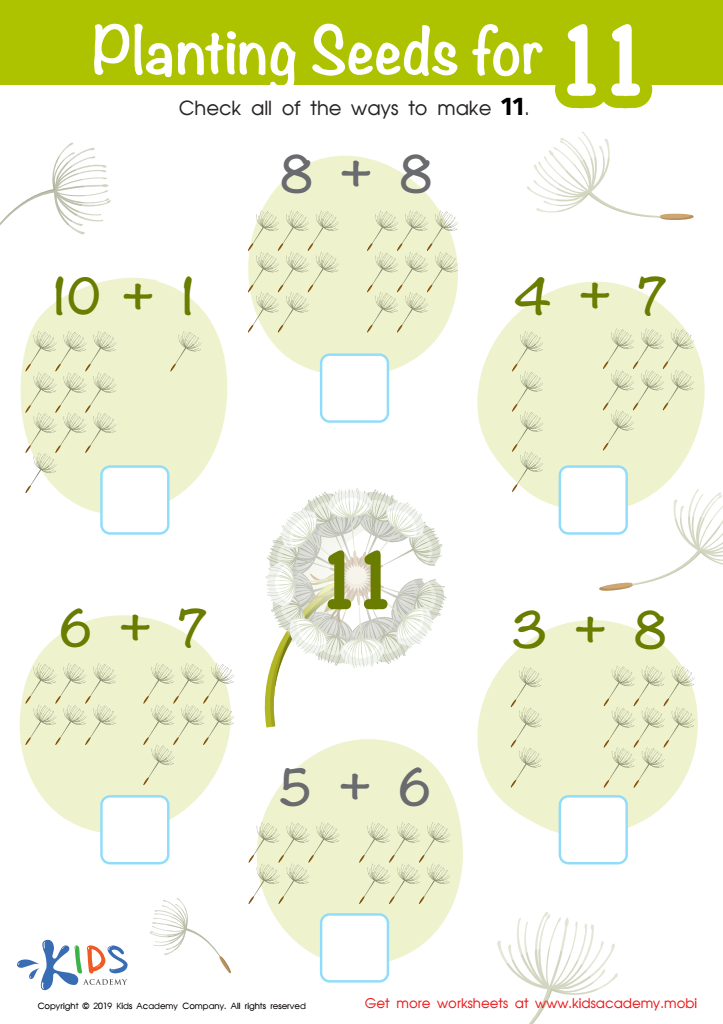
Planting Seeds for 11 Worksheet
 Assign to My Students
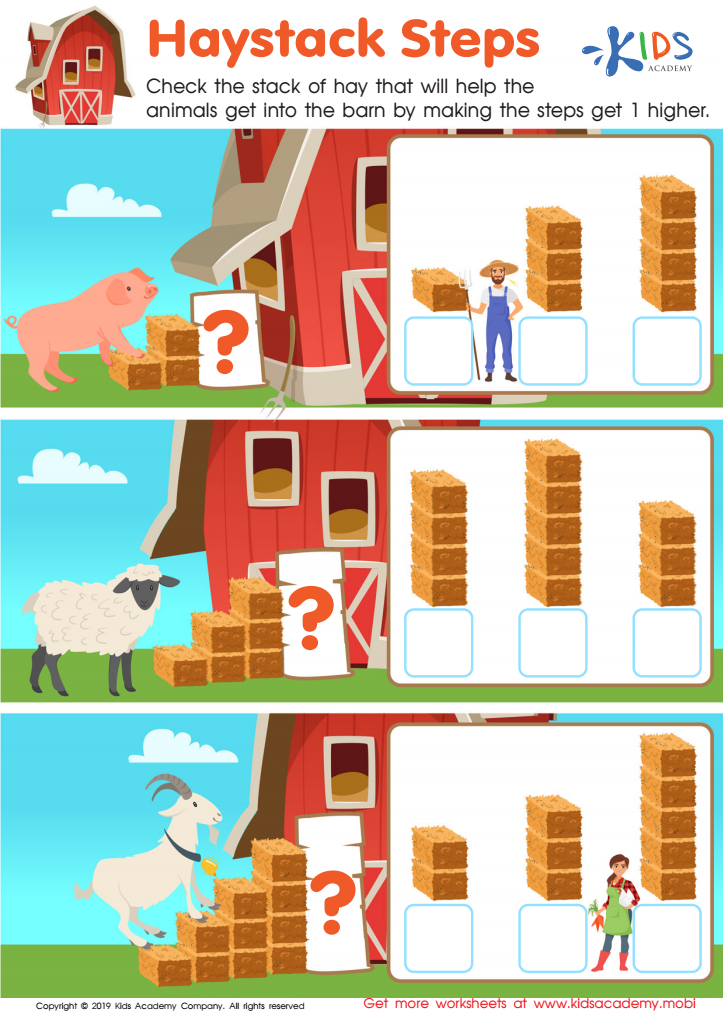
Haystack Steps Worksheet








Understanding sequences addition for ages 3-5 is crucial because it lays the foundation for essential mathematical concepts, cognitive development, and problem-solving skills. At this tender age, children's brains are highly receptive to new information, and introducing basic sequencing and addition in a fun, engaging way sets the stage for future learning.
Sequencing helps children understand order and predictability, crucial components of logic and critical thinking. For instance, when kids learn about daily routines or story sequences, they cultivate an ability to order events and anticipate outcomes, skills that are transferable to math problems. Understanding addition early introduces the concept of combining quantities, reinforcing the understanding that numbers represent quantities and can be manipulated.
Early exposure to these concepts promotes numerical fluency, enabling children to recognize patterns, develop spatial awareness, and establish strong number sense. It aids cognitive growth by encouraging children to follow steps logically to solve problems, fostering patience and attention to detail.
From a social-emotional standpoint, early mastery of sequencing and addition promotes confidence and fosters a positive attitude towards math. Interactive and hands-on activities make learning enjoyable, creating a balanced educational experience that combines cognitive skills with playfulness. Thus, parents and teachers play a significant role in shaping a child's mathematical mindset and overall academic success by emphasizing understanding sequences and addition at an early age.








