
Visual perception Addition Worksheets for Ages 3-5
13 filtered results
Difficulty Level
Grade
Age
-
From - To
Subject
Activity
Standards
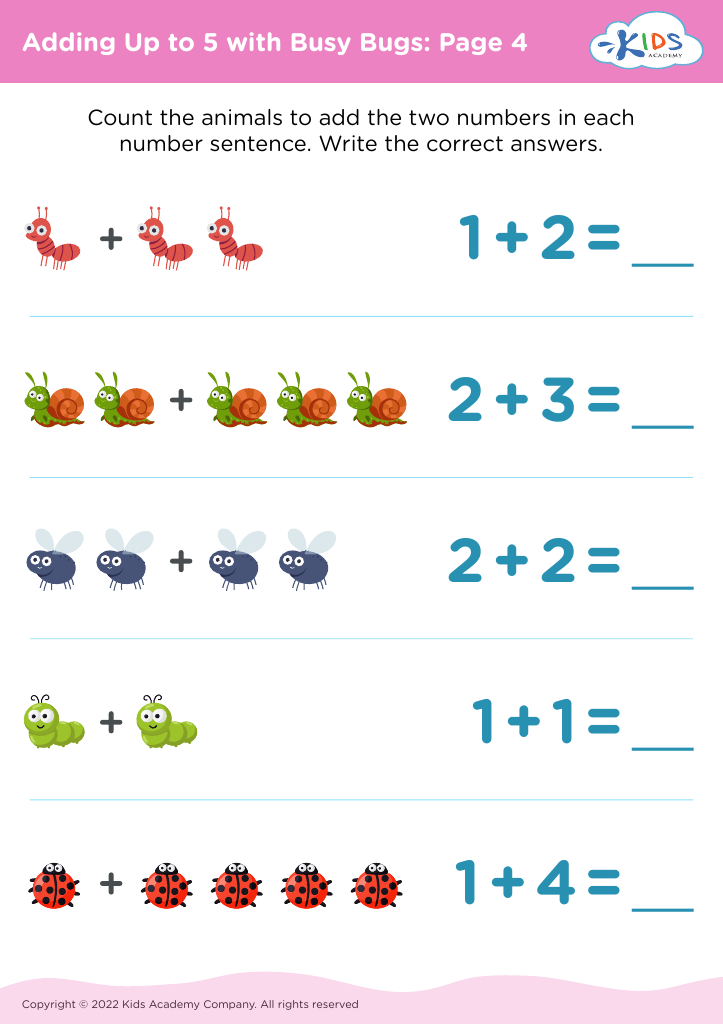
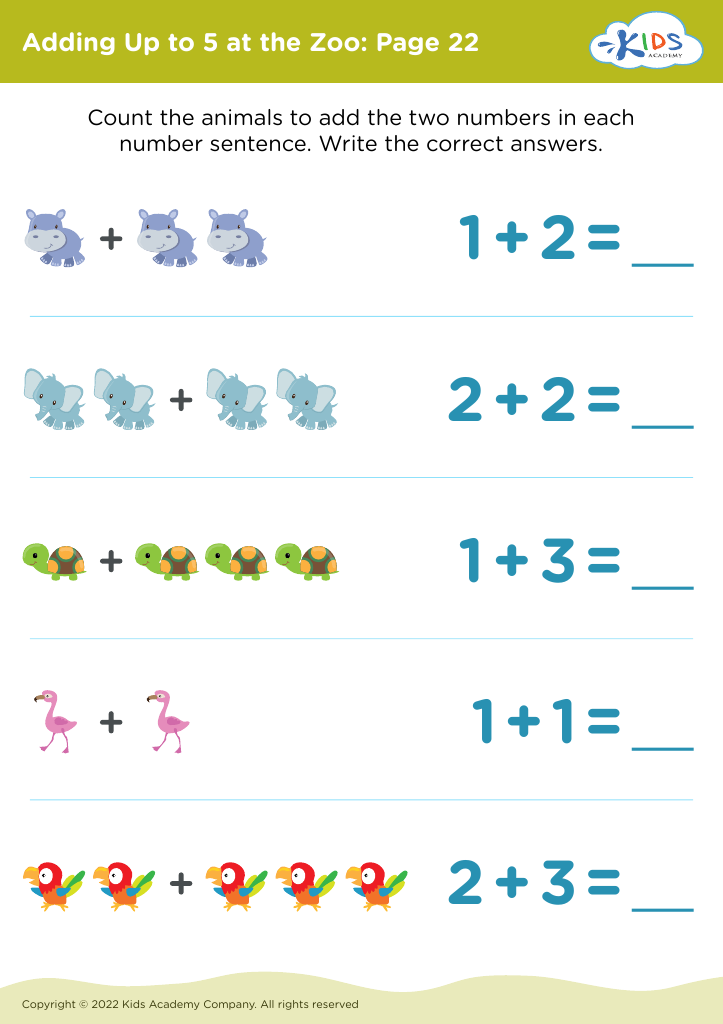
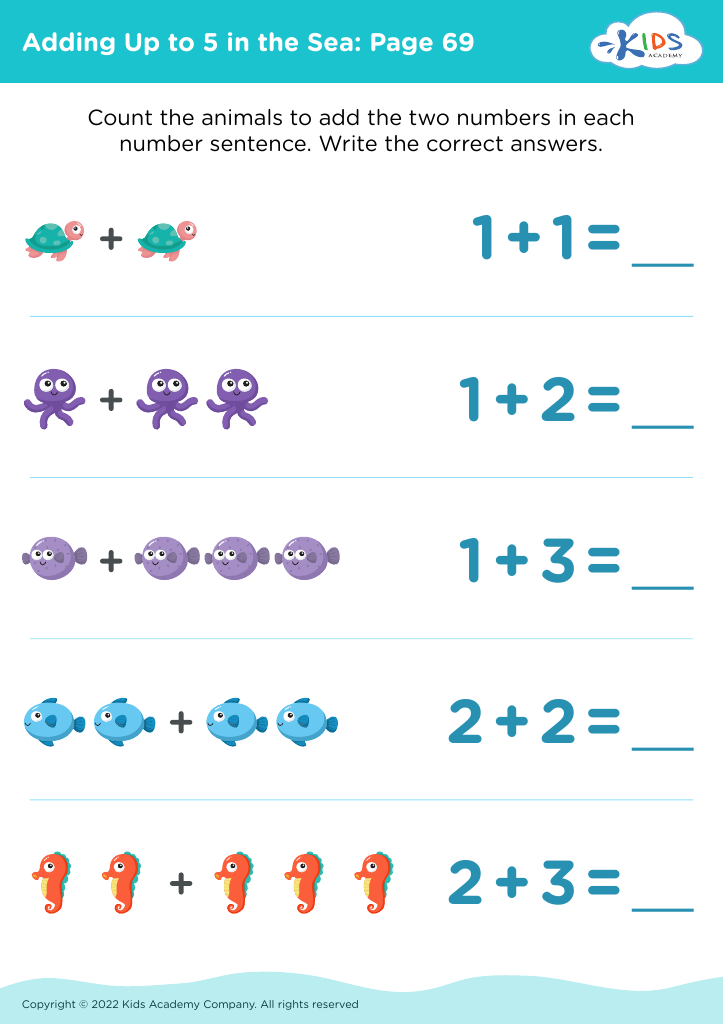
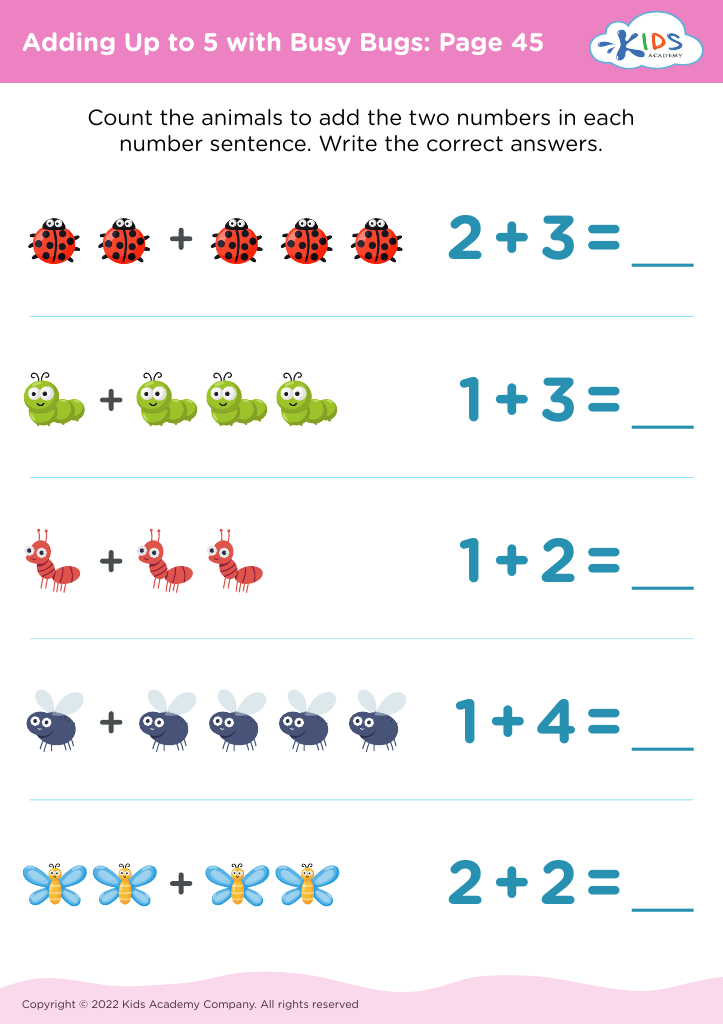
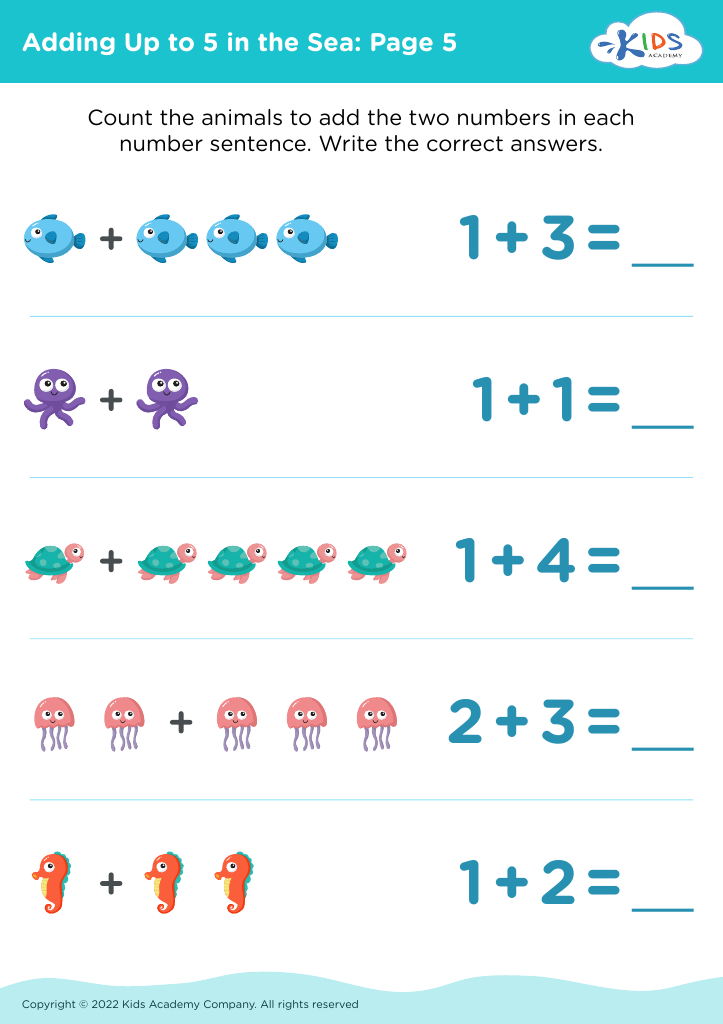
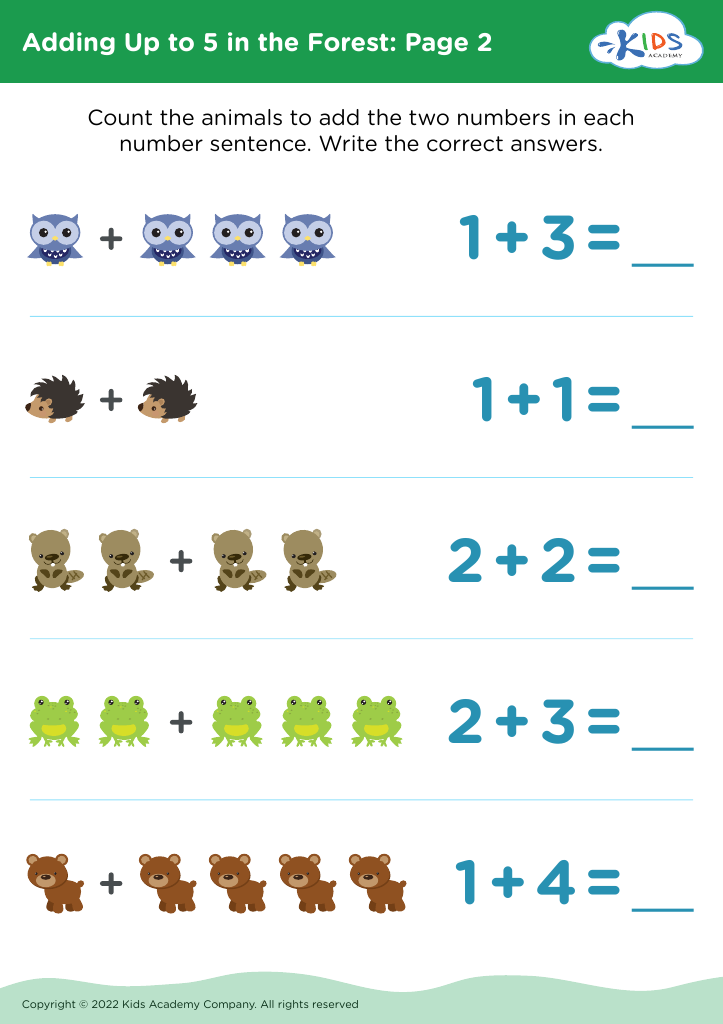
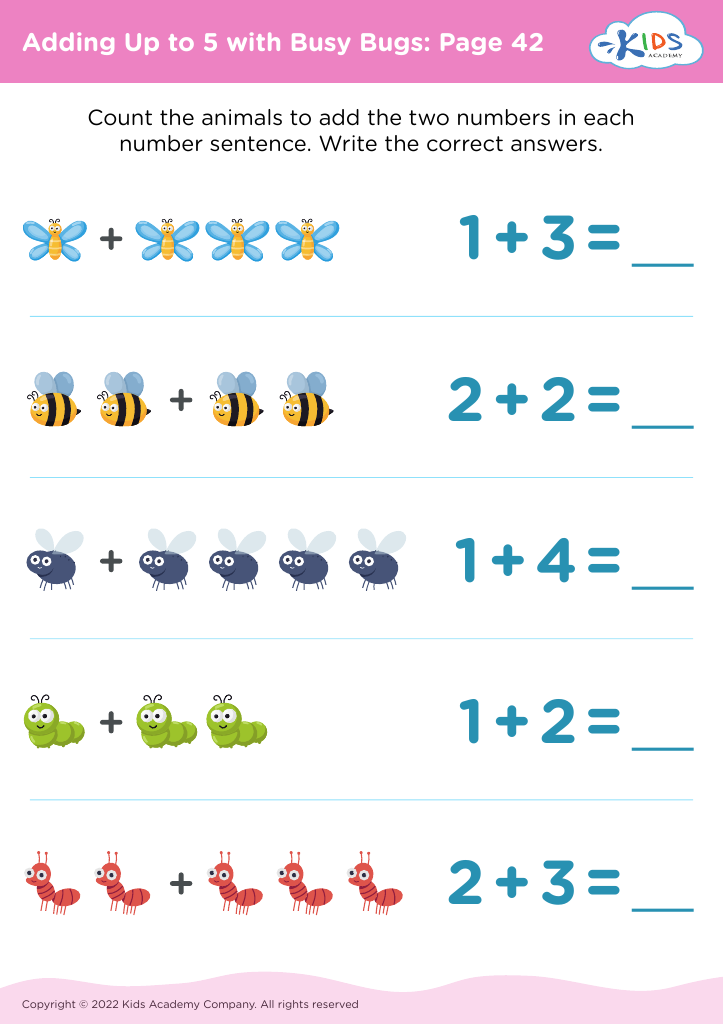
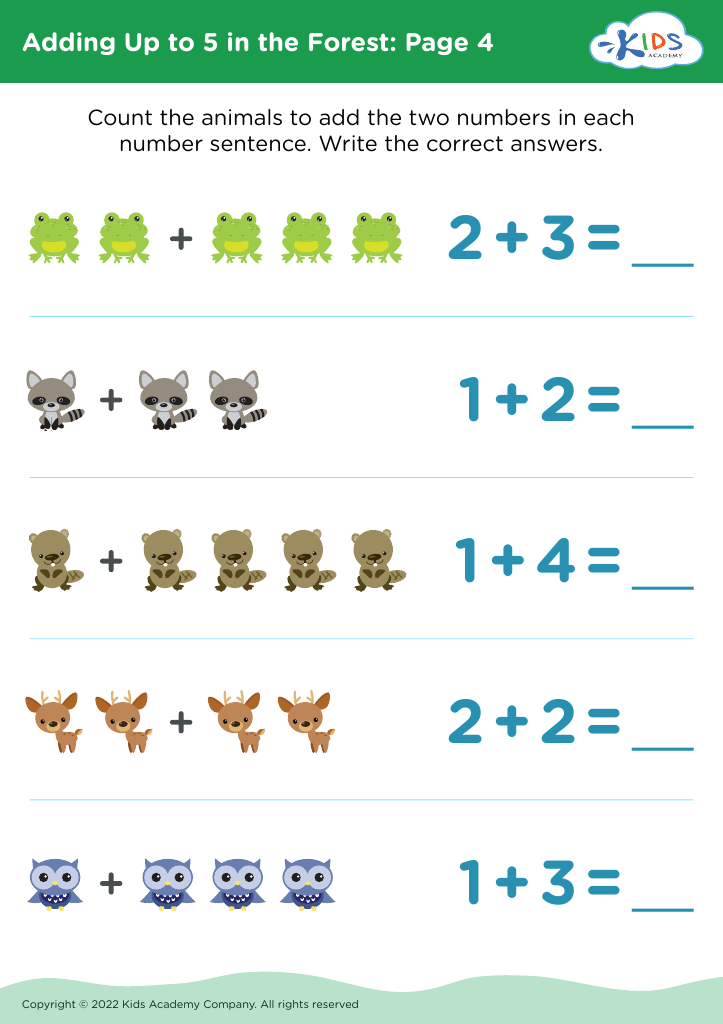
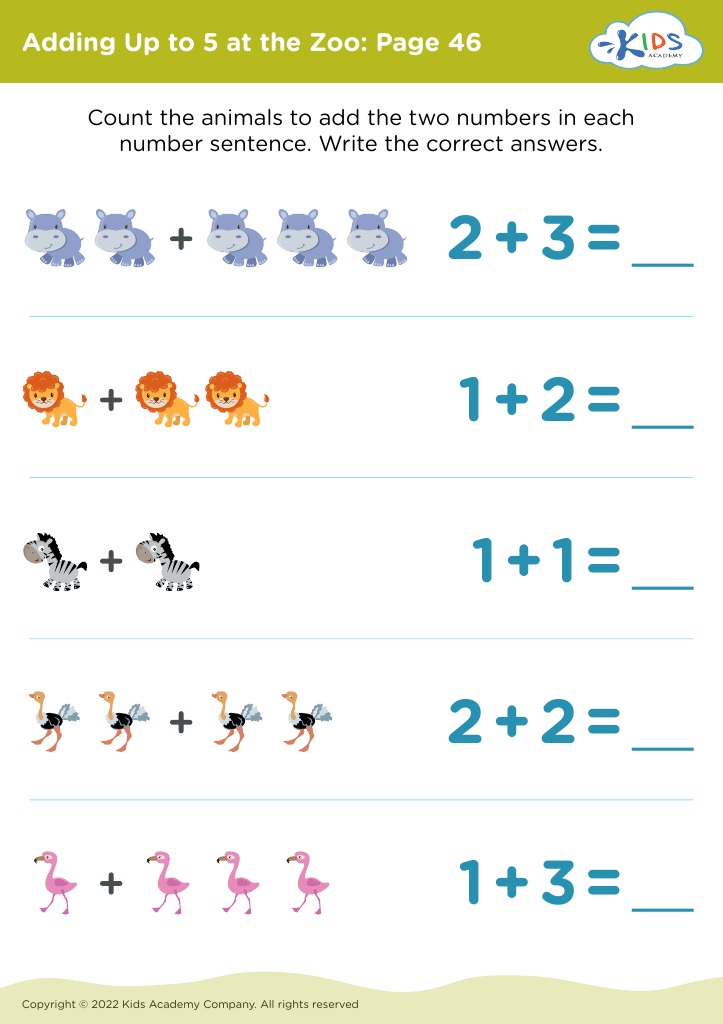
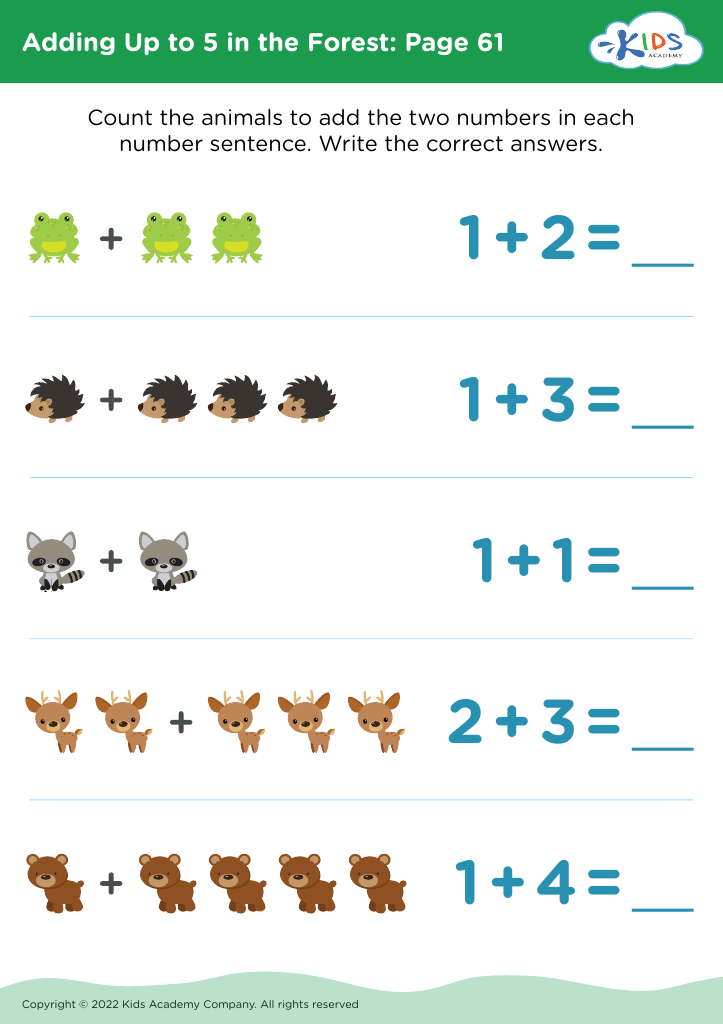
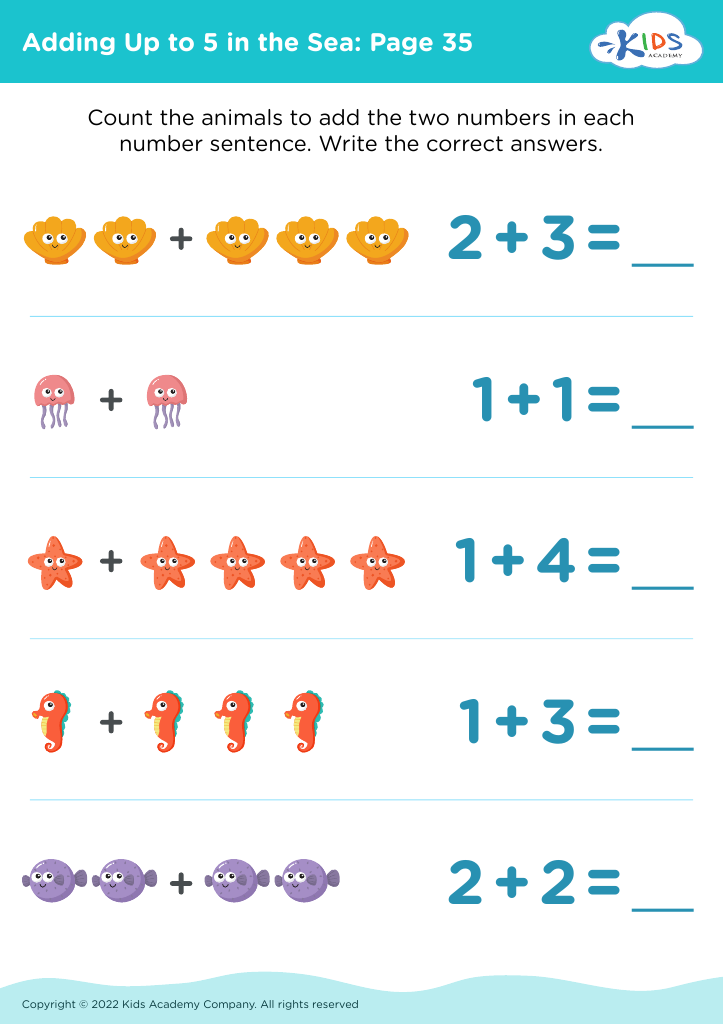
Boost your child's mathematical skills with our "Visual Perception Addition Worksheets for Ages 3-5"! These engaging worksheets are designed to enhance visual recognition and thinking skills, laying a strong foundation for early math learning. Through fun activities, kids will explore basic addition concepts while improving their ability to visualize numbers and understand quantity relationships. Our carefully crafted exercises cater to young learners, making math enjoyable and accessible. By integrating visual perception into early math practice, your child will develop confidence and fluency in addition. Start their math journey today and watch their love for learning flourish!
Favorites
With answer key
Interactive
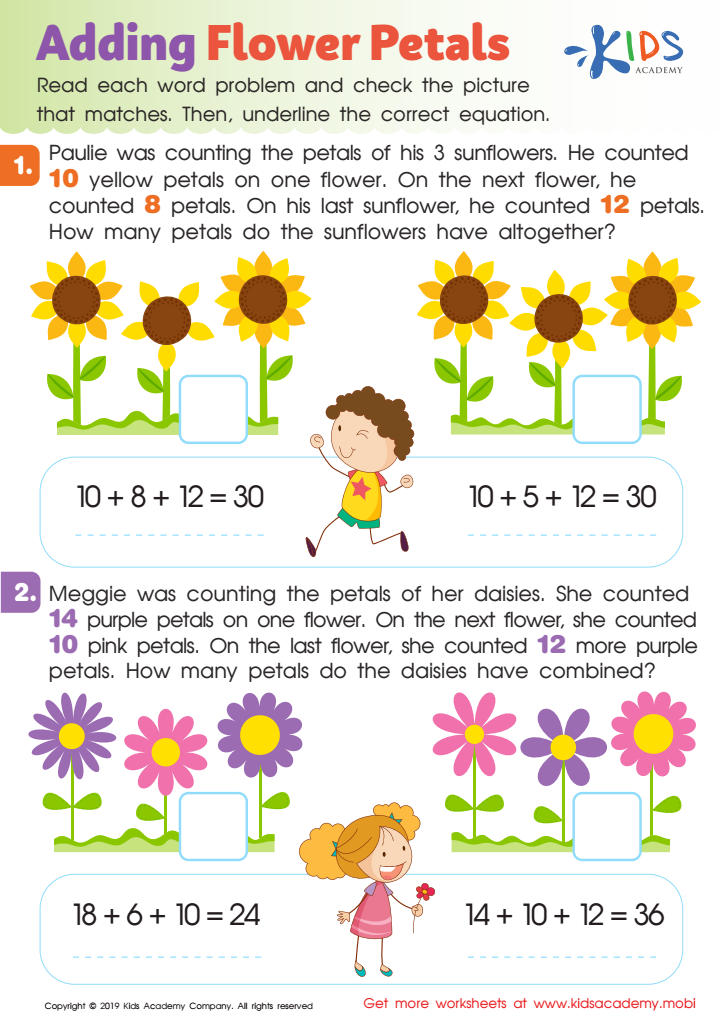
Adding Flower Petals Worksheet
This free worksheet helps little mathematicians learn to understand word problems. They'll read each one and match it to the corresponding picture. Important info is highlighted, teaching kids to look for key info when solving problems. Then they'll underline the correct number equation that matches the picture. A great way to practice problem-solving skills!
 Assign to My Students
Adding Flower Petals Worksheet
Worksheet
Join Kids Academy for Free
Who is primarily going to use this learning content?








Visual perception is crucial for children aged 3-5, as it lays the foundation for their learning and development. It encompasses the ability to interpret and understand visual information, which is essential for many cognitive tasks. For parents and teachers, fostering visual perception skills can enhance a child's capacity to recognize shapes, colors, and sizes, which are fundamental concepts in early mathematics, including addition.
When children can easily differentiate between visual elements, they are better equipped to engage in activities like counting and simple addition. These skills not only aid in academic success but also support critical thinking and problem-solving abilities. Furthermore, strong visual perception helps with tasks such as reading, writing, and navigating their environment—skills that are instrumental for lifelong learning.
Additionally, visual perception activities can be incorporated into playful, interactive learning environments, making education enjoyable and meaningful. Encouraging exploration through games, puzzles, and hands-on activities can reinforce these skills while fostering a love for learning. By nurturing visual perception, parents and teachers can create an enriching educational experience that prepares children for future academic challenges and engages them in the learning process.








