Visual Perception Skills Addition Worksheets for Ages 3-5
5 filtered results
-
From - To
Boost your child's math proficiency with our "Visual Perception Skills Addition Worksheets" designed for ages 3-5. These engaging worksheets seamlessly blend fun with fundamental math skills, fostering strong visual perception and counting abilities. Featuring colorful illustrations and interactive exercises, they captivate young learners' attention, making early math practice enjoyable and effective. Perfect for preschool to kindergarten, our worksheets support children in recognizing patterns, understanding basic addition, and developing fine motor skills. Discover an exciting, educational journey tailored to spark curiosity and build a solid foundation in math through our expertly crafted resources.
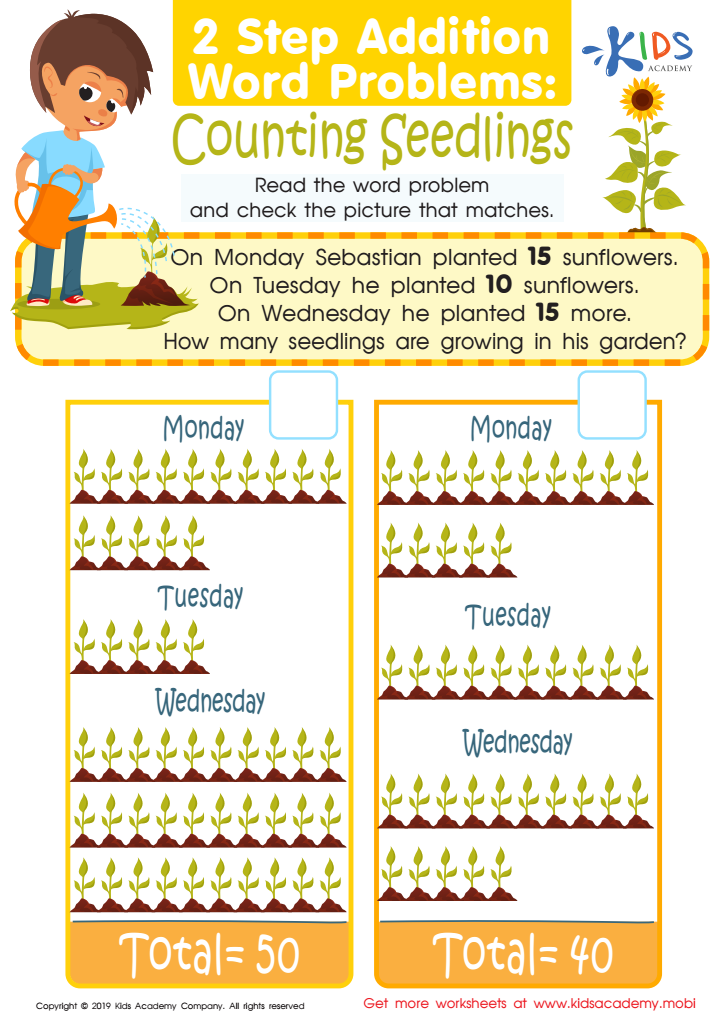
Counting Seedlings Worksheet
 Assign to My Students
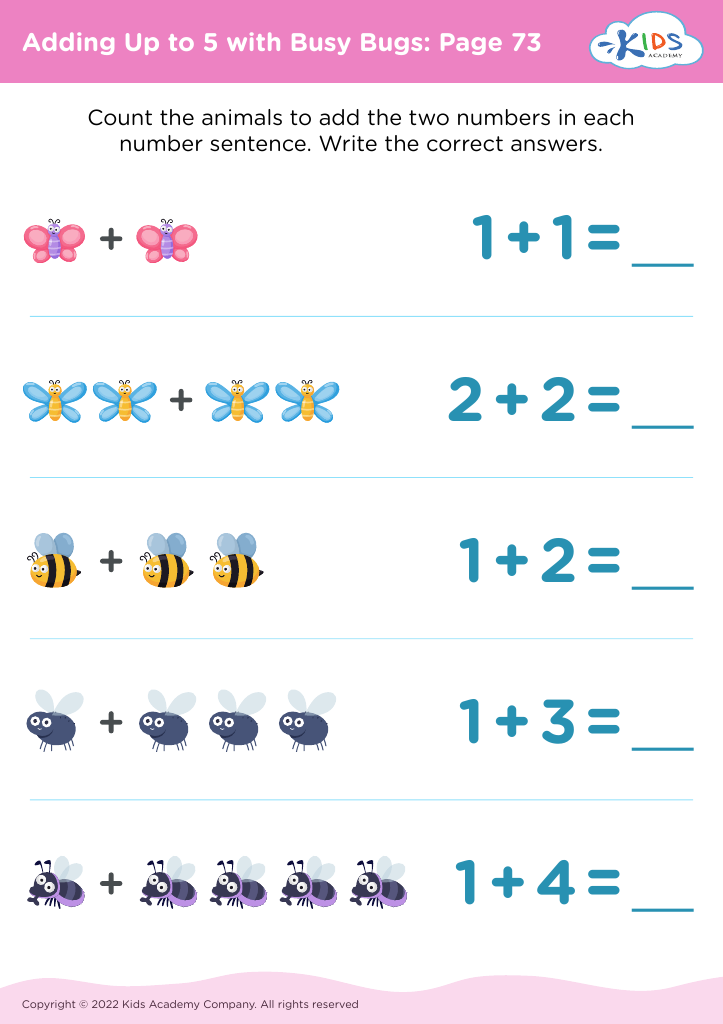
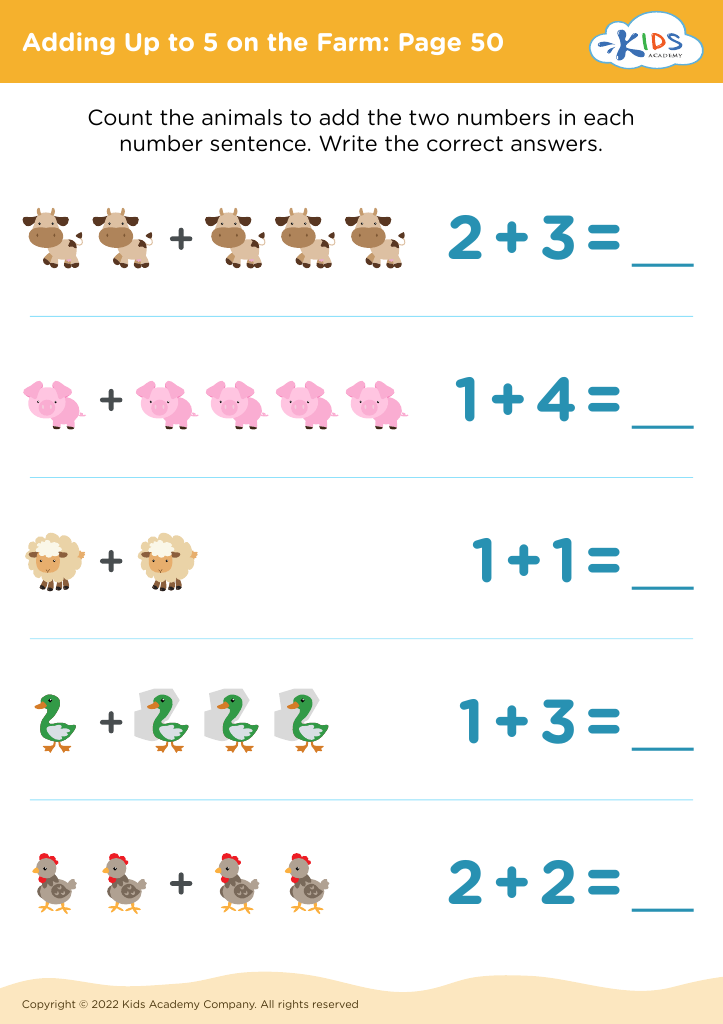
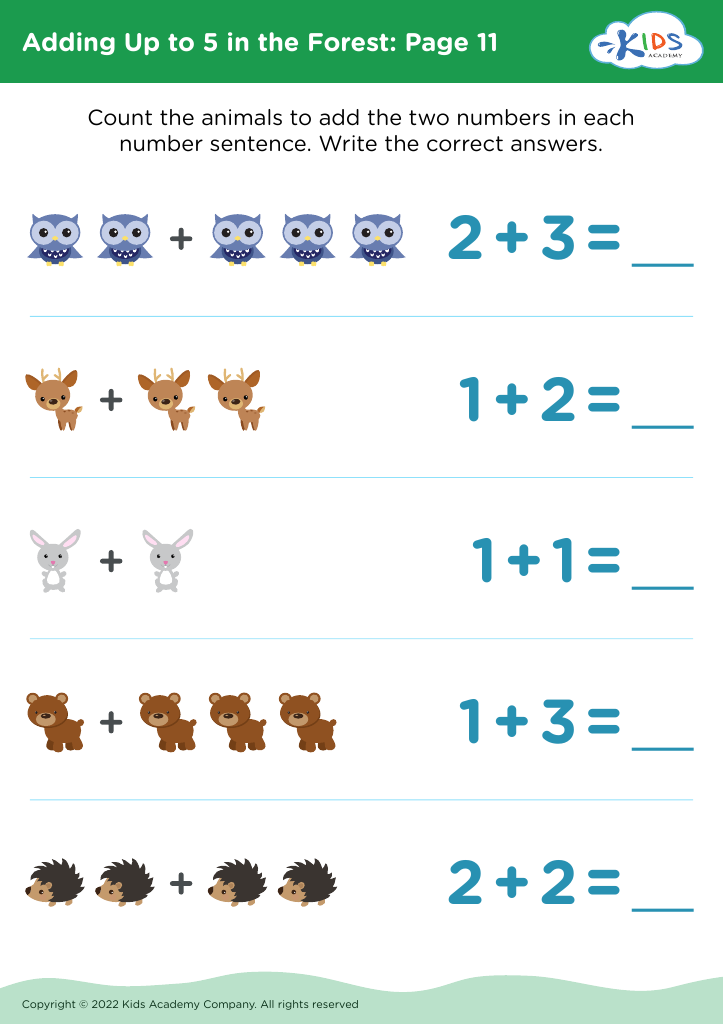
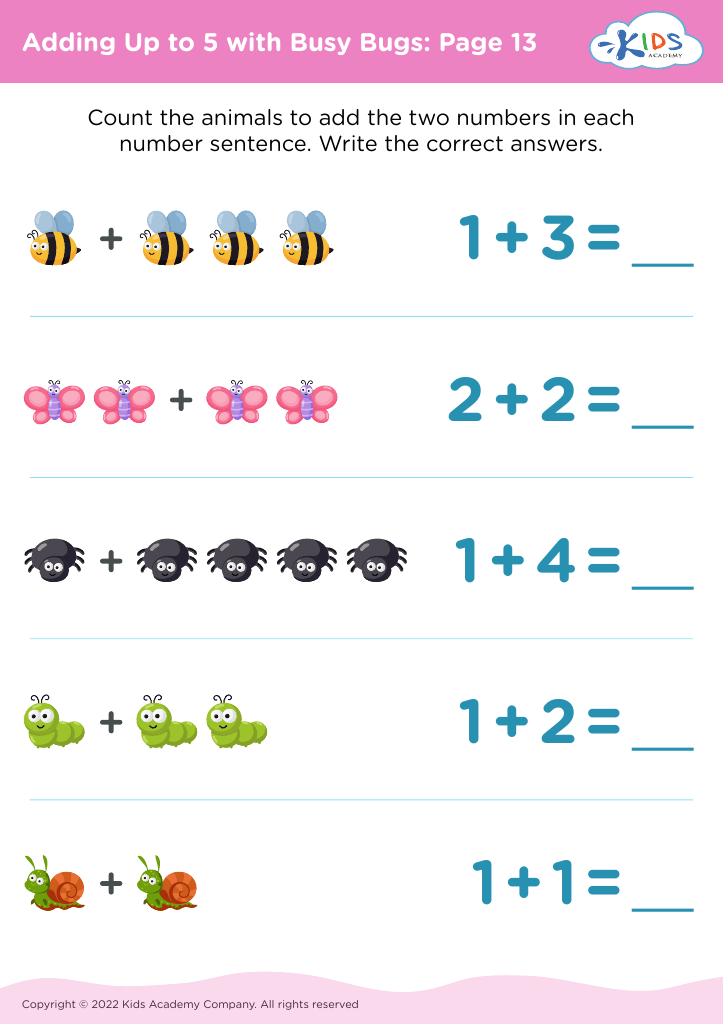








Visual perception skills are fundamental for the cognitive development of children aged 3-5, and fostering these skills should be a priority for both parents and teachers. At this age, children are extremely receptive to visual stimuli, which plays a crucial role in their overall learning process.
Visual perception involves the ability to interpret and make sense of visual information, which is essential for numerous daily activities, including reading, writing, and even playing games. For instance, recognizing letters and numbers, understanding spatial relationships, distinguishing between different shapes and colors, and following lines and patterns help build the pre-reading skills necessary for academic success.
Enhancing visual perception skills at an early age can also boost fine motor skills. Tasks like cutting, drawing, and assembling puzzles improve eye-hand coordination, which is vital for writing and other classroom activities. Moreover, strong visual perception skills strengthen a child's self-confidence and independence by enabling them to perform tasks more efficiently and with greater ease.
Engaging children in activities that develop visual perception, such as sorting games, matching exercises, and simple puzzles, lays a firm foundation for kindergarten and elementary school readiness. By understanding and prioritizing visual perception skills, parents and teachers can significantly contribute to a child's intellectual and motor development, setting the stage for future academic achievement and personal growth.








